How to Set Up a Fully Remote Company: Tips & Benefits
Learn how to set up a fully remote company the right way. Get clear steps, real benefits, a quick readiness scorecard, and expert tips before you commit.

Remote work is here to stay. Research from Stanford projects that better work-from-home arrangements could deliver a 5% productivity boost while helping businesses access talent beyond geographic boundaries.
But building a fully remote company takes more than letting employees work from home. It requires the right systems, processes, and culture to keep distributed teams productive and connected.
This blog shows you how to set up a fully remote company step by step, explores the biggest benefits and challenges, and includes a quick readiness scorecard to help you decide if your business is ready to make the switch.
What Is a Fully Remote Company?
A fully remote company is a business with no central office where every employee works remotely. From hiring and communication to collaboration and daily operations, every process is designed to support a distributed workforce rather than an in-person office.
However, fully remote isn't the same as remote-first. While both prioritize distributed work, there are important differences. Here's a quick comparison:
| Work Model | What It Means | Best For |
|---|---|---|
| Fully Remote | No physical office. Everyone works from anywhere. | Startups, global teams, cost-conscious businesses |
| Remote-First | Remote is the default, with an optional office or hub. | Growing teams that want occasional in-person meetups |
| Remote-Friendly | Employees can work remotely, but the office remains the default. | Established companies introducing flexibility |
| Hybrid | Employees split their time between home and the office. | Teams that require regular in-person collaboration |
How to Set Up a Fully Remote Company in 10 Steps
Building a successful remote company isn't about letting employees work from home, it's about creating systems that keep everyone productive, connected, and accountable.
Follow these 10 steps to build a remote-first business that scales smoothly and avoids the common mistakes new remote teams make.
1. Decide If a Fully Remote Model Fits Your Business
A fully remote setup isn't right for every business. If your operations depend on physical locations, such as warehouses, retail stores, or healthcare facilities, a remote model may not be practical. However, if most work happens on a computer, going fully remote could reduce costs and expand your hiring options.
2. Create a Remote Work Policy
Before your team starts working remotely, document the rules. Make sure your policy covers working hours, communication expectations, equipment, cybersecurity, leave policies, and performance standards. Clear guidelines prevent confusion and ensure everyone follows the same expectations.
3. Build Your Remote Tech Stack
Your tools become your workplace, so keep them simple and effective. Every remote team should have:
- Team Communication: Slack or Microsoft Teams
- Video Meetings: Zoom or Google Meet
- Project Management: Asana, Trello, or ClickUp
- File Sharing: Google Drive, OneDrive, or Dropbox
- Productivity & Visibility: A platform to track work, projects, and team performance
Choose tools that integrate well instead of overwhelming your team with unnecessary apps.
4. Establish Communication Guidelines
Remote teams succeed when communication is intentional. Set core working hours, define expected response times, encourage asynchronous communication, and document important decisions so everyone stays aligned, even across different time zones.
5. Hire People Who Thrive Remotely
Strong remote employees communicate clearly, manage their time well, and work independently. When hiring, prioritize these skills alongside technical expertise. Expanding your search globally also gives you access to a much larger talent pool.
6. Create a Structured Onboarding Process
Great onboarding helps new hires become productive faster. Ship equipment before their first day, assign a mentor, provide clear documentation, and introduce them to your workflows so they can contribute with confidence.
7. Measure Results Instead of Hours
Successful remote companies focus on outcomes, not screen time. Set measurable goals, review progress regularly, and use productivity insights to identify bottlenecks or burnouts without micromanaging employees.
8. Build a Remote-First Culture
Company culture doesn't happen by accident in a remote workplace. Regular recognition, virtual social activities, and transparent leadership and occasional in-person meetups help employees stay engaged and connected.
9. Train Managers to Lead Remotely
Managing a distributed team requires different skills. Equip managers to communicate effectively, lead productive one-on-one meetings, support employee well-being, and evaluate performance based on results rather than constant check-ins.
10. Continuously Improve Your Remote Operations
Remote work isn't a one-time transition, it's an ongoing process. Gather employee feedback, review what's working, refine your workflows, and update your policies regularly to keep your remote company efficient as it grows.
Know What's Happening Across Your Remote Team, Without Looking Over Their Shoulder
The Remote Company Readiness Scorecard
Before making the switch, assess whether your business is truly ready. Rate each statement from 1 (Strongly Disagree) to 5 (Strongly Agree), then add up your score.
| S.No | Statement | Score (1–5) |
|---|---|---|
| 1 | Our core work can be completed entirely online. | |
| 2 | We document processes rather than depending on verbal communication. | |
| 3 | We measure employee performance by results, not hours worked. | |
| 4 | We have the right tools for communication, collaboration, and project management. | |
| 5 | Our managers are equipped to lead remote teams effectively. | |
| 6 | We can manage hiring, payroll, and compliance across different locations. | |
| 7 | Our team communicates clearly and consistently in writing. | |
| 8 | We have initiatives in place to keep remote employees engaged and connected. |
What's Your Score?
| Total Score | Readiness Level |
|---|---|
| 33–40 | Ready to go fully remote. Your business has the systems needed to support a distributed workforce. |
| 24–32 | Almost there. Strengthen your weakest areas before making the transition. |
| 16–23 | Start with a remote-first or hybrid model. Improve your processes before going fully remote. |
| Below 16 | Not ready yet. Build the right policies, tools, and workflows before eliminating the office. |
A lower score doesn't mean remote work isn't possible, it simply highlights the areas that need attention. Use your results as a roadmap to strengthen your remote operations before making the transition.
Benefits of a Fully Remote Company
A fully remote company offers more than just flexibility. Here are some of the biggest advantages:
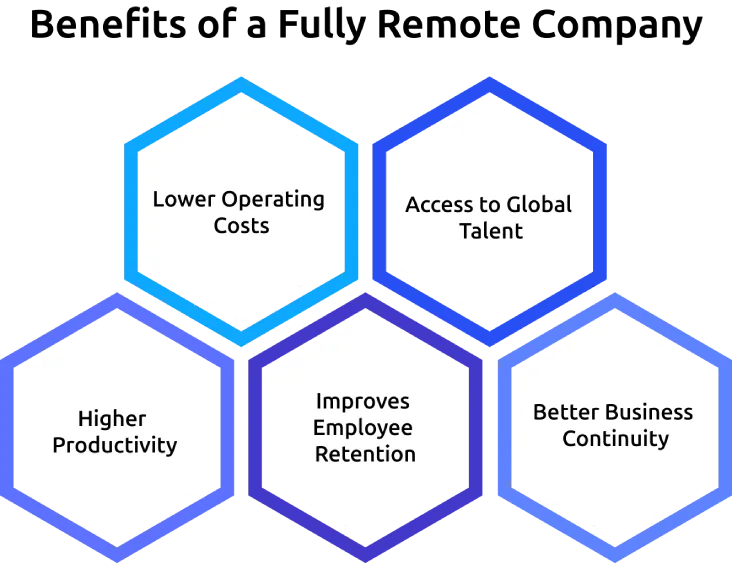
- Lower Operating Costs: Without a physical office, businesses save on rent, utilities, office equipment, and other overhead expenses, significantly reducing operating costs.
- Access to Global Talent: Hiring isn't limited by geography. You can recruit the best candidates from anywhere, giving your business access to a larger and more diverse talent pool.
- Higher Productivity: Remote employees often have fewer workplace distractions and greater flexibility, helping many teams stay focused and deliver better results.
- Improves Employee Retention: Flexible work arrangements are one of the most valued employee benefits today. Offering fully remote roles can increase job satisfaction and reduce turnover.
- Better Business Continuity: A distributed workforce is less affected by local disruptions, such as severe weather, transportation issues, or office closures, helping your business stay operational.
Real Examples of Fully Remote and Remote-First Companies
Some of the best-known remote companies operate without a central headquarters, and they prove that distributed teams can scale successfully. Looking at how they work is one of the fastest ways to understand what actually makes remote work succeed in practice.
- GitLab: One of the largest all-remote companies in the world, with 2,000+ employees across 60+ countries. Their entire operating system is documented in a public handbook, making their processes fully transparent and replicable.
- Automattic: The company behind WordPress.com has been fully distributed for years, with a strong focus on written communication and asynchronous workflows.
- Buffer: A fully remote team known for its transparency, open salaries, and culture built around trust and accountability across multiple time zones.
- Zapier: A remote-first company from day one, hiring globally without relying on a central office and designing every workflow for distributed execution.
The common thread across all of these companies is simple, they document everything, prioritize clear written communication, and focus on outcomes over hours worked. That combination is what makes remote work scalable at a global level.
How Time Champ Helps You Manage Remote Employees
Managing a remote workforce becomes much easier when you have complete visibility into how work is progressing without disrupting your employees. Time Champ is a remote employee monitoring software that helps businesses monitor productivity, streamline workflows, and keep distributed teams accountable while promoting flexibility and trust.
Key Time Champ features for managing remote employees:
Automatic Time Tracking
Eliminate the hassle of manual timesheets by automatically recording employees' working hours. Active and idle time are tracked in the background, giving you accurate work-hour records with less administrative effort.
Screenshots and Live Screen Monitoring
Gain the context you need without constantly checking in with employees. Capture screenshots at customizable intervals or view screens live, when necessary, while choosing a monitoring level that aligns with your organization's policies.
Productivity Classification
Get productivity insights that reflect how your teams actually work. Classify apps and websites as productive, neutral, or unproductive based on roles, teams, or projects for more meaningful reports.
Real-Time Activity Tracking
See how work progresses throughout the day without waiting for end-of-day reports. Monitor application and website usage in real time to understand how employees spend their time and identify workflow patterns.
Location Tracking
Keep remote and field teams connected by verifying work locations during business hours. GPS-based tracking helps improve accountability and makes it easier to coordinate employees across different locations.
Reports and Productivity Insights
Turn activity data into actionable insights with detailed dashboards and reports. Find productivity trends, identify inefficiencies, and make informed decisions to improve team performance.
Manage Your Remote Team with Confidence
Track productivity, monitor performance, and keep your distributed workforce aligned
Conclusion
Building a fully remote company isn’t about removing an office, it’s about building systems that support people working from anywhere. When done right, it unlocks global talent, lower costs, and stronger flexibility for both teams and founders. The key is preparation, clear processes, the right tools, and a culture built on trust and accountability. If your business is ready, going remote can become a long-term competitive advantage, not just a workplace change.

Jahnavi Pulluri

Table of Content
 What Is a Fully Remote Company?
- How to Set Up a Fully Remote Company in 10 Steps
- The Remote Company Readiness Scorecard
- What's Your Score?
- Benefits of a Fully Remote Company
- Real Examples of Fully Remote and Remote-First Companies
- How Time Champ Helps You Manage Remote Employees
- Conclusion
Instant Signup
Thank you for your request!
We have received your signup request and our team will get back to you soon. In the meantime, you can book a demo to see Time Champ in action.
Book a DemoFree trial. No credit card required. Prefer a walkthrough? Book a demo.
Related Blogs

Balance flexibility, productivity, and collaboration with hybrid work. Discover key benefits, common challenges, and proven solutions for team success.
Anjali | Jun 22, 2026
Learn to design an effective hybrid work schedule that balances flexibility and productivity, with best practices to fit your team’s needs.
Jahnavi Pulluri | Oct 26, 2024
Learn about employee rights in hybrid work, including pay, benefits, overtime, privacy, workplace safety, promotions, accommodations, and compliance laws.
Anjali | Jun 05, 2026
Hybrid work offers savings, but hidden costs can erode ROI. Explore 9 expenses and practical ways to identify them before they grow.
Guna Lakshmi | Jun 06, 2026
Hybrid work tax implications can affect payroll, tax residency, employer compliance, and multi-state obligations. Get key insights and risks in one guide.
Thasleem Shaik | Jun 11, 2026
Prevent hybrid work burnout in 2026 with practical manager strategies. Learn warning signs, support employee wellbeing, and reduce stress effectively.
Anjali | Jun 11, 2026


 4.7/5 avg.
Ready to Manage Your Workforce Smarter?
Join our family of 1500+ companies using smart insights to redefine workforces!

Free Trial
No Credit Card Required