Time Tracking Policy: Why They Matter & How to Get It Right
Create a clear time tracking policy to improve productivity, ensure accurate work-hour reporting, streamline compliance, and enhance team accountability.

Ignoring your time tracking process today can lead to costly payroll mistakes, compliance issues, and productivity losses tomorrow. As your team grows, depending on informal processes simply isn't sustainable. A well-defined time tracking policy helps you set clear expectations, reduce errors, and keep everyone aligned.
So, what does an effective time tracking policy actually look like? Let's break down the essentials and help you create a policy your team will actually follow.
What is a Time Tracking Policy?
A time tracking policy is a set of rules that an organization sets to regulate how employees document their working hours. It outlines the tools or systems used, how time is measured, and the processes for recording working hours, rest periods, and extra hours worked.
The policy helps to maintain the uniformity of time tracking, and it describes the expectations of the company and the obligations of the employees and managers in the process of timekeeping.
Why Your Business Needs a Time Tracking Policy
Think of a time tracking policy as the rulebook for how your team records work hours. Without one, everyone follows their own process, and that's when missed entries, payroll errors, compliance issues, and confusion start creeping in.
Here's why having a time tracking policy is essential.
1. Accurate Record Keeping
When employees follow a consistent process for logging their work hours, you get reliable data you can trust. This means fewer payroll errors, accurate wage calculations, and better visibility into where your team's time is being spent.
2. Builds Accountability
A time tracking policy sets clear expectations for everyone. Employees know when and how to log their hours, while you have a consistent way to review and approve timesheets. This reduces confusion, encourages accountability, and makes it easier to find delays, attendance issues, or productivity gaps.
3. Helps You Stay Compliant
Keeping accurate time records isn't just good practice, it's often a legal requirement. A well-defined policy helps you comply with labor laws, overtime regulations, and wage requirements by ensuring work hours are recorded correctly. It also provides the documentation you need if questions or audits ever arise.
4. Improves Workforce Planning
Time tracking isn't only about payroll, it's also a valuable management tool. When you understand where your team's time is going, it's easier to allocate resources, find inefficiencies, and improve overall productivity. Over time, these insights help you optimize workloads and keep your business running smoothly.
Simplify the way your team tracks time!
Replace manual processes with automated tracking, accurate records, and productivity insights
Key Components of a Time Tracking Policy
A well-structured time tracking policy leaves little room for confusion. Here are the essential components you should include to ensure accurate time tracking, smoother payroll, and better compliance.
1. Purpose of the Policy
Explain why your organization requires employees to track their time. Highlight how accurate time tracking supports payroll, improves productivity, ensures compliance with labor laws, and provides better visibility into how work hours are spent.
2. Scope and Applicability
Clearly define who the policy applies to. Specify whether it covers full-time, part-time, hourly, remote, hybrid, or contract employees, and mention any roles or departments that are exempt or follow separate guidelines.
3. Time Tracking Tools
List the approved tools or systems employees must use to record their work hours. Whether you use time tracking software, digital timesheets, or a mobile app, clearly identify the platform and explain how employees can access it.
4. Time Entry Guidelines
Set clear expectations for recording time. Explain when employees need to clock in and out, how often they must submit timesheets, how to record breaks and overtime, and the deadlines for submitting or approving time entries.
5. Roles and Responsibilities
Define the responsibilities of everyone involved in the time tracking process. Employees need to record their hours accurately; you review and approve timesheets, and HR or payroll teams use the records for payroll processing and compliance.
6. Accuracy and Compliance
Mention the importance of honest and accurate time reporting. Outline the consequences of late submissions, missing entries, or falsified records, and explain how following the policy helps your organization stay compliant with labor laws and company standards.
7. Audits, Exceptions, and Time Adjustments
Explain how time records will be reviewed and audited to ensure accuracy. Include the process for correcting errors, requesting changes, or reporting exceptional situations, along with the approval workflow for making adjustments.
How to Create an Effective Time Tracking Policy
This section highlights key steps to create a policy that supports effective time tracking in your organization.

Step 1: Understand Your Business Needs
Before drafting your policy, identify what you want it to achieve. Consider your workforce, payroll process, industry regulations, and current time-tracking challenges. Talk to managers and HR to understand common issues so your policy addresses real business needs from the start.
Step 2: Choose the Right Time Tracking Method
Select a time tracking solution that fits your team. Whether you use timesheets, a mobile app, or automated software, choose a tool that's easy to use, integrates with payroll, and supports office, remote, or shift-based employees.
Step 3: Draft the Policy
Write the policy in clear, simple language. Explain how employees should record work hours, breaks, overtime, and time off, along with submission deadlines, approval workflows, and the consequences of inaccurate or late entries.
Step 4: Review Before Launching
Have HR and legal teams review the policy to ensure it aligns with labor laws and company guidelines. Once approved, communicate it clearly to employees and provide any training they need to follow it consistently.
Best Practices for Enforcing a Time Tracking Policy

1. Keep the Policy Simple
The policy should be clear and simple to follow. Do not complicate it with too many rules or requirements that are hard to follow. Make the tracking process as easy as possible so that employees will follow it and not get confused.
2. Focus on Outcomes, Not Just Hours
When adopting a time-tracking policy, avoid creating a culture that will make the employees more concerned with the number of hours they have worked. Emphasize that the goal is to maximize work and productivity, not the time spent on it.
3. Protect Employee Privacy
Make sure that your time tracking policy does not infringe on the employees’ rights to privacy. It is important to know what data is being collected and for what purpose it is going to be used. Reassure the employees that the information will not be used to monitor their work but to enhance productivity.
4. Regularly Review and Adjust the Policy
Ensure that you are always checking the efficiency of the time tracking policy that you have put in place and make changes where necessary. If some of the aspects of the policy lead to the formation of dissatisfaction, do not be rigid and be ready to change the process.
How Time Champ Helps You Enforce Your Time Tracking Policy
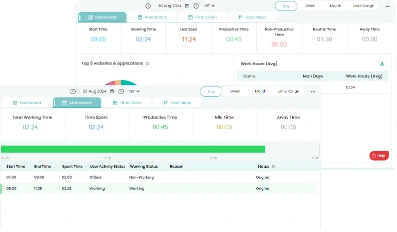
A time tracking policy is only effective when it's followed consistently. Time Champ is an employee monitoring software that helps you implement and enforce your policy while giving you complete visibility into employee work hours, productivity, and overall team performance.
Key Features
- Automatic Time Tracking: Eliminate manual time entries by automatically capturing work hours, improving payroll accuracy while saving valuable administrative time.
- Employee Activity Monitoring: Monitor active, idle, and productive time to ensure employees follow your organization's time tracking policy.
- Online Timesheets: Generate accurate timesheets automatically, making approvals, payroll processing, and recordkeeping faster and more efficient.
- Attendance & Leave Management: Track attendance, work hours, overtime, breaks, and leave from a centralized dashboard.
- Project & Task Tracking: Monitor the time employees spend on projects and tasks to improve resource allocation, project planning, and profitability.
- Productivity Analytics: Gain actionable insights into productivity trends and find opportunities to improve team performance.
- Detailed Reports & Dashboards: Access real-time reports on attendance, work hours, productivity, and employee performance to support informed decision-making.
Don't just create a time tracking policy, make it work!
Automate time tracking, monitor employee productivity, and ensure your policy is followed
Conclusion
A clear time tracking policy gives your team the direction they need and gives you the confidence that work hours are being tracked the right way. Keep your policy simple, communicate it effectively, and review it regularly to ensure it continues to meet your business needs. With the right approach, you can improve payroll accuracy, strengthen accountability, maintain compliance, and create a more productive workplace.

Jahnavi Pulluri

Table of Content
 What is a Time Tracking Policy?
- Why Your Business Needs a Time Tracking Policy
- Key Components of a Time Tracking Policy
- How to Create an Effective Time Tracking Policy
- Best Practices for Enforcing a Time Tracking Policy
- How Time Champ Helps You Enforce Your Time Tracking Policy
- Conclusion
Related Blogs

Learn the difference between productivity tracking and time tracking, how they work, and which approach helps improve team performance and visibility.
Guna Lakshmi | May 09, 2026
Download our professional time tracking discrepancies template to identify, report, and resolve timesheet and attendance mismatches efficiently.
Jahnavi Pulluri | May 14, 2026
Get answers to the most common questions about automated time tracking, including accuracy, privacy, productivity benefits, reporting, and team management.
Anjali | May 14, 2026
Time tracking software vs manual timesheets: compare accuracy, cost, effort, and ROI to pick the right solution for improving your team's productivity.
Jahnavi Pulluri | May 15, 2026
Learn how to measure the ROI of digital time tracking software with a practical cost benefit analysis template for productivity and cost savings.
Jahnavi Pulluri | May 15, 2026
Learn how time tracking improves remote team productivity through better visibility, accountability, performance tracking, and smarter team management.
Anjali | May 16, 2026


 4.7/5 avg.
Ready to Manage Your Workforce Smarter?
Join our family of 1500+ companies using smart insights to redefine workforces!

Free Trial
No Credit Card Required