What Is a Keylogger? Uses, Types & Legal Considerations
Learn what a keylogger is, how it works, and whether it's legal to use for monitoring. Explore legal implications, ethical concerns, and common use cases.

Not every keylogger is designed for cybercrime, and not every use of a keylogger is illegal.
In fact, keyloggers serve a variety of legitimate purposes, from employee monitoring and parental supervision to IT troubleshooting and cybersecurity. However, using them without proper authorization or consent can quickly cross legal and ethical boundaries.
So, what exactly is a keylogger, how does it work, and when is it legal to use one? Let's explore everything you need to know.
What is a Keylogger?
A keylogger (short for keystroke logger) is a software program or hardware device that records every keystroke typed on a keyboard. It is commonly used to monitor user activity, troubleshoot technical issues, enhance cybersecurity, or supervise device usage. However, keyloggers can also be used maliciously to steal sensitive information, such as usernames, passwords, credit card details, and other confidential data.
Is it Legal to Use a Keylogger?
Using a keylogger without a person's knowledge or consent is illegal. The legality of using a keylogger depends on its purpose and how it is deployed. While keyloggers can be used for legitimate purposes such as employee monitoring or parental control, they can also be misused to collect sensitive information without consent.
In the following sections, I’ve explained the common legal and illegal uses of keyloggers and the situations in which their use may violate privacy or data protection laws.
Legal Use Cases of Keyloggers
Just because keyloggers can be misused doesn't mean they're always illegal. In fact, when used responsibly and with proper authorization, they have several legitimate applications across personal, business, and security settings.
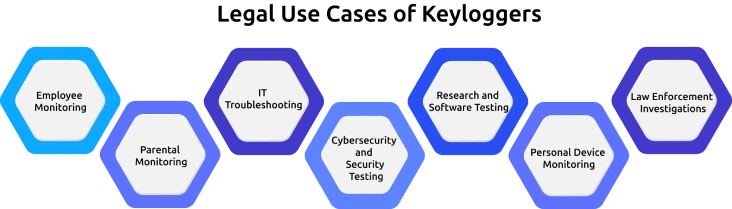
1. Employee Monitoring
Organizations may use keyloggers on company-owned devices to monitor productivity, protect sensitive business data, investigate policy violations, and detect insider threats. In many workplaces, employees are informed about such monitoring through company policies or employment agreements.
2. Parental Monitoring
Parents or legal guardians may use keyloggers to supervise their children's online activities. This can help identify risks such as cyberbullying, inappropriate content, or suspicious online interactions and promote safer internet use.
3. IT Troubleshooting
IT administrators may use keyloggers to diagnose keyboard-related issues, reproduce software bugs, and troubleshoot application errors. These tools are typically used on authorized systems to identify and resolve technical problems more efficiently.
4. Cybersecurity and Security Testing
Cybersecurity professionals may use keyloggers in authorized environments to analyze malware behavior, investigate security incidents, or conduct penetration testing. This helps organizations identify vulnerabilities and strengthen their overall security.
5. Research and Software Testing
Researchers and developers may use keyloggers to study user input, improve software usability, and identify input-related bugs during testing. These activities are generally carried out with the knowledge and consent of participants.
6. Personal Device Monitoring
Individuals may install keyloggers on their own devices to monitor their own activity, recover lost text, or track system usage. Since the monitoring is performed on a personally owned device, this is generally considered a legitimate use.
7. Law Enforcement Investigations
Law enforcement agencies may use keylogging tools during criminal investigations when legally authorized. Their use is typically subject to court orders, warrants, or other legal procedures, depending on the jurisdiction.
Illegal Use Cases of Keyloggers
Like any technology, keyloggers can be powerful tools, but in the wrong hands, they can also be used to invade privacy and commit cybercrime. Here are some of the most common ways keyloggers are misused and why these activities are considered illegal.
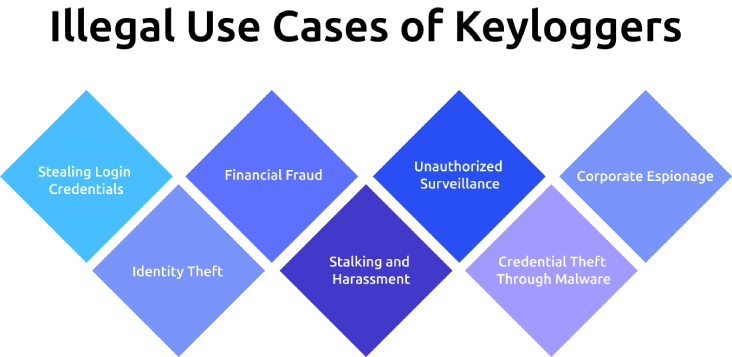
1. Stealing Login Credentials
Cybercriminals use keyloggers to capture usernames, passwords, and other login credentials for online accounts. This stolen information can be used to gain unauthorized access to email accounts, social media profiles, banking portals, and business systems.
2. Financial Fraud
Keyloggers can be used to steal sensitive financial information, such as credit card numbers, debit card details, online banking credentials, and payment information. Attackers may use this data to make unauthorized transactions or commit identity theft.
3. Unauthorized Surveillance
Installing a keylogger on someone else's device without their knowledge or permission to monitor their conversations, emails, or personal activities is generally illegal and violates privacy rights.
4. Corporate Espionage
A malicious insider or competitor may use a keylogger to steal confidential business information, trade secrets, customer databases, or intellectual property for financial or competitive gain.
5. Identity Theft
Attackers use stolen personal information, including names, addresses, passwords, and government-issued IDs, to impersonate victims and carry out fraudulent activities.
6. Stalking and Harassment
Keyloggers may be used to secretly monitor a person's communications, passwords, or online activity as part of stalking, harassment, or controlling behavior. This is a serious invasion of privacy and is illegal in many jurisdictions.
7. Credential Theft Through Malware
Many types of malware include keylogging functionality to collect sensitive information from infected devices silently. The stolen data is often transmitted to attackers, used in cyberattacks, or sold on the dark web.
Detect Keylogger Risks with Time Champ
Gain insights into activity and protect your workforce data
Conclusion
Keyloggers are not inherently illegal, their legality depends on how and where they are used. When deployed with proper consent and authorization, they can help with employee monitoring, parental supervision, troubleshooting, and cybersecurity efforts. However, using keyloggers secretly to steal information, monitor others without permission, or invade privacy can result in serious legal consequences.
Table of Content
 What is a Keylogger?
- Is it Legal to Use a Keylogger?
- Legal Use Cases of Keyloggers
- Illegal Use Cases of Keyloggers
- Conclusion
Related Blogs

Learn how to detect mouse jigglers using activity patterns, system logs, and monitoring tools to uncover insider threats and ensure productivity.
Jahnavi Pulluri | Jan 24, 2024
Explore common employee monitoring myths and learn what
Anjali | Apr 14, 2026
Learn about employee monitoring laws, what they mean for businesses, and how they protect employee privacy and rights.
Shabana Shaik | Jul 10, 2024
Learn the pros and cons of employee monitoring and discover when monitoring improves productivity and when it creates workplace risks.
Guna Lakshmi | May 06, 2026
Understand employee monitoring legal compliance, key laws, and best practices to track work activity while protecting privacy and avoiding legal risks.
Thasleem Shaik | Apr 14, 2026
Explore how to implement employee monitoring software effectively with clear steps, legal tips, best practices, ROI metrics, and key pitfalls to avoid.
Anjali | Apr 15, 2026


 4.7/5 avg.
Ready to Manage Your Workforce Smarter?
Join our family of 1500+ companies using smart insights to redefine workforces!

Free Trial
No Credit Card Required