DLP Pricing: Models, Real Costs & What You're Paying For
Why do DLP prices vary so much? Uncover what you're actually paying for, what's worth the investment, and what costs you can avoid.
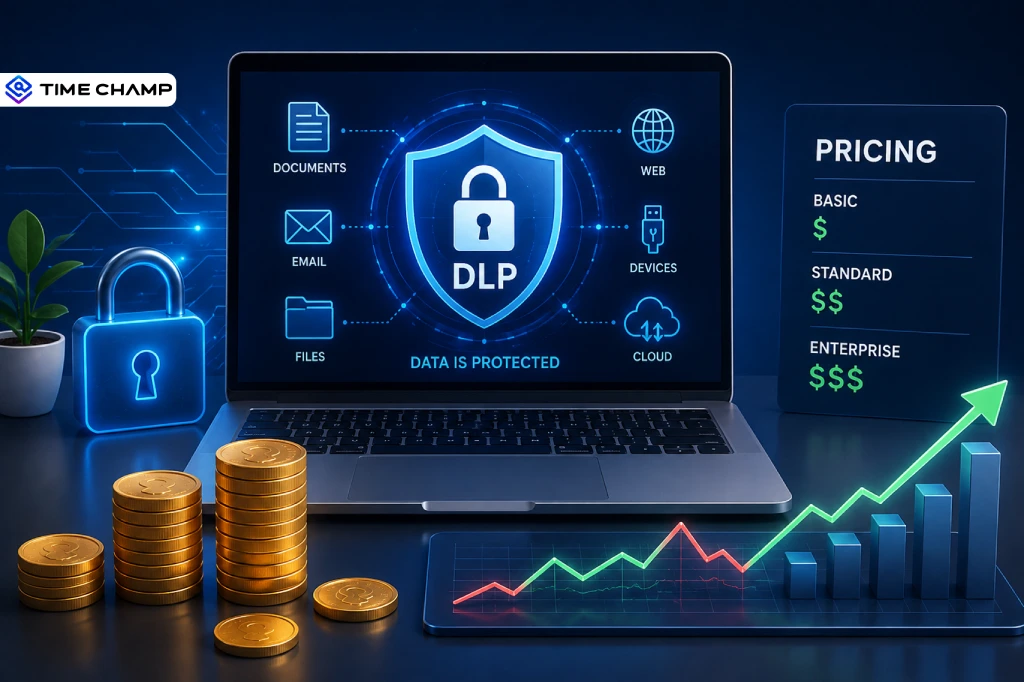
Choosing a DLP solution isn't just about comparing monthly subscription prices. What looks like an affordable option at first can quickly become much more expensive later. That's why understanding DLP pricing goes beyond looking at the price tag to evaluate the total cost and the value each solution delivers.
To make your buying process easier, we've packed this guide with everything you need to understand DLP pricing, from hidden costs to pricing factors and vendor comparisons.
What Are the 5 DLP Pricing Models You Should Know?
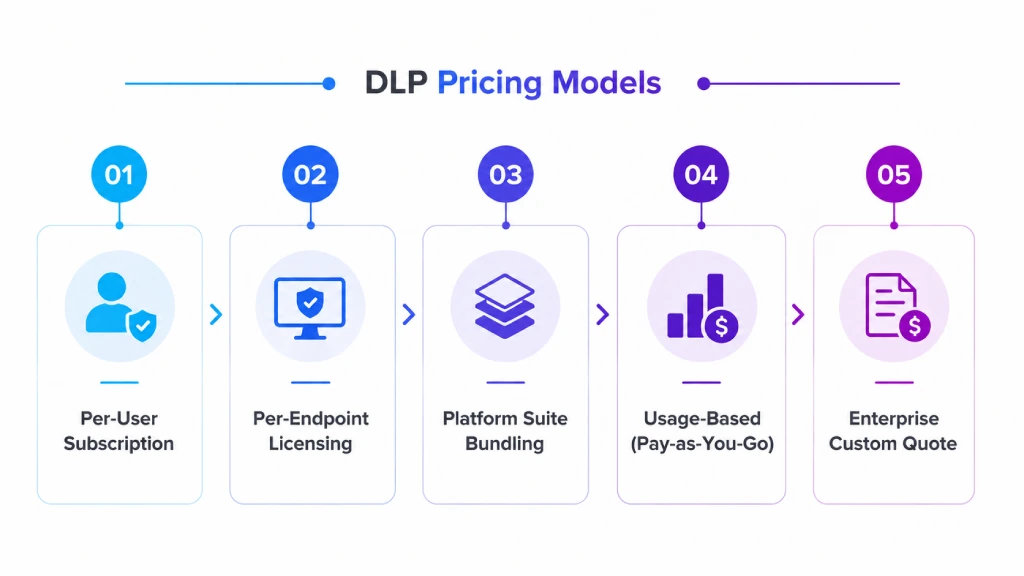
DLP vendors don't follow a single pricing strategy. Some charge based on the number of users, while others bill per device, data usage, or custom enterprise agreements. Understanding these pricing models makes it easier to compare vendor quotes, estimate your total investment, and choose the right solution for your budget and team size.
1. Per-User Subscription
Per-user subscription is the most common pricing model for cloud-based DLP solutions, especially those designed for small and medium-sized businesses. You pay a monthly or annual fee for each protected employee, making it easy to predict costs as your workforce grows. Pricing typically ranges from $5 to $25 per user per month, with volume discounts often available for larger teams.
2. Per-Endpoint Licensing
With per-endpoint licensing, you're charged for each protected device instead of each employee. This model works well if your workforce uses multiple company-owned devices, such as laptops, desktops, or mobile phones. It's commonly used for endpoint DLP solutions that focus on securing devices and preventing data loss at the endpoint level.
3. Platform Suite Bundling
Some vendors include DLP as part of a broader security or productivity suite rather than offering it as a standalone product. For example, Microsoft 365 E5 includes Microsoft Purview DLP. If your organization already uses the platform, bundling can reduce overall costs. However, bundled DLP capabilities may not offer the same depth as dedicated DLP solutions.
4. Usage-Based (Pay-as-You-Go)
Usage-based pricing charges you according to the amount of data processed, such as data scanned, API requests, or storage consumed. This model is common among cloud-native DLP providers and is ideal if your data volumes fluctuate throughout the year. While it offers flexibility, costs can increase as your usage grows.
5. Enterprise Custom Quote
Enterprise-focused vendors typically provide custom pricing based on your organization's size, deployment complexity, support requirements, and contract terms. These quotes often combine software licenses, implementation services, premium support, and multi-year discounts into a single package. Enterprise deployments generally start at $50,000 or more per year, depending on your requirements.
Not sure which DLP pricing model fits your business?
Explore Time Champ's transparent pricing and choose a plan that grows with your team.
How Much Does DLP Cost? Real Vendor Pricing Benchmarks
DLP pricing varies significantly from one vendor to another. Some providers offer transparent per-user or usage-based pricing, while others require you to request a custom quote based on your organization's size and security requirements.
The table below highlights pricing benchmarks for some of the leading DLP vendors in 2026, along with their pricing models and the types of organizations they're best suited for.
| DLP Vendor | Pricing Model | Approximate Cost | Best Fit For | Source |
|---|---|---|---|---|
| Time Champ | Per user/month | $3.90-$13.90/user | SMBs needing DLP + employee monitoring | Time Champ Pricing |
| Symantec DLP (Broadcom) | Custom quote / Annual licensing | Quote-based | Enterprises, regulated industries | Broadcom Symantec DLP |
| Forcepoint DLP | Custom quote | Quote-based | Mid-market to enterprise | Forcepoint DLP Pricing |
| Microsoft Purview DLP | Microsoft 365 E5 bundle | $57/user/month (annual billing) | Microsoft 365 organizations | Microsoft Purview Pricing |
| Netskope DLP | Per user / Enterprise quote | Starts around $8/user/month | Cloud-first companies | Netskope Pricing Request |
| Proofpoint DLP | Custom quote | Quote-based | Email-heavy environments | Proofpoint Information Protection |
| Trellix DLP | Enterprise custom quote | Quote-based | Large enterprises | Trellix Data Loss Prevention |
| Google Cloud Sensitive Data Protection (Cloud DLP) | Usage-based | Starts around $7/month (usage-dependent) | Google Workspace & GCP users | Google Cloud Sensitive Data Protection Pricing |
Cloud DLP vs On-Premises DLP: Which Is More Cost-Effective?
Cloud and on-premises DLP solutions follow very different pricing models. While cloud DLP offers lower upfront costs and faster deployment, on-premises DLP requires a larger initial investment but can provide greater control and customization. It depends on your budget, compliance needs, current infrastructure, and business objectives.
Cloud DLP Pricing Structure
Cloud DLP solutions are typically offered as subscription-based services, making them more affordable to get started. Since the vendor manages the infrastructure, you don't have to invest in hardware or ongoing software maintenance.
Key Advantages Include:
- Lower upfront costs with no hardware or perpetual licensing.
- Subscription pricing typically ranges from $8 to $25 per user per month.
- Faster deployment, often within weeks.
- Automatic updates, security patches, and maintenance handled by the vendor.

Did You Know?
Research and Markets revealed that Cloud deployments accounted for 67.3% of the DLP market revenue in 2025 and are projected to grow at a CAGR of 21.2% through 2031.
On-Premises DLP Pricing Structure
On-premises DLP requires you to purchase software licenses and maintain the supporting infrastructure yourself. Although the initial investment is higher, it offers greater control over data, configurations, and security policies.
Key Considerations Include:
- Higher upfront costs for software licenses, hardware, and deployment.
- Longer implementation timelines, often 3 to 9 months.
- Greater flexibility for customization and compliance.
- Your IT team is responsible for ongoing maintenance, upgrades, and system management.
Which Option Offers Better Value?
For most small and mid-sized businesses, cloud DLP is the most cost-effective option during the first few years because it eliminates large upfront expenses and reduces maintenance costs. However, very large enterprises with thousands of users may find on-premises DLP more economical over the long term, especially if they already have the required infrastructure.
Before making a decision, compare the total cost of ownership (TCO) rather than just the subscription price. Implementation services, integrations, support, and compliance requirements can significantly affect your overall investment, regardless of the deployment model.
Factors Affecting Data Loss Prevention Pricing
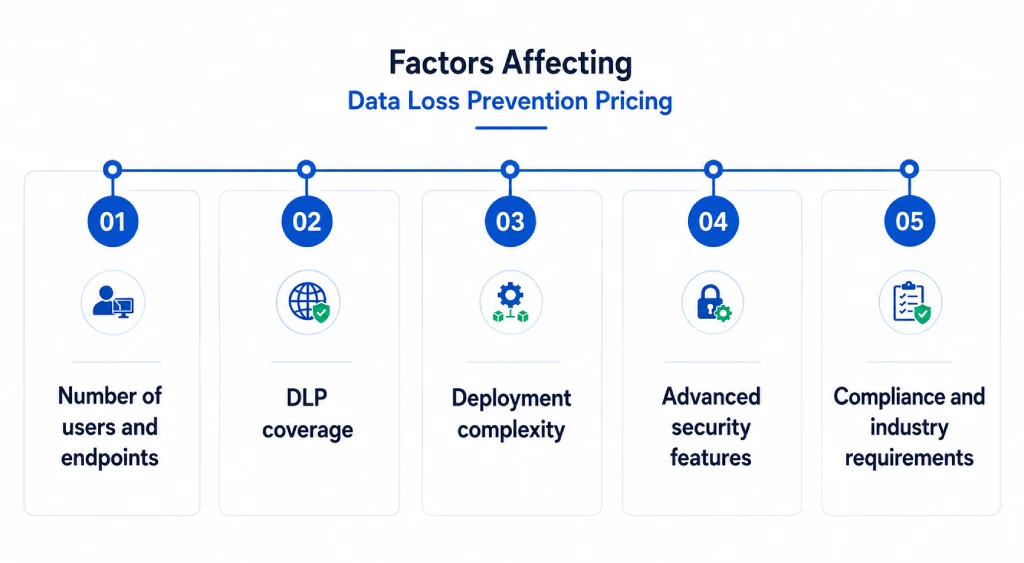
The advertised price of a DLP solution is only part of the total investment. Your final cost depends on several factors. Understanding these cost drivers helps you estimate your budget more accurately and avoid unexpected expenses.
Number of Users and Endpoints
Most DLP vendors charge based on the number of protected users or endpoints. As your organization grows, your licensing costs increase, although many vendors offer volume discounts for larger deployments.
If employees use multiple company devices, such as laptops, desktops, and mobile phones, endpoint-based licensing can increase your total cost. On the other hand, larger enterprises often negotiate lower per-user pricing than small businesses because of bulk licensing agreements.
DLP Coverage
The type of DLP protection you require also affects pricing. Solutions that protect only one area, such as email or endpoints, are generally less expensive. Platforms that secure endpoints, cloud applications, email, networks, and SaaS environments from a single console tend to cost more.
While multi-layer DLP platforms cost more upfront, they can reduce the need to purchase and manage multiple security tools separately.
Deployment Complexity
A more complex IT environment usually leads to higher implementation costs. Cloud-only deployments are usually faster and require minimal setup, while hybrid or on-premises environments often require custom integrations, policy configuration, and professional services.
Advanced Security Features
The more advanced the detection capabilities, the higher the licensing cost. Features such as Optical Character Recognition (OCR), machine learning, behavioral analytics, and GenAI data protection are typically available in premium plans because they provide more accurate threat detection and reduce false positives.
According to IBM's Cost of a Data Breach Report,organizations that extensively use AI and automation in security save an average of $1.93 million in breach costs compared to those that don't, making advanced security features a worthwhile investment for many businesses.
Compliance and Industry Requirements
If your organization must comply with regulations such as HIPAA, PCI DSS, SOX, or GDPR, you may need additional security controls, compliance reporting, or certified deployments. These requirements often require premium plans or add-on modules, increasing your overall DLP investment.
Before choosing a solution, identify the compliance standards your business must meet. This helps you avoid paying for unnecessary features while ensuring your DLP solution provides the protection and reporting your industry requires.
Why pay for features you don't need?
With Time Champ, you get flexible DLP plans designed to match your business size, compliance needs, and budget.
What Are the Hidden Costs of DLP That Buyers Miss?
The subscription fee is only part of your DLP investment. Many vendors charge extra for implementation, training, advanced features, and premium support. Planning for these costs upfront helps you avoid unexpected expenses later.
Implementation and Professional Services
Setting up a DLP solution often requires deployment, policy configuration, and system integrations. Depending on your environment, implementation can cost $10,000 to $100,000+, and many experts recommend budgeting 25% to 50% of your first-year licensing cost for these services.
Ongoing Policy Tuning
After deployment, you'll need to fine-tune DLP policies to reduce false positives and improve accuracy. This usually requires ongoing time from your IT team or paid vendor support.
Employee Training
Your employees need to understand how DLP alerts work and how to handle sensitive data correctly. Initial training typically costs $5,000 to $25,000, with periodic refreshers as your policies evolve.
Add-On Modules and Premium Features
Features like OCR, GenAI protection, cloud DLP, and advanced analytics are often sold separately. Before purchasing, check which capabilities are included and which require additional licensing.
Premium Support
Most plans include standard business-hours support, but 24/7 support, faster response times, and dedicated account managers usually cost extra and can increase your annual licensing fees.
Is DLP Worth the Cost? Calculating DLP ROI
Yes, for most businesses, DLP is worth the investment. While the upfront cost may seem high, it can help you avoid far greater expenses caused by data breaches, compliance violations, legal penalties, and business disruption.
Calculate Your DLP ROI
Here's a simple example to understand the return on investment:
Let's say your company has 500 employees and your DLP solution costs $15 per user per month.
Annual DLP cost:
500 employees × $15 × 12 months = $90,000 per year
Now imagine your DLP solution prevents just one data breach that would have cost your business $1 million.
- Your investment: $90,000
- Potential savings: $1,000,000
- Estimated return: $1,000,000 − $90,000 = $910,000 in avoided losses
Spending $90,000 to avoid $1 million in losses makes DLP a strong investment.
Additional Business Benefits
Beyond preventing data breaches, DLP also helps you:
- Reduce audit and compliance costs with detailed activity logs.
- Detect and respond to security incidents more quickly.
- Improve employee awareness of data security policies.
- Strengthen your overall security posture and reduce long-term business risks.
How Much Does DLP Cost for Small Businesses vs Enterprises?
The amount you pay for DLP depends largely on the size of your organization and the level of protection you need. While small businesses can often secure their data with affordable cloud subscriptions, larger organizations typically require broader coverage, advanced features, and custom deployments that increase overall costs.
Small Businesses (1-100 Employees)
If you run a small business, you can expect to pay $5-$15 per user per month for a cloud-based DLP solution. At this stage, essential features like content inspection, encryption, and basic reporting are usually enough to protect your data. If you're already using Microsoft 365 or Google Workspace, their built-in DLP capabilities may also meet your basic security needs.
Mid-Sized Businesses (100-1,000 Employees)
As your business grows, your security requirements become more complex. Standalone DLP solutions typically cost $10-$25 per user per month, with implementation services ranging from $25,000 to $75,000. This is often the point where investing in endpoint, email, and cloud DLP together becomes more cost-effective than using separate tools.
Enterprises (1,000+ Employees)
If you manage a large enterprise, pricing is usually based on a custom quote rather than a fixed per-user rate. Depending on your deployment, compliance requirements, and support needs, enterprise DLP solutions can cost anywhere from $50,000 to over $500,000 per year. While enterprise agreements often include volume discounts, your first-year investment can exceed $250,000 once implementation and professional services are included.
Why Time Champ Offers the Best DLP Value for SMBs
Time Champ is an employee monitoring software along with complete workforce intelligence features. Unlike enterprise DLP vendors charging $10-25+ per user for standalone DLP, Time Champ combines Data Loss Prevention (DLP) capabilities with employee monitoring and workforce intelligence in one platform for affordable pricing.
For small and mid-sized businesses that need practical data protection without enterprise complexity, Time Champ delivers three key advantages:
- Flexible pricing plans
- Fast, lightweight deployment
- Practical DLP for real SMB risks
See if Time Champ fits your DLP budget.
Start a 7-day free trial. No credit card required.
Conclusion
Understanding DLP pricing helps you balance cost, security, and long-term value. Looking beyond the subscription price allows you to choose a solution that meets your business needs without unnecessary spending.
If you're looking for an affordable solution that combines DLP capabilities, employee monitoring, and workforce intelligence in one platform, try Time Champ now!

Guna Lakshmi

Table of Content
 What Are the 5 DLP Pricing Models You Should Know?
- How Much Does DLP Cost? Real Vendor Pricing Benchmarks
- Cloud DLP vs On-Premises DLP: Which Is More Cost-Effective?
- Factors Affecting Data Loss Prevention Pricing
- What Are the Hidden Costs of DLP That Buyers Miss?
- Is DLP Worth the Cost? Calculating DLP ROI
- How Much Does DLP Cost for Small Businesses vs Enterprises?
- Why Time Champ Offers the Best DLP Value for SMBs
- Conclusion
Related Blogs

Protect your business from insider risks with insider threat prevention best practices for monitoring, access control, employee security, and data protection.
Guna Lakshmi | May 08, 2026
Protect your business from BYOD security risks like data breaches and phishing. Learn practical ways to secure employee devices and reduce security threats.
Guna Lakshmi | May 07, 2026
Learn about Data Loss Prevention (DLP), its types, challenges, and benefits to secure sensitive data, ensure compliance, and prevent costly breaches.
Tarun Kumar Reddy | Jan 20, 2025
Protect sensitive business data in hybrid work environments with strong security controls and practical strategies to prevent data breaches.
Guna Lakshmi | Jun 10, 2026
Discover how network data loss prevention protects sensitive data and shields your business from costly breaches and regulatory risks
Thasleem Shaik | Jan 18, 2025
Find answers to common questions about Data Loss Prevention, including how it works, its benefits, and how to choose the right solution for your business.
Jahnavi Pulluri | Jan 20, 2025


 4.7/5 avg.
Ready to Manage Your Workforce Smarter?
Join our family of 1500+ companies using smart insights to redefine workforces!

Free Trial
No Credit Card Required