DLP Compliance: Meet GDPR, HIPAA & PCI Requirements
Protect sensitive data and simplify DLP compliance with practical strategies to meet GDPR, HIPAA, and PCI DSS requirements while reducing security risks.
How confident are you that sensitive data isn’t leaving your organization through email, cloud apps, or employee devices? Compliance becomes much harder when you can’t see where sensitive information is stored, accessed, or shared. A strong DLP compliance strategy helps you protect critical data, reduce security risks, and support GDPR, HIPAA, and PCI DSS requirements.
Here you’ll understand what it is, why it matters, and how it supports the requirements of GDPR, HIPAA, and PCI DSS. You’ll also learn how to build effective DLP policies and strengthen your organization’s overall data protection strategy.
What is DLP compliance?
DLP compliance is the process of implementing Data Loss Prevention (DLP) policies and technologies to protect sensitive data and meet regulatory requirements. It helps you detect, control, and prevent unauthorized access, sharing, or loss of information, supporting compliance with regulations such as GDPR, HIPAA, and PCI DSS.
Why DLP Compliance Matters
Protecting sensitive data is no longer just an IT responsibility, it's a business necessity. As organizations handle increasing volumes of personal, healthcare, and payment information, preventing data leaks while meeting regulatory requirements becomes more challenging. DLP compliance helps reduce these risks by giving you greater control over how sensitive information is accessed, shared, and protected.
Here’s why DLP compliance matters:
- Prevents costly data breaches by detecting and blocking unauthorized access or data transfers before sensitive information is exposed.
- Supports regulatory compliance with standards like GDPR, HIPAA, and PCI DSS by applying consistent data protection policies.
- Reduces legal and financial risks by helping your organization avoid penalties, lawsuits, and remediation costs associated with non-compliance.
- Builds customer trust by demonstrating that personal and confidential information is handled securely and responsibly.
- Improves visibility into sensitive data so you know where critical information is stored, who accesses it, and how it is shared.
- Minimizes insider threats by monitoring risky user activities and preventing accidental or intentional data leaks.
- Simplifies audits and reporting through detailed logs and reports that help demonstrate compliance during security and regulatory assessments.

Did You Know?
According to the FBI Internet Crime Report, there were 859,532 cybercrime complaints and over $16 billion in losses. The findings highlight the need for stronger DLP controls to protect sensitive data and support compliance.
What Should a DLP Policy Include?
A well-designed DLP policy establishes clear rules for protecting sensitive information throughout its lifecycle. It helps your organization control how data is accessed, shared, stored, and monitored while supporting regulatory compliance. The following elements form the foundation of an effective DLP policy.

1. Sensitive Data Inventory
Begin by identifying the types of information your organization needs to protect, such as customer records, employee information, financial data, intellectual property, and payment details. Knowing what data exists is the first step toward protecting it effectively.
2. Data Usage Guidelines
Define how sensitive information can be collected, stored, transferred, and shared. These guidelines should specify approved communication channels, storage locations, and file-sharing methods to reduce the risk of accidental exposure.
3. Permission and Access Management
Set clear permissions based on job roles and business responsibilities. Limiting access to only those who need it helps reduce unnecessary exposure and lowers the risk of insider threats.
4. Risk Detection and Response Rules
Establish rules that identify unusual or unauthorized data activities. The policy should also define how your DLP solution responds, whether by generating alerts, restricting actions, encrypting files, or preventing sensitive data from leaving approved environments.
5. Security Monitoring and Audit Records
Track important user activities involving sensitive data and maintain detailed records of policy violations, alerts, and corrective actions. These records support investigations, simplify compliance audits, and help improve future security controls.
6. Policy Governance and Continuous Updates
Review your DLP policy regularly to reflect changes in business processes, emerging cyber threats, and regulatory requirements. Keeping policies up to date ensures they remain effective as your organization and compliance obligations evolve.
Struggling to keep sensitive data protected across your organization?
Use Time Champ to monitor data activity and prevent unauthorized data exposure.
How DLP Supports GDPR, HIPAA, and PCI DSS Compliance
Not all compliance regulations protect the same type of data, but they all require organizations to prevent unauthorized access and data loss. DLP helps meet these requirements by applying consistent controls that secure sensitive information across your organization.
GDPR and DLP: Protecting Personal Data Across the Organization
GDPR (General Data Protection Regulation) protects the personal data of individuals in the European Union (EU) and requires organizations to handle it securely. DLP helps support GDPR compliance by reducing the risk of unauthorized access and data exposure.
- Discovers Personal Data: Identifies and classifies sensitive information such as names, email addresses, and financial records across your environment.
- Controls Data Sharing: Prevents unauthorized transfers of personal data by enforcing security policies across email, cloud apps, and file-sharing platforms.
- Supports Compliance Reporting: Maintains activity logs and incident records that help demonstrate GDPR compliance during audits.
HIPAA and DLP: Securing Sensitive Healthcare Information
HIPAA (Health Insurance Portability and Accountability Act) sets standards for protecting patients' protected health information (PHI) and electronic PHI (ePHI). DLP helps healthcare organizations secure this information throughout its lifecycle.
- Protects PHI and ePHI: Detects and classifies patient records, medical documents, and other healthcare information.
- Prevents Unauthorized Sharing: Restricts the transfer of sensitive healthcare data through unsecured emails, cloud storage, or removable devices.
- Maintains Audit Records: Tracks user activity and security events to support HIPAA monitoring and compliance requirements.
PCI DSS and DLP: Preventing Cardholder Data Exposure
PCI DSS (Payment Card Industry Data Security Standard) requires organizations that process payment card information to protect cardholder data from unauthorized access and fraud. DLP helps strengthen these security controls.
- Identifies Cardholder Data: Detects payment card information wherever it is stored or transmitted.
- Secures Payment Data Transfers: Blocks or encrypts unauthorized sharing of cardholder information across business systems.
- Improves Monitoring and Compliance: Records data movement and policy violations to support PCI DSS audits and ongoing compliance.
How to Build DLP Compliance Step by Step?
Building DLP compliance starts with understanding what data your organization handles and creating policies that protect it without interrupting daily work. Following a structured approach helps reduce security risks, supports regulatory requirements, and ensures sensitive information remains protected across your environment.
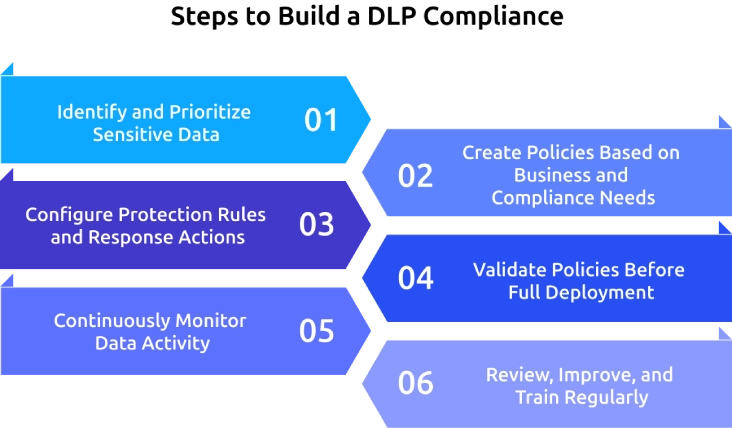
1. Identify and Prioritize Sensitive Data
Start by identifyingthe sensitive information your organization stores and processes, such as personal data, healthcare records, payment information, financial documents, and intellectual property. Prioritize the data that carries the highest business and compliance risk so you can protect it first.
2. Create Policies Based on Business and Compliance Needs
Develop DLP policies that reflect your organization’s security requirements and the regulations you must follow, such as GDPR, HIPAA, or PCI DSS. Clearly define which data requires protection, where it can be shared, and which activities should be restricted.
3. Configure Protection Rules and Response Actions
Set up rules that determine how your DLP solution reacts when sensitive data is at risk. Depending on the situation, it may alert users, block file transfers, encrypt data, restrict sharing, or notify security teams for further investigation.
4. Validate Policies Before Full Deployment
Test your DLP policies in a monitoring or audit mode before enforcing them across the organization. This helps identify unnecessary alerts, refine protection rules, and ensure legitimate business activities are not disrupted.
5. Continuously Monitor Data Activity
Track how sensitive information is accessed, used, and shared across endpoints, networks, cloud applications, and email. Regular monitoring helps detect unusual behavior early and allows your security team to respond before data exposure occurs.
6. Review, Improve, and Train Regularly
DLP compliance is an ongoing process. Review policy performance, analyze security incidents, and update rules as your business, technology, and regulatory requirements change. Regular employee training also helps reinforce secure data handling practices and reduces accidental policy violations.
Did You Know?
NIST FY 2025 Cybersecurity & Privacy Program Annual Report states that risk management, identity and access management, software security, and privacy protection remain key cybersecurity priorities, highlighting the need for preventive controls such as Data Loss Prevention (DLP) to safeguard sensitive information.
How Time Champ Strengthens DLP Compliance
Protecting sensitive data becomes much more difficult when you can’t see how employees access, share, or transfer information across devices and applications. Traditional DLP solutions often focus on monitoring data movement, but they may not provide enough visibility into the user activities that lead to data leaks. Time Champ is a smart employee monitoring software with built-in DLP features that helps you detect risky behavior, prevent unauthorized data transfers, and strengthen compliance with regulations like GDPR, HIPAA, and PCI DSS through greater visibility and proactive controls.
Here’s how Time Champ helps strengthen your DLP compliance strategy:
- Monitors File Activity with Complete Visibility: Tracks file creation, modification, deletion, renaming, copying, and movement to quickly identify unauthorized handling of sensitive information.
- Controls File Uploads and Downloads: Restricts uploads and downloads based on your security policies, helping prevent confidential files from being shared through unauthorized websites or applications.
- Blocks Unauthorized USB Data Transfers: Detects and blocks unapproved USB devices while recording every transfer, reducing the risk of data loss through removable storage.
- Restricts Access to Risky Websites: Blocks access to unauthorized or high-risk websites to reduce the chances of sensitive business information being exposed online.
- Provides Instant Alerts for Suspicious Activities: Sends real-time notifications whenever unusual or policy-violating actions occur, enabling your security team to respond before data leaves the organization.
- Identifies Potential Insider Threats Early: Monitors user behavior to detect unusual activity patterns that may indicate accidental or intentional attempts to expose sensitive data.
- Generates Detailed Compliance Reports: Provides access to comprehensive activity logs and security reports that simplify audits, demonstrate compliance efforts, and support regulatory requirements such as GDPR, HIPAA, and PCI DSS.
- Provides Centralized Visibility Across Your Workforce: Monitors data-related activities across remote, hybrid, and office teams from a single dashboard, making it easier to enforce consistent DLP policies throughout your organization.
Need better visibility into your organization’s data security risks?
Time Champ helps you strengthen DLP compliance with proactive monitoring and real-time alerts.
Conclusion
Protecting sensitive information requires more than meeting regulatory requirements, it demands consistent visibility, well-defined policies, and proactive security controls. Identifying sensitive data, enforcing clear DLP policies, and aligning your practices with GDPR, HIPAA, and PCI DSS can help to reduce data exposure, strengthen customer trust, and stay prepared for evolving compliance requirements. Building a strong DLP compliance strategy today helps prevent costly security incidents and supports long-term business resilience. Assess your current data protection practices, address existing gaps, and implement the right controls to keep sensitive information secure and your organization compliant.

Anjali

Table of Content
 What is DLP compliance?
- Why DLP Compliance Matters
- What Should a DLP Policy Include?
- How DLP Supports GDPR, HIPAA, and PCI DSS Compliance
- How to Build DLP Compliance Step by Step?
- How Time Champ Strengthens DLP Compliance
- Conclusion
Related Blogs

Strengthen remote work security with proven best practices, reduce security risks, protect your remote teams, and keep business data secure from threats.
Anjali | Jul 30, 2026
Tackle HR compliance challenges with practical guidance on compliance areas, training, and proven strategies that help reduce risks and support compliance.
Anjali | Aug 03, 2026
Boost remote team productivity with practical management tips, proven best practices, key metrics, and tools that help your remote teams perform better.
Anjali | Jul 16, 2026
Learn how GDPR and employee monitoring impact your business, including key principles, risks, employee rights, compliance steps, and best practices.
Thasleem Shaik | Apr 15, 2026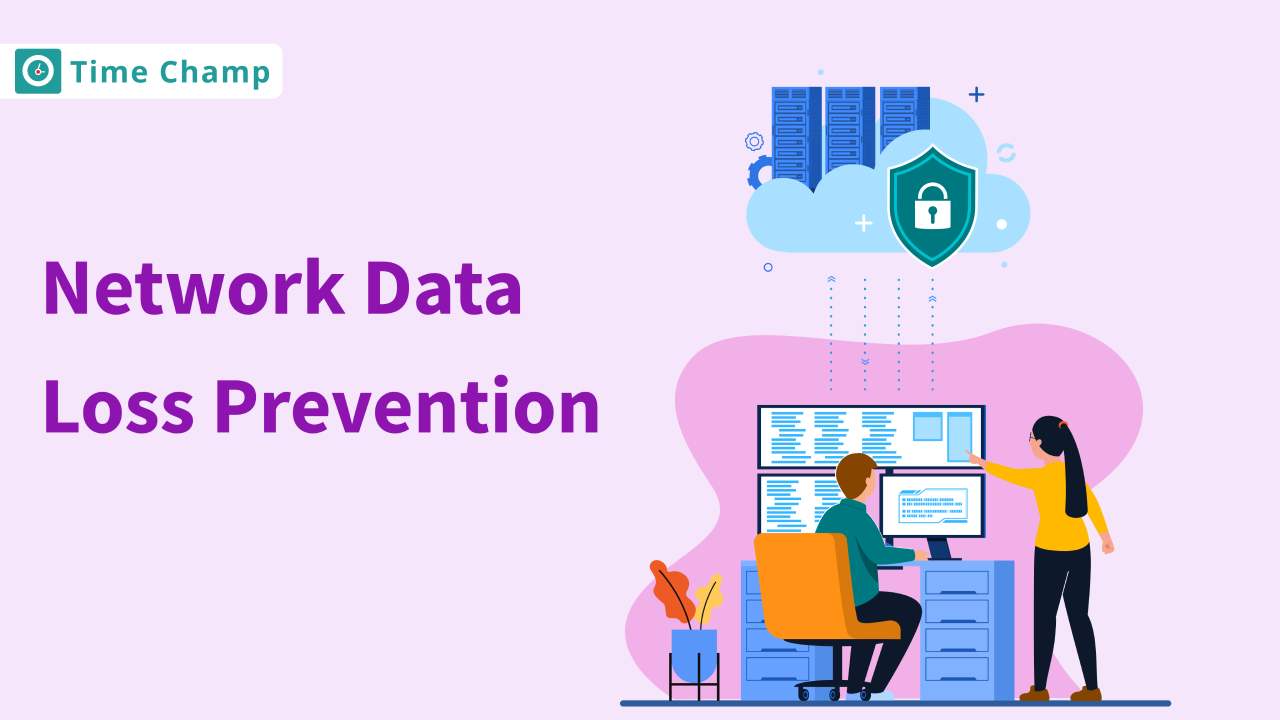
Discover how network data loss prevention protects sensitive data and shields your business from costly breaches and regulatory risks
Thasleem Shaik | Jan 18, 2025
Learn what Email Data Loss Prevention (DLP) is, how it works, key features, benefits, and best practices to protect email data from leaks.
Guna Lakshmi | Aug 19, 2026


 4.7/5 avg.
Ready to Manage Your Workforce Smarter?
Join our family of 1500+ companies using smart insights to redefine workforces!

Free Trial
No Credit Card Required