Employee Performance Monitoring: Types and Methods
Explore employee performance monitoring types, effective methods, common mistakes, and practical ways to improve overall team performance for modern workplaces.
You may struggle with monitoring the employee performance when the focus stays only on tracking activity without understanding what actually improves performance. You rely too heavily on dashboards and reports or depend only on manual reviews and feedback conversations. Without the right balance, monitoring can become confusing, inconsistent, or difficult for employees to trust. That is why you need a clear approach to employee performance monitoring that helps to measure performance accurately, improve accountability, and support team growth without creating unnecessary pressure.
This guide explains the 5 main types of employee performance monitoring and the most effective methods organizations use to track and improve employee performance. You’ll also learn common monitoring mistakes, practical implementation tips, and how businesses can build a monitoring system that works effectively for modern teams.
What is Employee Performance Monitoring?
Employee performance monitoring is the process of tracking and evaluating employee work, productivity, goal progress, and overall job performance using measurable data and regular feedback. Organizations use performance monitoring to understand how employees’ complete tasks, maintain work quality, and contribute to business objectives. This process helps you identify performance gaps, improve accountability, and support employee development through better visibility into daily work patterns.
Employee performance monitoring helps you improve accountability, identify performance gaps early, and make better workforce decisions using real performance data. When you use the right monitoring methods, you can balance workloads more effectively, support employee growth, and create a more transparent performance management process across your teams.

Did you Know?
According to ADP Research, employees who feel heavily watched are nearly three times less likely to report high productivity compared to employees who do not feel monitored.
What are The 5 Main Types of Employee Performance Monitoring?
You use different types of employee performance monitoring to measure productivity, work behavior, skill development, and overall business impact. Choosing the right combination helps you understand team performance more clearly and improve the overall performance management process.

1. Output-Based Monitoring
Output-based monitoring helps you measure what employees complete during their work. Track finished tasks, resolved tickets, closed deals, completed projects, or published content to understand performance levels more clearly. This works well because the results are measurable and easy to review during performance discussions. Many teams use output monitoring as a core part of their performance management process.
2. Behavior-Based Monitoring
Behavior-based monitoring helps you understand how employees work and interact with others across the workplace. You can observe communication habits, collaboration, responsiveness, teamwork, and willingness to accept feedback. This type of monitoring gives you deeper insight into work culture and employee engagement beyond productivity numbers alone. Regular one-on-one meetings, peer feedback, and performance reviews often support this monitoring approach.
3. Activity-Based Monitoring
Activity-based monitoring focuses on daily work activity and time usage across tasks, tools, and applications. You can track app usage, website activity, focus time, idle time, and task duration to understand how employees spend their working hours. This type of employee performance monitoring helps you identify workload imbalances, distractions, and productivity patterns more effectively. When you use activity monitoring responsibly, it improves visibility and supports better workload management across teams.
4. Outcome and Impact Monitoring
Outcome and impact monitoring helps you measure the long-term results employees create for the business. You can evaluate customer satisfaction, revenue growth, retention rates, project success, or overall business impact connected to employee work. This approach helps you focus on business outcomes, not only tracking daily activity or completed tasks.
5. Skill-Based Monitoring
Skill-based monitoring helps you track employee growth, learning progress, and professional development over time. You can evaluate technical skills, leadership abilities, problem-solving capabilities, and role-specific expertise to identify strengths and skill gaps. This type of employee performance monitoring supports career development conversations, mentoring programs, and long-term workforce planning. It also helps you understand whether employees continue improving and adapting to changing business needs.
What Are the 5 Most Effective Methods for Employee Performance Monitoring?
Using the right employee performance monitoring methods helps you track productivity, improve accountability, and understand how your team performs daily. A balanced monitoring approach gives you better visibility into employee progress, workload distribution, and performance trends without creating confusion or unnecessary pressure.
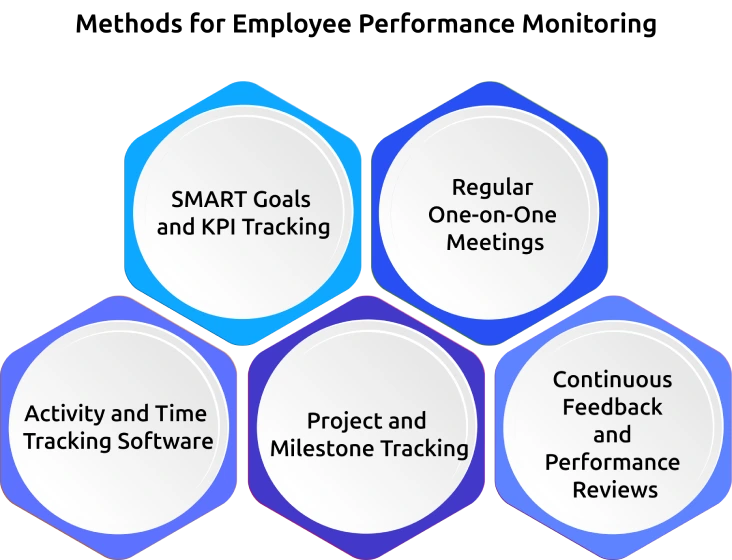
1. SMART Goals and KPI Tracking
Set clear SMART goals and measurable KPIs so you can evaluate employee performance consistently. Track completed tasks, sales numbers, customer support metrics, project deadlines, or other role-specific targets to measure progress more accurately. Make sure employees clearly understand expectations and performance standards. Use these measurable insights to identify productivity gaps, recognize improvements, and keep performance discussions focused on results.
2. Regular One-on-One Meetings
Schedule weekly or bi-weekly one-on-one meetings to discuss employee progress, workload concerns, and ongoing challenges. Use these conversations to provide guidance, clarify expectations, and resolve issues before they affect productivity. Encourage open communication so employees feel supported and comfortable sharing concerns. Consistent check-ins also help you improve accountability, engagement, and collaboration across teams.
3. Activity and Time Tracking Software
Use activity and time tracking software to understand how employees spend time on tasks, projects, websites, and applications. Monitor productivity patterns, workload distribution, distractions, and inefficient processes through accurate tracking data. Review attendance trends, focus time, and project-level work to gain better visibility without depending only on manual reporting. Always use tracking transparently so employees understand its purpose and feel supported throughout the process.
4. Project and Milestone Tracking
Break large projects into smaller milestones so you can monitor progress more effectively across teams and departments. Review completed stages, pending tasks, missed deadlines, and overall project movement regularly to understand employee contributions more clearly. Identify delays early and take corrective action before projects fall behind schedule. This approach also improves coordination, accountability, and deadline management within collaborative work environments.
5. Continuous Feedback and Performance Reviews
Give regular feedback to help employees improve performance through ongoing guidance and recognition. Discuss achievements, development areas, work expectations, and performance concerns throughout the year instead of limiting conversations to annual reviews. Conduct consistent performance reviews to keep employees aligned with business goals and team priorities. A continuous feedback approach also creates a more transparent, supportive, and growth-focused work environment.
Struggling to track employee performance without creating confusion or extra manual work?
Time Champ gives you real-time visibility into productivity, workloads, and team performance from one dashboard.
What are the Most Common Mistakes in Employee Performance Monitoring?
Many employee performance monitoring programs fail because teams focus too much on tools and not enough on the overall monitoring approach. Understanding the common mistakes helps you build a monitoring process that improves productivity and supports employees more effectively.
1. Choosing Monitoring Tools Before Defining Goals
Mistake: Many teams start using employee performance monitoring software before deciding what they want to measure. This often creates confusing reports, unnecessary tracking, and performance data that does not support business goals.
Solution: Define your performance objectives first and then choose monitoring methods that support those goals. Clear priorities such as productivity, accountability, collaboration, or project delivery make the monitoring process more focused and effective.
2. Focusing Too Much on Activity Tracking
Mistake: Some teams rely heavily on screenshots, app usage, or online activity while ignoring work quality, project outcomes, and employee contribution. This creates a monitoring process that measures busyness without showing actual performance.
Solution: Combine activity tracking with output, project progress, feedback, and performance reviews to create a more balanced monitoring approach. A broader view helps you understand both productivity and overall work impact more clearly.
3. Reviewing Data Without Enough Context
Mistake: Sudden changes in productivity or work behavior can look concerning when you review data without understanding workload changes, deadlines, or temporary project demands. This often leads to inaccurate assumptions during performance discussions.
Solution: Give your monitoring process time to collect consistent performance patterns before making decisions. Reviewing trends over longer periods helps you identify real issues more accurately and improves the quality of performance evaluations.
4. Turning One-on-One Meetings into Reporting Sessions
Mistake: Performance meetings lose value when every conversation focuses only on dashboards, reports, and productivity numbers. Employees feel pressured and disconnected when discussions become repetitive status updates.
Solution: Use one-on-one meetings to understand employee challenges, provide support, discuss growth opportunities, and remove blockers affecting performance. Productive conversations build trust and improve employee engagement across teams.
5. Monitoring Employees Without Transparency
Mistake: Unclear monitoring practices often create confusion, resistance, and lower employee trust across the workplace. Employees may feel uncomfortable when they do not understand what data you collect or how you use it.
Solution: Communicate your employee performance monitoring policies clearly and explain the purpose behind the monitoring process. Open communication creates transparency, improves accountability, and helps employees feel more comfortable with performance tracking.
How Does Time Champ Simplify Employee Performance Monitoring?
Many teams struggle to track employee performance because disconnected tools and limited visibility make it difficult to understand actual work patterns and productivity trends. Without clear insights, performance monitoring often becomes inconsistent and fails to support meaningful workforce decisions.
Time Champ is an employee monitoring software with a built-in workforce intelligence that helps to simplify employee performance monitoring by combining activity tracking and performance visibility in one platform. You can monitor app and website usage, project and task time, attendance patterns, productivity trends, and work activity through a centralized dashboard. The platform also helps you identify workload imbalance, focus issues, attendance changes, and team-level performance patterns that support better coaching and decision-making. With configurable monitoring settings, ethical tracking features, and compliance support for GDPR, ISO 27001, HIPAA, and SOC 2, Time Champ helps you build a more transparent and effective performance monitoring process across your organization.
Finding it difficult to balance employee monitoring with transparency and trust?
Time Champ helps you track performance accurately with workforce intelligence, and actionable productivity insights.
Conclusion
Employee performance monitoring works best when you focus on improving visibility, productivity, accountability, and employee growth together. The right mix of monitoring types and methods helps you understand how your team works, identify performance gaps early, and support employees with better feedback and guidance. A balanced monitoring approach also creates more transparency and helps employees feel supported instead of pressured. When you combine clear goals, regular communication, and reliable performance data, you can build a monitoring process that improves both team performance and long-term business success. Choosing practical methods and using them consistently makes employee performance monitoring more effective and easier to manage across modern workplaces.

Anjali

Table of Content
 What is Employee Performance Monitoring?
- What are The 5 Main Types of Employee Performance Monitoring?
- What Are the 5 Most Effective Methods for Employee Performance Monitoring?
- What are the Most Common Mistakes in Employee Performance Monitoring?
- How Does Time Champ Simplify Employee Performance Monitoring?
- Conclusion
Related Blogs
Explore how to implement employee monitoring software effectively with clear steps, legal tips, best practices, ROI metrics, and key pitfalls to avoid.
Anjali | Apr 15, 2026
Track the right employee monitoring metrics to understand work patterns, improve performance, and make data-driven decisions with confidence.
Thasleem Shaik | Apr 22, 2026
Learn how to boost productivity by finding the right balance in employee monitoring, focusing on key indicators, and maintaining transparency for a driven team.
Tarun Kumar | Mar 14, 2025
Boost team productivity and performance with effective tracking methods. Enhance productivity through data-driven insights and actionable strategies.
Shabana Shaik | Mar 17, 2025
Performance evaluation in remote workforces: 7 metrics that matter, common biases to avoid, and how to run reviews your team trusts.
Guna Lakshmi | Apr 14, 2026
Companies are watching remote workers more than ever. But is it ethical? We break down where monitoring is justified and where it crosses the line.
Guna Lakshmi | Apr 16, 2026


 4.7/5 avg.
Ready to Manage Your Workforce Smarter?
Join our family of 1500+ companies using smart insights to redefine workforces!

Free Trial
No Credit Card Required