What is an Organization? Definition, Process, & Types
Find out what is an organization, why it matters, its key characteristics, processes, types, and how the right structure improves business performance

Many successful businesses, nonprofits, and startups achieve their goals by following a clear structure, assigning responsibilities effectively, and coordinating everyone toward a common purpose. Whether it’s a small team launching a new product or a global company managing thousands of employees, every successful operation relies on a well-organized system to keep work running smoothly. Understanding what is an organization is essential for anyone involved in planning, managing, or contributing to a business.
This blog explains the definition of an organization, why it is important, its key characteristics, and main processes. It also explains different types, organizational structures, and how effective organizations operate and achieve their goals.
What is an Organization?
An organization is a group of people who work together in a structured way to achieve shared goals. It defines roles, responsibilities, and workflows that help teams coordinate tasks, use resources efficiently, make informed decisions, and accomplish objectives while adapting to changing business needs.
Why Organization is Important
An organization provides a structure that helps individuals work together toward common goals. Clearly defining responsibilities, workflows, and communication helps to improve coordination, reduce confusion, and enable teams to use their time and resources more effectively. Whether it’s a small business or a large enterprise, a well-organized workplace creates the foundation for consistent performance and long-term success.
- Provides Clear Direction: Establishes shared goals and aligns every team and individual toward achieving the organization’s objectives.
- Defines Roles and Responsibilities: Clarifies who is responsible for each task, reducing confusion and improving accountability across teams.
- Improves Team Coordination: Encourages smooth collaboration between departments, helping projects move forward without unnecessary delays.
- Supports Better Decision-Making: Creates a structured flow of information, enabling managers to make timely and informed business decisions.
- Enhances Operational Efficiency: Organizes people, processes, and resources effectively to minimize wasted effort and improve productivity.
- Optimizes Resource Utilization: Ensures employees, budgets, tools, and time are allocated where they create the greatest value.
- Adapts to Business Growth and Change: Provides a flexible framework that helps businesses respond to market changes, expansion, and evolving customer needs.
- Drives Long-Term Success: Builds a stable foundation for innovation, consistent performance, customer satisfaction, and sustainable business growth.

Did You Know?
According to Gallup’s State of the Global Workplace, only 32% of U.S. employees are engaged at work, while 68% are either not engaged or actively disengaged. This shows why organizations need clear goals, defined roles, and effective processes to keep employees engaged and improve overall performance.
Benefits of an Effective Organization
A well-organized workplace helps teams perform at their best by creating clarity, improving coordination, and making everyday operations more efficient. When people, processes, and resources are aligned, organizations can achieve better results while supporting long-term growth.
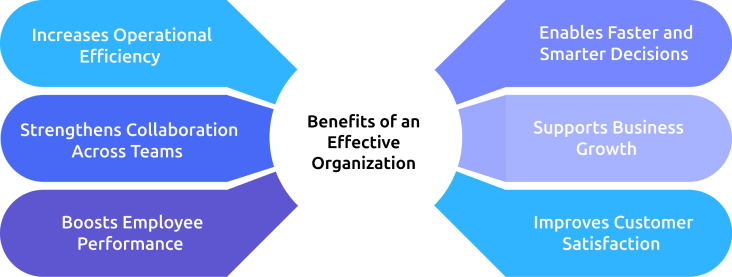
Increases Operational Efficiency
Well-defined workflows reduce delays, eliminate unnecessary steps, and help teams complete work more efficiently without compromising quality.
Strengthens Collaboration Across Teams
Clear communication channels and coordinated responsibilities encourage departments to work together, improving teamwork and project execution.
Boosts Employee Performance
Employees perform with greater confidence when they have clear expectations, the right resources, and a structured work environment that supports productivity.
Enables Faster and Smarter Decisions
A structured organization provides managers with clear reporting lines and reliable information, helping them make timely and well-informed decisions.
Supports Business Growth
As the organization expands, established processes and defined responsibilities make it easier to scale operations, onboard employees, and manage increasing workloads.
Improves Customer Satisfaction
Efficient internal operations lead to consistent service, quicker response times, and higher-quality outcomes, creating a better experience for customers.
Struggling with scattered workflows and unclear responsibilities?
Use Time Champ to organize work, improve team visibility, and boost productivity.
What are the Key Characteristics of an Organization?
Every successful organization shares a set of characteristics that enable individuals to work together efficiently and achieve common objectives. These characteristics create a clear framework for managing people, processes, and resources while supporting growth and long-term success.
1. Shared Goals and Purpose
An organization is built around a common purpose that guides every activity and decision. Whether the objective is serving customers, generating profit, or delivering public services, shared goals keep teams aligned and focused on achieving meaningful outcomes.
2. Clearly Defined Roles and Responsibilities
Each employee has specific duties and areas of responsibility that contribute to the organization’s overall objectives. Clearly assigning roles reduces confusion, strengthens accountability, and ensures work is completed efficiently.
3. Structured Communication and Coordination
Effective organizations establish communication channels that enable information to flow smoothly across teams and departments. Strong coordination helps employees collaborate, solve problems quickly, and keep projects moving forward.
4. Efficient Resource Management
Organizations use their people, technology, finances, and time strategically to maximize productivity. Proper resource allocation helps reduce waste, improve operational efficiency, and support better business performance.
5. Established Policies and Work Processes
Well-defined policies, procedures, and workflows create consistency in daily operations. They help employees perform tasks accurately, maintain quality standards, and ensure compliance with organizational requirements.
6. Flexibility and Continuous Improvement
Successful organizations regularly evaluate their processes and adapt to changing business needs, customer expectations, and market conditions. A commitment to continuous improvement helps them remain competitive, innovative, and prepared for future growth.
What are the Main Processes of an Organization?
An effective organization relies on a structured process that transforms business goals into coordinated actions. Organizing work systematically, businesses can improve collaboration, allocate resources efficiently, and ensure every team contributes toward achieving shared objectives. The following steps form the foundation of an effective organizational process.
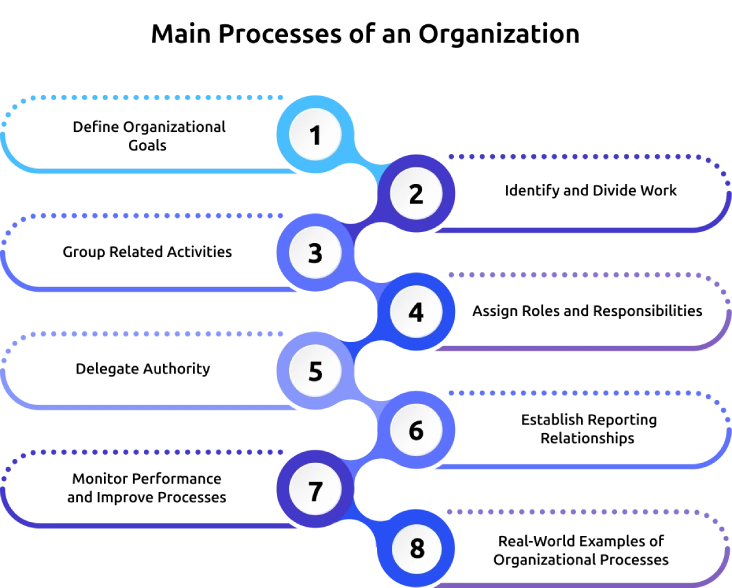
1. Define Organizational Goals
The process begins by establishing clear organizational goals that guide every business activity. Well-defined objectives help leaders set priorities, allocate resources effectively, and align all departments toward achieving the same outcomes.
2. Identify and Divide Work
The work required to achieve organizational goals is divided into smaller, manageable tasks. Responsibilities are assigned based on employees' skills and expertise, improving efficiency, reducing duplication of effort, and ensuring work is completed effectively.
3. Group Related Activities
Similar tasks are grouped into departments or teams, such as marketing, finance, operations, or human resources. Organizing related activities strengthens coordination, improves communication, and enables teams to work more efficiently toward shared objectives.
4. Assign Roles and Responsibilities
Each employee is assigned clearly defined roles and responsibilities based on their knowledge, skills, and experience. Clear expectations improve accountability, minimize confusion, and help employees understand how their work contributes to organizational goals.
5. Delegate Authority
Decision-making authority is delegated according to employees' roles and responsibilities. Appropriate delegation speeds up decision-making, builds trust, and encourages greater ownership while ensuring work is carried out efficiently.
6. Establish Reporting Relationships
A clear reporting structure defines how employees communicate, share information, and escalate decisions. Well-defined reporting relationships improve coordination and ensure smooth communication across every level of the organization.
7. Monitor Performance and Improve Processes
Organizational performance, workflows, and processes are reviewed regularly to identify opportunities for improvement. Continuous evaluation helps eliminate inefficiencies, adapt to changing business needs, and support long-term organizational growth.
8. Real-World Examples of Organizational Processes
Many successful organizations follow structured processes to improve coordination, productivity, and overall business performance.
- Amazon: Specialized teams, standardized workflows, and clearly defined responsibilities help manage millions of customer orders efficiently. This structured approach supports faster deliveries and consistent operational performance.
- Google: Cross-functional teams work together across engineering, design, product management, and marketing to achieve shared goals. This collaborative structure encourages innovation, speeds up decision-making, and helps develop better products.
Types of Organizations
Organizations can be classified in different ways based on how they are structured and the purpose they serve. Choosing the right type helps improve coordination, decision-making, and overall business performance while supporting long-term goals.
Based on Organizational Structure
Functional Organization
Employees are grouped based on their specialized skills or departments, such as marketing, finance, human resources, and operations. This approach encourages expertise, improves efficiency, and helps each department focus on its core responsibilities while contributing to the organization's overall objectives.
Divisional Organization
Business operations are divided into separate units based on products, services, customer groups, or geographic regions. Each division functions independently, allowing quicker decision-making, greater accountability, and a stronger focus on meeting specific market needs.
Matrix Organization
Employees work across both functional departments and project teams, often reporting to more than one manager. This approach promotes cross-functional collaboration, makes better use of specialized skills, and helps organizations manage multiple projects simultaneously.
Flat Organization
With fewer levels of management, employees have greater access to leadership and more authority to make decisions. This creates a collaborative work environment, speeds up communication, and allows organizations to respond more quickly to changing business needs.
Hierarchical Organization
A clear chain of command defines reporting relationships from senior leaders to frontline employees. This approach establishes accountability, streamlines decision-making, and ensures responsibilities are distributed across every level of the organization.
Based on Business Purpose
For-Profit Organization
Established to generate revenue by offering products or services, these organizations focus on achieving sustainable growth while creating value for owners, investors, or shareholders. Business decisions are primarily driven by profitability and long-term success.
Nonprofit Organization
Created to support social, educational, charitable, or community causes, these organizations prioritize their mission over earning profits. Any surplus income is reinvested to expand programs, improve services, and increase their positive impact.
Government Organization
Responsible for delivering essential public services and implementing policies, these organizations operate at local, state, or national levels. Their primary focus is to serve the public by managing areas such as healthcare, education, transportation, public safety, and administration.
Cooperative Organization
Owned and managed collectively by its members, this model enables individuals or businesses to work toward shared economic or social objectives. Members participate in decision-making and share the benefits generated through the organization's activities.
How Time Champ Helps Organizations Improve Productivity
Building an effective organization requires more than clearly defined roles and processes. Teams also need visibility into how work is performed, where time is spent, and how resources are utilized. Time Champ is comprehensive employee monitoring software that helps organizations improve productivity by providing actionable insights, streamlining daily operations, and enabling managers to make informed decisions that support business growth.
- Automatic Time Tracking: Captures employees’ work hours automatically, eliminating manual time entries and ensuring accurate records for productivity, attendance, and payroll.
- Project and Task Management: Tracks time spent on projects and individual tasks, helping organizations monitor progress, improve resource allocation, and keep work on schedule.
- Productivity Analytics: Provides detailed insights into productive time, idle time, and work patterns, allowing managers to identify improvement opportunities and optimize team performance.
- Workforce Performance Reports: Generates comprehensive reports on employee activities, project progress, and productivity trends, making it easier to evaluate performance and support data-backed decision-making.
- Attendance and Leave Management: Automates attendance tracking, shift management, and leave records, reducing administrative effort while ensuring accurate workforce management.
- Workload Visibility and Team Monitoring: Gives managers a clear view of workload distribution and team activities, helping balance responsibilities, prevent employee burnout, and improve overall operational efficiency.
Want to improve productivity with a better organizational process?
Track work, optimize team performance, and improve efficiency with Time Champ.
Conclusion
Every successful business, institution, or community is built on a strong organizational foundation. Knowing what is an organization helps to recognize how clear goals, defined responsibilities, effective processes, and the right structure contribute to better collaboration and consistent results. Choosing an organizational model that aligns with business objectives enables teams to work more efficiently, adapt to change, and support sustainable growth. As businesses continue to evolve, maintaining a well-structured organization remains essential for improving productivity, making informed decisions, and creating an environment where both employees and the organization can flourish.

Anjali

Table of Content
 What is an Organization?
- Why Organization is Important
- Benefits of an Effective Organization
- What are the Key Characteristics of an Organization?
- What are the Main Processes of an Organization?
- Types of Organizations
- How Time Champ Helps Organizations Improve Productivity
- Conclusion
Related Blogs

Learn how to introduce productivity monitoring with clear policies, employee communication, rollout planning, and trust-focused implementation steps.
Anjali | May 12, 2026
Understand the role of productivity tracking in remote work and how it improves team clarity, workload balance, and performance with real insights.
Thasleem Shaik | May 01, 2026
Discover how employee productivity tracking builds accountability, drives ownership, and turns daily activity into measurable team performance.
Guna Lakshmi | May 01, 2026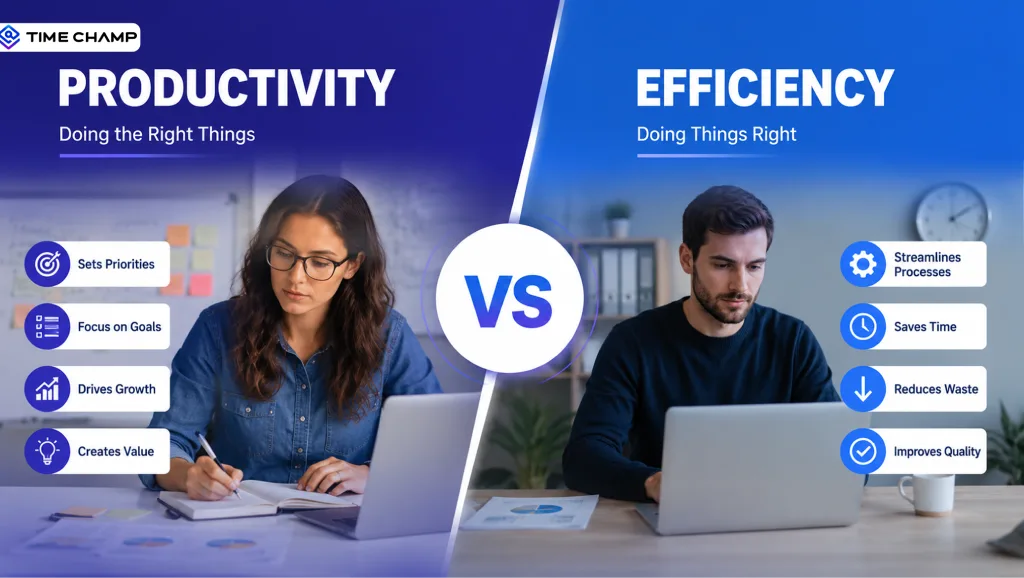
Compare productivity vs efficiency with real examples, practical benefits, key differences, and actionable tips to improve business results and performance.
Thasleem Shaik | Jun 29, 2026
Explore the productivity effects of hybrid work and discover how it can improve focus, employee engagement, retention, and overall team performance.
Guna Lakshmi | Jul 01, 2026
Want to know if your team is truly productive and balanced? Explore the 9 organizational health metrics that matter and learn how to track them.
Guna Lakshmi | Apr 20, 2026


 4.7/5 avg.
Ready to Manage Your Workforce Smarter?
Join our family of 1500+ companies using smart insights to redefine workforces!

Free Trial
No Credit Card Required