Talent Analytics: Definition, Metrics & How It Works
Learn what talent analytics is, how it differs from workforce analytics, the key metrics that matter, and tools for effective, evidence-based talent decisions.
Hiring has never been easy, but today the stakes are much higher. A great resume doesn't always lead to a great hire, interviews can be subjective, and one wrong hiring decision can cost both time and money. With so much depending on the people an organization brings in and develops, making decisions based on instinct alone is no longer enough.
That's why talent analytics is becoming part of everyday conversations in HR and business leadership. In this blog, you'll learn what talent analytics is, how it works, the key metrics that matter, and how organizations use it to make better talent decisions.
What is Talent Analytics?
Talent analytics is the process of collecting and analyzing employee data to improve how an organization attracts, develops, manages, and retains talent. It uses information from different stages of the employee lifecycle, such as recruitment, performance, engagement, internal mobility, and turnover, to identify patterns and support better talent decisions.
Often referred to as talent management analytics, it is a specialized area within the broader field of people analytics, with a strong focus on optimizing talent-related strategies across the organization.
Talent Analytics vs Workforce Analytics vs People Analytics
These three terms are closely related, but they focus on different aspects of managing an organization's workforce.
Here's how they differ:
| Aspect | People Analytics | Talent Analytics | Workforce Analytics |
|---|---|---|---|
| Focus | Overall workforce insights and employee experience | Individuals and the talent lifecycle | Workforce capacity, operations, and planning |
| Core Questions | How can employee data improve business and HR outcomes? | Who should we hire, develop, promote, and retain? | How can we optimize workforce capacity, productivity, and costs? |
| Typical Metrics | Engagement, absenteeism, turnover, diversity, performance | Quality of hire, promotion rate, retention, flight risk | Headcount cost, utilization, productivity, output per FTE |
| Primary Data Sources | HRIS, engagement surveys, payroll, performance, ATS | ATS, HRIS, performance reviews, learning and engagement data | Time tracking, scheduling, operational systems, and financial data |
| Primary Owners | HR leaders, People Analytics teams, and business leaders | Talent Acquisition, Talent Management, and HR Business Partners | Workforce Planning, Operations, and Finance |
| Primary Goal | Improve workforce and business decisions using employee data | Attract, develop, and retain the right talent | Ensure the workforce is productive, efficient, and aligned with business demand |
What Metrics Are Used in Talent Analytics?
Talent analytics relies on a combination of metrics to measure how effectively an organization attracts, develops, and retains its workforce. Rather than focusing on a single KPI, organizations analyze multiple metrics across the employee lifecycle to identify trends, improve decision-making, and strengthen talent strategies.
| Lifecycle Stage | Key Metrics | What It Measures |
|---|---|---|
| Attract & Hire | Quality of hire, time to hire, cost per hire, offer acceptance rate | Evaluates the efficiency and effectiveness of the hiring process. |
| Onboarding | Time to productivity, 90-day retention rate | Measures how quickly new hires become productive and whether they stay beyond the initial months. |
| Performance | Goal achievement, productivity, manager effectiveness, performance ratings | Assesses employee performance and identifies opportunities for improvement. |
| Development | Internal mobility, promotion rate, learning completion, skills gap analysis | Tracks employee growth, career progression, and skill development. |
| Retention | Employee retention rate, turnover rate, regretted attrition, flight risk, eNPS | Indicates how well the organization retains top talent and employee satisfaction. |
Looking at these metrics together provides a clearer picture of the employee experience and highlights areas that need attention.
See What Drives Employee Performance!
Understand work patterns, productivity, and engagement with actionable insights
The Four Levels of Talent Analytics
Talent analytics evolves through four levels, with each one providing deeper insights than the last.
- Descriptive Analytics - What Happened?
Provides a view of historical data, such as employee turnover, headcount, hiring numbers, or completed training programs.
- Diagnostic Analytics - Why Did It Happen?
Examines the reasons behind trends or outcomes, such as high attrition in a specific department or a decline in offer acceptance rates.
- Predictive Analytics - What Is Likely to Happen?
Uses historical patterns and data to forecast future outcomes, such as identifying employees at risk of leaving or predicting hiring success.
- Prescriptive Analytics - What Should We Do Next?
Recommends the best course of action, such as investing in employee development, improving retention strategies, or adjusting hiring plans based on data-driven insights.
How to Get Started with Talent Analytics
Implementing talent analytics doesn't require a complete overhaul of your HR processes. The key is to start with a clear objective and build from there.
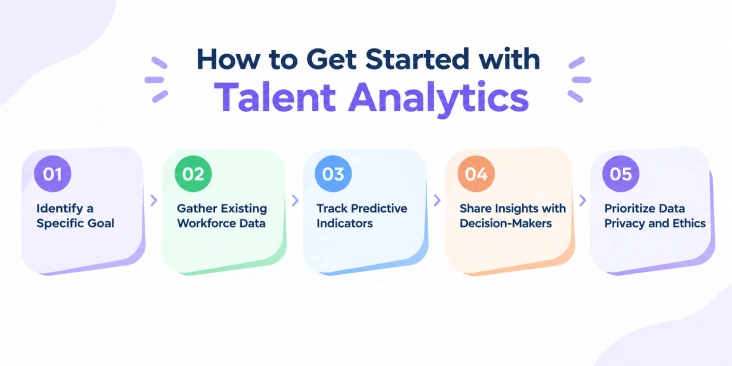
- Identify a Specific Goal: Focus on one challenge, such as improving employee retention, reducing time to hire, or increasing the quality of hires. A clear objective makes it easier to measure success.
- Gather Existing Workforce Data: Review the data already available in your HR systems, such as your HRIS, applicant tracking system (ATS), performance reviews, learning platforms, and employee engagement surveys.
- Track Predictive Indicators: Go beyond historical reporting by monitoring metrics such as flight risk, turnover trends, or skill gaps that can help anticipate future workforce challenges.
- Share Insights with Decision-Makers: Ensure managers and HR leaders have access to relevant insights so they can take timely action rather than simply reviewing reports.
- Prioritize Data Privacy and Ethics: Establish clear policies for data access, transparency, and responsible use to build employee trust and ensure compliance with privacy regulations.
Starting with a single business problem and gradually expanding your analytics capabilities makes it easier to achieve measurable results while building a strong foundation for long-term success.
The Role of Time Champ in Talent Analytics
Time Champ is not a talent analytics platform, nor does it replace an applicant tracking system (ATS) or performance management software. It rather complements talent analytics by providing objective workforce data that helps organizations better understand employee productivity, engagement, and retention.
Time Champ is a workforce analytics software that provides visibility into employees' daily work patterns. This helps HR teams and managers better understand productivity, engagement, and overall employee well-being.
Key ways Time Champ supports talent analytics include:
- Attrition Risk Insights: Helps identify employees who may be at risk of leaving by analyzing behavioral patterns over time.
- Productivity and Activity Trends: Provides objective data on work habits and productivity to support performance discussions.
- Burnout Indicators: Highlights signs of overutilization or underutilization, helping managers address potential burnout early.
- Engagement Patterns: Tracks changes in work behavior that may indicate declining engagement or motivation.
Instead of replacing talent analytics, Time Champ complements it by adding reliable behavioral insights. Combined with HR data and performance metrics, these insights help organizations make more informed decisions about employee development, retention, and workforce planning.
Strengthen Talent Analytics with Time Champ!
Get real-time insights into productivity, engagement, burnout, and attrition risks
Conclusion
Talent analytics gives organizations a clearer understanding of their workforce by turning employee data into meaningful insights. It helps improve hiring, employee development, performance, and retention with informed decision-making. As workplace expectations continue to evolve, using the right metrics and tools can help build stronger teams and support long-term business growth.

Jahnavi Pulluri

Table of Content
 What is Talent Analytics?
- Talent Analytics vs Workforce Analytics vs People Analytics
- What Metrics Are Used in Talent Analytics?
- The Four Levels of Talent Analytics
- How to Get Started with Talent Analytics
- The Role of Time Champ in Talent Analytics
- Conclusion
Related Blogs
What are HR goals? Learn the main types of HR goals and objectives, examples, and simple steps to set and track them.
Guna Lakshmi | Jul 27, 2026
Tackle HR compliance challenges with practical guidance on compliance areas, training, and proven strategies that help reduce risks and support compliance.
Anjali | Aug 03, 2026
Discover 10 ways HR teams can use workforce intelligence to improve hiring, retention, performance management, and drive smarter data-driven HR decisions.
Anjali | Feb 11, 2026
Discover the key differences between training and development in enhancing skills and fostering long-term growth within an organization.
Sai Keerthi Uppala | Apr 29, 2024
Roll out employee monitoring the right way with our training guide. Learn what to teach managers and employees before and after launch for smooth adoption.
Anjali | Apr 16, 2026
User behavior analytics detects insider threats and improves security. Explore UBA benefits, real-world use cases, and tools to protect your business.
Jahnavi Pulluri | Apr 15, 2026


 4.7/5 avg.
Ready to Manage Your Workforce Smarter?
Join our family of 1500+ companies using smart insights to redefine workforces!

Free Trial
No Credit Card Required