HR Goals and Objectives: Types, Examples & How to Set Them
What are HR goals? Learn the main types of HR goals and objectives, examples, and a step-by-step way to set and track them.
Hiring great and talented employees is hard. Keeping them engaged? Even harder. That's why clear HR goals matter. Whether you're an HR manager or operations leader, the right goals help you attract top talent, improve performance, increase retention, and align your workforce with business priorities.
To help you set effective HR goals, this guide covers what HR goals are, how they differ from HR objectives, the different types of HR goals, practical SMART examples, and proven ways to set and measure them.
What Are HR Goals?
HR goals are clear, measurable targets that help you attract, develop, engage, and retain employees while supporting your organization's overall business objectives. They provide direction for your HR initiatives, making it easier to prioritize tasks, measure progress, and create a productive, compliant, and high-performing workplace.
HR Goals vs. HR Objectives: What's the Difference?
Although the terms HR goals and HR objectives are often confused, they serve different purposes. An HR goal defines what you want to achieve, while an HR objective outlines the specific, measurable actions needed to achieve it. Goals provide direction, whereas objectives create a clear roadmap for success.
| HR Goals | HR Objectives |
|---|---|
| Broad, long-term outcomes you want to achieve. | Specific, measurable actions that help achieve a goal. |
| Provide strategic direction. | Focus on execution and measurable results. |
| Usually align with business priorities. | Include timelines, targets, and success metrics. |
| Example: Improve employee engagement. | Example: Increase employee engagement survey scores by 15% within six months. |
The best results come when your HR goals and objectives work together. A clear goal gives your team direction, while well-defined objectives help you measure progress, stay accountable, and ensure your HR initiatives contribute to overall business success.

Did You Know?
According to Gartner, organizations with direct HR involvement in workforce decisions can improve employee productivity byup to 11%, highlighting the value of setting clear, strategic HR goals.
Why Do HR Goals Matter?
Without clear HR goals, even the best strategies can lose direction. Setting the right goals helps you prioritize initiatives, measure success, and build a stronger, more productive workforce.
- Provides Clear Direction: HR goals help you prioritize initiatives and focus on activities that support your workforce and business objectives.
- Improves Decision-Making: With measurable goals in place, you can make informed decisions based on workforce data instead of assumptions.
- Helps Measure HR Success: Clear goals make it easier to track progress using KPIs like employee retention, hiring success, engagement, and productivity.
- Enhances Employee Performance: Setting HR goals encourages regular feedback, performance reviews, and development plans that help employees succeed.
- Increases Employee Retention: Goals focused on engagement, recognition, and career growth help reduce turnover and retain top talent.
- Optimizes Recruitment Efforts: Hiring goals help you attract qualified candidates, reduce time-to-fill, and improve the quality of new hires.
- Supports Better Workforce Planning: HR goals help you identify skill gaps, plan future hiring, and prepare your workforce plan for changing business needs.
- Drives Business Growth: When your HR goals align with business priorities, your workforce becomes more productive, engaged, and prepared to achieve organizational success.
Want to know if your HR goals are actually working?
Track every milestone with Time Champ and gain the insights you need to improve hiring, performance and retention.
What Are the Main Types of HR Goals?
Not all HR goals serve the same purpose. Some focus on attracting the right talent, while others improve employee performance, engagement, or compliance. Understanding the different types of HR goals helps you prioritize initiatives that support both your workforce and your business objectives.
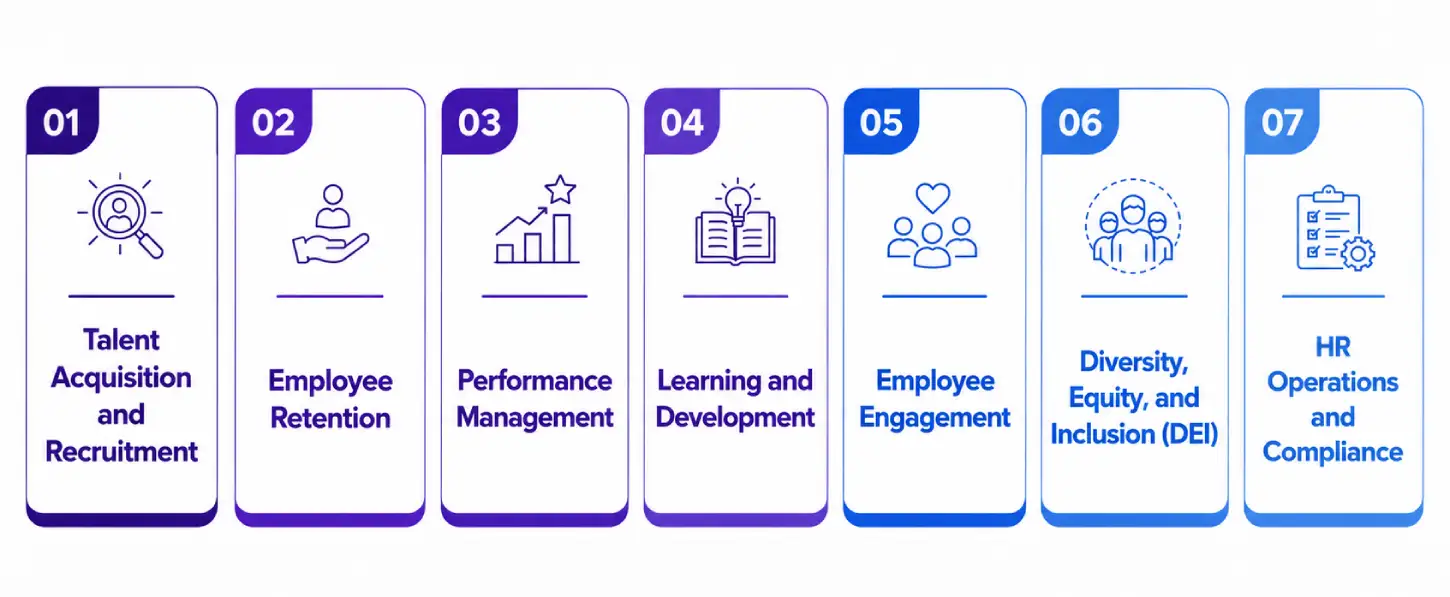
Recruitment goals focus on attracting, hiring, and onboarding the right candidates. Setting clear hiring goals helps you reduce recruitment delays, improve candidate quality, strengthen your brand, and deliver a better hiring experience.
Employee Retention Goals
Employee retention goals help you reduce turnover and keep high-performing employees engaged. These goals often focus on career development, recognition programs, competitive benefits, and creating a positive workplace culture that encourages employees to stay longer.
Performance Management Goals
Performance management goals are designed to help employees perform at their best while contributing to business success. They include setting clear expectations, conducting regular performance reviews, providing constructive feedback, and recognizing achievements.
Did You Know?
According to Gallup, 28% of employees say their most meaningful workplace recognition comes from their manager, making manager recognition a key driver of employee engagement.
Learning and Development Goals
Learning and development goals help your employees build new skills, improve existing ones, and prepare for future responsibilities. Investing in continuous learning, leadership development, and professional certifications strengthens your workforce and supports long-term business growth.
Employee Engagement Goals
Employee engagement goals focus on creating a workplace where employees feel motivated, valued, and connected to the organization. These goals may include improving communication, increasing recognition, gathering employee feedback, and supporting work-life balance.
Diversity, Equity, and Inclusion (DEI) Goals
DEI goals help you build a workplace where employees from different backgrounds feel respected, included, and treated fairly. Common goals include improving workforce diversity, reducing bias in hiring and promotions, and creating equal opportunities for growth and development.
HR Operations and Compliance Goals
HR operations and compliance goals focus on improving the efficiency of HR processes while meeting legal and organizational requirements. These goals may include streamlining onboarding, automating HR workflows, maintaining accurate employee records, and staying compliant with labor laws and workplace policies.
| HR Goal Type | Primary Focus | Example Metric |
|---|---|---|
| Talent Acquisition and Recruitment | Hiring qualified candidates efficiently | Reduce time-to-fill by 20% |
| Employee Retention | Keeping top talent and reducing turnover | Lower voluntary turnover to 10% |
| Performance Management | Improving employee productivity and performance | Increase performance review completion to 100% |
| Learning and Development | Upskilling employees and building future leaders | Achieve a 90% training completion rate |
| Employee Engagement | Increasing employee satisfaction and motivation | Improve engagement survey scores by 15% |
| Diversity, Equity, and Inclusion (DEI) | Building an inclusive and diverse workplace | Increase diverse hiring by 25% |
| HR Operations and Compliance | Streamlining HR processes and maintaining compliance | Achieve 100% policy compliance |
SMART HR Goal Examples
SMART HR goals help you turn broad workforce objectives into measurable outcomes. When your HR goals are Specific, Measurable, Achievable, Relevant, and Time-bound, they become easier to manage, measure, and achieve.
Recruitment and Retention Goal Examples
The following SMART goals help you hire qualified talent faster and improve employee retention.
1. Reduce Time-to-Fill
Reduce the average time-to-fill open positions from 45 days to 30 days within the next six months by streamlining the hiring process and using structured interview workflows.
2. Improve Employee Retention
Decrease voluntary employee turnover from 15% to 10% over the next 12 months by introducing career development plans, recognition programs, and regular one-on-one check-ins.
3. Increase Offer Acceptance Rate
Increase the job offer acceptance rate from 80% to 90% within nine months by improving candidate communication, branding, and compensation benchmarking.
4. Improve Onboarding Success
Achieve a 95% onboarding completion rate within 30 days for all new hires by implementing a structured onboarding program and assigning mentors.
Performance, Engagement, and Culture Goal Examples
These examples focus on improving employee performance, strengthening workplace culture, and increasing engagement.
5. Improve Employee Performance
Increase the percentage of employees meeting or exceeding performance expectations from 75% to 90% within one year through quarterly performance reviews and personalized development plans.
6. Boost Employee Engagement
Increase employee engagement survey scores by 15% within 12 months by launching recognition initiatives, improving your communication with teams, and collecting regular employee feedback.
7. Strengthen Workplace Culture
Increase employee participation in company wellness, recognition, and team-building programs by 25% over the next six months to foster a more collaborative workplace culture.
8. Improve Internal Communication
Achieve an 85% employee satisfaction score for internal communication within nine months by introducing monthly town halls, pulse surveys, and transparent leadership updates.
Learning, DEI, and HR Operations Goal Examples
Use these SMART goals to develop employee skills, build a more inclusive workplace, and improve HR processes and compliance.
9. Increase Training Completion
Achieve a 95% training completion rate for all mandatory learning programs within six months by offering flexible online learning and automated reminders.
10. Improve Workforce Diversity
Increase the representation of underrepresented groups in new hires by 20% over the next 12 months by expanding diverse recruitment channels and implementing structured interview processes.
11. Strengthen Compliance
Achieve 100% completion of mandatory compliance training and policy acknowledgments within 90 days to reduce compliance risks across the organization.
12. Improve HR Process Efficiency
Reduce employee onboarding paperwork processing time by 40% within six months by automating HR workflows and digitizing employee documentation.
How to Set SMART HR Goals Effectively
Setting HR goals is only effective when they're clear, realistic, and measurable. The SMART framework helps you create goals that are focused, actionable, and aligned with your business priorities.
Apply the SMART Framework
Use the SMART framework to create HR goals that are easy to implement and track.
- Specific: Clearly define what you want to achieve. Example: Reduce employee turnover in the sales department.
- Measurable: Add metrics so you can evaluate progress. Example: Lower voluntary turnover from 15% to 10%.
- Achievable: Set realistic goals based on your resources, budget, and workforce capacity.
- Relevant: Make sure the goal supports your organization's overall business and HR priorities.
- Time-bound: Assign a deadline to keep your team accountable. Example: Achieve the target within the next 12 months.
Align HR Goals with Business Strategy
Your HR goals should support your organization's broader business objectives. For example, if your company plans to expand into new markets, your HR goals might focus on hiring skilled talent, improving onboarding, and developing future leaders. If reducing costs is a priority, your goals could focus on improving employee retention and increasing workforce productivity.
Before finalizing your HR goals, check on these
- Align each goal with a business objective.
- Define clear KPIs to measure progress.
- Set realistic goals based on available resources.
- Assign an owner and a deadline for accountability.
- Prioritize goals that deliver measurable business value.
When your HR goals align with your business strategy, your HR initiatives become more focused, measurable, and impactful.
Looking for a smarter way to manage your HR goals?
With Time Champ, you can track workforce performance and stay on top of every goal from a single dashboard.
How to Track and Measure HR Goals
Setting clear HR goals helps you understand whether your efforts are delivering results. Regularly monitoring the right HR metrics allows you to identify what's working, address challenges early, and make data-driven decisions to improve your people strategy.
Here are some of the most common KPIs you can use to measure HR goals:
- Time-to-Fill: Measures how quickly you fill open positions, helping you evaluate the efficiency of your recruitment process.
- Employee Turnover Rate: Tracks how many employees leave your organization over a specific period, helping you identify retention challenges via the attrition rate.
- Employee Retention Rate: Measures your ability to retain employees and maintain a stable workforce.
- Employee Engagement Score: Evaluates employee satisfaction, motivation, and commitment to the organization.
- Training Completion Rate: Tracks participation and completion of learning programs to measure employee development.
- Performance Review Completion Rate: Measures how consistently you conduct performance evaluations across the organization.
- Absenteeism Rate: Monitors employee attendance patterns to identify potential productivity or workplace issues.
- Internal Promotion Rate: Shows how effectively you're developing employees and filling roles with internal talent.
How Time Champ Helps You Set and Track HR Goals
You spend months working toward your HR goals, but struggle to measure whether they're actually making a difference? Without real-time workforce insights, it's easy to miss trends affecting productivity, retention, and performance. Time Champ helps you prevent that.
Time Champ is an employee monitoring software with HR management features that helps you set realistic HR goals, monitor key HR metrics, and track progress with real-time reports and analytics.
With Time Champ, you can
- Track employee productivity with real-time insights to identify performance trends and improvement opportunities.
- Monitor attendance and leave to reduce absenteeism and improve workforce planning.
- Measure employee performance using detailed work reports and productivity analytics.
- Track project and task progress to understand workloads and improve team efficiency.
- Analyze workforce trends with dashboards that help you make data-driven HR decisions.
- Monitor HR KPIs such as productivity, attendance, work hours, and utilization from a single dashboard.
- Get automated reports to evaluate progress and share HR performance reports with stakeholders.
Conclusion
Setting clear HR goals is the foundation of a productive, engaged, and high-performing workforce. When your goals align with your business objectives and are backed by measurable KPIs, you can make better decisions, improve employee outcomes, and drive long-term growth.
Tools like Time Champ give you the real-time workforce insights you need to set realistic HR goals, measure progress with confidence, and make better decisions.
Ready to turn your HR goals into measurable results?
Explore Time Champ and see how it can help you build a more productive, engaged, and efficient workforce.

Guna Lakshmi

Table of Content
 What Are HR Goals?
- HR Goals vs. HR Objectives: What's the Difference?
- Why Do HR Goals Matter?
- What Are the Main Types of HR Goals?
- SMART HR Goal Examples
- How to Set SMART HR Goals Effectively
- How to Track and Measure HR Goals
- How Time Champ Helps You Set and Track HR Goals
- Conclusion
Instant Signup
Thank you for your request!
We have received your signup request and our team will get back to you soon. In the meantime, you can book a demo to see Time Champ in action.
Book a DemoFree trial. No credit card required. Prefer a walkthrough? Book a demo.
Related Blogs
Find the best employee goal-setting software for 2026. Compare features, pricing, pros & cons to track goals, boost performance, and align teams.
Anjali | Apr 14, 2026
Apply the OKR framework to boost employee productivity with clear goals, aligned teams, and measurable progress you can track weekly.
Guna Lakshmi | Apr 22, 2026
HR Analytics vs People Analytics: Explore definitions, key differences, similarities, and practical use cases to make smarter, data-driven workforce decisions.
Anjali | Jun 13, 2024
The right employee performance tracking software turns activity data into decisions. See what to look for, how to compare, and what works for your team.
Guna Lakshmi | Apr 18, 2026
Understand what HR analytics is, explore its four types, key metrics, benefits, and learn how to run your first HR analytics project for better HR decisions.
Jahnavi Pulluri | Aug 17, 2026![What is Workforce Intelligence? A Complete Guide [2026]](https://www.timechamp.io/images/workforce-intelligence-feature-image.webp)
Discover what workforce intelligence is, why it
Guna Lakshmi | Feb 11, 2026


 4.7/5 avg.
Ready to Manage Your Workforce Smarter?
Join our family of 1500+ companies using smart insights to redefine workforces!

Free Trial
No Credit Card Required