Staff Monitoring Program: A Complete Guide for 2026
Build a staff monitoring program that improves productivity, accountability, and workforce visibility with effective ethical practices and the right tools.

Ever wondered why some teams stay productive while others struggle, even with the same resources? A lack of clear visibility into how work actually gets done can quietly slow down your team’s performance and decision-making. A well-planned staff monitoring program gives you the insights needed to support employees, optimize workflows, and make better business decisions without micromanaging.
Here, you’ll understand what staff monitoring is, how it is different from staff tracking, and its benefits and challenges. You'll also see how to implement it in your organization and how the right tools can help to monitor productivity fairly and transparently.
What is Staff Monitoring?
Staff monitoring is the process of observing and analyzing employees’ work activities, time, productivity, and work patterns using digital tools. It helps you gain accurate visibility into how work is performed, improve operational efficiency, strengthen accountability, and support informed decisions while maintaining transparency and employee trust.
Why Does Staff Monitoring Matter?
As teams become more distributed and workflows more complex, relying on assumptions can lead to missed deadlines, uneven workloads, and lower productivity. Effective staff monitoring provides real-time insights that help you improve performance, optimize resources, and support employees while maintaining accountability across your organization.
Staff Tracking Vs Employee Monitoring: What’s The Difference?
Many people use staff tracking and employee monitoring interchangeably, but they serve different purposes. Staff tracking focuses on where and when employees work, while employee monitoring provides deeper insights into how work is performed, productivity levels, and work patterns. Understanding the difference helps you choose the right approach for your business goals.
| Feature | Staff Tracking | Employee Monitoring |
|---|---|---|
| Purpose | Tracks employee location, attendance, and work hours. | Monitors work activities, productivity, and performance. |
| Primary Focus | Presence and time spent at work. | Efficiency, work quality, and productivity trends. |
| Data Collected | Clock-in/out times, GPS location, shift records, and attendance. | Application usage, website activity, active and idle time, tasks, screenshots (if enabled), and productivity insights. |
| Use Cases | Attendance management, field workforce tracking, payroll, and shift management. | Productivity improvement, workload analysis, performance management, and workflow optimization. |
| Best Suited For | Mobile, field, and shift-based employees. | Office, remote, hybrid, and knowledge workers. |
| Business Value | Confirms employees are working at the right place and time. | Helps identify productivity gaps, improve accountability, and optimize team performance. |
| Privacy Impact | Generally, less intrusive because it mainly records time and location. | Requires clear policies and transparency since it collects work activity data. |
| Common Tools | GPS tracking, attendance systems, time clocks, and geofencing. | Employee monitoring software, productivity analytics, activity monitoring, and workforce intelligence platforms. |
What Are the Benefits of Monitoring Employee Productivity?
Monitoring employee productivity helps you understand how work gets done, identify opportunities for improvement, and support employees with the right resources. When implemented through a transparent staff monitoring program, it enables better decisions, stronger accountability, and improved business performance.

1. Improves Productivity with Actionable Insights
Real-time visibility into work activities helps you clearly understand how employees spend their time during the workday. It allows you to identify productivity gaps, reduce distractions, and streamline workflows for better efficiency. As a result, teams can focus more on high-value tasks and consistently deliver better outcomes.
2. Strengthens Accountability Across Teams
When employees know their work progress is visible, they are more likely to stay responsible and committed to their tasks. It creates a culture of ownership where individuals take accountability for their performance. You can also provide fair and data-driven feedback without relying on assumptions.
3. Optimizes Workload Distribution
Productivity data helps you identify employees who are overworked or underutilized. This allows you to redistribute tasks more effectively and ensure a balanced workload across the team. It helps prevent burnout while improving overall team efficiency and morale.
4. Supports Better Performance Management
Monitoring work patterns makes it easier to evaluate employee performance based on actual data. You can recognize top performers, identify areas for improvement, and provide targeted support or training. This leads to more accurate performance reviews and continuous employee growth.
5. Improves Project and Resource Planning
Understanding how time is spent on tasks helps you plan projects more accurately. You can allocate resources efficiently, set realistic deadlines, and avoid delays. This ensures smoother project execution and better use of available resources.
6. Enables Smarter Business Decisions
Detailed productivity insights reveal trends and patterns across teams and departments. These insights help you identify inefficiencies, improve processes, and make informed strategic decisions. Over time, this leads to better operational performance and sustainable business growth.

Did You Know?
According to the U.S. Bureau of Labor Statistics, every 1 percentage-point increase in remote work was associated with a 0.05 percentage-point increase in total factor productivity growth. This highlights the importance of having better visibility into employee productivity and work patterns.
What Are the Pros and Cons of Staff Tracking?
Staff tracking offers both valuable benefits and potential challenges that you should carefully consider. When used transparently with clear policies, it can improve productivity and accountability. However, poor implementation may affect employee trust and workplace culture.
Pros of Staff Tracking
- Improves Operational Efficiency
Tracking work hours, activities, and task progress helps you identify workflow bottlenecks and eliminate inefficiencies. This enables your teams to complete work faster and use resources more effectively.
- Enables Fair Performance Reviews
Accurate work data gives an objective view of your employees’ performance. This helps you recognize high performers, identify coaching opportunities, and conduct evaluations based on measurable results.
- Strengthens Compliance and Security
Tracking employee activities helps you identify unusual behavior, protect business data, and maintain compliance with company policies. It also creates a reliable record of work-related activities when needed.
- Supports Better Remote and Hybrid Team Management
With greater visibility into work progress and productivity, you can manage distributed teams more effectively. It helps you maintain accountability while ensuring employees receive the support they need to stay productive.
Cons of Staff Tracking
- Can Reduce Employee Trust
Employees may feel uncomfortable if tracking practices are not communicated clearly. A lack of transparency can create uncertainty and reduce confidence in management.
- May Encourage Micromanagement
Focusing too much on employee activity can shift attention away from outcomes. Excessive monitoring may limit autonomy and negatively impact motivation and creativity.
- Raises Privacy Concerns
Collecting work-related data without clear boundaries can create privacy concerns. You need transparent policies that explain what is monitored, why it is monitored, and how the information is used.
- Requires Clear Policies and Consistent Implementation
Without defined guidelines, monitoring data can be misunderstood or applied inconsistently. Establishing clear policies and training helps ensure tracking remains fair, ethical, and beneficial for everyone.
Still struggling to improve productivity without constant follow-ups?
Time Champ gives you the visibility to manage every team with confidence.
How to Build a Staff Monitoring Program the Right Way?
A successful staff monitoring program is built on transparency, clear objectives, and the right technology. Following these steps helps you improve productivity and accountability while maintaining employee trust.
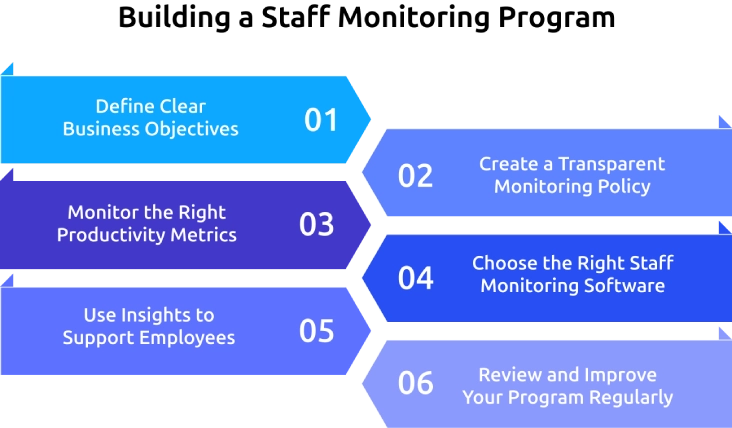
1. Define Clear Business Objectives
Start by identifying why you want to monitor employees. Whether your goal is to improve productivity, optimize workflows, manage remote teams, or strengthen compliance, having clear objectives ensures your monitoring efforts remain focused and measurable.
2. Create a Transparent Monitoring Policy
Explain what information will be monitored, why it is being collected, and how it will be used clearly. Sharing these expectations with your employees builds trust, reduces concerns, and promotes transparency across the organization.
3. Monitor the Right Productivity Metrics
Focus on meaningful metrics such as productive hours, task completion, project progress, application usage, and attendance. Measuring relevant work indicators provides actionable insights without creating unnecessary surveillance.
4. Choose the Right Staff Monitoring Software
Select a solution that offers time tracking, productivity insights, attendance management, activity monitoring, reporting, and workforce analytics in a single platform. The right software helps you gain accurate visibility while simplifying day-to-day management.
5. Use Insights to Support Employees
Ensure that monitoring supports employee success without creating a sense of control. Use productivity insights to identify workload imbalances, remove obstacles, recognize achievements, and provide coaching where needed.
6. Review and Improve Your Program Regularly
Business priorities and team structures change over time. Regularly review your monitoring strategy, gather employee feedback, and refine your policies to ensure the program continues to support both business goals and employee experience.
How Time Champ Makes Staff Monitoring Smarter
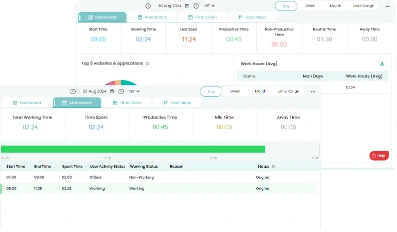
Limited visibility into employee work can make it difficult to improve productivity, balance workloads, and make confident business decisions. Time Champ is a comprehensive employee monitoring software that gives you real-time visibility into work activities, productivity, attendance, and project progress. With powerful workforce insights, it helps you monitor teams transparently, improve accountability, and optimize performance without micromanaging.
Here’s how Time Champ helps you build a smarter, more productive workforce:
- Real-Time Productivity Tracking: Provides instant visibility into employee work patterns, helping you reduce idle time and boost overall team performance.
- Application and Website Monitoring: Offers clear insights into how work hours are utilized, which helps you minimize distractions and encourage more productive activities.
- Automated Time and Attendance Management: Simplifies tracking with accurate timesheets and attendance records, ensuring better workforce management without manual effort.
- Actionable Reports and Workforce Analytics: Delivers detailed insight into employee performance and work trends, enabling you to make informed decisions and optimize resource allocation effectively.
- Centralized Team Management: Brings all teams into a single dashboard, allowing you to manage remote, hybrid, and in-office employees while ensuring smooth coordination and efficient progress tracking.
- Transparent and Fair Monitoring: Builds a culture of accountability by providing clear insights while helping you maintain trust and a positive work environment.
Finding it difficult to track employee productivity across remote, hybrid, or office teams?
Time Champ helps you monitor work, improve productivity, and stay in control.
Conclusion
An effective staff monitoring program gives you the visibility needed to improve productivity, strengthen accountability, optimize workloads, and make informed business decisions. The key is to focus on transparency, clear policies, and meaningful performance insights without excessive monitoring. When implemented thoughtfully, it creates a workplace where employees feel supported, and you can confidently guide teams toward better outcomes. Evaluate your current monitoring approach, identify areas for improvement, and build a strategy that helps your organization achieve sustainable productivity and long-term success.

Anjali

Table of Content
 What is Staff Monitoring?
- Staff Tracking Vs Employee Monitoring: What’s The Difference?
- What Are the Benefits of Monitoring Employee Productivity?
- What Are the Pros and Cons of Staff Tracking?
- How to Build a Staff Monitoring Program the Right Way?
- How Time Champ Makes Staff Monitoring Smarter
- Conclusion
Related Blogs
See how employee monitoring strengthens accountability, improves transparency, and helps teams perform better without crossing into workplace surveillance.
Anjali | Jul 01, 2026
Not all employee monitoring methods are the same. Explore 12 common types of employee monitoring and find the best fit for your workforce!
Guna Lakshmi | Jun 30, 2026
Learn how to monitor employee computer activity in the workplace using ethical, compliant methods to improve productivity and accountability.
Guna Lakshmi | Jun 29, 2026
Explore how to implement employee monitoring software effectively with clear steps, legal tips, best practices, ROI metrics, and key pitfalls to avoid.
Anjali | Apr 15, 2026
The right employee performance tracking software turns activity data into decisions. See what to look for, how to compare, and what works for your team.
Guna Lakshmi | Apr 18, 2026
Explore 5 core principles of employee monitoring, emerging AI ethics in 2026, and a practical playbook to balance employee productivity, privacy, and trust.
Anjali | May 07, 2026


 4.7/5 avg.
Ready to Manage Your Workforce Smarter?
Join our family of 1500+ companies using smart insights to redefine workforces!

Free Trial
No Credit Card Required