Remote Work Trends 2026: 12 Data-Backed Workforce Shifts
Explore the top remote work trends of 2026, from hybrid work and RTO realities to AI agents, and find out what they mean for your remote workforce success.

Remote work in 2026 looks very different from just a few years ago. Hybrid schedules have stabilized, AI agents are becoming part of everyday workflows, return-to-office (RTO) mandates are facing new challenges, and employee expectations continue to evolve. But which trends are actually driving these changes, and which ones should leaders pay attention to?
In this article, we'll explore 12 data-backed remote work trends in 2026 that are reshaping the remote workforce and what they mean for organizations planning for the future.
What are the Biggest Remote Work Trends in 2026?
The remote work trends in 2026 show how the workplace is evolving beyond simply choosing between remote and office work.
The table below highlights the 12 biggest remote work trends in 2026, along with the key data points that support each shift.
| S.No | Remote Work Trend | Key Data Point |
|---|---|---|
| 1 | Hybrid settles at three days | 89% of occupiers now require 3+ in-office days (CBRE, 2026) |
| 2 | RTO mandates outpace compliance | Target attendance: 3.2 days; actual attendance: 2.9 days (CBRE, 2026) |
| 3 | Mandates carry a brain-drain cost | Turnover up 13%; roles take 23% longer to fill after an RTO mandate |
| 4 | The office is full, but teams remain distributed | 27% of fully on-site employees say their teams are spread across multiple locations (Gallup, 2025) |
| 5 | AI agents join the workforce | 15× year-over-year growth in active AI agents in Microsoft 365 (2026) |
| 6 | Output beats hours | Hybrid work reduced resignations by 33% with no productivity loss (Nature, 2024) |
| 7 | The infinite workday | Employees experience interruptions every 2 minutes, around 275 per day (Microsoft, 2025) |
| 8 | Engagement is the weak link | Only 20% of employees are engaged, while manager engagement has fallen to 22% (Gallup, 2026) |
| 9 | Team-set schedules win | 90% rate team-set schedules as fair vs. 73% for self-selected schedules (Gallup, 2025) |
| 10 | Flexibility becomes a valued benefit | Employees would trade 9% of salary for flexible work hours (Owl Labs, 2025) |
| 11 | The workforce goes borderless | Freelancing among skilled knowledge workers increased from 28% to 38% in one year (Upwork, 2026) |
| 12 | Monitoring grows | 85% believe employers should disclose employee monitoring tools (Owl Labs, 2025) |
These remote work trends don't exist in isolation, they're connected. Let's take a closer look at each of these trends and what they mean for the future of remote work in 2026.
1. Hybrid Has Settled at Three Days
Hybrid work has finally found its balance. After years of experimenting with different models, most organizations now expect employees to work from the office three days a week. CBRE's 2026 Occupier Survey found that 89% of companies require at least three in-office days, making it the new hybrid standard.
However, there's one challenge: employees often choose the same office days, leading to crowded midweeks and quieter Mondays and Fridays. Instead of letting everyone decide individually, businesses can improve collaboration by setting team anchor days, so the right people are in the office at the same time.
2. Return-to-Office Mandates are Outpacing Return-to-Office Compliance
More companies are asking employees to spend extra days in the office, but attendance isn't increasing at the same pace. CBRE found that while employers expect employees to work 3.2 days a week in the office, the actual average is 2.9 days. This gap shows that announcing an RTO policy is much easier than enforcing it.
One reason is that managers often make exceptions to retain top talent and accommodate team needs. Instead of depending on mandates alone, organizations should clearly define attendance expectations, track them consistently, and ensure office days serve a purpose beyond simply showing up.
3. Brain Drain Is Now the Measurable Price of a Mandate
Return-to-office policies don't just change where people work, they can also affect who stays. Research found that companies introducing RTO mandates experienced a 13% increase in employee turnover, while open roles took 23% longer to fill. The employees most likely to leave were experienced professionals and managers.
This doesn't mean every office mandate is a bad decision. However, organizations should weigh the benefits of in-office work against the potential cost of losing skilled employees before making major policy changes.
4. The Office Is Full, and the Team Is Still Distributed
Bringing employees back to the office doesn't always mean teams are working together in the same place. Gallup found that 27% of fully on-site employees still collaborate with teammates in different locations, meaning much of their work continues to happen through video calls and online tools.
This shows that distributed work isn't disappearing. Even organizations with office-based teams still need strong digital collaboration, clear communication, and visibility across locations.
5. AI Agents Have Joined the Remote Workforce
AI is quickly becoming part of everyday work. Microsoft's 2026 Work Trend Index reported a 15-fold increase in active AI agents within Microsoft 365, while more employees are using AI to complete routine tasks.
The biggest opportunity isn't simply adopting AI; it's using it effectively. Companies that provide clear AI guidelines, train employees, and integrate AI into existing workflows are more likely to improve productivity than those depending on individual experimentation.
6. Outcome-Based Performance Finally Has Data Behind It
Companies are gradually shifting away from measuring hours worked toward measuring results. A large study published in Nature found that hybrid work reduced resignations by 33% without affecting productivity, showing that employees don't need to be in the office every day to perform well.
For organizations, this means performance should be measured by goals, work quality, and business outcomes rather than by time spent at a desk.
7. The Infinite Workday Is the Real Remote Workplace Problem
One of the biggest challenges of remote work is having too much work spread across the day. Microsoft's research found employees are interrupted roughly every two minutes, making it difficult to focus on meaningful work.
To reduce burnout, organizations should encourage focused work time, limit unnecessary meetings, and monitor workloads before employees become overwhelmed.
8. Engagement Is the Weak Link, and Managers Are the Epicenter
Employee engagement continues to decline, with Gallup reporting that only 20% of employees are engaged at work. Manager engagement has also dropped, making it harder for leaders to support their teams effectively.
Organizations that invest in manager support, regular feedback, and stronger communication are better positioned to keep remote and hybrid teams engaged.
9. Team-Set Schedules Beat Individual Choice
Giving employees complete freedom to choose office days may sound ideal, but research suggests a different approach works better. Gallup found that employees rated team-set schedules much more positively than either employer-assigned or individually chosen schedules.
When teams agree on shared office days, collaboration becomes easier, schedules are more predictable, and employees spend less time coordinating availability.
10. Flexibility Is Becoming a Priced Benefit
Flexible work has become one of the most valuable workplace benefits. Research shows many employees are willing to trade part of their salary for flexible working hours, while others would reject job offers that don't offer flexibility.
As organizations increase office attendance requirements, flexibility is becoming an important factor in attracting and retaining skilled employees.
11. The Remote Workforce Is Going Freelance and Borderless
Remote work has made it easier for professionals to work across companies, cities, and even countries. Upwork's research shows a growing number of skilled workers are taking on freelance work, while digital nomadism continues to expand.
Businesses should review their remote work policies to address cross-border work, tax requirements, security, and compliance as workforces become more global.
12. Monitoring Grows Up: From Screenshots to Workforce Intelligence
Employee monitoring is changing. Instead of focusing on screenshots or tracking activity, organizations are using workforce data to understand productivity, workload, and employee well-being. Research also shows that employees expect greater transparency about how monitoring tools are used.
The focus in 2026 is shifting from watching employees to using data responsibly to improve performance, identify burnout risks, and support better decision-making.
Make Hybrid Work Easier to Manage!
Coordinate office days, monitor attendance, and track productivity
How to Prepare Your Workforce for Remote Work in 2026
Understanding the remote work trends is one thing; acting on them is what makes the difference. Based on the data we've covered, here are five practical moves every organization should consider when planning its workforce strategy for 2026.

1. Establish Clear Remote Work Policies
Create clear guidelines for communication, availability, performance expectations, and collaboration. When employees know what's expected of them, remote teams can work more efficiently and avoid misunderstandings.
2. Measure Performance by Outcomes
Evaluate employees based on goals, deliverables, and business results rather than time spent online or office attendance. Outcome-based performance creates accountability while giving employees the flexibility to work effectively.
3. Prioritize Employee Well-Being
Remote employees can easily experience long hours and digital fatigue. Regularly review workloads, encourage breaks, and help managers identify signs of burnout before they affect productivity and engagement.
4. Build Transparency into Workplace Monitoring
If you use employee monitoring tools, clearly explain what information is collected, why it's needed, and how it will be used. Being transparent builds trust and helps employees feel more comfortable with workplace monitoring.
5. Invest in the Right Remote Work Technology
The right technology keeps distributed teams connected and productive. Equip employees with collaboration, communication, project management, and workforce management tools that support efficient remote work while giving managers the insights they need to make informed decisions.
How Time Champ Helps You Manage a Remote Workforce in 2026
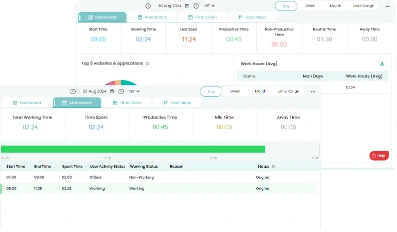
Managing a remote or hybrid workforce requires more than tracking attendance. Time Champ is a employee monitoring software with workforce intelligence, giving organizations the insights they need to improve productivity, reduce burnout, and support employees across remote, hybrid, and field teams.
1. Hybrid Scheduling and Attendance in One View
Plan work-from-home and work-from-office schedules with team-based anchor days, manage shifts across different time zones, and monitor attendance from a single dashboard. For field teams, GPS attendance and geofencing help verify check-ins at approved job sites.
2. Productivity Data That Measures Output, Not Hours
Time Champ helps you understand how work gets done by tracking application and website usage, project time, and task allocation. Instead of focusing on hours spent online, managers can evaluate productivity based on meaningful work and project progress.
3. Workload and Burnout Signals Before People Go Quiet
Identify signs of overwork before they become bigger problems. Time Champ provides insights into focus time, overtime, break patterns, and workload distribution, helping managers recognize burnout risks early and support employees proactively.
4. Attrition Risk You Can See Coming
Behavioral trends, workload patterns, and productivity insights help managers identify employees who may be at risk of disengagement or leaving the organization, allowing timely intervention before retention becomes a challenge.
5. Employee Monitoring Built on Transparency
Time Champ is designed with responsible monitoring in mind. Features like blurred screenshots, role-based access controls, encrypted data storage, and privacy-focused activity tracking help organizations maintain visibility while respecting employee privacy.
Create a Better Remote Work Experience!
Support your employees with flexible scheduling, balanced workloads, and productivity insights
Conclusion
Remote work in 2026 is continuing to evolve as businesses find better ways to balance flexibility, collaboration, and performance. The remote work trends covered in this blog show that successful organizations are focusing on clear policies, practical tools, and employee experience. Putting these trends into practice can help you build a workforce that's more productive, engaged, and ready for what's next.

Jahnavi Pulluri

Table of Content
 What are the Biggest Remote Work Trends in 2026?
- How to Prepare Your Workforce for Remote Work in 2026
- How Time Champ Helps You Manage a Remote Workforce in 2026
- Conclusion
Related Blogs
Why remote work is becoming more popular in the last few years? Check out our 4 reasons companies are using remote work.
Shabana Shaik | Mar 14, 2025
Wondering why meetings are essential in remote work? Uncover 10 key reasons they improve communication, teamwork, and efficiency for your remote team!
Tarun Kumar Reddy | Mar 14, 2025
Avoid common remote work mistakes that hurt productivity and teamwork. Learn how to overcome challenges and create a more efficient remote work setup.
Thasleem Shaik | Mar 13, 2025
Explore tips to establish your value as a remote worker. Learn how communication, time management, and proactivity help you stand out and build trust.
Tarun Kumar Reddy | Mar 13, 2025
Remote work is the secret sauce for more loyal employees. Discover how virtual collaboration and flexible hours transform teams into powerhouses.
Sai Keerthi Uppala | Feb 21, 2025
Unlock the secret to happier remote teams! Discover how work-life balance boosts productivity and satisfaction in remote work.
Sai Keerthi Uppala | Feb 21, 2025


 4.7/5 avg.
Ready to Manage Your Workforce Smarter?
Join our family of 1500+ companies using smart insights to redefine workforces!

Free Trial
No Credit Card Required