Reasons to Work From Home: 13 Benefits + How to Keep It
Trade the commute for 13 real reasons to work from home, from bigger savings to deeper focus. Plus how to ask for remote work and hold on to it for good.

This generation loves flexibility in everything, and refuses to adjust (peak Gen Z behavior). The same is expected for work too, and why shouldn’t work be flexible? I mean, think of a relaxed morning with a cup of coffee and your favorite pajamas, zero rush of waking up, getting ready, and don’t ask me about dealing with the clanky morning traffic.
Working from home is peaceful, productive, and moreover, cost-effective.
I will tell you 13 benefits of doing WFH, how to ask for it, and most importantly, how to sustain it.
What are the Real Reasons to Work From Home?
The real reasons to work from home come down to time, money, focus, and control over how you work.
Here’s a brief comparison of remote and in-office work:
| Factor | Working From Home | Working in the Office |
|---|---|---|
| Commute | None, hours back every week | Daily travel, time and money |
| Focus | Fewer interruptions, deep work | Frequent ad-hoc distractions |
| Schedule | Flexible around your life | Fixed and location-bound |
| Daily costs | Lower (fuel, food, wardrobe) | Higher on every workday |
| Collaboration | Planned and digital | Spontaneous and in person |
Both setups have a place, and if you want the fully balanced view, we break it down in our guide on the advantages and disadvantages of working from home. For now, let us get into the good reasons to work from home, grouped so you can find the ones that matter most to you.
Personal Reasons to Work From Home That Change Your Daily Life
Now let’s get to in-depth and tempting reasons why you should ask for work from home. I am sure you will get convinced after reading this section. Shall we get started already?
1. You Get Your Commute, and Your Mornings, Back
Metropolitan cities are flooded with traffic these days, and you making it to your workplace, that too in time, is a tiny war you have to deal with time, traffic, and sometimes luck too.
The average one-way commute in the US runs close to 28 minutes each way per the Census Bureau, and for many people it is far worse.
Also, even before the Washington Post reported commute times hitting record highs during the remote boom. Cut all this time, and you can easily win back roughly 8.5 hours a week, which is why 79% of workers name the missing commute as a top reason they love remote work. That is a whole extra workday of your life, every single week.
2. Better Work-life Balance and Real Time with Family
When your office is down the hall, life stops competing with work for every spare minute. Around 79% of remote workers report better work-life balance, and a majority of people (87%) say remote work gives them more time with family. You can eat lunch with your kids and just be there for the school pickup, and still hit your deadlines. That is not a small perk. For most people, this is the whole point.
3. More Time for Health, Hobbies, and Headspace
The time you save does not just go to vain. It goes into deep sleep, a real and happy lunch, a walk, or the gym you kept skipping. A SurveyMonkey study found remote workers report lower stress and healthier eating, and FlexJobs found 97% of professionals feel better mental health working remotely. When you are not running on empty, you show up better for work and for yourself.
4. You Keep More of Your Money
Fuel, parking, daily lunches, groceries, coffee runs, work clothes, and rent in the city all of these cost an arm and a leg because most companies operate in cities, and the lifestyle, inflation, and demand have made prices skyrocket. Global Workplace Analytics estimates the average remote worker saves about 4,000 dollars a year, while companies save close to 11,000 dollars per half-time remote employee.
I tried to bring as many real-time stats as I can so that you don’t think I am just talking random stuff to convince you into remote work.
Professional Reasons to Work From Home That Help Your Career
Here are some professional reasons to WFH that your skeptical manager won’t be able to say no to (because it benefits them too):
5. You Get More Done, with Fewer Distractions
The open office was never built for deep work. A Udemy report found around 69% of workers feel distracted on the job, and the obvious reasons are chatter, meetings, and work interruptions. Remove those office noises, and the team’s efficiency reaches its peak. Forbes reports 77% of remote workers say they are more productive at home, and Gallup's also says that remote work can be just as effective, sometimes often more.
6. Better Focus and Time Management
When you are at home, you control your calendar instead of reacting to whoever walks up to your desk. Buffer's State of Remote Work found that a flexible schedule is the single biggest benefit workers name. You have particular times of the day when your focus is at its peak, right? Block those hours for hard work and push all the shallow tasks to the edges of the day.
If you want a head start, our guide to time management techniques pairs perfectly with a remote setup.
7. A Chance to Build New Digital Skills
There’s a better benefit to your digital skills with remote work from home too, it quietly turns you into a stronger communicator and a sharper user of digital tools.
- You learn to write clearly
- Run async updates
- Manage projects across time zones
- And keep yourself accountable without a manager hovering
Those are exactly the skills that make you more valuable and more promotable, whether you stay remote or not.
8. Higher Job Satisfaction and Lower Burnout
People who choose where they work are simply happier in the role and in life too. That satisfaction is not soft either, according to Deloitte's 2025 research, 65% of Gen Z and Millennials would leave a job if forced back to the office full-time.
Work should respect your life, because when it does, you stay, you engage, and you burn out far less often.
The Bigger-picture Reasons to Work From Home
A couple of reasons reach past your own desk. They are worth naming, because they matter to the people and the planet around you.
9. A More Inclusive, Accessible Workplace
Remote work opens doors for people the traditional office quietly left out like, parents, caregivers, people with disabilities, and anyone far from a city hub. Flexible location widens the talent pool and gives more people a fair shot at good jobs, not just the ones who live near the building.
10. A Smaller Carbon Footprint
Fewer commutes mean fewer carbon emissions. Global Workplace Analytics estimates widespread half-time remote work could cut greenhouse gases by the equivalent of taking millions of cars off the road. Working from home is one of the rare choices that is good for you and good for the environment as well.
What are Good Reasons to Ask for Work From Home, and How to Make the Case?
Here’s a compilation of how to ask for work from home
It’s basically the ones your manager cares about too: You will be more focused, more available during core hours, and just as accountable, if not more. You just need to frame each personal benefit as a business win, then offer proof.
| The Reason You Give | What Your Manager is Really Weighing | How to Win the Point |
|---|---|---|
| I will be more productive | Can I trust the output when I cannot see you? | Offer a short weekly summary of what you shipped, not hours logged. |
| I will save commute time | Will that time go to work or to errands? | Commit to clear core hours and fast response times. |
| Fewer distractions at home | Home has distractions too | Set up a dedicated workspace and agree on availability. |
| Better balance keeps me here | Will you quietly disengage? | Propose a trial period with simple, agreed check-ins. |
You can lead with a trial to win your manager’s trust. A 30 or 60-day pilot lowers the risk for everyone and lets your results do the arguing for you. For a full script and step-by-step approach, read our guide on how to ask for work from home. Come prepared, stay flexible on the details, and you will hear yes far more often.
Why Do Some People Keep Working From Home While Others Get Called Back?
Most remote work is not lost because people slack off. It is lost because managers cannot see what is getting done, so they fall back on the one thing they can measure: whether you are at a desk or not. When output is invisible, people find it hard to trust the process, and the call-back email arrives. When output is clearly visible, the call-back conversation never even starts.
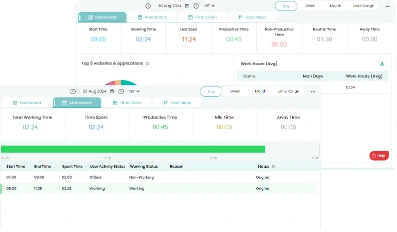
This is where the right tool protects your flexibility instead of threatening it. Time Champ is employee monitoring software with a workforce intelligence layer. For a remote worker, that layer is quietly on your side. It turns your productive hours and focus time into a clear record, so your manager sees results instead of guessing your work hours. It gives leaders team-level insight to trust remote work with data rather than gut feel. And its work-life balance signals flag overwork early, so nobody burns out trying to prove they are online.
When you use it the right way, monitoring becomes evidence for work, not mere surveillance. It is the whole difference between hoping your boss believes remote work is fine and showing them it really is.
Prove your productivity without the guesswork!
See your focus hours at a glance with Time Champ.
Are There Real Downsides to Working From Home?
Yes, there are some downsides, and pretending otherwise helps no one. Remote work has trade-offs worth planning for, not hiding from.
- Isolation and Blurred Lines: Without a commute to bookend the day, work can continue to bleed into the evening. A hard stop and a real workspace help.
- Fewer Spontaneous Moments: Hallway ideas and quick mentoring need to be scheduled on purpose when you are remote.
- Visibility Worries: Out of sight can mostly feel out of mind at promotion time, which is exactly why provable output matters so much.
- Home Distractions: Family, chores, and miscellaneous stuff are real. Boundaries and a routine help you keep them in check.
For the complete two-sided view, our post on the advantages and disadvantages of working from home lays it all out.
The Bottom Line on Working From Home
The reasons to work from home are not a mystery anymore. You save time and money, you focus better, you feel healthier, and you build a life that fits around your work instead of the other way around. All those benefits are absolutely real, and the data keeps backing them up continuously.
The part most people miss is the second half, winning remote work is easy, but keeping it with you is about proof. Make your results visible, stay accountable during core hours, and treat the flexibility like something worth protecting (because it is).

Shabana Shaik

Table of Content
 What are the Real Reasons to Work From Home?
- Personal Reasons to Work From Home That Change Your Daily Life
- Professional Reasons to Work From Home That Help Your Career
- The Bigger-picture Reasons to Work From Home
- What are Good Reasons to Ask for Work From Home, and How to Make the Case?
- Why Do Some People Keep Working From Home While Others Get Called Back?
- Are There Real Downsides to Working From Home?
- The Bottom Line on Working From Home
Related Blogs
Struggling to focus while working from home? Discover practical tips to manage distractions like chores, pets, and social media for better productivity.
Shabana Shaik | Oct 26, 2024
Compare hybrid and remote work models to determine which improves your team's productivity, collaboration, flexibility, and long-term business performance.
Anjali | Jun 16, 2026
Discover practical ways to maintain work-life balance in the era of remote work, reduce burnout, and build healthier remote work habits.
Guna Lakshmi | Sep 29, 2026
Discover insights on remote work productivity, engagement levels, and trends to enhance your team
Thasleem Shaik | Nov 09, 2024
Discover how hybrid remote work blends flexibility with productivity. And explore key benefits, challenges, and tips for managing a successful hybrid workplace.
Sai Keerthi Uppala | Oct 25, 2024
Struggling with remote work productivity challenges? Learn what’s slowing your team down and how to improve focus, communication, and performance.
Guna Lakshmi | Apr 15, 2026


 4.7/5 avg.
Ready to Manage Your Workforce Smarter?
Join our family of 1500+ companies using smart insights to redefine workforces!

Free Trial
No Credit Card Required