Project Portfolio Management (PPM): Process & Benefits
Learn what Project Portfolio Management is, why it matters, key components, processes, benefits, and how PPM differs from project management.

Most organizations struggle to handle several projects simultaneously due to clashing priorities, limited resources, and decisions made without actual visibility. This results in wastage of effort, delayed outcomes, and projects that do not truly support business objectives. Project portfolio management helps solve this problem by providing you with a structured way of reviewing, prioritizing, and managing all projects as a single portfolio rather than individual initiatives. Building best project management software requires aligning policy, technology, and team adoption from day one.
This blog will inform you about what Project Portfolio Management (PPM) is, why it matters, the key components and processes of it, the difference between PPM and project management, and the benefits it brings when properly implemented. You will have a clear understanding of how to align projects with business objectives, allocate resources smarter, reduce risks early, and make confident decisions that drive measurable results across your organization.
What Is Project Portfolio Management (PPM)?
Project portfolio management or PPM is the structured practice of overseeing, coordinating and managing multiple projects in an organization as a single portfolio. It involves systematically reviewing every project, assessing its alignment with strategic objectives, and making informed decisions regarding prioritization, resource allocation, and risk management to ensure projects deliver maximum value.
PPM provides a clear framework for managing complex project landscapes and connecting daily project activities to broader organizational goals. In its simplest form, PPM enables organizations to view all ongoing and planned projects collectively rather than individually. It helps you identify which projects require attention, allocate resources efficiently, minimize duplication of effort, and ensure that every initiative contributes meaningfully to overall objectives.
When you manage projects as a unified portfolio, you gain a clear overview of progress, interdependencies, and potential risks, enabling proactive coordination and consistent tracking across all projects.
Why Is Project Portfolio Management Important?
It is more difficult to remain focused, make the right decisions, and utilize resources wisely when several projects are running simultaneously. Project portfolio management brings order and transparency to this complexity. Here, you will get to know the significance of PPM.
- Aligns Projects with Business Goals:PPM ensures every project stays connected to organizational goals. Avoid running projects that look busy but move the business in the wrong direction.
- Brings Clarity Across All Projects:PPM gives you a single, clear view of all ongoing and planned projects. You always know what is happening, which projects are causing delays, and what requires your attention.
- Enables Better Decision-Making:PPM allows you to make decisions based on real project data rather than assumptions. You can choose what to continue, pause, or stop with confidence.
- Brings Order to Complex Project Setups: When many projects run at the same time, confusion grows quickly. PPM helps you manage every project effectively by reviewing, prioritizing, and tracking them well.
- Optimizes Use of Limited Resources:PPM makes it easier to see where time, people, and budgets are already committed. Avoid overloading teams and overusing resources.
- Improves Control Over Changing Priorities:As business needs change, PPM helps you adjust your projects without chaos. You can respond calmly instead of reacting too late.
- Reduces Project Conflicts and Overlaps: PPM highlights dependencies and overlaps between projects. This prevents duplicated work and conflicting efforts across teams.
What Are the Components of Project Portfolio Management?
Several key elements form the foundation of project portfolio management and ensure all projects within an organization work together efficiently and deliver maximum value. Understanding these elements will assist you in structuring your portfolio, making informed decisions, and aligning every project with business objectives.
The following are the main elements of project portfolio management that form the backbone of a successful portfolio project management strategy.
1. Strategic Alignment
Strategic alignment is the first component of project portfolio management. All projects within the portfolio should support the organisation's broader goals. This makes sure that you are investing time, resources, and effort into initiatives that truly matter.
Aligning projects strategically reduces wasted effort and keeps the portfolio focused on initiatives that deliver the highest value. When each project reflects organizational priorities, you will be able to make better decisions regarding what initiatives to start, pause, or stop.
2. Resource Management
Another important aspect of project portfolio management is resource management. It entails the identification, allocation, and monitoring of resources, including people, time, and budgets, across all projects.
Proper management of resources helps to avoid overloading teams and avoid unnecessary delays. When you track how each project uses resources, you can make smarter decisions, manage workloads effectively, and ensure every project gets what it needs to succeed.
3. Risk Management
Risk management is a key component of project portfolio management. Any project has its own set of challenges, and a portfolio approach will enable you to identify risks early, understand interdependencies, and develop mitigation strategies.
Monitoring risks within the portfolio allows you to ensure that minor problems do not grow into major ones and keep the process consistent. This proactive risk management enhances confidence in decision-making and facilitates easier implementation of all projects.
4. Performance Monitoring and Reporting
Another critical component of project portfolio management is performance monitoring and reporting. It enables you to monitor progress, compare actual performance with planned performance, and identify lagging or underperforming projects.
With proper reporting and monitoring of key metrics, you can have a clear picture of the whole portfolio. This aspect guarantees transparency, keeps stakeholders updated, and facilitates proactive intervention where necessary.
5. Governance and Decision-Making
Governance and decision-making cover defining rules, responsibilities, and decision-making procedures for the portfolio. An effective governance framework will provide consistent prioritization, approve changes effectively, and resolve conflicts between projects. Strong governance enables you to make confident choices, maintain accountability, and align all projects with business objectives.
6. Portfolio Review and Optimization
The last aspect of project portfolio management is periodic review and optimization of the portfolio. Periodically reviewing all projects will assist you in performance evaluation, resetting priorities, and resource optimization.
Ongoing portfolio review will make sure that your organization is responsive to evolving business requirements, reduces redundancy, and maximizes total value. This aspect makes your portfolio dynamic, strategic, and results-oriented.
Struggling to keep your projects on track and aligned?
Optimize your project portfolio and make smarter decisions with Time Champ!
What Are the Key Processes in Project Portfolio Management?
Project portfolio management allows you to manage all projects as a whole, make informed decisions, and use resources, risks, and priorities effectively. The following are the essential processes that you should follow.
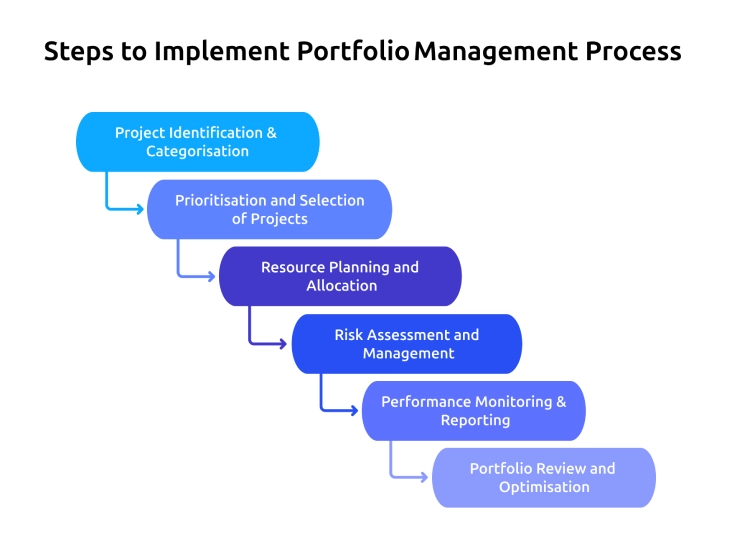
1. Project Identification and Categorization
The initial important step in project portfolio management is to list all the current and intended projects within your organization. First, evaluate the purpose, strategic alignment, and potential value of each project. After identification, you classify projects according to their priority, impact, or resources needed.
It ensures you do not miss any projects and gives you a clear view of your portfolio. It assists you in making wise choices on what projects to initiate, maintain, or suspend, and the portfolio remains concentrated on the projects that matter.
2. Prioritization and Selection of Projects
Once you have identified projects, prioritize them to focus on initiatives that bring the greatest value. Evaluate every project in terms of its alignment with strategic objectives, anticipated benefits, risks, and available resources. This will keep your portfolio within reach, prevent wasting time and resources on projects that have low value, and focus on those that have the most impact.
3. Resource Planning and Allocation
Resource planning is a vital part of the project portfolio process. Determine the resources each project needs, such as people, time, and budgets, and then allocate them effectively across projects. You balance workloads and prevent overcommitment, so every project gets the support it deserves.
Effective resource allocation ensures that you prevent delays, team burnout, and can quickly adjust resources when priorities change. This step will make your portfolio run smoothly and efficiently.
4. Risk Assessment and Management
Portfolio project management depends on effective risk management. Determine the risks associated with each project, their probability, and consequences, and create mitigation strategies. Portfolio risk monitoring assists you in dealing with risks early, handling project dependencies, and ensuring that minor problems do not turn into major setbacks. Risk assessment is proactive and improves the confidence of decision-making, and makes sure that all projects are on track.
5. Performance Monitoring and Reporting
It is crucial to track the performance of each project to ensure that your portfolio is on track. Track every project in relation to the planned objectives, timelines and budgets, and report on the key metrics on a regular basis. Monitoring performance enables you to identify underperforming projects, address problems in time and keep stakeholders updated. Clear reporting creates transparency and allows you to take proactive action where needed.
6. Portfolio Review and Optimization
Reviewing and optimizing the portfolio is the final process in the project portfolio management process. You assess the results of projects, re-examine priorities, and adjust resources to suit changing business requirements.
Constant review reduces redundancy, maximizes total value and ensures that all projects add strategic value to organizational objectives. This process makes your portfolio dynamic, result-oriented and able to adjust to the changes in the business environment.
What Are the Benefits of Project Portfolio Management?
You may lose time, money, and direction when projects run without a portfolio view. The PMI report indicates that organizations waste around 11.4% of investment due to poor project performance. Project portfolio management directly addresses this gap by bringing visibility, control, and alignment across all projects, helping you turn effort into measurable business value.
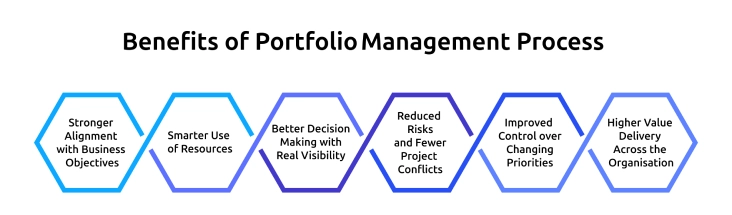
Stronger Alignment with Business Objectives
Project portfolio management makes sure that each project has clear business objectives. Stop projects that do not add value. When you align projects with your strategy, you focus efforts where they matter most and connect results directly to organizational priorities and long-term growth.
Smarter Use of Resources
You can see the commitments of people, time, and budgets easily with a portfolio view. This will assist you in avoiding overloading teams or spreading resources. Allocate resources based on priority and value, which enhances efficiency and minimizes delays due to poor planning.
Better Decision Making with Real Visibility
Project portfolio management provides you with reliable information on all projects. You make decisions based on actual performance rather than assumptions. This enables you to keep doing high-value work, suspend low-impact initiatives and abandon projects that no longer make sense before they consume more resources.
Reduced Risks and Fewer Project Conflicts
Project portfolio management will assist you in recognizing risks at an early stage and how initiatives are dependent on each other. You avoid duplication of work, conflicting priorities and concealed risks. This formal control minimizes unexpected events and prevents issues from developing into expensive failures.
Improved Control over Changing Priorities
Business requirements are constantly changing. Project portfolio management assists you in making changes without disruption. You re-evaluate priorities, shift resources, and re-align projects without difficulty. This flexibility will keep your organization responsive, stable and focused across the portfolio.
Higher Value Delivery Across the Organization
You can make sure that projects bring real value by continuously reviewing performance and results. This helps remove unnecessary activities, strengthen high-impact projects, and improve ROI. This will make your portfolio more strategic, success-oriented, outcome-driven, and focused.
Is Project Portfolio Management Different from Project Management?
Yes, project portfolio management and project management are different. Project management focuses on completing individual projects successfully. Project portfolio management looks at all projects together to make sure they align with business goals, use resources efficiently, and deliver maximum value. Knowing the difference helps you make smarter decisions and manage your organization’s initiatives more strategically.
| Aspect | Project Portfolio Management | Project Management |
|---|---|---|
| Focus | Oversees all projects as a portfolio to align with organizational goals and strategic priorities | Concentrates on completing a single project successfully within defined scope and objectives |
| Decision Making | Makes strategic decisions about which projects to start, continue, pause, or stop based on value and alignment | Makes tactical decisions to complete tasks and milestones on time and within budget |
| Resource Management | Allocates resources across multiple projects to optimize utilization and avoid overloading teams | Manages resources within a single project to ensure timely and efficient execution |
| Risk Management | Identifies risks and dependencies across the entire portfolio to prevent conflicts and duplicated effort | Manages risks within the individual project to mitigate delays and issues |
| Success Measurement | Measures the overall contribution of all projects to organizational goals and strategic outcomes | Measures the success of the project based on completion, quality, and deliverables |
How Time Champ Supports Project Portfolio Management
Managing multiple projects can quickly become overwhelming without clear visibility into progress, resource usage, and risks. You struggle to track which projects stay on schedule, spot overloaded teams, and identify initiatives that deliver real value. This lack of insight makes it difficult to align projects with business objectives, adjust priorities, and make confident decisions that benefit the entire portfolio.
Time Champ tackles this challenge by giving you real-time workforce intelligence across all projects. You can address these challenges by gaining real-time insights across all projects. It shows how you allocate effort and highlights potential challenges that could affect project success.
You can also gain clear insights into workload patterns, project performance, and early warning signs, helping you take proactive steps to prevent small issues from becoming major problems.
With Time Champ, you gain a clear view of your portfolio, make smarter decisions about prioritization and resource allocation, and ensure every project drives your organization’s strategic goals.
Want to spot risks early and manage resources better?
Get real-time insights and maximize value with Time Champ!
Conclusion
Using project portfolio management helps you take control of all your projects and ensure they truly support your business goals. You can prioritize initiatives, allocate resources wisely, reduce risks, and track progress with clarity. When you combine PPM with Time Champ, you gain real-time insight into work, spot potential issues early, and make confident decisions that maximize value across your organization. This way, every project contributes meaningfully and helps you achieve better results consistently.

Tarun Kumar Reddy

Table of Content
-
 What Is Project Portfolio Management (PPM)?
-
Why Is Project Portfolio Management Important?
-
What Are the Components of Project Portfolio Management?
-
What Are the Key Processes in Project Portfolio Management?
-
What Are the Benefits of Project Portfolio Management?
-
Is Project Portfolio Management Different from Project Management?
-
How Time Champ Supports Project Portfolio Management
-
Conclusion
Related Blogs
Enhance employees productivity with project management software and generate profits that makes your company stay ahead of competitors.
Mounika Sai | Aug 29, 2023
Familiarize yourself with the basics of Project Cost Management, including budgeting, and estimating the costs. Make sure that your projects are profitable.
Jahnavi Pulluri | May 21, 2024
Explore the essentials of project time management, its importance, best processes and top tips to meet deadlines without fail and boost workforce productivity.
Shabana Shaik | Oct 10, 2024
Explore 12 free project schedule templates in Excel, Word, and PDF, including simple, construction, tracking, timeline, and multi-project options.
Thasleem Shaik | November 03, 2025
Explore free project deliverables templates in Excel, Word, and PDF formats to track progress, manage tasks, and ensure on-time delivery.
Thasleem Shaik | November 03, 2025
Explore 7 free project planning templates to plan, schedule, and manage projects effectively. Download in Excel, Word & PDF and boost your project success.
Chetana Choudary | November 11, 2025


 4.7/5 avg.
Ready to Manage Your Workforce Smarter?
Join our family of 1500+ companies using smart insights to redefine workforces!

Free Trial
No Credit Card Required