What Is Moonlighting? Meaning, Risks, Types and How to Prevent
Moonlighting is when an employee holds a second job outside their primary role. See its meaning, types, risks, signs, and how to prevent it.

Rent goes up. Groceries cost more. So, a lot of people quietly pick up a second job to close the gap. That second job, worked alongside a main one, is what we call moonlighting.
For employees it can feel like smart survival. For managers it can feel like a productivity leak or a security risk hiding in plain sight. Both things can be true at once, and that is exactly why moonlighting is worth understanding properly instead of reacting to it.
This guide covers the moonlighting meaning in plain terms, the main types, real examples, whether it is legal, the risks to your business, the signs to watch for, and practical ways to detect and prevent it without treating your team like suspects.
What Is Moonlighting?
Moonlighting is when an employee holds a second job or does extra paid work outside their primary employment, usually during evenings, weekends, or off hours.
The name comes from the idea of working “by the light of the moon” after the regular workday ends. In modern workplaces it also covers freelance gigs, consulting, and online side businesses run alongside a full-time role.
Did You Know?
About 8,406 Americans were working more than one job as of June 2026 according to the U.S. Bureau of Labor Statistics.
Moonlighting Meaning and Definition
The moonlighting definition is holding more than one paid job at the same time, with one clear primary employer and one or more secondary jobs on the side. It is a form of secondary employment, and when both jobs are formal and ongoing, people also call it dual employment.
The word carries a slight sense of quietness. Historically, moonlighting suggested work done off the books or off the radar, outside the main employer's view. The biggest concern isn't that employees have a second job. It's that employers often don't know about it. That lack of transparency is what makes HR teams pause.
Moonlighting vs. Dual Employment vs. Side Hustle
These terms overlap and get mixed up, so here is the short version:
| Term | What It Means |
|---|---|
| Moonlighting | Extra paid work done alongside a primary job, often during off hours |
| Dual employment | Two formal jobs held at the same time, both with real employers |
| Side hustle | Any income activity outside the main job, including passive or occasional ones |
All moonlighting is secondary employment. Not every side hustle counts as moonlighting, and dual employment is really just moonlighting where the second job is a proper, structured role rather than a casual gig.
Types of Moonlighting
Moonlighting looks different for every employee. It might be occasional side work, a regular part-time job, or even a second career. That's why HR teams often group it into four levels of intensity, along with a separate category for freelance and gig work.
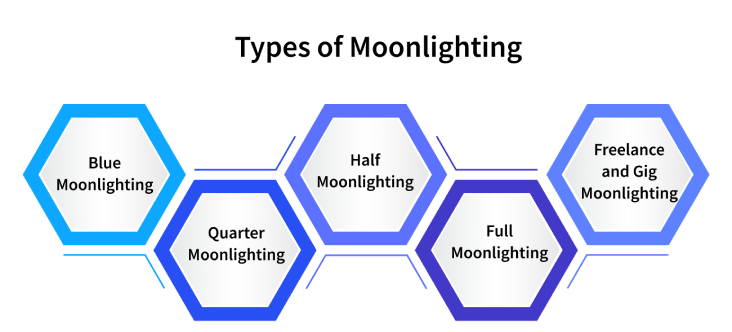
- Blue Moonlighting: Short bursts of extra work, taken on occasionally when someone needs quick cash or a one-off opportunity comes up. Low intensity, rarely a lasting problem.
- Quarter Moonlighting: A small, steady side commitment, maybe a few hours a week. Think evening tutoring or a light freelance retainer.
- Half Moonlighting: A bigger chunk of free time goes to the second job, often part-time evening or weekend work. This is where work fatigue starts to show.
- Full Moonlighting: The second job is nearly full-time in its own right. This is the highest-risk type, most likely to cause burnout, conflict, and slipping performance in the main role.
- Freelance and Gig Moonlighting: Rideshare driving, food delivery, freelance design, coding, or writing done through apps and platforms. It is flexible, easy to start, and increasingly common.
The level matters more than the label. A blue moonlighter is usually fine. A full moonlighter working for a rival is a serious issue. Knowing which type you are dealing with keeps your response proportionate.
Real Examples of Moonlighting
Definitions only go so far, so here is what moonlighting actually looks like in real workplaces:
- The Freelance Developer: A full-time software engineer takes on paid coding projects at night. If those projects are for a competitor, it becomes a conflict of interest and a possible data risk.
- The Double Remote Shift: A remote customer support agent secretly works a second remote role during overlapping hours, splitting attention across two employers at once.
- The Weekend Creative: A marketer runs a photography or design side business on weekends. Usually harmless, and often a healthy outlet, as long as it stays off company time.
- The Gig Driver: An office employee drives for a rideshare or delivery app in the evenings to cover rising costs. Low conflict, but real fatigue if it runs late.
- The Consultant on the Side: A senior professional quietly advises other companies in the same industry, sometimes using insights or contacts from the day job. High risk around confidentiality.
Notice the pattern. Examples 3 and 4 are low concern. Examples 1, 2, and 5 are where employers need clarity, because the second job touches company time, competitors, or confidential information.
Pro Tip
Before you worry about detecting moonlighting, ask whether your team even knows what your moonlighting policy allows. Half of all moonlighting problems come from silence, not deception.
Is Moonlighting Illegal or Legal?
Moonlighting itself is not illegal in most places. There is generally no law stopping an adult from holding a second job. Whether it is allowed for a specific employee depends on their employment contract, company policy, and local labor law, not on the act of moonlighting on its own.
The restrictions that actually matter usually come from four places:
- The Employment Contract: A signed clause may prohibit outside work or require prior approval.
- Company Policy: An employee handbook may set clear moonlighting rules.
- Non-Compete Clauses: These can bar working for a competitor, though many regions now limit how far they can reach. About one in five US workers, is locked into a non-compete agreement that limits where they can work next. These clauses are legal but increasingly restricted, and as of 2026, four states ban them outright.
- Confidentiality Agreements: These restrict sharing proprietary information, which second jobs can quietly put at risk.
Why Employees Choose Moonlighting Jobs
Most people do not moonlight to cheat their employer. They moonlight because their circumstances or their ambitions push them to. Understanding the reason is the first step to responding well.
Extra Income: The most common driver. Inflation and housing costs have pushed many workers to seek supplemental earnings just to keep up. More than half of US workers (54%) report stress tied to job insecurity, according to the American Psychological Association's 2025 Work in America survey.
- Career Growth and Skill Development: Some people take side projects to build skills their day job does not offer.
- Testing a Business Idea: Moonlighting lets people trial self-employment without giving up a steady paycheck.
- Passion and Creativity: A second job is sometimes an outlet, not a necessity.
- Remote Flexibility: Work-from-home setups make it far easier to fit a second role into the day.
Here is the useful reframe. If people are moonlighting mainly for money or growth, some of that pressure can be answered inside your organization, through fair pay reviews, internal mobility, and development programs. Prevention often starts with retention.
Risks of Employee Moonlighting
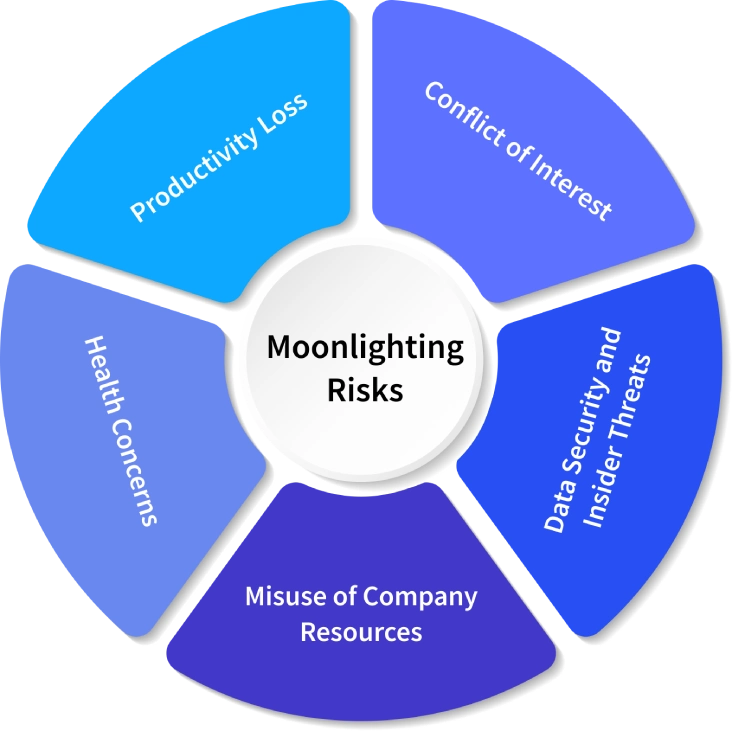
Employee moonlighting becomes a business problem when the second job drains energy, competes with your company, or exposes sensitive data. The risk is not the same for every employee, but when it lands, it can be costly. Here are the four areas that matter most.
Productivity Loss
Handling two jobs can be overwhelming. Employees may struggle to manage their time effectively, leading to poor performance in both roles. Fatigue from working too much can cause mistakes, missed deadlines, and lower quality work in their primary job. This decrease in productivity can harm the company’s overall success.
Conflict of Interest
This is the sharpest risk. When an employee works for or advises a competitor, their loyalty is split and your interests can quietly take second place. Conflict of interest is where moonlighting stops being a personal choice and becomes a direct threat to the business.
Data Security and Insider Threats
Employees with access to client data, source code, or strategy can carry that knowledge into a second job, sometimes without meaning to. Confidential information leaks, intellectual property crosses boundaries, and insider threats grow. In sensitive roles, this is the risk that keeps security teams awake.
Misuse of Company Resources
Company laptops, software licenses, and paid working hours sometimes get quietly redirected to the side job. It raises costs, disrupts operations, and blurs the line between what the employee owes you and what they are giving elsewhere.
Health Concerns
Juggling multiple jobs can negatively affect an employee’s health. The stress of managing two roles may lead to physical and mental fatigue, increasing the risk of burnout. Employees may find it hard to maintain a healthy work-life balance, which is essential for overall well-being.
None of these are guaranteed. A weekend gig rarely triggers any of them. But full or competing moonlighting can hit all five at once, which is why detection matters.
Spot Moonlighting Risks Early and Manage Them Fairly.
Time Champ gives you complete workforce visibility in-detail.
Signs an Employee May Be Moonlighting
The signs of moonlighting are behavioral before they are technical. You usually notice something feels off well before you have proof. Watch for a cluster of these signals rather than any single one:
- A sudden, unexplained drop in productivity or work quality.
- Missed deadlines from someone who used to deliver reliably.
- Odd working patterns, like long gaps during the day or activity spiking at unusual hours.
- Frequent tiredness, distraction, or disengagement in meetings.
- Reluctance to take on calls or tasks during certain time windows.
- Being consistently hard to reach during normal working hours.
- Vagueness about how they spend their time or what they did during quiet periods.
Pro Tip
Write down what you notice, with dates. A short, factual log of missed deadlines or odd activity windows turns a vague hunch into something you can raise fairly in a one-on-one, and it protects you if the conversation ever becomes a formal one.
How to Find Out If an Employee Is Moonlighting
To find out if an employee is moonlighting, combine honest conversation with objective data on work patterns. The goal is verification, not surveillance, so lead with fairness and use tools to confirm what the behavioral signs are hinting at.
Here are practical steps for employee moonlighting detection:
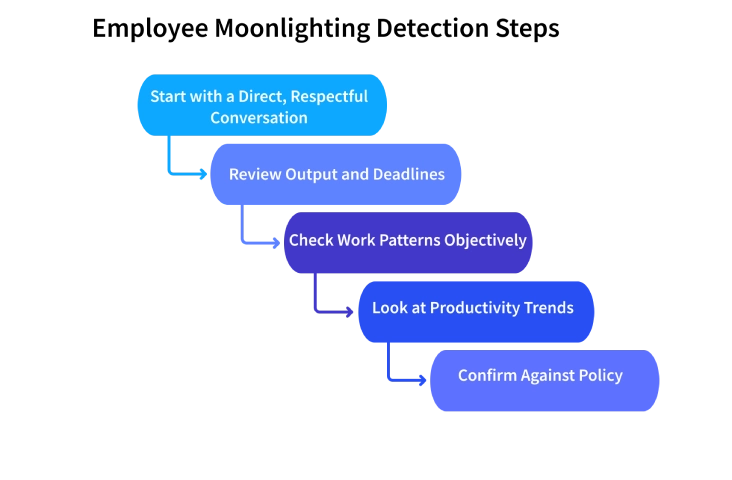
- Start with a Direct, Respectful Conversation: Ask how their workload feels and whether anything is affecting their focus. Many issues surface here without any investigation at all.
- Review Output and Deadlines: Look at deliverables and turnaround over time. A clear, sustained decline is more telling than a single miss.
- Check Work Patterns Objectively: Use time tracking and activity tracking tools to see when real work is happening. Consistent gaps or activity at odd hours are signals worth exploring.
- Look at Productivity Trends: Trends over weeks separate genuine moonlighting from a rough patch.
- Confirm Against Policy: Compare what you find to your contract and moonlighting policy before you act, so any response is fair and defensible.
Keep it lawful and proportionate throughout. Detection should respect privacy, follow local employee monitoring laws, and focus on work performance, not on policing someone's private life.
How to Prevent Moonlighting in Your Organization
You prevent harmful moonlighting with clear rules, fair conditions, and honest visibility, not with fear. The aim is to stop the risky, hidden kind while staying reasonable about harmless outside work.
Here are the employee moonlighting prevention steps:
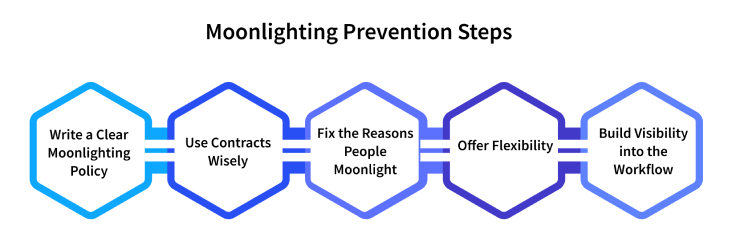
- Write a Clear Moonlighting Policy: Spell out what is allowed, what needs disclosure, and what is off-limits. Ambiguity causes most disputes, so remove it.
- Use Contracts Wisely: Add focused conflict-of-interest and confidentiality clauses where the role genuinely needs them, rather than blanket bans that may not hold up.
- Fix the Reasons People Moonlight: Review pay, offer internal growth paths, and support employee development. If the main job meets more needs, the pull of a second one weakens.
- Offer Flexibility: Reasonable, transparent flexibility beats a hidden second job. Open communication lets employees raise needs before they go looking elsewhere.
- Build Visibility into the Workflow: Use time tracking and productivity analytics so performance issues surface early and fairly, before they become bigger problems.
- Focus Policy on Performance: Judge the work, not the person's private choices. Rules tied to output and conflict are fairer and easier to enforce than rules that police someone's evenings.
Prevention is really a mix of culture and clarity. Treat people fairly, tell them the rules, and give managers honest data, and most moonlighting risk fades on its own.
Worried about hidden second jobs?
Detect unusual work patterns, protect company data, and keep your policy fair with Time Champ!
What Should a Moonlighting Policy Include?
A good moonlighting policy sets clear expectations without banning every side job outright. It tells employees what is allowed, what they must disclose, and where the hard lines are, so nobody has to guess.
The strongest policies focus on conflict, confidentiality, and performance, not on controlling how people spend their private time. Here is what to include:
- A Clear Definition and Scope: State what your company counts as moonlighting, including freelance, consulting, and gig work, so the rule is not open to interpretation.
- A Disclosure Rule: Ask employees to declare outside work that could touch their role, rather than banning it. Disclosure builds trust and gives you early visibility.
- Conflict-of-Interest Limits: Spell out that working for a direct competitor, or using company clients and data for a side job, is off-limits.
- Confidentiality and IP Terms: Reference your existing NDA and intellectual property clauses so sensitive information cannot follow someone into a second job.
- A Performance Standard: Make clear that the primary job comes first, and that outside work must not affect deadlines, quality, or availability during working hours.
- Use of Company Resources: State plainly that company devices, software, and paid hours are for company work only.
- A Fair Review Process: Explain how concerns are raised and reviewed, so any action is consistent and defensible.
Protect Your Business from Hidden Moonlighting with Time Champ!
Pro Tip
Ask employees to sign the moonlighting policy the same way they sign other handbook terms, and re-share it whenever the policy changes. A signed, dated acknowledgment removes the “I did not know” defense and keeps everyone on the same page.
How Time Champ Helps You Detect and Prevent Moonlighting
Time Champ is an employee monitoring and time tracking software. Several Time Champ features support moonlighting detection and prevention:
- App and Website Usage Detection: Flags unauthorized applications or websites like competitor tools, freelance platforms, or job boards accessed during work hours.
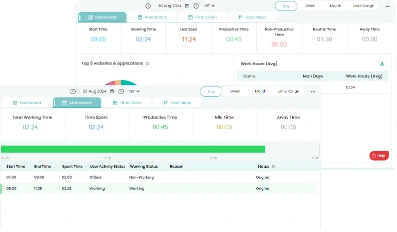
- Productivity Tracking: Surfaces consistent productivity dips or unusual work patterns that often signal an employee splitting time between two jobs.
- Screenshots and Screen Recordings: Provides visual evidence of work activity, revealing parallel projects or unfamiliar software use on company devices.
- Live Screen Monitoring: Gives you real-time visibility into what employees are working on when behavioral signals warrant a closer look.
- Suspicious Activity Detection: Alerts you to high-risk behaviors like repeated switching between unrelated tools or activity spikes outside scheduled hours.
- Data Loss Prevention: Detects unauthorized file transfers, sensitive data downloads, or company documents shared with external accounts.
- Automated Time and Attendance Tracking: Verifies actual work hours against schedules, closing the gap where moonlighting typically occurs.
- Real-Time Dashboards and Reports: Consolidates all signals into a single view for evidence-based conversations with employees when concerns arise.
Agilisium company saw a 70% productivity gain across remote teams after deploying Time Champ. The same visibility that supports productivity insights surfaces moonlighting risk before it becomes a compliance or performance issue.
Read Agilisium's Success Story
See It for Yourself
Time Champ turns scattered activity data into clear productivity trends, so you can spot moonlighting risks early and manage them fairly. Book your free demo today and see what your workforce data has been trying to tell you.

Sai Keerthi Uppala

Table of Content
 What Is Moonlighting?
- Moonlighting Meaning and Definition
- Types of Moonlighting
- Real Examples of Moonlighting
- Is Moonlighting Illegal or Legal?
- Why Employees Choose Moonlighting Jobs
- Risks of Employee Moonlighting
- Signs an Employee May Be Moonlighting
- How to Find Out If an Employee Is Moonlighting
- How to Prevent Moonlighting in Your Organization
- What Should a Moonlighting Policy Include?
- How Time Champ Helps You Detect and Prevent Moonlighting


 4.7/5 avg.
Ready to Manage Your Workforce Smarter?
Join our family of 1500+ companies using smart insights to redefine workforces!

Free Trial
No Credit Card Required