Top Hybrid Work Performance Evaluation Methodologies
Explore effective methods for evaluating employee performance in hybrid work settings, improving accountability, and supporting better team outcomes.

You may find it difficult to evaluate employees fairly when some work remotely and others work from the office. Without the right approach, you can struggle to measure performance accurately, maintain accountability, and make unbiased evaluation decisions. To overcome these challenges, you can adopt hybrid work performance evaluation methodologies that focus on measurable outcomes, continuous feedback, and consistent performance standards for all employees.
Here, you'll learn the best methods for evaluating employee performance in hybrid work environments and why they matter. We'll also share tips for choosing the right approach, avoiding common mistakes, and making performance evaluations easier and more effective.
What Are Hybrid Work Performance Evaluation Methods?
Hybrid work performance evaluation methods are structured approaches used to assess employee performance in workplaces where employees split their time between remote and office settings. These methods measure productivity, goal achievement, collaboration, and overall contribution using fair, consistent, and outcome-focused criteria without relying on physical presence.
Effective hybrid work performance evaluation ensures all employees are evaluated using the same performance standards across remote and in-office work. It improves employee accountability, identifies performance gaps, supports development, and enables you to make informed decisions about feedback, promotions, and rewards while building trust and maintaining productivity across hybrid teams.
Five Methods for Evaluating Hybrid Work Performance
Evaluating performance in a hybrid workplace requires more than simply tracking hours worked. You need structured frameworks that measure outcomes, encourage continuous improvement, and ensure employees stay aligned with business goals regardless of where they work.
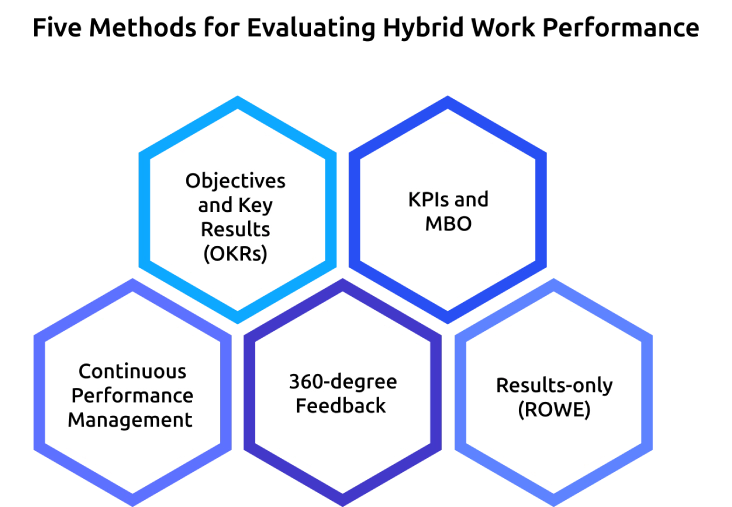
1. Objectives and Key Results (OKRs)
OKRs are a goal-setting framework that helps you define ambitious objectives and measure progress through specific, measurable outcomes.
How It Works: You work with employees to set clear objectives and measurable key results aligned with business goals. Regular check-ins help you monitor progress, resolve challenges, refine priorities, and ensure your hybrid team stays on track to achieve expected outcomes.
2. KPIs and MBO
KPIs and MBO combine measurable productivity metrics with predefined objectives to evaluate how effectively employees achieve their assigned goals.
How It Works: Establish clear KPIs, such as project completion rates, customer satisfaction, or sales targets, alongside individual objectives. You can periodically review these metrics to assess performance, provide guidance, and determine whether employees are meeting expectations based on outcomes rather than work location.
3. Continuous Performance Management
It is an ongoing approach that replaces annual performance reviews with regular feedback, coaching, and goal tracking.
How It Works: Schedule regular one-on-one meetings instead of relying on annual performance reviews. Use these conversations to discuss progress, recognize achievements, address challenges, and provide timely feedback. This helps employees adjust their priorities, stay engaged, and continuously improve their performance in a hybrid work environment.
4. 360-degree Feedback
This method collects feedback from multiple sources, including managers, peers, direct reports, and sometimes customers, to provide a well-rounded view of an employee's performance.
How It Works: Collect anonymous feedback from peers, direct reports, other managers, and relevant stakeholders who regularly work with the employee. Review the feedback to assess communication, collaboration, leadership, and overall performance. Use these insights to recognize strengths, identify development areas, and create targeted improvement plans.
5. Results-only (ROWE)
It is a performance management approach that evaluates employees solely on the results they achieve, not just the hours they work.
How It Works: Set clear goals, expected outcomes, and deadlines for your employees while giving them the flexibility to choose when and where they work. Evaluate performance based on deliverables, work quality, and business results, not just the hours worked, ensuring accountability without limiting flexibility.

Did You Know?
Gallup reports that hybrid employees are generally more engaged than employees who work only from the office. This shows why businesses need clear and consistent performance evaluation methods to keep hybrid teams productive and motivated.
How to Choose the Right Hybrid Work Performance Evaluation Method
The right performance evaluation method should reflect your team's goals, work style, and business priorities. Follow these practical steps to select an approach that promotes accountability, fairness, and consistent performance across your hybrid workforce.
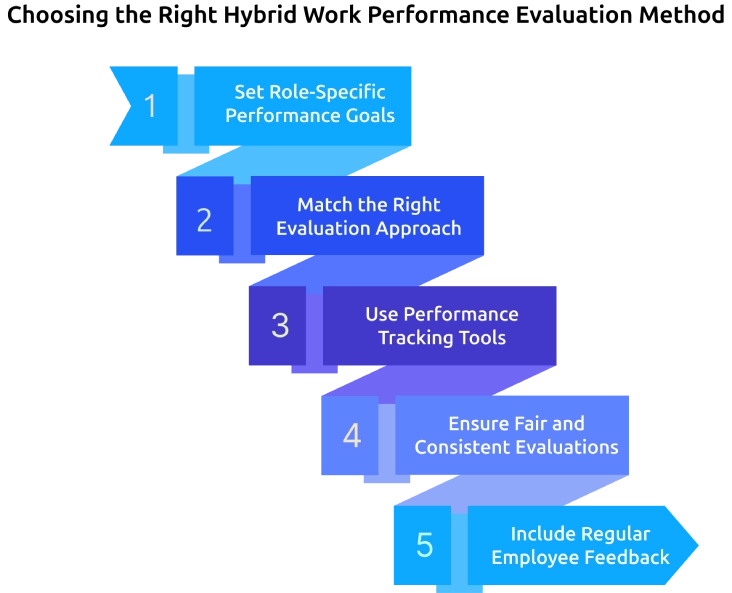
1. Set Role-Specific Performance Goals
Start by defining clear expectations for every role. Identify measurable goals and responsibilities so employees understand what success looks like. Well-defined objectives make performance evaluations more accurate and objective.
2. Match the Right Evaluation Approach
Choose a performance evaluation method that fits your team's responsibilities and the outcomes you want to measure. For example, use OKRs for goal-driven teams, 360-degree feedback for leadership roles, or continuous performance management when regular coaching is essential.
3. Use Performance Tracking Tools
Implement tools that help you track productivity, project progress, attendance, and goal completion in real time. Reliable performance data enables you to evaluate employees based on measurable outcomes, not just assumptions.
4. Ensure Fair and Consistent Evaluations
Apply the same evaluation criteria to every employee, whether they work remotely or in the office. Review performance using consistent standards to minimize bias and create a fair evaluation process.
5. Include Regular Employee Feedback
Encourage employees to share feedback about their challenges, achievements, and overall work experience. Combining measurable performance data with employee input gives you a more complete and balanced view of performance.
Finding it difficult to evaluate hybrid employee performance fairly?
Time Champ gives you the visibility and insights needed to measure performance with confidence.
Five Mistakes to Avoid When Evaluating Hybrid Work Performance
Even the best performance evaluation strategy can fail when common mistakes go unnoticed. Avoiding these pitfalls helps you create a fair, consistent, and outcome-focused evaluation process that supports hybrid team success.
Confusing Visibility with Performance
Judging employees by how often they are seen in the office or online can lead to inaccurate performance evaluations. How to fix it: Measure employees using clear goals, work quality, completed deliverables, and business outcomes to create a more accurate assessment.
Relying Too Much on Activity Monitoring
Tracking every click, keystroke, or online status can reduce trust and encourage employees to focus on appearing busy. How to fix it: Monitor meaningful productivity indicators, project progress, and completed work while giving employees the flexibility to manage their responsibilities.
Ignoring Equal Opportunities to Contribute
Remote employees may have fewer chances to share ideas, participate in discussions, or gain recognition for their work. How to fix it: Create an inclusive environment where every employee has equal access to meetings, collaboration, feedback, and recognition.
Applying the Same Evaluation Criteria to Every Role
Using identical performance standards across different roles can overlook unique responsibilities and expectations. How to fix it: Develop role-specific evaluation criteria that align with each employee's responsibilities, goals, and expected outcomes.
Focusing Only on Activity Metrics
Measuring logged hours or completed tasks alone does not provide a complete picture of an employee's contribution. How to fix it: Evaluate performance by considering goal achievement, work quality, business impact, and overall contribution to team success.
Did You Know?
Microsoft's Work Trend Index reports that organizations are increasingly focused on improving productivity and business outcomes through better workplace practices and technology, reinforcing the need for reliable performance evaluation systems.
How Time Champ Makes Hybrid Work Performance Evaluation Easier
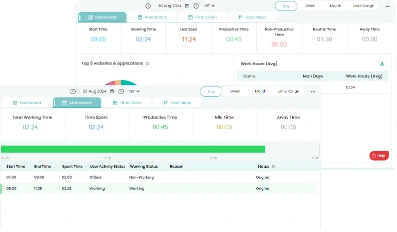
Measuring hybrid employee performance can be difficult when you don't have complete visibility into daily work. Without the right insights, fair and consistent evaluations become harder to achieve. Time Champ is an all-in-one employee monitoring platform with dedicated hybrid work management features that simplify hybrid work performance evaluation. It combines real-time productivity insights, time tracking, attendance management, and workforce analytics in one place, giving you the visibility needed to evaluate performance fairly and confidently.
- Track productivity in real time to understand how employees spend their work hours across remote, hybrid, and office environments.
- Monitor app and website usage to identify productive work patterns and uncover productivity blockers.
- Measure project and task progress to evaluate employee contributions based on completed work and project outcomes.
- Track attendance, work hours, and shift adherence to maintain consistent performance records across all work locations.
- Access productivity reports and workforce analytics to identify trends, compare performance, and support fair evaluations.
- Review timelines, activity insights, and work patterns to conduct objective performance discussions backed by reliable data.
- Generate automated reports that simplify performance reviews and support informed decision-making.
- Manage hybrid teams from a centralized dashboard with complete visibility into productivity, attendance, and workforce performance.
Need better visibility into your hybrid team's performance?
Time Champ helps you track, evaluate, and improve performance with ease.
Conclusion
Choosing the right hybrid work performance evaluation methodologies is essential for building a productive, accountable, and engaged workforce. Focusing on measurable outcomes, continuous feedback, and fair evaluation practices helps you assess employee performance more accurately while supporting workplace flexibility. The right evaluation approach not only improves individual performance but also strengthens team collaboration and business results. Pairing these methods with reliable workforce management tools gives you the visibility needed to make informed decisions, recognize employee contributions, and create a consistent performance evaluation process that helps your hybrid teams succeed over the long term.

Anjali

Table of Content
 What Are Hybrid Work Performance Evaluation Methods?
- Five Methods for Evaluating Hybrid Work Performance
- How to Choose the Right Hybrid Work Performance Evaluation Method
- Five Mistakes to Avoid When Evaluating Hybrid Work Performance
- How Time Champ Makes Hybrid Work Performance Evaluation Easier
- Conclusion
Related Blogs

Hybrid work combines office and remote time to fit how teams actually work. Learn hybrid work models, benefits, challenges, and how to measure success.
Thasleem Shaik | Jun 22, 2026
Learn about employee rights in hybrid work, including pay, benefits, overtime, privacy, workplace safety, promotions, accommodations, and compliance laws.
Anjali | Jun 05, 2026
Learn what a hybrid work policy is, see the 9 essential components to include, and download, edit, and use your free hybrid-work-policy-template.docx.
Guna Lakshmi | Jun 13, 2026
Hybrid work statistics highlighting employee preferences, productivity, workplace flexibility, and business performance across modern organizations.
Thasleem Shaik | Jun 15, 2026
See what the data says about hybrid work productivity gains, including productivity, retention, engagement, cost savings, and long-term business impact.
Thasleem Shaik | Jun 08, 2026
Learn how to create an effective hybrid work schedule in 6 simple steps. Improve collaboration and productivity with a schedule that works for your team.
Guna Lakshmi | Jun 12, 2026


 4.7/5 avg.
Ready to Manage Your Workforce Smarter?
Join our family of 1500+ companies using smart insights to redefine workforces!

Free Trial
No Credit Card Required