Call Center Quality Assurance: Scorecard and Best Practices
A complete guide to call center quality assurance: what it is, the QA process, what goes on a QA scorecard, and best practices to improve CX.
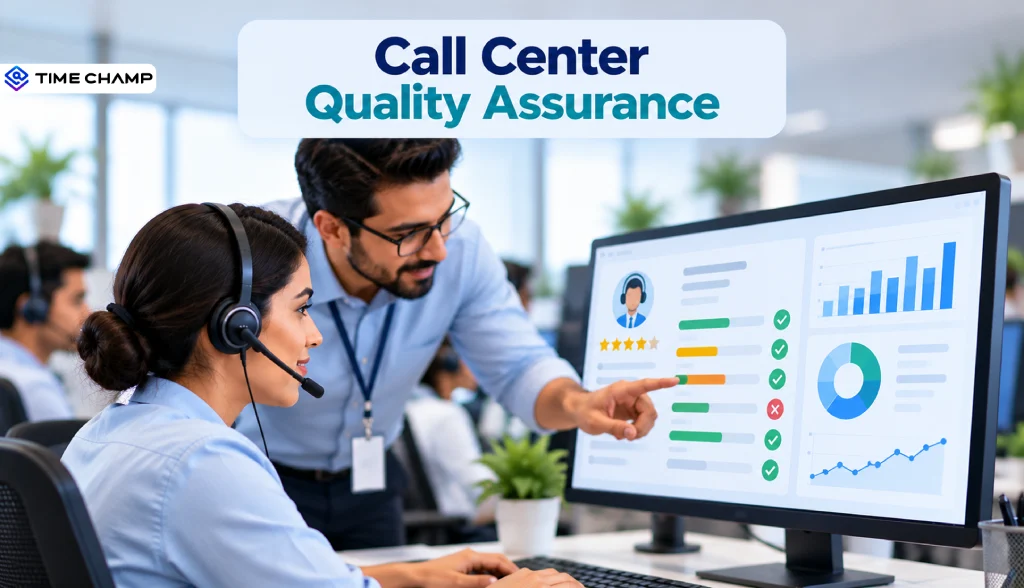
Every customer interaction shapes how people see your brand. Call center quality assurance (QA) helps you make sure those interactions are accurate, consistent, compliant, and aligned with customer expectations. But effective QA is more than listening to calls and scoring agents. It helps you identify performance gaps, improve customer experiences, and give agents the feedback they need to succeed.
To help you get started, this guide covers key QA metrics, evaluation criteria, best practices, common challenges, and practical strategies to improve call center quality and performance.
What Is Call Center Quality Assurance?
Call center quality assurance (QA) is the systematic process of monitoring, evaluating, and improving customer interactions to ensure they meet your company’s quality standards. It involves reviewing calls, chats, or other interactions against defined criteria such as communication, accuracy, compliance, problem resolution, and customer experience.
A well-structured QA process helps you identify performance gaps, recognize strong agent performance, provide targeted coaching, and maintain consistent service quality across your call center.

Did You Know?
Deloitte’s 2026 research found that 71% of customers valued ease of resolving issues, followed by fast response times (63%) and a positive support experience (52%).
Quality Assurance vs Quality Control vs Quality Management
QA, quality control (QC), and quality management (QM) all aim to improve service quality, but they focus on different areas. QA is proactive and focuses on preventing quality issues, QC is reactive and identifies issues after they occur, while QM takes a broader approach to managing and improving quality across the entire call center.
| Aspect | Quality Assurance (QA) | Quality Control (QC) | Quality Management (QM) |
|---|---|---|---|
| Focus | Preventing quality issues | Detecting quality issues | Managing overall quality |
| Approach | Proactive | Reactive | Strategic and continuous |
| Goal | Improve processes and agent performance | Identify errors and inconsistencies | Build and maintain a quality-driven operation |
| Timing | Before and during service delivery | After service delivery | Throughout the entire operation |
| Scope | Processes and agent interactions | Individual interactions and outcomes | People, processes, systems, and standards |
| Key Activities | Monitoring, evaluation, coaching, and feedback | Call reviews, error detection, and corrective action | Quality planning, improvement, governance, and performance management |
| Primary Outcome | Consistent and improved performance | Fewer errors and quality issues | Sustainable, organization-wide quality improvement |
| Example | Creating a call evaluation scorecard | Identifying an agent's compliance error during a call review | Using QA and QC data to improve call center processes |
Why Call Center Quality Assurance Matters
Call center quality assurance matters because it helps you maintain consistent service quality while improving both agent performance and customer experiences. Key benefits include:
- Improves Customer Experience: Helps ensure every interaction meets your service standards and customer expectations.
- Identifies Performance Gaps: Reveals areas where agents may need additional training, coaching, or support.
- Ensures Compliance: Helps you identify and address violations of company policies, regulations, and required procedures.
- Increases first-call Resolution: Highlights recurring issues and coaching opportunities that can help agents resolve customer concerns more effectively.
- Boosts Agent Performance: Provides agents with clear, actionable feedback to improve their communication and problem-solving skills.
- Maintains Consistency: Ensures customers receive a similar level of service across agents, teams, and channels.
- Reduces Costly Errors: Helps you catch inaccurate information, process mistakes, and other issues before they become recurring problems.
- Supports Data-driven Decisions: Gives you insights from customer interactions that can guide training, process improvements, and operational decisions.
Did You Know?
Gartner found that customers who experience first-contact resolutionconsistently report higher customer satisfaction and lower customer effort than customers whose issues are not resolved on the first contact.
The Call Center QA Process: Step by Step
A structured QA process helps you evaluate interactions consistently, identify performance gaps, and turn customer interaction data into meaningful improvements. Follow these steps to build an effective call center quality assurance process.
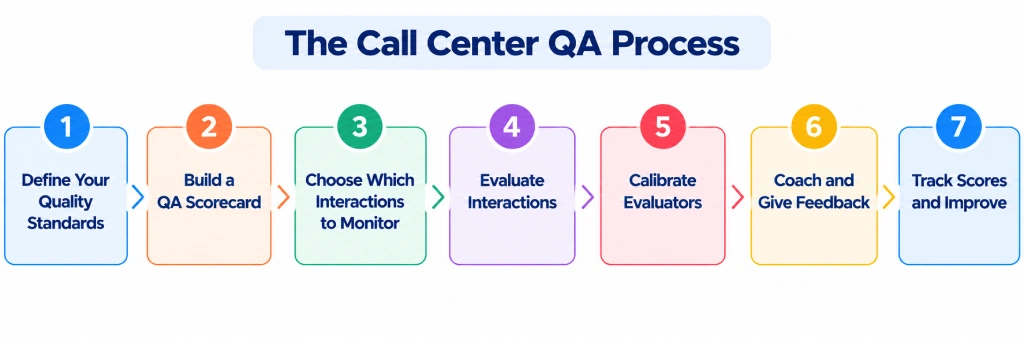
Start by clearly defining what a high-quality customer interaction looks like. Document your expectations for areas such as communication, accuracy, problem resolution, compliance, and customer experience. Align these standards with your business goals, such as improving CSAT, first-call resolution, and compliance.
Step 2: Build a QA Scorecard
Turn your quality standards into a measurable QA scorecard. Assign appropriate weights to each criterion based on its importance, so evaluators can consistently assess agent performance. Consider creating different scorecards for different call types, such as sales, support, or complaints.
Step 3: Choose Which Interactions to Monitor
Decide which customer interactions you will evaluate and how often. You can use random sampling for a balanced view, targeted monitoring for complaints or high-value interactions, or analytics-driven and 100% monitoring for broader coverage. While automated tools can help identify potential issues, human review remains important for understanding context and nuance.
Step 4: Evaluate Interactions
Review selected interactions against your QA scorecard and apply the criteria consistently. Record the agent’s strengths, performance gaps, and specific examples from the interaction. This gives you clear evidence to support feedback and coaching.
Step 5: Calibrate Evaluators
Conduct regular calibration sessions where evaluators independently score the same interaction and compare their results. Discuss differences and clarify how each criterion should be interpreted. This helps keep evaluations consistent, fair, and trusted across your QA team.
Step 6: Coach and Give Feedback
Use QA results to provide specific, timely, and actionable feedback. Focus on what the agent did well, what needs improvement, and what they can do differently next time. Treat QA as a development tool rather than a policing mechanism to encourage continuous agent improvement.
Step 7: Track Scores and Improve
Track QA scores and trends over time to identify recurring issues across agents, teams, or processes. Use these insights to improve training, workflows, policies, and quality standards. Continuously reviewing and refining your QA program helps you maintain consistent quality as customer needs and business goals change.
A QA process can reveal service quality and performance gaps.
Time Champ helps you track time, activity, attendance, and productivity for a clearer view of performance.
What to Include on a Call Center Quality Assurance Scorecard
A well-designed call center quality assurance scorecard should cover the key factors that determine whether an interaction meets your quality standards. The exact criteria and weightings can vary based on your goals, call type, and customer needs.
| Scorecard Category | What It Evaluates |
|---|---|
| Opening and verification | Proper greeting, branding, and identity or account verification. |
| Communication skills | Clarity, tone, active listening, and empathy. |
| Problem resolution | Accuracy, correct information, and resolving the issue (ideally first contact). |
| Compliance and process | Required disclosures, scripts, data security, and regulatory rules. |
| Professionalism | Courtesy, patience, and personalization. |
| Closing | Summary, clear next steps, and a satisfaction check. |
Example Call Center QA Scorecard
Here’s a simple example of how you can structure and weight a call center QA scorecard:
| Evaluation Category | Weight | Score (1-5) | Weighted Score |
|---|---|---|---|
| Opening and verification | 10% | 4 | 8% |
| Communication skills | 20% | 5 | 20% |
| Problem resolution | 25% | 4 | 20% |
| Compliance and process | 20% | 5 | 20% |
| Professionalism | 15% | 4 | 12% |
| Closing | 10% | 4 | 8% |
| Total | 100% | 88% |
Weighted Score Formula:
Weighted Score = (Score ÷ 5) × Weight
For example, if the score is 4/5 and the weight is 10%:
(4 ÷ 5) × 10 = 8%
So, the weighted score is 8%.
How to use it: Evaluators score each category on a 1-5 scale and apply the assigned weight to calculate the agent’s overall QA score. You can adjust the weightings based on your priorities. For example, give compliance more weight in highly regulated industries.
Improve Your Call Center QA with Better Performance Insights!
Start using Time Champ to track agent time, activity, attendance, and productivity for better coaching decisions.
Key Call Center QA Metrics to Track
Tracking the right metrics helps you understand where service quality is strong, where agents need support, and which issues are affecting customers. Key call center quality assurance metrics include:
Quality (QA) Score: Measures overall agent and team performance based on your quality assurance call scorecard. It helps you identify performance gaps and track improvements over time.
First Call Resolution (FCR): Shows whether customers’ issues are resolved during their first contact. A higher FCR can indicate more effective problem-solving and fewer repeat contacts.
Average Handle Time (AHT): Measures how long agents spend handling interactions. Use it alongside quality metrics to improve efficiency without sacrificing the customer experience.
CSAT, NPS, and CES: Captures how customers rate their experience, loyalty, and effort. These metrics help you understand whether your service meets customer expectations.
Compliance Adherence: Measures whether agents follow required processes, disclosures, scripts, and security procedures. Tracking it helps reduce compliance risks and maintain consistent processes.
Customer Sentiment: Analyzes customer tone and emotions to identify positive or negative experiences. It can help you spot emerging issues that may not be visible through scores alone.
Call Center Quality Assurance Best Practices
A strong QA program should do more than measure agent performance. It should help you identify issues early, improve customer interactions, and create a consistent service experience. Follow these best practices:
1. Set Clear Quality Standards
Define specific, measurable expectations so agents and evaluators understand what good performance looks like. Align these standards with customer expectations, business goals, and compliance requirements. Review them regularly to ensure they remain relevant.
2. Use Consistent Scorecards
Apply the same evaluation criteria across similar interactions to keep scoring fair and reliable. Use clear scoring guidelines so evaluators can assess performance consistently and agents know how they are being measured.
3. Monitor a Balanced Sample of Interactions
Combine random, targeted, and analytics-based monitoring to get a more complete view of quality. Include different call types, agents, and customer situations to avoid relying on a limited sample.
4. Calibrate QA Evaluators Regularly
Review the same interactions together to reduce scoring differences and maintain consistency. Discuss disagreements and clarify scoring rules so evaluations remain fair across the QA team.
5. Give Timely, Actionable Feedback
Share feedback soon after evaluations and focus on specific behaviors agents can improve. Explain what went well, what needs improvement, and what the agent can do differently in future interactions.
6. Use QA for Coaching, Not Punishment
Make QA a development tool that helps agents build skills and improve performance. A supportive approach can make agents more receptive to feedback and encourage continuous improvement.
7. Track Trends, Not Just Individual Scores
Look for recurring issues across teams to identify training or process improvements. Tracking trends can help you uncover problems that may not be visible when reviewing individual agent scores.
8. Combine QA With Customer Feedback
Compare internal quality scores with CSAT, FCR, and other customer metrics for a broader view of performance. This helps you understand whether improvements in agent performance are also translating into better customer experiences.
9. Review and Update Your QA Program
Regularly adjust standards, scorecards, and monitoring methods as customer expectations and business needs change. Updating your quality assurance program keeps it effective and ensures your evaluation process continues to support your current goals.
How Time Champ Can Support Call Center QA
While call center QA helps you measure the quality of customer interactions, you can use Time Champ to understand how your agents spend their working time. Combining time and QA data gives you a clearer view of productivity, workload, and overall agent performance.
You can use it to:
- Productivity Tracking: See how your team spends their working hours.
- Time Tracking: Understand how much time agents spend on different tasks.
- Attendance Tracking: Keep visibility into agent attendance and working hours.
- Activity Monitoring: See activity levels during working hours and identify productivity gaps.
- Performance Analytics: Review productivity trends and compare them with QA results.
- Workload Management: Identify agents who may be overloaded or underutilized.
- App and Website Usage Tracking: Understand which tools and websites your agents use during work.
- Coaching Insights: Combine time, activity, and QA insights to make coaching more targeted.
Ready to Improve Your Call Center Performance?
Start using Time Champ to connect productivity insights with QA results.
Conclusion
A strong call center quality assurance process gives you a clear view of what’s working and where your team needs support. Set clear standards, use a practical scorecard, track the right metrics, and turn evaluation results into useful coaching.
If you’re also looking for a productivity tracking tool, Time Champ can be a great solution. It gives you visibility into how your agents spend their work time, their activity levels, attendance, and productivity, helping you get a more complete picture of team performance.

Guna Lakshmi

Table of Content
 What Is Call Center Quality Assurance?
- Quality Assurance vs Quality Control vs Quality Management
- Why Call Center Quality Assurance Matters
- The Call Center QA Process: Step by Step
- What to Include on a Call Center Quality Assurance Scorecard
- Key Call Center QA Metrics to Track
- Call Center Quality Assurance Best Practices
- How Time Champ Can Support Call Center QA
- Conclusion
Instant Signup
Thank you for your request!
We have received your signup request and our team will get back to you soon. In the meantime, you can book a demo to see Time Champ in action.
Book a DemoFree trial. No credit card required. Prefer a walkthrough? Book a demo.
Related Blogs
Discover the ultimate guide to call centre workforce management. Learn key functions, pros, cons, optimisation tips, and how real-time WFM boosts ROI.
Thasleem Shaik | Oct 01, 2025
Discover the 10 best call centre quality assurance software for 2025. Compare features, pricing, pros, and cons to boost service quality and performance.
Thasleem Shaik | Nov 07, 2025
Learn what the call center occupancy rate is, the formula, how to calculate it, what a good occupancy rate is, and how it differs from utilization.
Guna Lakshmi | Oct 16, 2026
Track the most important BPO KPIs to measure agent performance, productivity, customer satisfaction, and overall contact center success in 2026.
Guna Lakshmi | Oct 02, 2026
Learn what average handle time (AHT) is, the AHT formula, how to calculate it, and proven ways to reduce it without hurting service quality.
Guna Lakshmi | Oct 05, 2026
Contact center services help businesses manage customer support across multiple channels. Compare types, benefits, costs, technologies, and AI trends.
Thasleem Shaik | Aug 10, 2026


 4.7/5 avg.
Ready to Manage Your Workforce Smarter?
Join our family of 1500+ companies using smart insights to redefine workforces!

Free Trial
No Credit Card Required