Screenshot Monitoring Without Spying: 6 Privacy Best Practices
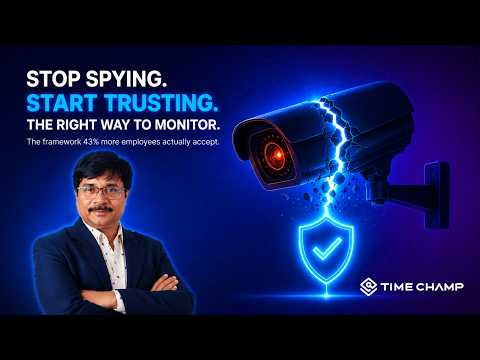
Can you monitor work without making people feel watched? Praveen walks through six practices, from defining the purpose to publishing a clear policy, and shows how Time Champ supports each one.

What You'll Learn in This Video
The six practices covered in the video, in the order they appear.
Purpose and Frequency
Why screenshot monitoring needs a stated purpose, and how to control when and how often screenshots are captured so it stays proportionate.
Blur Sensitive Information
How screenshot blurring keeps passwords, personal messages and customer data out of captured images.
Breaks and Access Limits
Respecting working hours and breaks, and restricting who in the organisation can open screenshots.
A Transparent Policy
Why a clear, published monitoring policy comes before the technology, and how Time Champ supports privacy-first monitoring.
About This Video
Screenshot monitoring only works when people understand why it exists and what it will never be used for. In this video Praveen from Time Champ walks through six best practices for privacy-friendly screenshot monitoring: define the purpose, control when and how often screenshots are captured, protect sensitive information with blurring, respect working hours and breaks, limit who can access screenshots, and be transparent with a clear monitoring policy. He closes with how Time Champ supports privacy-first monitoring and why the policy should come before the technology.
Who this is for:
- HR and people leaders writing or updating a monitoring policy
- Managers of remote and hybrid teams who want visibility without eroding trust
- IT and security teams configuring screenshot capture and access controls
- Business owners weighing monitoring against employee privacy expectations
Read the full guide, Employee Screenshot Privacy: Best Practices for Monitoring, or see how Time Champ screenshot monitoring handles blurring, frequency and access controls.




















 4.7/5 avg.
Ready to Manage Your Workforce Smarter?
Join our family of 1500+ companies using smart insights to redefine workforces!

Free Trial
No Credit Card Required