Remote Work Culture: How to Build a Strong Culture Across Remote Teams
Build a strong remote work culture with practical strategies that improve communication, collaboration, accountability, and connection across your team.
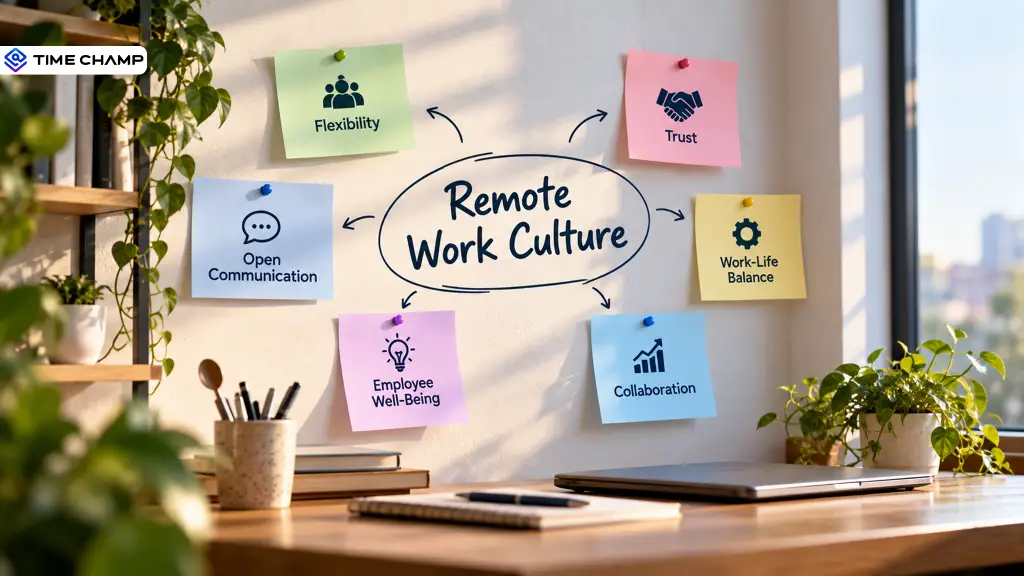
Your remote team may work from different places, but it still needs a strong sense of connection. It grows through trust, support, shared goals, and the small moments that keep everyone connected, even when you work miles apart.
Remote work culture shapes how you communicate, collaborate, support your team, and stay connected to a shared purpose. A strong culture makes remote work feel less like completing tasks from different locations and more like working together toward a common goal.
Building a strong culture takes more than good tools or flexible policies. This guide covers practical steps and ideas you can use to build a strong culture across your remote teams.
What Is Remote Work Culture?
Remote work culture is the shared values, behaviors, communication habits, and expectations that shape how your team works together when you work outside a central office. It influences how you build trust, communicate, collaborate, recognize contributions, and stay connected across different locations and time zones.
Why Remote Work Culture Is Important
Remote teams need something to hold them together when the office no longer does. A strong remote workplace culture gives you that foundation. Gallup’s data shows that only 20% of U.S. employees strongly agree that they feel connected to their workplace culture, which shows how much room there is to strengthen that connection.
Here are the key reasons a strong remote culture matters:
- Keeps Your Team Connected: Distance can make everyday work feel transactional when your team interacts only around tasks and deadlines. Regular check-ins, shared rituals, recognition, and informal conversations create stronger connections and give your team a greater sense of belonging and shared purpose.
- Sharpens Communication: Remote work requires clear and intentional communication. Setting regular check-ins, documenting important updates, and defining clear expectations give your team a reliable way to share information and stay aligned. This approach reduces confusion, keeps priorities visible, and makes collaboration easier across locations.
- Lowers Turnover: A strong culture can give your team more reasons to stay. When you create a supportive work environment, recognize contributions, offer growth opportunities, and maintain open communication, your team can feel more valued and connected to their work. This can strengthen loyalty and encourage your team to build a longer-term future with you.
- Strengthens Talent Attraction: A strong remote workforce culture can make your workplace more appealing to candidates who value flexibility, trust, and a supportive work environment. When you offer clear communication, meaningful growth opportunities, and flexible ways to work, you can attract talent from a wider range of locations and backgrounds.
- Protects Work-Life Boundaries: Remote work can make it harder to separate work from personal time. Setting clear working hours, respecting time away from work, and focusing on outcomes rather than constant availability can support a healthier work-life balance. These practices also give your team the space to recharge and maintain a sustainable routine.
Want better visibility into remote work without micromanaging your team?
Use Time Champ to gain productivity insights and build accountability through clarity.
How to Build a Strong Remote Work Culture (Step by Step)
A strong remote culture does not happen by accident. You build it through deliberate choices in how you communicate, set goals, onboard your team, and support your team when you are not working in the same room. Use the steps below as a starting point, then adapt them to fit the way your team works.
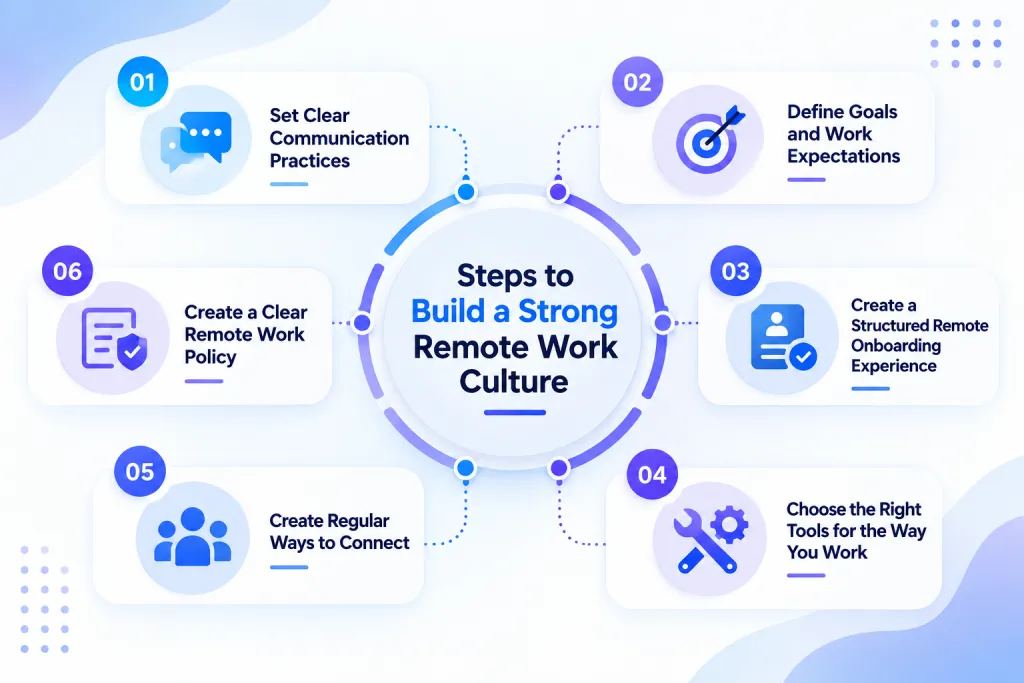
1. Set Clear Communication Practices
Make communication easy to follow from day one. Decide where your team should share updates, ask questions, document decisions, and handle urgent matters.
Use asynchronous communication for updates that do not need an immediate response. Keep important information in shared spaces so your team can access it whenever they need it, without waiting for a reply.
2. Define Goals and Work Expectations
Tell your team what success looks like, not just which tasks to complete. Define outcomes, deadlines, and ownership for every project, then review them regularly to keep work on track.
When you pair clear goals with visibility into output, you build accountability without hovering over your team. Time Champ gives you that visibility through productivity insights that show progress toward outcomes, not just hours logged, so your team stays aligned without feeling watched.
3. Create a Structured Remote Onboarding Experience
Your first few weeks can shape how quickly new hires feel connected to your team. Give each new hire a clear path through their role, tools, workflows, values, and communication practices.
Create an onboarding checklist, assign a dedicated onboarding coordinator, schedule regular check-ins, and provide easy access to important documents. A structured approach can replace many of the informal conversations that naturally happen in an office.
4. Choose the Right Tools for the Way You Work
Pick tools that match your team's workflow instead of adding every app available. Use communication and project tools like Slack, Zoom, and Asana for day-to-day collaboration, and add productivity-tracking software like Time Champ to give you and your team a shared, clear view of workload and output.
This approach builds trust through clarity rather than constant oversight and helps you spot signs of burnout before they affect your team.
5. Create Regular Ways to Connect
Your team needs opportunities to interact beyond tasks and deadlines. Build simple rituals that give everyone a chance to connect and share experiences.
Try virtual coffee chats, team celebrations, interest-based channels, onboarding buddies, or occasional virtual events. You can also create no-meeting blocks so your team has uninterrupted time for focused work.
6. Create a Clear Remote Work Policy
Put your expectations in writing so your team does not have to guess how remote work should operate. Cover working hours, communication norms, meeting expectations, response times, time-zone coordination, availability, and time away from work.
Review the remote work policy as your team grows. When your guidelines reflect how your team actually works, you create consistency without taking away the flexibility that makes remote work effective.
Remote Work Culture Examples from Leading Companies
A strong remote culture becomes easier to picture when you see how established remote-first teams put it into practice. The most useful examples do not rely on virtual perks alone. They build culture into communication, documentation, transparency, flexibility, and everyday team interactions.
Here are three examples you can look at when shaping your own remote workforce culture.
1. GitLab: Builds a Culture Around Documentation, Transparency, and Autonomy
GitLab follows a handbook-first approach that puts its ways of working, values, and processes into written documentation. Its all-remote guide also emphasizes written knowledge, documented processes, flexible hours, and public information sharing. This approach gives the team a clear reference point instead of relying on informal office conversations.
2. Buffer: Puts Transparency at the Center of Its Remote Culture
Buffer has operated as a fully remote and distributed team since 2013. Its culture centers on transparency, with clear communication and open decision-making playing an important role in how the team works together. Buffer also documents its communication expectations, so new team members do not have to rely on informal conversations to understand how communication works.
3. Zapier: Builds Its Remote Culture Around Asynchronous Communication and Connection
Zapier uses asynchronous communication to keep work moving across different schedules and locations. Its internal communication practices give the team space to share updates, discuss ideas, and keep conversations accessible instead of depending on everyone being available at the same time.
Finding it difficult to manage remote work without losing visibility?
Use Time Champ to understand productivity and workload with greater clarity.
Challenges in Building a Remote Work Culture and Best Practices to Overcome Them
Building a strong remote work culture can come with challenges. Distance can make it harder to stay connected, communicate clearly, track work progress, manage different time zones, and maintain a healthy work-life balance. The good news is that you can address each challenge with the right practices and clear expectations. Here are the most common challenges you may face and practical ways to handle them.
1. Remote Teams Can Feel Isolated
When your team rarely meets in person, daily interactions can become limited to tasks, updates, and deadlines. Over time, your team may miss the casual conversations and social connections that naturally happen in an office.
How to Reduce Isolation
Create regular opportunities for genuine interaction. Try virtual coffee chats, interest-based channels, personal check-ins during team meetings, and occasional team activities. Keep these interactions natural and give your team space to participate without making every activity mandatory.
2. Communication Can Become Disconnected
Remote work removes many quick conversations that happen naturally in a shared workplace. Important updates can get buried in messages, decisions can remain unclear, and different communication habits can create confusion.
How to Fix Communication Gaps
Set clear communication rules for your team. Decide which channels you should use for updates, discussions, urgent matters, and important decisions. Encourage written documentation and asynchronous communication when an immediate response is not necessary. This gives your team a clear way to stay informed without relying on constant meetings.
3. Accountability Can Become Difficult
Without clear expectations, remote work can create uncertainty around priorities, deadlines, and progress. You may start relying on frequent check-ins when you cannot clearly see how work is progressing.
How to Improve Accountability
Set clear outcomes, deadlines, responsibilities, and review points from the start. Focus conversations on results rather than constant availability. Use productivity insights to understand workload and work patterns, then use those insights to have more focused conversations about progress and support.
4. Remote Teams Can Develop Silos
When your team works from different locations, communication can become limited to the people they work with most often. This can make cross-team collaboration harder and leave important information trapped within smaller groups.
How to Improve Team Collaboration
Create shared spaces for important information and encourage collaboration across teams. Keep key decisions visible, invite different perspectives into discussions, and create opportunities for your team to interact beyond their immediate work groups.
Build a Stronger Remote Work Culture with Time Champ
Remote work gives your team more freedom, but you still need a clear view of how work is progressing. Without that visibility, you may have to rely on frequent updates or assumptions when you want to understand workload, focus, and progress. The right remote work software can give you useful insights while keeping trust at the center of your culture.
Time Champ brings time tracking and productivity insights into one place, helping you see work patterns, workload, and progress more clearly. You can use these insights to set realistic expectations, identify workload gaps, and have better conversations about support and priorities. Your team gets more clarity without the pressure of constant check-ins.
You can also use Time Champ to build accountability around outcomes rather than physical presence. When you focus on work patterns and results instead of watching every activity, you create a healthier balance between visibility and autonomy. That approach can strengthen trust and make your remote team culture more consistent as your team grows.
Want your remote team to work with freedom and clear direction?
Try Time Champ to understand work patterns and keep priorities on track.
Conclusion
A strong remote work culture gives your team more than flexibility. It creates trust, clear communication, shared goals, and a sense of connection across locations. Keep those practices consistent, listen to what your team needs, and adjust your approach as your team grows.
If you want clearer visibility into workload and work patterns, Time Champ gives you time tracking and productivity insights to support better decisions. You can use those insights to strengthen accountability while giving your team the freedom to work with confidence. Ready to bring more clarity to remote work? Try Time Champ today.

Thasleem Shaik

Table of Content
-
 What Is Remote Work Culture?
-
Why Remote Work Culture Is Important
-
How to Build a Strong Remote Work Culture (Step by Step)
-
Remote Work Culture Examples from Leading Companies
-
Challenges in Building a Remote Work Culture and Best Practices to Overcome Them
-
Build a Stronger Remote Work Culture with Time Champ
-
Conclusion
Related Blogs

Discover if remote workers are truly less productive. Explore key insights, challenges, and benefits of remote work in boosting employee productivity.
Shabana Shaik | 26 March 2025
Struggling to improve your remote workplace? Uncover six powerful strategies to boost productivity, enhance collaboration, and keep your team engaged!
Tarun Kumar Reddy | 14 March 2025
Wondering why meetings are essential in remote work? Uncover 10 key reasons they improve communication, teamwork, and efficiency for your remote team!
Tarun Kumar Reddy | 14 March 2025
Avoid common remote work mistakes that hurt productivity and teamwork. Learn how to overcome challenges and create a more efficient remote work setup.
Thasleem Shaik | 13 March 2025
Remote work is the secret sauce for more loyal employees. Discover how virtual collaboration and flexible hours transform teams into powerhouses.
Sai Keerthi Uppala | 21 February 2025
Learn how to track time for remote workers using simple methods and remote tracking tools and learn best practices that improve trust and productivity.
Guna Lakshmi | 19 May 2026


 4.7/5 avg.
Ready to Manage Your Workforce Smarter?
Join our family of 1500+ companies using smart insights to redefine workforces!

Free Trial
No Credit Card Required