Remote Employee Onboarding: A Step-by-Step Guide (2026)
Learn a five-phase remote employee onboarding process with clear owners, from preboarding to month six, backed by research and proven best practices.

Hiring for a new job is exciting but doing it remotely can also feel a little intimidating. Instead of walking into an office, meeting teammates over coffee, or casually asking questions, new hires are often greeted by a laptop, a calendar full of video calls, and a long list of documents to read. It's no surprise that many remote employees take longer to feel connected and confident in their new role.
That's why remote onboarding is much more than sending a welcome email or shipping company equipment.
In this blog, I'll break down a simple five-phase remote employee onboarding process, from preboarding to the six-month milestone. You'll learn what happens at each stage, who should own it, and the research-backed practices that help remote employees feel welcomed, engaged, and set up for long-term success.
What Is Remote Employee Onboarding?
Remote employee onboarding is the process of welcoming and integrating a new hire into your company without them ever setting foot in a physical office. It's about much more than sending a laptop or creating login credentials. A successful onboarding experience helps new employees feel prepared, connected, and confident from day one.
Why Remote Employee Onboarding Often Falls Short
Remote onboarding usually fails for one simple reason: new employees don't know what to do, where to find information, or who to ask for help. In an office, many answers come from quick chats and daily interactions. In a remote team, those moments need to be planned.
Gallup found that only 12% of employees feel their company does a great job onboarding new hires, and only 29% feel fully ready and supported after onboarding. A BambooHR study also found that 44% of employees have doubts about their new job within the first week, and 65% don't know who to ask when they have questions.
Good remote onboarding is about giving new hires clear steps, easy access to information, and the right people to support them from day one.
How the Remote Employee Onboarding Process Works
Most remote onboarding guides give you a checklist of tasks. They rarely tell you who is responsible for making those tasks happen. In a remote environment, ownership is just as important as the process itself. When every phase has a clear owner, onboarding becomes consistent, repeatable, and far less likely to fall through the cracks.
Here's a practical five-phase framework that takes a new hire from offer acceptance to the six-month milestone.
Phase 1: Preboarding (Offer Accepted to Day One)
The onboarding experience starts long before an employee logs in for the first time. In fact, preboarding is often the most important stage because delays here can derail the entire first week. If the laptop hasn't arrived or accounts don't work, productivity stalls before it even begins.
| Task | Owner | Recommended Timing |
|---|---|---|
| Send employment contract, complete paperwork, and verify right-to-work documents | HR | Within 48 hours of offer acceptance |
| Collect shipping address and equipment preferences | HR | Immediately after acceptance |
| Order, ship, and confirm delivery of equipment | IT | At least one week before the start date |
| Create and test all user accounts and system access | IT | Two days before day one |
| Send a welcome email, first-day agenda, and first-week schedule | Hiring Manager | Three days before the start date |
| Announce the new hire to the team | Hiring Manager | The Friday before the employee starts |
| Assign a buddy and schedule the first three meetings | Hiring Manager | Before day one |
Best Practice: Don't just create accounts; test every login before the employee starts. A missing password or blocked account can consume an entire first day and leave a poor first impression.
Phase 2: Day One (Structure Beats Good Intentions)
A remote employee's first day shouldn't be an empty calendar with a message saying, "Take your time getting settled." Without an office environment, "settling in" often means sitting alone, unsure of what comes next.
Instead, give every new hire a structured agenda with scheduled meetings, clear expectations, and a defined finish time.
A successful first day should include:
- A 30-minute welcome meeting with the hiring manager to discuss expectations and answer questions.
- A team introduction session that helps the new hire meet key colleagues without overwhelming them.
- A one-on-one meeting with their onboarding buddy, making it clear that no question is too small.
- One small but meaningful task they can complete before the end of the day to build confidence.
- A clear end-of-day wrap-up, reviewing any questions and confirming what happens on day two.
The goal is to ensure they end their first day feeling welcomed, supported, and confident about what's next.
Phase 3: Week One (Build Connections Before Productivity)
During the first week, relationships matter more than output. New employees should finish the week knowing who to ask for help, how work gets done, and where to find information without depending on memory.
The first week is also the ideal time to encourage questions. New hires are much more likely to ask for help early than after they've been in the role for a month.
Phase 4: Days 30, 60, and 90 (Define Success in Writing)
Great onboarding doesn't end after the first week. Employees need to understand what success looks like over time, and those expectations should be documented from the beginning.
A simple framework works well:
- Day 30: Focus on learning the role, understanding processes, and becoming comfortable with daily responsibilities.
- Day 60: Shift toward consistent contribution, greater ownership, and stronger collaboration across the team.
- Day 90: Aim for increased independence, confidence in decision-making, and full integration into the team.
Use each milestone as a structured conversation rather than a performance review. Review progress together, celebrate achievements, address challenges, and update goals for the next phase.
Phase 5: Month Six (The Check-In Many Companies Skip)
Many onboarding programs officially end after 90 days, but employees are still forming lasting opinions about their role, manager, and company months later. After six months, new hires are often more open about what's working well and what isn't.
A dedicated six-month check-in gives you the chance to discuss:
- What's working well.
- What's still frustrating.
- Whether expectations match the reality of the role.
- Career development goals.
- Additional support or training the employee needs.
This conversation can help you find engagement issues before they become retention problems and reinforces that onboarding is an ongoing process.
Great onboarding starts with the right visibility!
See how new hires are settling in, track their progress, and support them
How Time Champ Supports Remote Employee Onboarding
Time Champ is not an onboarding workflow tool, and it does not replace welcome emails, training plans, or manager conversations. Time Champ is a remote employee monitoring software with a workforce intelligence layer that helps you manage employee information, track work patterns, and find early challenges.
Employee Records Management: Keeps employee information organized in one place for easy access by HR and managers.
Document & Policy Management: Helps you store and manage important documents and policies so employees can quickly find the right information.
Attendance Tracking: Automates tracking of logins, logouts, breaks, shifts, and leave management from day one.
Shift & Schedule Management: Helps manage remote and hybrid work schedules across different locations and time zones.
Task Management: Allows you to assign tasks to new hires with clear roles, priorities, and deadlines.
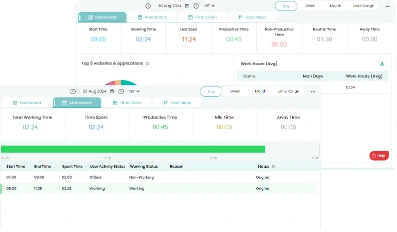
Productivity & Time Reports: Provides insights into how employees spend time across tasks and projects during the onboarding period.
Workload & Over-Utilization Insights: Helps you identify workload issues, excessive work hours, and potential challenges early.
Training & Skill Development Planning: Supports employee growth by helping you identify skill gaps and plan development activities.
Not sure whether your new remote hires are actually settling in?
Track attendance, workload, and work patterns from day one with Time Champ
Conclusion
Remote employee onboarding works best when it is planned, consistent, and supported by the right people. From preboarding to the six-month check-in, every step helps new hires feel connected, confident, and ready to contribute. A clear process with defined owners removes confusion and creates a better experience for both you and your employees. With clear communication, proper support, and regular feedback, companies can create a stronger remote work experience from day one.

Jahnavi Pulluri

Table of Content
 What Is Remote Employee Onboarding?
- Why Remote Employee Onboarding Often Falls Short
- How the Remote Employee Onboarding Process Works
- How Time Champ Supports Remote Employee Onboarding
- Conclusion
Related Blogs
A walk-in interview is a kind of job interview where candidates can just arrive at the company
Thasleem Shaik | Mar 22, 2024
Learn what a work schedule is, its types, benefits, challenges, legal factors, and how to create effective employee schedules with practical tips.
Guna Lakshmi | Apr 13, 2026
Looking to build a better hybrid work schedule? Explore popular schedule types, weekly examples, and practical tips for a more productive team.
Guna Lakshmi | Jul 21, 2026
Discover what is project scheduling, definition, key components, types, templates, strategies, pros & cons, real examples, and software for efficiency.
Tarun Kumar | Apr 02, 2026
Build a smarter swing shift schedule with work hours, schedule types, industries that use swing shifts, and step-by-step tips for effective shift management.
Anjali | Jun 27, 2026
Discover how hybrid remote work blends flexibility with productivity. And explore key benefits, challenges, and tips for managing a successful hybrid workplace.
Sai Keerthi Uppala | Oct 25, 2024


 4.7/5 avg.
Ready to Manage Your Workforce Smarter?
Join our family of 1500+ companies using smart insights to redefine workforces!

Free Trial
No Credit Card Required