What Is a Time Budget? How to Plan Your Time More Effectively
Learn what a time budget is, why it matters, how to create an effective one in four simple steps, and look at the common mistakes to avoid.

The workday ends, but your most important tasks are still sitting on tomorrow's to-do list. Meanwhile, meetings, emails, and unexpected requests seem to consume hours without warning. Here, the main problem is usually the absence of a structured plan for managing your time.
A time budget helps you take control of how your hours are spent before they get claimed by competing priorities.
To help you get started, we have explained what a time budget is, why it matters, how to create one, and the common mistakes to avoid so you can make better use of your time every day.
What Is a Time Budget?
A time budget is a time management method that helps you decide how much time you'll spend on different activities during a specific period, such as a day, week, or month. Instead of letting meetings, emails, and unexpected tasks take control of your day, a time budget helps you decide in advance where your time should go.
Just as a financial budget helps you manage money, time budgeting helps you manage your time. For example, if you work 35 hours a week, you might create a time budget that includes:
- 15 hours for project work
- 8 hours for meetings
- 5 hours for employee support
- 4 hours for planning
- 3 hours as buffer time
Over time, this simple habit can help you build better planning skills and improve how you manage your workload.
Why a Time Budget Matters
Most people don't intentionally waste time. The real problem is that they don't have a clear plan for how their time should be spent. Without a time budget, it's easy for meetings, emails, and unexpected requests to take over your day, leaving little time for important work.
A time budget helps you stay in control by giving every hour a purpose. Here's why it matters:
- Keep Your Priorities on Track: Ensures important work gets done before less valuable tasks consume your time.
- Improves Visibility: Helps you understand where your hours are actually going and identify activities that take more time than expected.
- Reduces Stress: Prevents overcommitting by showing how much time you realistically have available.
- Supports Better Decisions: Makes it easier to evaluate new requests and determine whether they fit into your schedule.
- Helps You Achieve Goals Faster: Aligns your daily activities with your weekly, monthly, and long-term objectives.
When you know where your time is going, you can make smarter choices about how to spend it.

Did You Know?
According to Deloitte's Global Human Capital Trends survey, employees report spending 41% of their workday on activities that don't contribute to organizational value, highlighting the importance of better time allocation and prioritization.
How to Create a Time Budget in Just 4 Steps
Creating a time budget doesn't have to be complicated. When you follow a few simple steps, you can build a realistic plan that helps you stay focused, manage your workload, and make better use of your available hours.
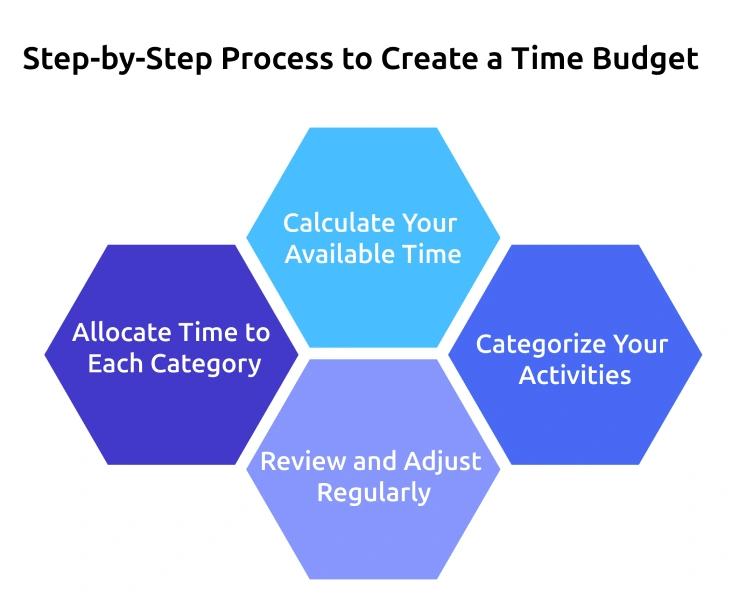
Step 1: Calculate Your Available Time
Start by determining how many hours you actually have available. Subtract recurring commitments such as meetings, breaks, and administrative work from your total working hours. The remaining time is what you can allocate to your priorities.
Step 2: Categorize Your Activities
Group your work into categories such as project work, meetings, emails, planning, employee support, and administrative tasks. This makes it easier to see where your time needs to go.
Step 3: Allocate Time to Each Category
Assign a specific number of hours to each category based on its importance. Be realistic and leave some buffer time for unexpected tasks and urgent requests.
Step 4: Review and Adjust Regularly
At the end of each week, compare how you planned to spend your time with how you actually spent it. Use these insights to adjust your future budgets and improve your planning accuracy.
Are unexpected tasks constantly disrupting your schedule?
Time Champ helps you understand work patterns and allocate time more effectively across projects and teams.
Common Mistakes to Avoid While Budgeting Time
Even the best time budget can fail if it's based on unrealistic expectations. Here are some common mistakes to watch out for:
Underestimating How Long Tasks Take
Many tasks take longer than expected. When your estimates are too optimistic, deadlines slip, and your entire schedule gets disrupted. Using past data instead of assumptions can help you create more realistic time budgets.
Pro Tip
Stop guessing how long tasks will take. Let Time Champ's Automatic Time Tracking capture actual work hours so you can build future time budgets with confidence.
Scheduling Every Available Hour
Leaving no room for unexpected work is a common mistake. Always reserve some buffer time to handle urgent requests, meetings, or last-minute changes. Even a small buffer can prevent one disruption from affecting your entire day.
Ignoring Low-Value Activities
Emails, status updates, and unnecessary meetings can quietly consume a large portion of your day. If you don't account for them, your budget won't reflect reality. Tracking these activities can reveal opportunities to reclaim valuable time.
Treating Every Task as a Priority
Not all work has the same impact. Spending too much time on low-priority tasks can leave little room for strategic or high-value work. Focus your largest time blocks on activities that contribute most to your goals.
Multitasking Too Often
Switching between tasks may feel productive, but it often reduces focus and increases the time needed to complete work. This helps improve concentration and allows you to finish work more efficiently. Small improvements in focus can lead to significant gains in productivity over time.
Also Read: What is Time Blocking? How to Use it for Greater Efficiency
Failing to Review Your Budget
A time budget should evolve as your workload changes. Regular reviews help you identify what's working, what's not, and where adjustments are needed. Even a 10-minute weekly review can significantly improve future planning.
Creating an Overly Complex Budget
Some people create too many categories and detailed schedules, making the budget difficult to maintain. Keep your time budget simple enough to follow consistently.
Track Your Time Budget Accurately with Time Champ
Creating a time budget is only half the battle. To make it effective, you need to know whether you're actually spending your time as planned. Without accurate tracking, it's difficult to identify where your hours are going or which activities are consuming more time than expected.
Time Champ is an employee monitoring and time tracking software with workforce intelligence features that help you track, analyze, and optimize how time is spent across your organization.
With Time Champ, you can:
- Track actual time spent on tasks with automatic time tracking, giving you accurate visibility into how work hours are spent.
- Manage project deadlines and progress through project management features to stay on schedule and meet goals on time.
- Monitor app and website usage to understand where productive time is being spent.
- Identify time-consuming activities through productivity tracking, which categorizes time as productive, non-productive, or neutral.
- Get detailed reports with advanced analytics & reporting to make better planning and resource allocation decisions.
- Monitor employee activity levels to understand work patterns and improve workforce planning.
When you combine accurate tracking with actionable insights, Time Champ helps you build more realistic time budgets.
Ready to turn your time budget into measurable results?
Time Champ gives you the tracking and insights needed to improve planning, productivity, and performance.
Conclusion
A time budget helps you take control of your schedule instead of letting your schedule control you. Knowing where your time is allocated creates more clarity and structure throughout the work week. This creates a more organized approach to managing responsibilities and meeting deadlines.
To make time budgeting even more effective, Time Champ helps you track actual time usage, identify productivity trends, and keep your time budget aligned with real work patterns.

Guna Lakshmi

Table of Content
 What Is a Time Budget?
- Why a Time Budget Matters
- How to Create a Time Budget in Just 4 Steps
- Common Mistakes to Avoid While Budgeting Time
- Pro Tip:
- Track Your Time Budget Accurately with Time Champ
- Conclusion
Instant Signup
Thank you for your request!
We have received your signup request and our team will get back to you soon. In the meantime, you can book a demo to see Time Champ in action.
Book a DemoFree trial. No credit card required. Prefer a walkthrough? Book a demo.
Related Blogs

Looking for the best freelance time tracking software? Explore the top free and paid tools to track work hours, manage projects, and improve productivity.
Guna Lakshmi | May 18, 2026
Learn how time tracking improves remote team productivity through better visibility, accountability, performance tracking, and smarter team management.
Anjali | May 16, 2026
Want to boost productivity? Uncover 20 time tracking best practices that can transform your workflow and help you achieve more with less effort.
Guna Lakshmi | July 01, 2025
Discover effective ways to build employee trust in automatic time tracking software and create a transparent, productive, and positive work environment.
Thasleem Shaik | Mar 13, 2025
Find out why you may need to monitor freelancer work, including key pros and cons that affect productivity, quality, accountability, and trust in teams.
Jahnavi Pulluri | Apr 29, 2026
Learn how automated time tracking improves team productivity, reduces manual work, builds trust, and delivers smarter workforce insights for managers today.
Anjali | May 15, 2026


 4.7/5 avg.
Ready to Manage Your Workforce Smarter?
Join our family of 1500+ companies using smart insights to redefine workforces!

Free Trial
No Credit Card Required