Time Allocation: 9 Smart Techniques for Time Management
Learn what time allocation is, why it matters, and the best techniques to allocate your time effectively for improved workforce productivity.

Every day, you start work with a list of tasks you want to complete. But as the day goes on, meetings get scheduled, emails keep arriving, and unexpected requests demand your attention. Before you know it, the day is over, and the tasks that mattered most are still unfinished.
That's where time allocation comes in. When you allocate your time effectively, you decide in advance how much time each task deserves.
To help you get started, we will walk you through what time allocation is, why it matters, and practical techniques you can use to allocate your time more effectively in 2026.
What Is Time Allocation?
Time allocation is the process of deciding how much time you should spend on specific tasks, projects, or activities based on their importance and priority. Instead of simply working through a list of tasks, time allocation helps you distribute your available time in a way that supports your goals and responsibilities.
For example, if you have an 8-hour workday, you might allocate:
- 4 hours for high-priority project work
- 2 hours for meetings
- 1 hour for emails and administrative tasks
- 1 hour for planning and unexpected work
This approach makes it easier to balance competing priorities while maintaining steady progress on your most important tasks.
Whether you are managing a team or trying to improve your personal productivity, effective time allocation helps you stay focused, organized, and aligned with your goals.

Did You Know?
According to research highlighted by Forbes, knowledge workers spend nearly 19% of their workweek searching for and gathering information, reducing the time available for meaningful work.
How Time Allocation Benefits Your Work
When your time is planned around your priorities, it becomes easier to stay organized and get more done. Here are some of the key benefits of effective time allocation:
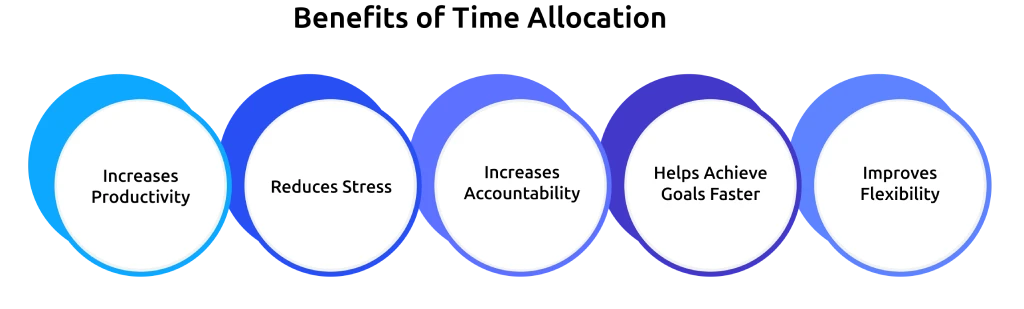
Increases Productivity
When you allocate time to your most important tasks, you spend less time deciding what to work on next and more time getting meaningful work done. A clear plan helps you stay focused, reduce distractions, and make better use of your working hours.
Reduces Stress
Unclear priorities often lead to missed deadlines and unnecessary pressure. Time allocation creates structure in your day by helping you understand what needs your attention and when. This makes your workload feel more manageable and reduces feelings of overwhelming.
Increases Accountability
Allocating time to specific tasks makes it easier to track how you spend your day. You can compare the time you planned to spend on an activity with the time actually spent, helping you identify areas where improvements can be made. This awareness encourages better work habits and greater accountability.
Helps Achieve Goals Faster
Whether you're working toward a business objective, a project deadline, or a personal milestone, progress requires consistent effort. Time allocation ensures that important goals receive dedicated attention, making it easier to stay on track and reach them more efficiently.
Improves Flexibility
Effective time allocation gives you more control over your schedule. You can adjust to new priorities, urgent requests, and unexpected tasks without disrupting your entire day. This flexibility helps you stay productive even when plans change.
Ever reach the end of the day and wonder where all your time went?
Don't let another busy day pass without clarity. Use Time Champ to uncover where your hours go.
Factors That Affect Time Allocation
Several factors influence how effectively you allocate your time. Understanding these factors can help you identify obstacles, adjust your schedule, and make better decisions about where your time should go.
- Personal Priorities: The importance of your goals and responsibilities influences how you distribute your time.
- Time Constraints: Deadlines, meetings, and limited working hours can affect your ability to allocate time effectively.
- Distractions: Interruptions and distractions can take time away from important tasks and reduce focus.
- Multitasking: Managing multiple tasks at once can make it difficult to dedicate enough time to each activity.
- Energy Levels: Your productivity and concentration levels can impact how effectively you use your available time.
- Workload: The number of tasks and responsibilities you handle can influence how your time is allocated.
Did You Know?
According to research from Deloitte, 53% of workers identified interruptions as the top barrier to productivity.
9 Effective Techniques for Allocating Your Time
To allocate time more effectively, you need the right techniques that can help you prioritize important work, stay focused, and make better use of your available hours.
1. Time Blocking
Time blocking involves dividing your day into dedicated blocks of time for specific tasks or activities. For example, you might reserve your morning for project work and your afternoon for meetings and administrative tasks. This technique helps you stay focused and reduces the temptation to switch between tasks.
Example Formula: Available Work Hours = Important Work + Meetings + Admin Tasks + Buffer Time
For an 8-hour workday: 8 Hours = 4h Project Work + 2h Meetings + 1h Admin + 1h Buffer
2. The Eisenhower Matrix
The Eisenhower Matrix helps you prioritize tasks based on urgency and importance. It divides tasks into four categories:
- Important and Urgent → Do First
- Important but Not Urgent → Schedule
- Urgent but Not Important → Delegate
- Neither Urgent nor Important → Eliminate
This method helps you focus your time on activities that contribute most to your goals.
3. The Pomodoro Technique
The Pomodoro Technique encourages you to work in short, focused intervals, typically 25 minutes, followed by a 5-minute break. After completing four sessions, you take a longer break. This approach helps you maintain concentration.
Formula: 25 Minutes Work + 5 Minutes Break = 1 Pomodoro
After four cycles:
4 × (25 + 5) = 120 Minutes
Followed by a longer break of 15–30 minutes.
4. The 80/20 Rule (Pareto Principle)
The 80/20 Rule suggests that roughly 80% of your results come from 20% of your efforts. Identifying the tasks that create the greatest impact allows you to allocate more time to high-value activities and less time to lower-priority work.
80% of Results = 20% of Efforts
For example, if you have ten tasks on your list, two of them may contribute most of your progress and deserve a larger share of your time.
5. Task Batching
Task batching involves grouping similar tasks together and completing them during a dedicated time block. For example, you can respond to emails, return calls, or review reports in batches rather than throughout the day. This reduces context switching and improves efficiency.
6. The 70-20-10 Allocation Method
This method helps you distribute your time across different priorities:
- 70% for core responsibilities
- 20% for learning and improvement
- 10% for unexpected tasks and emergencies
It provides a simple framework for balancing daily work with growth and flexibility.
Formula: 70% Core Work + 20% Learning + 10% Buffer Time = 100% of Available Time
For a 40-hour workweek:
- 28 hours → Core work
- 8 hours → Learning and development
- 4 hours → Unexpected tasks
7. ABC Prioritization
ABC Prioritization helps you rank tasks based on importance:
- A Tasks: High-priority tasks with significant consequences
- B Tasks: Important but less critical activities
- C Tasks: Nice-to-have tasks with minimal impact
This technique ensures that your most valuable work receives the attention it deserves before less important activities.
Simple Formula: A > B > C
8. The Two-Minute Rule
If a task takes less than two minutes to complete, do it immediately. Handling small tasks right away prevents them from piling up and consuming valuable time later.
Rule: Task Duration ≤ 2 Minutes → Complete Immediately
9. Schedule Buffer Time
Unexpected interruptions and urgent requests are part of most workdays. Setting aside buffer time between tasks gives you the flexibility to handle surprises without disrupting your entire schedule.
Example Formula: 90% Planned Work + 10% Buffer Time = Balanced Schedule
Make Time Allocation Easier with Time Champ
Creating a time allocation plan is one thing, but following it consistently is another. Many people underestimate how much time they spend on meetings, emails, and distractions. Without accurate data, it becomes difficult to know whether your time is being used effectively.
This is where Time Champ can help.
Time Champ is an employee monitoring and time tracking software with workforce intelligence features. It helps you understand how time is spent across tasks, projects, and daily activities to help you make smarter decisions on time allocation.
With Time Champ, you can:
- Track Time Automatically: Capture work hours across tasks, projects, and applications automatically, giving you accurate data for better time allocation.
- Monitor Productivity Patterns: Understand which activities consume the most time and which contribute the most value.
- Analyze Detailed Reports: Use real-time insights and reports to spot trends, improve planning, and optimize how time is allocated.
- Manage Projects More Effectively: Allocate resources and working hours based on actual workloads to keep projects on track and avoid bottlenecks.
- Set Goals, Reminders, and Deadlines: Keep your priorities organized by setting goals and deadlines that help you allocate time effectively and avoid last-minute rushes.
Ready to take control of how you allocate your time?
Don't let another workday disappear without knowing where your time went. Try Time Champ now!
Conclusion
Every day gives you the same 24 hours, but how you allocate them makes all the difference. A clear plan helps you focus on high-impact work, avoid unnecessary distractions, and stay aligned with your goals. Start small, review your progress regularly, and refine your approach as your priorities change.
To make time allocation even easier, consider using tools like Time Champ that help you track your work hours, monitor productivity, and gain insights into where your time goes each day.

Guna Lakshmi

Table of Content
 What Is Time Allocation?
- Factors That Affect Time Allocation
- 9 Effective Techniques for Allocating Your Time
- Make Time Allocation Easier with Time Champ
- Conclusion
Instant Signup
Thank you for your request!
We have received your signup request and our team will get back to you soon. In the meantime, you can book a demo to see Time Champ in action.
Book a DemoFree trial. No credit card required. Prefer a walkthrough? Book a demo.
Related Blogs

Learn what time tracking is, why it matters in 2026, the best methods, and how to implement it without team pushback. A practical guide for modern teams.
Jahnavi Pulluri | May 19, 2026
Learn the key pros and cons of time tracking to enhance employee productivity and manage challenges effectively.
Thasleem Shaik | Aug 17, 2024
Looking for the best freelance time tracking software? Explore the top free and paid tools to track work hours, manage projects, and improve productivity.
Guna Lakshmi | May 18, 2026
Learn how time tracking improves remote team productivity through better visibility, accountability, performance tracking, and smarter team management.
Anjali | May 16, 2026
Discover effective ways to build employee trust in automatic time tracking software and create a transparent, productive, and positive work environment.
Thasleem Shaik | Mar 13, 2025
Learn how automated time tracking improves team productivity, reduces manual work, builds trust, and delivers smarter workforce insights for managers today.
Anjali | May 15, 2026


 4.7/5 avg.
Ready to Manage Your Workforce Smarter?
Join our family of 1500+ companies using smart insights to redefine workforces!

Free Trial
No Credit Card Required