SLA vs KPI: Understand Key Differences, Examples & Benefits
SLA vs KPI explained: the real differences between them, practical examples, and how each one shapes service quality and overall business performance.
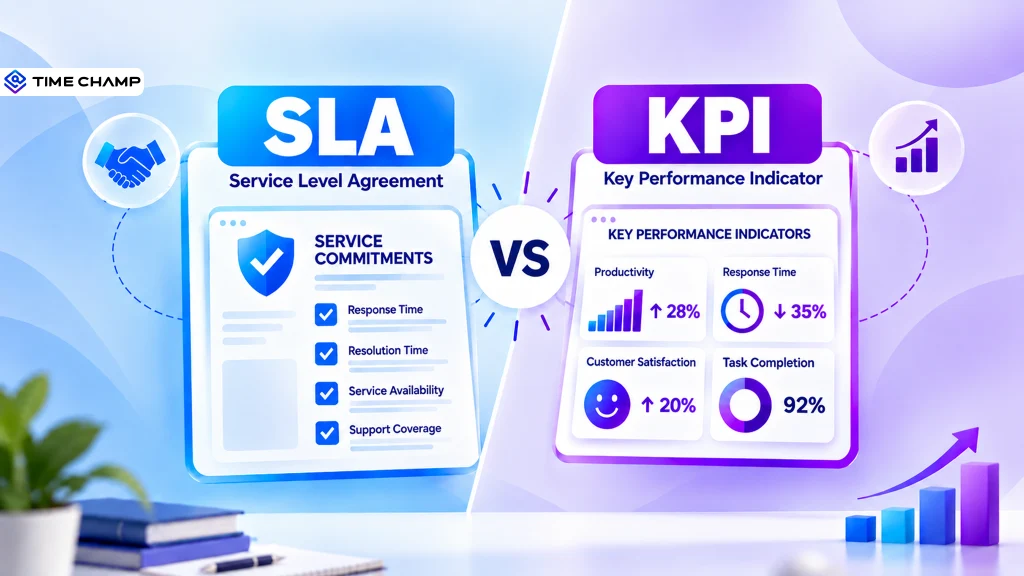
When service expectations and performance results are measured through different metrics, it can be difficult to know what your team should track and why. Confusing commitments with performance measures can lead to unclear targets, inconsistent reporting, and missed service expectations. Knowing the difference between SLA vs KPI helps you set the right expectations and measure whether your teams are meeting them.
This blog breaks down what SLAs and KPIs mean and how they differ. You’ll also see practical examples, key benefits, and how both can work together to support better business performance.
What Is a Service Level Agreement (SLA)?
A Service Level Agreement (SLA) is a formal agreement that defines the level of service a provider commits to deliver. It sets measurable service standards, responsibilities, timelines, and expectations between the parties. An SLA may also specify remedies or consequences when agreed service levels are not met.
What Is a Key Performance Indicator (KPI)?
A Key Performance Indicator (KPI) is a measurable metric used to evaluate progress toward a specific business or performance goal. KPIs help teams track results, identify performance gaps, and make informed decisions. They can measure areas such as productivity, response time, quality, customer satisfaction, efficiency, and operational performance.
SLA vs KPI: What Is the Difference?
SLA vs KPI both rely on measurable targets, but they answer different questions. An SLA defines the level of service an organization commits to deliver, while a KPI shows how well a team, process, or business is performing against a specific goal.
| Factor | SLA | KPI |
|---|---|---|
| Purpose | Defines agreed service expectations and commitments | Measures progress and performance toward a goal |
| Focus | Service quality and delivery standards | Business, team, or operational performance |
| Audience | Usually customers, clients, vendors, or service partners | Primarily internal teams, managers, and leadership |
| Nature | Formal agreement with defined service commitments | Performance metric used for monitoring and evaluation |
| Targets | Sets minimum or agreed service levels | Sets measurable performance goals |
| Measurement | Tracks whether committed service levels are being met | Tracks trends, results, efficiency, or progress |
| Consequences | Missing an SLA may lead to service credits, penalties, or escalation | Missing a KPI generally leads to internal review or corrective action |
| Scope | Usually focuses on specific services and agreed standards | Can measure a wide range of business and operational activities |
| Flexibility | Changes may require agreement between the involved parties | Targets can generally be adjusted based on business needs |
| Example | Respond to critical support requests within 30 minutes | Maintain an average response time below 20 minutes |
Examples of SLA and KPI
The best way to distinguish SLAs from KPIs is to see how they apply to everyday business operations. SLAs set specific service commitments, while KPIs track performance against business or operational goals.
SLA Examples
- Response Time: Respond to 95% of high-priority customer tickets within 30 minutes.
- Resolution Time: Resolve critical IT issues within four hours of receiving the request.
- Service Availability: Maintain 99.9% system uptime each month.
- Issue Escalation: Escalate unresolved critical incidents to the appropriate team within 15 minutes.
- Support Availability: Provide customer support during agreed business hours, such as 24/7 coverage for critical services.
KPI Examples
- First Response Time: Track the average time employees take to respond to customer requests.
- Resolution Rate: Measure the percentage of support issues resolved within the target timeframe.
- Customer Satisfaction: Track the percentage of customers who rate their support experience positively.
- Productivity Rate: Measure the amount of work completed by an employee or team within a specific period.
- Employee Utilization: Track the percentage of available working time spent on productive tasks.
How Do SLA and KPI Work Together
SLAs and KPIs work best when they are connected. An SLA sets the service standard you promise to deliver, while KPIs provide the performance data needed to check whether your team is staying on track.
- SLAs define the Service Commitment: An SLA establishes the level of service expected, such as responding to customer requests within two hours or maintaining 99.9% system availability.
- KPIs Measure Service Performance: KPIs provide the data used to evaluate whether the agreed service standards are being met. For example, average response time can show how quickly a support team responds to requests.
- KPIs Show Progress toward SLA Targets: KPI results indicate whether performance is meeting, exceeding, or falling below the commitments outlined in the SLA.
- KPI Trends can Highlight Potential SLA Issues: Changes in response times, resolution rates, or system availability can reveal performance problems before they result in an SLA breach.
- SLA and KPI Data Support Service Improvements: Reviewing both together helps identify recurring issues, evaluate service quality, and improve processes, staffing, or resource allocation.
- Example: An SLA may require 95% of support tickets to receive a response within one hour. The percentage of tickets answered within one hour and the average first response time can serve as KPIs for measuring compliance with that SLA.
Are you struggling to spot performance gaps before they affect service targets?
Use Time Champ to track workforce performance and identify issues early.
Benefits of Using SLAs and KPIs
Using SLAs and KPIs together gives your teams a clearer framework for setting expectations and measuring results. While SLAs define the service standards to maintain, KPIs provide the performance data needed to track progress and identify areas that need attention.

Set Clear Performance Expectations
SLAs establish specific service standards, while KPIs translate those expectations into measurable results. This gives your teams a clear view of what they need to achieve and how their performance will be evaluated.
Improve Team Accountability
When performance targets are clearly defined and regularly measured, teams have greater ownership of their responsibilities. KPI results also make it easier to identify performance gaps and take corrective action when targets are missed.
Strengthen Customer Trust
Consistently meeting SLA commitments shows customers that your organization can deliver reliable service. Supporting these commitments with KPI data also provides clear evidence of service performance and helps you build stronger customer relationships.
Identify Performance Gaps Early
Regular KPI tracking can reveal declining performance before it leads to an SLA breach. Teams can spot issues such as slower response times or growing backlogs and address them while there is still time to improve results.
Support Data-Driven Decisions
SLAs establish the standards that matter, while KPIs provide the data needed to evaluate them. Reviewing this information helps you make better decisions about staffing, workloads, processes, and resource allocation.
Drive Continuous Improvement
Comparing KPI results with SLA targets helps your teams identify recurring inefficiencies and areas for improvement. Over time, these insights can support process changes that improve service consistency, efficiency, and overall performance.
Reduce Service Risks
Monitoring KPIs against SLA commitments creates an early warning system for potential service problems. Teams can respond to performance issues sooner, reducing the likelihood of missed commitments, escalations, penalties, and customer dissatisfaction.
How Time Champ Supports SLA and KPI Performance
Meeting service commitments becomes difficult when you lack clear visibility into how teams spend their working hours and where performance gaps occur. Time Champ is a smart employee monitoring software that brings time, attendance, productivity, activity, and performance data into one place, helping your teams track the metrics that support SLA and KPI performance.
Here are the key features of Time Champ that help you achieve better SLA and KPI performance:
- Automated Time Tracking: Records work hours, breaks, and idle time automatically, helping you to compare actual working hours with schedules and identify gaps that may affect performance targets.
- Productivity Tracking: Measures how employees use their time across apps and tasks, which helps you identify productivity gaps and support employees in meeting KPI targets.
- Project and Task Time Tracking: Records the time employees spend on specific projects and tasks that help you understand workload, track progress, and keep important work on schedule.
- Attendance Tracking: Tracks attendance, late arrivals, absences, and work schedules, helping you to maintain proper team coverage and prevent staffing issues from affecting service delivery.
- App and Website Usage Tracking: Shows how employees spend time on different applications and websites, which helps you identify distractions, improve workflows, and support better productivity.
- Real-Time Dashboards and Reports: Displays workforce data through live dashboards and detailed reports, helping you to monitor performance trends and make quick decisions when results fall below expectations.
- Activity Tracking and Insights: Provides information about focus time, idle periods, app usage, and work activity, which helps you identify performance bottlenecks and resolve issues before they affect targets or service quality.
Need better visibility into the metrics affecting SLA and KPI performance?
Try Time Champ to track time, productivity, activity, and performance in one place.
Conclusion
SLAs and KPIs serve different purposes, but using them together gives you a stronger way to manage service and performance. SLAs define clear service commitments, while KPIs provide measurable data to track progress and identify gaps. When teams connect these two, they can monitor results, address issues early, improve accountability, and maintain consistent service quality. The key is to choose relevant metrics, set realistic targets, and review performance regularly. A clear SLA vs KPI approach helps you balance customer expectations with internal performance goals, making it easier to improve processes, allocate resources effectively, and achieve better business outcomes over time.

Anjali

Table of Content
 What Is a Service Level Agreement (SLA)?
- What Is a Key Performance Indicator (KPI)?
- SLA vs KPI: What Is the Difference?
- Examples of SLA and KPI
- How Do SLA and KPI Work Together
- Benefits of Using SLAs and KPIs
- How Time Champ Supports SLA and KPI Performance
- Conclusion
Related Blogs

Explore the most important productivity metrics and KPIs to measure employee performance, improve efficiency, and boost workplace productivity.
Anjali | May 12, 2026
Browse 25 KPI examples for employees by category and role, including formulas, target benchmarks, practical examples, and metrics that can quietly backfire.
Jahnavi Pulluri | Jul 03, 2026
Productivity metrics are becoming a norm for businesses and organizations of all sizes, but only because it gives managers, executives, some insight
Sai Keerthi Uppala | May 30, 2023
Learn how to calculate productivity using simple formulas, practical methods, and real examples to measure employee performance accurately.
Thasleem Shaik | May 20, 2026
Learn how time tracking improves remote team productivity through better visibility, accountability, performance tracking, and smarter team management.
Anjali | May 16, 2026
Improve productivity with simple employee performance tracking methods. Streamline tracking for better performance insights.
Shabana Shaik | Mar 15, 2024


 4.7/5 avg.
Ready to Manage Your Workforce Smarter?
Join our family of 1500+ companies using smart insights to redefine workforces!

Free Trial
No Credit Card Required