Shrinkage in BPO: Formula, Calculation & How to Control It
Shrinkage in BPO can hurt staffing and service levels. See the formula, calculation, key causes, and practical ways to control shrinkage more effectively.

You need enough agents available to handle demand, but unexpected absences, planned leave, training, meetings, and other non-productive time can quickly reduce your available workforce. When these gaps are underestimated, you may face understaffing, higher workloads, missed service levels, and increased operating costs. Tracking shrinkage in BPO helps you account for lost agent availability and plan your workforce more accurately.
Here you’ll understand what BPO shrinkage means, its different types, and how to calculate it with a simple example. You’ll also find the key causes of high shrinkage and practical ways to control it.
What Is Shrinkage in BPO?
Shrinkage in BPO is the percentage of scheduled agent time that is unavailable for handling customer interactions. It covers planned activities such as breaks, training, and meetings, along with unplanned time from absenteeism, lateness, or system issues. Tracking shrinkage helps you plan staffing accurately and maintain service levels.
What Are the Types of Shrinkage in BPO?
Shrinkage in BPO is commonly grouped into two broad categories, planned and unplanned shrinkage. Both describe periods when agents are unavailable for customer-facing work, but they differ in how predictable they are and how easily workforce teams can account for them in staffing plans.
1. Planned Shrinkage
Planned shrinkage refers to time when employees are scheduled to be unavailable for their primary work. Since these activities are known in advance, you can account for them while creating workforce forecasts and agent schedules.
Common examples include:
- Breaks and Meal Periods: Scheduled rest and lunch breaks.
- Training: Time spent on onboarding, upskilling, compliance, or process training.
- Meetings and Coaching: Team meetings, one-on-one sessions, feedback, and performance coaching.
- Planned Leave: Approved vacations, holidays, and other scheduled time off.
- Administrative Work: Scheduled activities such as documentation, reporting, or back-office tasks.
2. Unplanned Shrinkage
Unplanned shrinkage occurs when employees become unavailable unexpectedly or spend unplanned time away from their assigned work. Because these events are difficult to predict precisely, they can create sudden staffing shortages and affect service levels.
Common examples include:
- Unscheduled Absence: Sick days, emergencies, or unexpected personal leave.
- Lateness and Early Departures: Employees who arrive late or leave before their scheduled shift ends.
- Unscheduled Breaks: Breaks that extend beyond the allocated time or occur outside the planned schedule.
- Technical Downtime: System, network, telephony, or equipment problems that prevent agents from working.
- Unexpected Disruptions: Urgent issues or unplanned activities that take agents away from customer interactions.
How to Calculate Shrinkage in BPO: A Step-by-Step Example
Calculating shrinkage gives you a clear view of how much scheduled agent time is unavailable for customer-facing work. Measuring this percentage consistently can help you account for planned and unplanned losses when forecasting staffing needs and identifying where workforce capacity is being reduced.
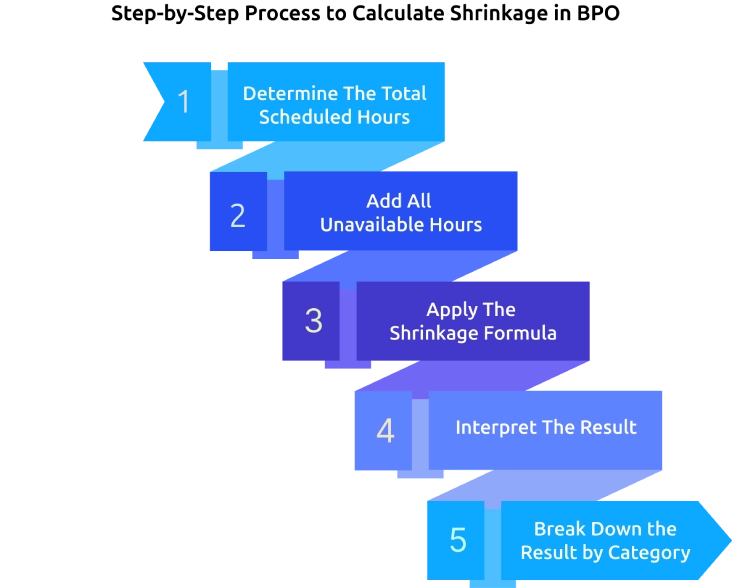
Shrinkage Formula in BPO
Shrinkage (%) = (Internal shrinkage hours + External shrinkage hours) ÷ Total scheduled hours × 100
Follow these steps to calculate your BPO shrinkage accurately:
Step 1: Determine The Total Scheduled Hours
Multiply the number of agents by their scheduled working hours for the selected period.
Example:
50 agents x 40 hours per week = 2,000 scheduled hours
Step 2: Add All Unavailable Hours
Combine the hours agents spend on planned and unplanned activities that make them unavailable for customer interactions.
For Example:
- Breaks and lunch: 300 hours
- Training and meetings: 180 hours
- Approved leave: 100 hours
- Absenteeism and sick leave: 60 hours
- Late arrivals and other unplanned time: 40 hours
Total unavailable hours = 680 hours
Step 3: Apply The Shrinkage Formula
Substitute the figures into the formula:
Shrinkage = (680 ÷ 2000) × 100
Shrinkage = 34%
Step 4: Interpret The Result
A 34% shrinkage rate means 34% of the team’s scheduled hours were unavailable for customer-facing work during the measured period, leaving 66% of scheduled time available for handling customer interactions.
Step 5: Break Down the Result by Category
Do not stop at the overall percentage. Separate planned and unplanned shrinkage to identify what is driving the loss. This helps you determine whether scheduling, absenteeism, training, meetings, or another factor needs attention.
What Are the Causes of High Shrinkage in BPO?
Some shrinkage is unavoidable because agents need breaks, training, meetings, and time off. However, when these periods become excessive or unexpected, they can reduce agent availability and create staffing gaps. Identifying the main causes of high shrinkage helps you determine which losses can be planned, reduced, or addressed at their source.
High Absenteeism
Frequent sick days, personal emergencies, and unplanned absences can quickly reduce the number of agents available to handle customer interactions. Repeated absenteeism can make staffing forecasts less reliable and increase the workload on agents who are present.
Employee Attrition
High employee turnover can contribute to shrinkage because newly hired agents need time for recruitment, onboarding, training, and nesting before becoming fully available for customer-facing work. Persistent attrition can therefore create ongoing gaps in workforce capacity.
Excessive or Poorly Scheduled Breaks
Breaks and meal periods are necessary, but poorly coordinated schedules can take too many agents away from the queue at the same time. This becomes particularly problematic during peak demand periods.
Training and Coaching
Training, coaching, quality reviews, and skill-development sessions temporarily remove agents from customer-facing work. These activities are valuable, but scheduling too many sessions during high-volume periods can increase operational shrinkage.
Meetings and Administrative Work
Team meetings, huddles, one-on-one discussions, documentation, and other administrative responsibilities consume scheduled work hours without directly contributing to customer interactions. When these activities occur frequently or run longer than planned, they can increase shrinkage.
Late Arrivals and Early Departures
Agents who log in late, leave before their scheduled shift ends, or return late from breaks create unplanned availability gaps. Even small delays can accumulate across a large BPO team and affect staffing coverage.
Schedule Non-adherence
Agents may be present and available to work but fail to adhere to their assigned schedules. Extended breaks, incorrect status changes, unauthorized offline time, and delayed returns from scheduled activities can all contribute to lost productive hours.
System and Technical Issues
System outages, login failures, connectivity problems, application errors, hardware issues, and slow business tools can prevent agents from handling customer interactions even when they are present and scheduled to work.
Burnout and Low Employee Engagement
Heavy workloads, insufficient recovery time, difficult schedules, and limited workplace support can contribute to disengagement and burnout. Over time, these issues may appear operationally as higher absenteeism, lateness, and employee turnover, increasing overall shrinkage.
Poor Workforce Forecasting
Inaccurate forecasts can cause planned activities such as leave, training, meetings, and coaching to be underestimated. When expected shrinkage is not built into staffing plans, the actual availability of agents can fall short of operational requirements.
Not sure what’s causing high shrinkage across your BPO teams?
Use Time Champ to identify shrinkage causes through clear workforce visibility and actionable productivity insights.
How to Control Shrinkage in BPO: 8 Practical Ways
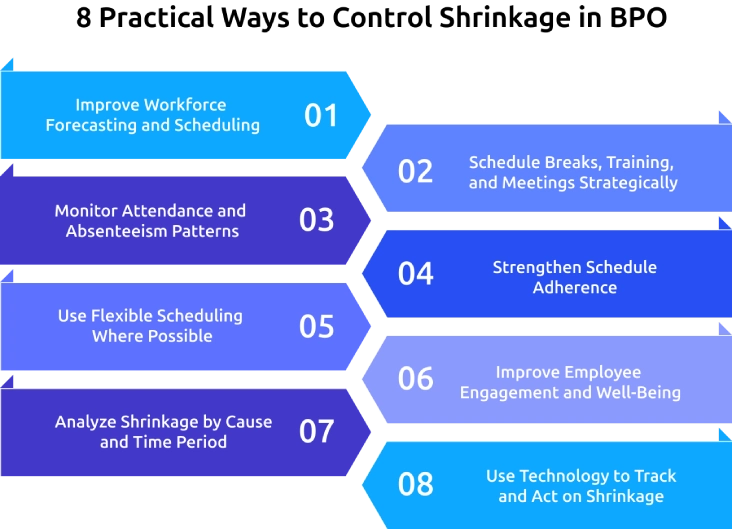
You cannot eliminate shrinkage completely because breaks, training, leave, and other non-customer-facing activities are necessary for a healthy BPO operation. The goal is to control avoidable shrinkage, plan necessary downtime, and protect agent availability during high-demand periods. Use the following eight approaches to keep shrinkage under control.
1. Improve Workforce Forecasting and Scheduling
Use historical workload, attendance, seasonal patterns, and shrinkage data to forecast how many agents you need for each interval. Build expected shrinkage into staffing plans and adjust schedules when demand changes. Accurate forecasting helps you maintain adequate coverage without placing excessive workload on available agents.
2. Schedule Breaks, Training, and Meetings Strategically
Plan breaks, coaching, meetings, and training around periods of lower customer demand. Stagger breaks across teams so too many agents are not unavailable simultaneously. Shorter meetings and focused training sessions can also reduce the amount of time agents spend away from customer interactions.
3. Monitor Attendance and Absenteeism Patterns
Track absences, late arrivals, early departures, and recurring attendance patterns to identify where unplanned shrinkage is coming from. Look beyond the overall absence rate and investigate recurring patterns by team, shift, or day. Addressing the underlying causes can help you reduce repeated unplanned absences.
4. Strengthen Schedule Adherence
Give supervisors visibility into whether agents are following their assigned schedules. Monitor late logins, extended breaks, delayed returns, and unauthorized offline time so deviations can be addressed promptly. Real-time adherence data also allows you to intervene before small schedule gaps become larger staffing problems.
5. Use Flexible Scheduling Where Possible
Offer agents greater scheduling flexibility when operational requirements allow. Flexible schedules can make it easier for employees to manage personal commitments and may reduce avoidable absences. WFM teams should still maintain the staffing coverage required for expected customer demand.
6. Improve Employee Engagement and Well-Being
High workload, poor scheduling, and limited support can contribute to absenteeism, burnout, and attrition. Regular check-ins, appropriate workload management, recognition, and wellness initiatives can address some of the factors behind unplanned shrinkage. Focus on the reasons employees are unavailable, not just the shrinkage percentage itself.

Did You Know?
Gallup found that highly engaged business units experience 78% less absenteeism and 21% less turnover in high-turnover organizations, highlighting engagement’s role in reducing workforce availability gaps.
7. Analyze Shrinkage by Cause and Time Period
Do not rely on one overall shrinkage percentage. Break the metric down by planned vs. unplanned time, team, shift, day, interval, and cause. This shows whether the largest losses come from absenteeism, extended breaks, training, meetings, or other activities and helps you focus on improvement efforts where they matter most.
8. Use Technology to Track and Act on Shrinkage
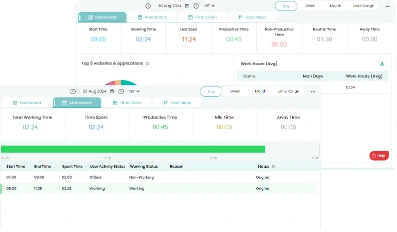
Use workforce and employee activity data to monitor attendance, schedules, productive time, and activity patterns in one place. Automated reports and real-time visibility can help you identify availability gaps sooner and make informed staffing decisions. Technology can also reduce manual administrative work that consumes agents scheduled hours.
How Time Champ Helps Track and Control Shrinkage
When you manage a BPO team, it can be difficult to identify where scheduled hours are being lost. Limited visibility into attendance, breaks, idle time, shift adherence, and agent activity can make it harder to pinpoint the causes of shrinkage and take timely action. Time Champ is a comprehensive employee monitoring software with a BPO time-tracking solution that brings these insights together, helping you track workforce availability, identify productivity gaps, and make smarter staffing decisions.
Here are the key Time Champ features that can help you track and control shrinkage more effectively:
- Automated Time Tracking: Captures clock-in and clock-out times, work hours, breaks, and idle periods, giving you accurate data on how scheduled hours are being used.
- Attendance & Absence Tracking: Shows who is present, absent, or on leave, which helps you spot absence patterns and reduce unplanned shrinkage.
- Shift Scheduling: Helps you create and adjust employee shifts, ensuring that the right number of agents are available when needed.
- Break & Idle-Time Insights: Tracks how frequently and how long agents take breaks while identifying idle periods. It helps you identify avoidable losses in agent availability.
- Real-Time Productivity Monitoring: Shows agent activity, productivity patterns, and workload levels as they change. It helps you quickly address performance or staffing gaps.
- Alerts for Late Logins and Productivity Drops: Sends real-time signals for late logins, idle time, and productivity declines, helping you respond to schedule and availability issues before they affect operations.
- Detailed Reports & Analytics: Provides detailed reports on attendance, productivity, time, tasks, and teams, helping you identify shrinkage patterns and take corrective action immediately.
Struggling to pinpoint where agent time is being lost across shifts and teams?
Time Champ helps you monitor attendance, breaks, idle time, and productivity in real time.
Conclusion
Shrinkage is an unavoidable part of BPO operations, but excessive shrinkage can reduce agent availability, increase workloads, and affect service levels. A clear view of shrinkage in BPO helps you distinguish planned activities from avoidable losses and identify where workforce capacity is being reduced. Improving forecasting, managing schedules, monitoring attendance, addressing absenteeism, and analyzing shrinkage by cause can help you control staffing gaps, improve workforce utilization, and maintain more consistent customer service.

Anjali

Table of Content
 What Is Shrinkage in BPO?
- What Are the Types of Shrinkage in BPO?
- How to Calculate Shrinkage in BPO: A Step-by-Step Example
- What Are the Causes of High Shrinkage in BPO?
- How to Control Shrinkage in BPO: 8 Practical Ways
- How Time Champ Helps Track and Control Shrinkage
- Conclusion
Related Blogs

Explore shift monitoring system benefits, key features, and set up tips to improve scheduling, track shifts accurately, and manage teams more efficiently.
Anjali | May 01, 2026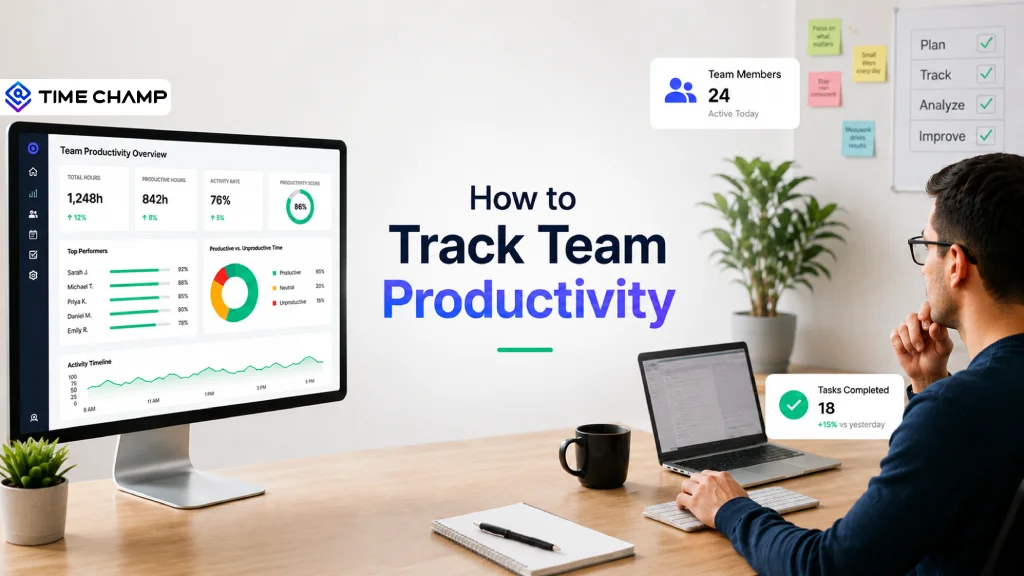
Track team productivity without watching people: 8 metrics with formulas, the three that fit your team, and how to spot when your numbers are being gamed.
Shabana Shaik | Aug 31, 2026
Want to simplify measuring employee productivity? Explore common challenges and effective approaches to improve team performance.
Guna Lakshmi | Aug 07, 2026
A productivity report shows how work really happened. Learn the metrics, types and formats to include, how to build one, and how to read it the right way.
Shabana Shaik | Jun 11, 2026
Learn how to monitor employee idle time the right way with fair thresholds, transparent policies, and idle time monitoring software that builds trust.
Anjali | Apr 30, 2026
The right employee performance tracking software turns activity data into decisions. See what to look for, how to compare, and what works for your team.
Guna Lakshmi | Apr 18, 2026


 4.7/5 avg.
Ready to Manage Your Workforce Smarter?
Join our family of 1500+ companies using smart insights to redefine workforces!

Free Trial
No Credit Card Required