Nesting Period in BPO: What It Is and How It Works
What the nesting period in BPO means, where it fits in call center training, what happens during nesting, the metrics to track, and best practices.
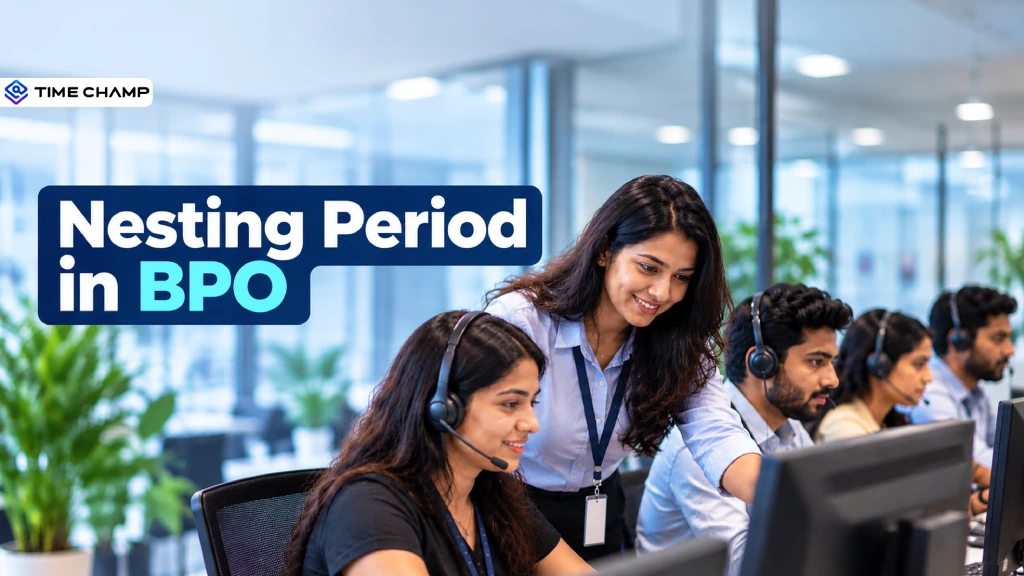
Starting a new role in a BPO can feel overwhelming, especially when new agents are expected to handle real customer interactions soon after training. That’s where the nesting period in BPO begins. It gives agents a chance to apply what they’ve learned in a controlled, supportive environment before they fully take over customer interactions.
But what exactly happens during nesting, how long does it last, and how does it help agents become ready for live calls? Let’s break it down.
What Is the Nesting Period in BPO?
The nesting period in BPO is the transition phase after initial training when new agents begin handling real customer interactions with guidance from experienced team members or supervisors. It allows agents to apply their training in a live environment, build confidence, improve their communication and problem-solving skills, and gradually adjust to actual customer interactions before working independently.
During this phase, agents receive regular feedback and support as they learn to manage different types of customer queries. The goal is to help them become comfortable with the workflow and meet the required performance standards before moving to independent work.

Did You Know?
According to McKinsey, each new contact center agent hire is estimated to cost $10,000 to $20,000 in training, recruiting costs, and lost productivity during the ramp-up period.
How Does Nesting Help in Call Center Training?
Nesting is the bridge between formal training and independent work in a call center. It helps new agents gradually move from learning processes and observing experienced employees to handling real customer interactions on their own.
The typical training journey looks like this:
1. Orientation
Agents are introduced to the company, their roles, workplace policies, systems, and basic expectations. This gives them a clear understanding of what their job involves before formal training begins.
2. Classroom or Virtual Training
Agents learn about the company’s products or services, processes, tools, and customer-handling procedures. They also practice common scenarios to build the knowledge needed to handle customer interactions.
3. Shadowing
Agents observe experienced team members handling live customer calls. This helps them see how trained processes are applied in real conversations and learn how experienced agents respond to different situations.
4. Nesting
Agents begin handling real customer interactions while trainers, supervisors, or experienced team members remain available for support. They can ask questions, receive feedback, and correct mistakes as they gain confidence.
5. Live Production
After completing the nesting phase and meeting the required performance standards, agents move into regular operations. At this stage, they handle customer interactions independently while continuing to receive ongoing coaching and performance feedback.
Want to Monitor Your BPO Team More Easily?
Track employee activity, work hours, and productivity with Time Champ.
Nesting vs Shadowing: What Is the Difference?
Nesting and shadowing are two common stages in call center training. Shadowing focuses on observing experienced agents, while nesting allows new agents to handle real customer interactions with support available.
| Aspect | Shadowing | Nesting |
|---|---|---|
| Primary focus | Learning through observation | Learning through hands-on practice |
| Agent's role | Observes an experienced agent | Handles real customer interactions |
| Customer interaction | New agent does not handle the interaction | New agent handles the interaction |
| Support | Learns by watching how experienced agents respond | Receives guidance from trainers or supervisors when needed |
| Main goal | Understand how processes and communication work in real situations | Build confidence and improve performance before working independently |
| Feedback | Usually based on observations and discussions | Based on the agent's actual customer interactions |
| Training stage | Usually comes before nesting | Usually comes after shadowing and formal training |
How Long Does the Nesting Period Last?
The nesting period in BPO typically lasts around 1 to 4 weeks, although the exact duration can vary depending on the company, process, and agent performance. Some simple processes may require only a few days of nesting, while more complex processes may extend beyond four weeks.
The duration is usually based on how quickly agents become comfortable handling real customer interactions and consistently meet the required performance standards.
Factors That Affect the Nesting Period
- Process Complexity: Complex products, services, or customer issues may require 3-4 weeks or more of practice.
- Agent Performance: Agents who need additional coaching may stay in nesting for an extra 1-2 weeks.
- Call Volume: A higher volume of interactions can give agents more opportunities to practice during the nesting period.
- Performance Standards: Agents may need to meet quality, accuracy, or productivity targets before moving to live production.
- Type of Process: Voice processes may require more practice than chat or email processes, depending on the role.
In general, 1-4 weeks is a useful range to explain the typical nesting period, but BPO companies can set shorter or longer periods based on their specific requirements.
Looking for an Easier Way to Track Agent Productivity?
Get a clearer picture of your team’s day-to-day work and use those insights to improve how your BPO operates.
What Happens During the Nesting Period?
During the nesting period, new agents move from training simulations to real customer interactions while receiving support from trainers or supervisors. They practice handling actual customer situations, receive feedback, and gradually build the confidence they need to work independently.
1. Agents Handle Real Interactions
Agents start taking live customer calls, chats, or emails. They apply the product knowledge, scripts, and processes they learned during training to real customer situations. This hands-on practice helps them adjust to the pace and expectations of live interactions.
2. Trainers Provide Support
Trainers, team leaders, or supervisors stay available to help agents when they face difficult questions or unfamiliar situations. Agents can ask for guidance instead of trying to resolve every issue on their own. This support allows agents to learn from challenges without disrupting the customer experience.
3. Supervisors Monitor Calls
Supervisors monitor customer interactions and review how agents handle them. They check areas such as communication, accuracy, process adherence, and customer handling. They use these observations to identify mistakes and areas where agents need additional coaching.
4. Agents Receive Regular Feedback
Trainers give agents feedback on their performance and explain where they can improve. Agents can then apply this feedback to their next customer interactions. Regular feedback helps agents correct mistakes early and strengthen their overall performance.
5. Managers Track Performance
Managers may track metrics such as quality score, average handling time (AHT), first-call resolution (FCR), and customer satisfaction (CSAT). These metrics help them assess an agent’s progress during nesting. They can use the results to determine whether an agent is ready to handle interactions with less support.
Did You Know? Deloitte's 2026 Global Contact Center Survey found that improving customer experience remained the No. 1 strategic priority among surveyed contact-center leaders.
Did You Know?
Deloitte's 2026 Global Contact Center Survey found that improving customer experience remained the No. 1 strategic priority among surveyed contact-center leaders.
6. Agents Gradually Work Independently
As agents gain experience and consistently meet performance expectations, they require less support from trainers. Once they demonstrate the required level of confidence and consistency, they can move into live production. This gradual transition helps agents become comfortable handling customer interactions without constant assistance.
Metrics to Track During Nesting
Tracking the right metrics during the nesting period helps managers understand how well new agents are adapting to real customer interactions. Instead of focusing only on speed, managers need to look at a combination of quality, productivity, accuracy, and customer experience metrics.
The quality score shows how well an agent follows the required processes and handles customer interactions. Managers can review factors such as communication, accuracy, compliance, and problem-solving to identify areas that need improvement.
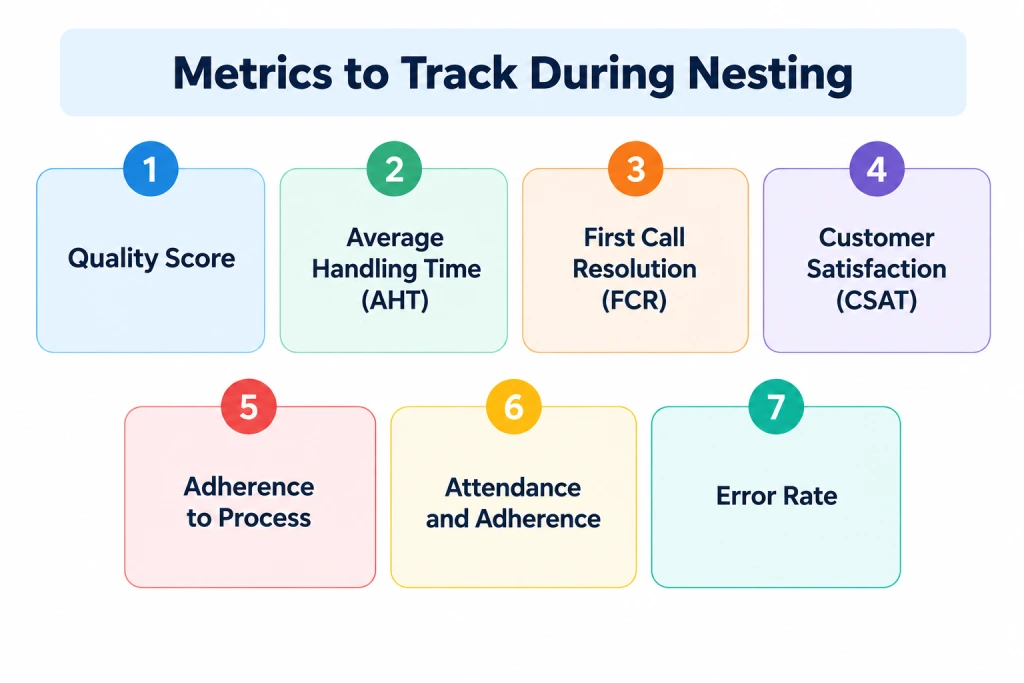
1. Quality Score
The quality score shows how well an agent follows the required processes and handles customer interactions. Managers can review factors such as communication, accuracy, compliance, and problem-solving to identify areas that need improvement.
2. Average Handling Time (AHT)
AHT measures the average time an agent spends handling a customer interaction, including talk time and any related after-call work. Managers can use this metric to see whether agents are becoming more efficient without sacrificing service quality.
3. First Call Resolution (FCR)
FCR measures how often agents resolve customer issues during the first interaction without requiring a follow-up. A strong FCR indicates that an agent can understand customer needs and provide an appropriate solution.
4. Customer Satisfaction (CSAT)
CSAT measures how satisfied customers are with the service they receive. Managers can use customer feedback to understand how effectively new agents communicate and address customer concerns.
5. Adherence to Process
This metric shows whether agents follow the required procedures, scripts, security checks, and compliance guidelines. Monitoring process adherence during nesting helps managers identify mistakes before agents move into independent production.
6. Attendance and Adherence
Managers can track whether agents attend their scheduled nesting sessions and remain available during assigned hours. Consistent attendance helps agents gain enough practice to become comfortable with live customer interactions.
7. Error Rate
The error rate tracks how frequently an agent makes mistakes during customer interactions, such as entering incorrect information or following the wrong process. Monitoring errors helps trainers provide targeted coaching and prevent repeated mistakes.
Nesting Period Best Practices
A well-structured nesting period helps new agents adjust to real customer interactions without feeling overwhelmed. BPO managers and trainers can use a few practical strategies to make this transition smoother and more effective.
1. Set Clear Expectations
Explain the nesting process, performance standards, schedules, and support available before agents begin handling live interactions. Clear expectations help agents understand what the company expects from them during this stage.
2. Start with Simpler Interactions
Give new agents straightforward customer interactions at the beginning and gradually introduce more complex situations. This approach allows them to build confidence before handling challenging customer issues.
3. Keep Support Easily Available
Make trainers, team leaders, or experienced agents available when new agents need help. Quick access to support allows agents to resolve difficult situations while learning from each interaction.
4. Provide Regular Coaching
Review agent performance regularly and provide specific feedback on what they did well and where they can improve. Short coaching sessions can help agents address recurring mistakes before they become habits.
5. Focus on Quality Before Speed
Avoid pushing new agents to meet productivity targets too quickly. During nesting, they should first focus on accuracy, process adherence, and customer experience before working toward faster handling times.
6. Use Performance Data
Track relevant metrics such as quality scores, AHT, FCR, and CSAT to understand each agent’s progress. Managers can use these results to identify individual coaching needs and decide when agents are ready for independent production.
7. Set Clear Graduation Criteria
Define the performance standards agents must meet before leaving nesting. Clear criteria help managers make consistent decisions about when an agent is ready to transition to live production.
Ready to Manage Your BPO Team More Effectively?
Use performance insights to understand your team better and make coaching and performance management easier.
Conclusion
The nesting period in BPO gives new agents the support they need to move from training to handling real customer interactions with confidence. Hands-on practice, regular coaching, performance monitoring, and gradual independence help BPO teams build the skills agents need for successful live production.
With clear expectations, the right metrics, and consistent support, nesting can create a smoother transition for both agents and customers.

Guna Lakshmi

Table of Content
 What Is the Nesting Period in BPO?
- How Does Nesting Help in Call Center Training?
- Nesting vs Shadowing: What Is the Difference?
- How Long Does the Nesting Period Last?
- What Happens During the Nesting Period?
- Metrics to Track During Nesting
- Nesting Period Best Practices
- Conclusion
Related Blogs
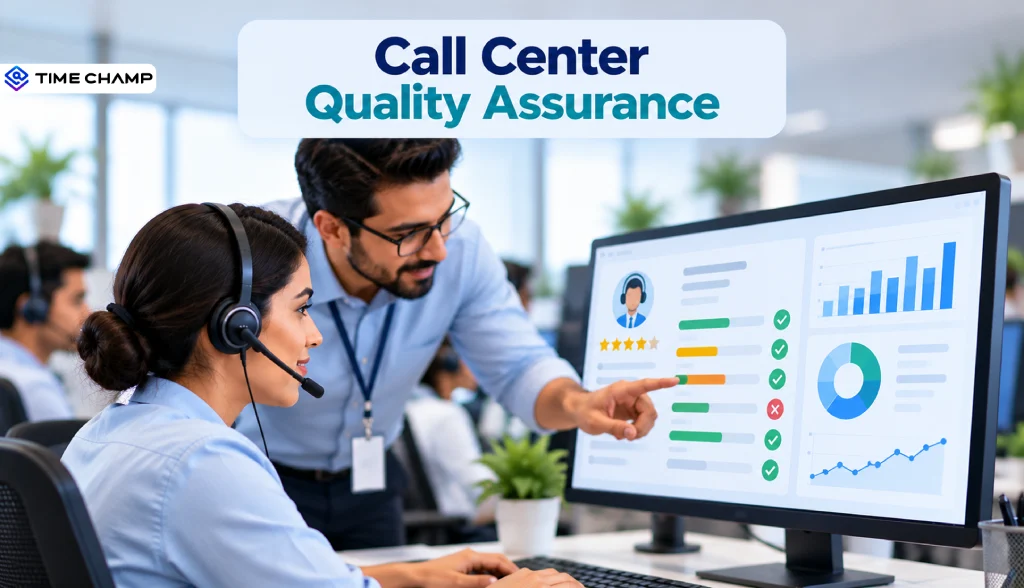
A complete guide to call center quality assurance: what it is, the QA process, what goes on a QA scorecard, and best practices to improve CX.
Guna Lakshmi | Oct 16, 2026
Discover the 10 best call centre quality assurance software for 2025. Compare features, pricing, pros, and cons to boost service quality and performance.
Thasleem Shaik | Nov 07, 2025
BPO workforce management guide: the six-stage cycle, shrinkage and adherence formulas, real benchmarks, and 8 best practices that protect service levels.
Shabana Shaik | Sep 11, 2026
Learn what the call center occupancy rate is, the formula, how to calculate it, what a good occupancy rate is, and how it differs from utilization.
Guna Lakshmi | Oct 19, 2026
Track the most important BPO KPIs to measure agent performance, productivity, customer satisfaction, and overall contact center success in 2026.
Guna Lakshmi | Oct 02, 2026
Contact center services help businesses manage customer support across multiple channels. Compare types, benefits, costs, technologies, and AI trends.
Thasleem Shaik | Aug 10, 2026


 4.7/5 avg.
Ready to Manage Your Workforce Smarter?
Join our family of 1500+ companies using smart insights to redefine workforces!

Free Trial
No Credit Card Required