Intraday Management Call Center: A Complete Guide
Build stronger intraday management call center processes with practical strategies to optimize staffing, manage demand, and maintain performance.
Call center demand can change from one interval to the next. Unexpected call spikes, agent absences, or longer handle times can quickly create staffing gaps. Intraday management helps you respond to these changes in real time, keep staffing aligned with demand, and maintain service levels.
In this practical guide, you’ll learn what intraday management call center means, how it works, why it matters, and the strategies you can use to manage your workforce more effectively.
What Is Intraday Management in Call Center?
Intraday management in call center is the process of monitoring and adjusting staffing, schedules, and agent activities throughout the day to match changing call volumes and customer demand. It helps you respond quickly to demand changes, adjust agent schedules or activities, and maintain service levels.
Unlike workforce planning, which focuses on future staffing needs, intraday management focuses on real-time decisions. It helps you manage unexpected call spikes, agent absences, and changes in workload more effectively.

Did You Know?
A report by Gallup found that 37% of employees named staffing shortages as the top barrier to delivering exceptional products and services to customers.
The Role of Intraday Management in Call Center Management
In a call center, intraday management helps you keep staffing aligned with changing customer demand throughout the day. It turns your WFM plan into real-time actions, allowing you to:
- Track Call Volume: Monitor incoming calls and identify sudden changes in demand.
- Manage Agent Availability: Make sure enough agents are available to handle calls during busy periods.
- Adjust Breaks and Activities: Reschedule breaks, meetings, or offline tasks when call volume increases.
- Monitor Schedule Adherence: Check whether agents are following their assigned schedules.
- Respond to Staffing Changes: Adjust coverage when agents are absent, late, or unavailable.
- Protect Service Levels: Take quick action to reduce wait times and prevent excessive call queues.
Want to improve your call center’s intraday management?
Use Time Champ to track agent activity, spot staffing gaps, and maintain the right coverage. Try Now!
Key Call Center Metrics to Monitor in Real Time
Real-time metrics help you understand what is happening on the floor and take quick action when performance or staffing starts to shift. Focus on these key metrics:
1. Call Volume
Track the number of incoming calls during each interval. Comparing actual call volume with your forecast helps you identify unexpected spikes or drops in demand and adjust staffing accordingly.
2. Service Level
Service level shows the percentage of calls answered within your target time. Monitoring it in real time helps you identify when customers are waiting too long and take action before service levels decline further.
3. Average Speed of Answer (ASA)
ASA measures how long customers wait before an agent answers their call. A sudden increase can indicate that call volume is higher than expected or that you do not have enough agents available.
4. Abandonment Rate
Track the percentage of callers who leave the queue before reaching an agent. A rising abandonment rate can signal long wait times and may indicate that you need to adjust staffing or move available agents to calls.
5. Agent Occupancy
Agent occupancy shows how much time agents spend handling calls and related tasks compared with their available time. Monitoring it helps you identify periods of high workload and avoid putting excessive pressure on agents.
6. Schedule Adherence
Monitor whether agents are following their planned schedules, including login times, breaks, meetings, and other activities. Poor adherence can create unexpected staffing gaps and affect call center performance.
7. Average Handle Time (AHT)
AHT measures the average time agents spend handling customer interactions, including talk and after-call work. Tracking changes in AHT helps you understand whether longer interactions are affecting staffing and queue performance.
8. Queue Size
Monitor how many customers are waiting to speak with an agent. A growing queue can be an early warning that demand is exceeding available capacity, giving you time to make intraday adjustments.
Intraday Management vs. Workforce Management
Intraday management and workforce management (WFM) work together to keep your call center properly staffed, but they focus on different timeframes. WFM focuses on planning, while intraday management focuses on making real-time adjustments based on what is happening during the day.
| Intraday Management | Workforce Management |
|---|---|
| Focuses on real-time call center operations | Focuses on workforce planning |
| Responds to current call volume and staffing needs | Forecasts future call volume and staffing needs |
| Makes same-day schedule and activity adjustments | Creates staffing plans and agent schedules |
| Handles unexpected changes in demand or availability | Plans for expected workforce requirements |
| Monitors real-time performance and service levels | Uses forecasts and historical data for planning |
In simple terms, WFM creates the plan, while intraday management helps you adjust that plan when actual call center conditions change. This allows you to maintain the right level of coverage while responding to unexpected changes in demand and staffing.
Build a More Responsive Call Center Workforce!
See how Time Champ helps you gain real-time visibility, spot performance gaps, and make faster workforce decisions.
Common Intraday Triggers and How to Respond
Call center conditions can change quickly throughout the day, making it important to identify issues as soon as they occur. By monitoring real-time performance and responding to common intraday triggers, you can maintain adequate staffing and keep customer wait times under control.
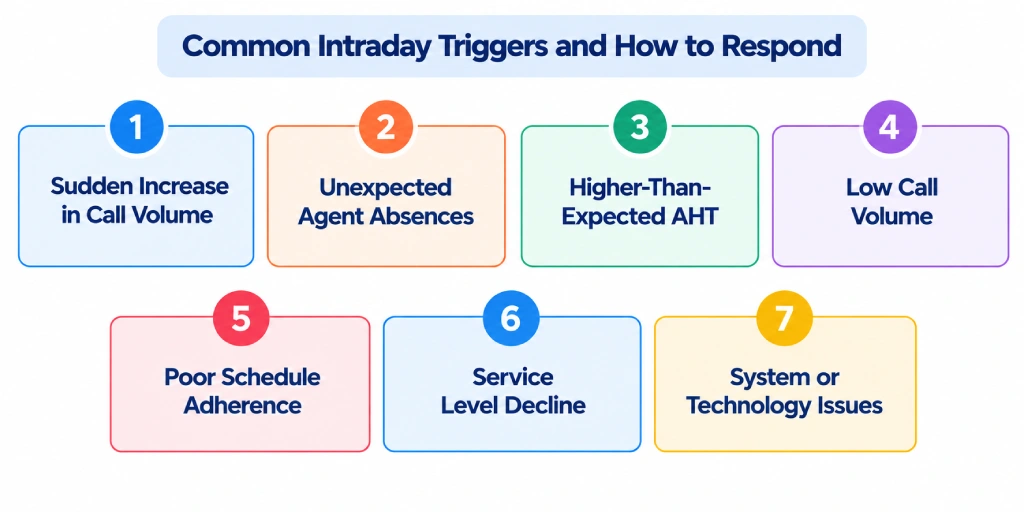
1. Sudden Increase in Call Volume
Trigger: A sudden spike in incoming calls can quickly increase queue size, agent workload, and customer wait times. This can happen because of service disruptions, product launches, promotions, or unexpected customer issues. If the increase continues, your existing staffing plan may no longer provide enough coverage.
How to Respond: Move available agents to call handling, postpone non-urgent offline activities, or adjust breaks to increase coverage. You can also check whether cross-trained agents or other available resources can provide additional support. Taking action early helps prevent queues from growing and service levels from falling.
2. Unexpected Agent Absences
Trigger: Unplanned absences can leave your call center with fewer agents than expected during specific intervals. Even a small staffing gap can affect coverage when call volume is already high.
How to Respond: Review available staff, adjust schedules, or bring in cross-trained agents to cover critical periods. You can also reschedule non-essential activities when necessary. Quick adjustments help maintain coverage without significantly disrupting the rest of the day's operations.
3. Higher-Than-Expected AHT
Trigger: When calls take longer than forecasted, agents remain occupied for longer and fewer agents are available to handle new calls. Higher AHT can result from complex customer issues, system delays, or changes in call types.
How to Respond: Monitor AHT closely and identify whether additional coverage or operational support is needed. Review common call drivers to understand what is causing longer interactions. If the issue is temporary, you can make short-term staffing adjustments to protect service levels.
4. Low Call Volume
Trigger: When call volume is lower than forecasted, you may have more agents available than needed for current demand. Leaving this capacity unused can result in inefficient use of agent time.
How to Respond: Use the extra capacity for coaching, training, meetings, or other planned offline activities. You can also bring forward tasks that were scheduled for later in the day. This helps you use available agent capacity without affecting customer service.
5. Poor Schedule Adherence
Trigger: Late logins, extended breaks, early logouts, or agents being unavailable during scheduled call time can reduce your planned staffing coverage. Repeated adherence issues can create gaps even when your overall staffing level appears sufficient.
How to Respond: Monitor adherence throughout the day and address significant deviations quickly. Work with team leaders to return agents to their planned activities where appropriate. Consistent monitoring helps ensure the number of available agents matches your staffing plan.
6. Service Level Decline
Trigger: A sudden drop in service level can indicate that call volume is exceeding available capacity. It may also be caused by longer AHT, staffing gaps, poor adherence, or unexpected operational issues.
How to Respond: Check call volume, queue size, agent availability, and AHT to identify the underlying cause. Based on what you find, you can move agents, adjust activities, or increase coverage where possible. Acting early can help prevent longer wait times and increased call abandonment.
7. System or Technology Issues
Trigger: Phone, CRM, network, or other system issues can slow down agents and prevent them from handling calls normally. These problems can quickly increase AHT, reduce agent availability, and create longer queues.
How to Respond: Escalate technical issues to the appropriate support team and communicate the impact to supervisors and agents. Adjust staffing or workflows where possible while the issue is being resolved. Clear communication helps your team manage customer interactions more effectively during disruptions.
Who Runs Intraday: The Real-Time Analyst (RTA)
The Real-Time Analyst (RTA) is responsible for monitoring and managing call center operations throughout the day. They use real-time data to compare actual performance with staffing plans and quickly identify issues that could affect service levels.
An RTA typically:
- Monitors Call Center Performance: Tracks call volume, queues, service levels, AHT, and agent availability in real time.
- Manages Staffing: Checks whether enough agents are available to handle current demand and identifies coverage gaps.
- Tracks Schedule Adherence: Monitors whether agents are following their assigned schedules, breaks, and activities.
- Responds to Changes: Takes quick action when call volume, staffing, or performance changes unexpectedly.
- Coordinates with Supervisors: Communicates staffing issues and recommends adjustments to keep operations on track.
- Makes Intraday Adjustments: Helps reschedule breaks, move agents between activities, or adjust coverage based on current needs.
In short, the RTA acts as the link between the workforce plan and what is happening on the call center floor in real time.
Ready to strengthen your call center operations?
Give your RTA team better visibility into workforce performance with Time Champ.
Conclusion
Effective intraday management call center practices help you stay prepared when customer demand, staffing, or performance changes throughout the day. Monitoring key metrics, identifying common triggers, and making timely staffing adjustments can help you keep queues under control and maintain service levels.
With the right approach, you can improve staffing efficiency, support your agents, and deliver a more consistent customer experience.

Guna Lakshmi

Table of Content
 What Is Intraday Management in Call Center?
- The Role of Intraday Management in Call Center Management
- Key Call Center Metrics to Monitor in Real Time
- Intraday Management vs. Workforce Management
- Common Intraday Triggers and How to Respond
- Who Runs Intraday: The Real-Time Analyst (RTA)
- Conclusion
Related Blogs
Learn what the call center occupancy rate is, the formula, how to calculate it, what a good occupancy rate is, and how it differs from utilization.
Guna Lakshmi | Oct 14, 2026
Compare the best online outsourcing websites for 2026, including real fees, hiring tips, platform features, and proven ways to manage freelancers easily.
Jahnavi Pulluri | Aug 13, 2026
Learn what average handle time (AHT) is, the AHT formula, how to calculate it, and proven ways to reduce it without hurting service quality.
Guna Lakshmi | Oct 05, 2026
Learn how call center forecasting helps predict demand, plan staffing, and improve efficiency with practical methods, steps, and best practices.
Guna Lakshmi | Oct 13, 2026
Contact center services help businesses manage customer support across multiple channels. Compare types, benefits, costs, technologies, and AI trends.
Thasleem Shaik | Aug 10, 2026
Understand what vanity metrics are, why they matter, examples, and how they differ from actionable metrics for measuring real business performance.
Guna Lakshmi | Oct 09, 2026


 4.7/5 avg.
Ready to Manage Your Workforce Smarter?
Join our family of 1500+ companies using smart insights to redefine workforces!

Free Trial
No Credit Card Required