Call Abandonment Rate: Formula and How to Reduce It
Learn what call abandonment rate is, the formula to calculate it, industry benchmarks for a good rate, the top causes, and ways to reduce abandoned calls.
A high call abandonment rate can quickly turn a busy contact center into a source of lost customers. If callers keep hanging up before reaching your agents, it’s worth checking what’s causing the delay and how your performance compares with industry standards.
In this guide, you’ll learn about the call abandonment rate, industry benchmarks, common causes, and practical ways to reduce it.
What Is Call Abandonment Rate?
Call abandonment rate is the percentage of callers who hang up before reaching an agent. It helps you understand how many customers are leaving your call queue without getting the support they need.
A high abandonment rate can point to long wait times, insufficient staffing, or inefficient call handling. Tracking this metric helps you identify these issues and improve your contact center’s performance.
Call Abandonment Rate Formula:
Call Abandonment Rate = (Number of Abandoned Calls ÷ Total Incoming Calls) × 100
How to Calculate Call Abandonment Rate
Calculating your call abandonment rate is simple. You only need to know how many calls were abandoned and the total number of calls that entered your queue.
Formula:
Call Abandonment Rate = (Number of Abandoned Calls ÷ Total Incoming Calls) × 100
Step-by-Step Calculation
Step 1: Find your total incoming calls: Count all calls that entered your call queue during the period you’re measuring.
Step 2: Count abandoned calls: Find the number of callers who hung up before speaking with an agent.
Step 3: Apply the formula: Divide abandoned calls by total incoming calls, then multiply the result by 100.
Example Calculation
Suppose you received1,000 calls in a month, and 80 callers hung up before reaching an agent.
Total incoming calls = 1,000
Abandoned calls = 80
Call Abandonment Rate = (Abandoned Calls ÷ Total Incoming Calls) × 100
= (80 ÷ 1,000) × 100
= 8%
So, your call abandonment rate is 8%. An 8% call abandonment rate means that 8 out of every 100 callers hung up before reaching an agent. This indicates that some customers are experiencing longer wait times or delays in getting connected.
Track Your Call Center Agent Performance with Time Champ
Get insights into agent activity, attendance, workload, and productivity to make smarter staffing decisions.
What Is a Good Call Abandonment Rate?
A low call abandonment rate means more customers are reaching your agents without giving up. But what counts as good can vary based on your industry, call volume, and customer expectations. Use the benchmarks below to quickly assess where your contact center stands.
| Call Abandonment Rate | What It Indicates |
|---|---|
| Below 3% | Excellent. Most callers reach an agent. |
| 3%-5% | Good. Wait times are generally manageable. |
| 5%-8% | Needs attention. Some callers may be waiting too long. |
| Above 8% | High. Review staffing, wait times, and call-handling processes. |
A 5% or lower rate is often a reasonable target for many contact centers. However, you should compare your rate with your own historical performance and industry expectations rather than relying on one number.
If your abandonment rate suddenly increases, look at factors such as longer wait times, call spikes, understaffing, or poor call routing. Finding the cause can help you reduce abandoned calls and keep more customers connected to your team.

Did You Know?
McKinsey found that a three-hour contact-center site failure could increase average speed of answer from 10 seconds to 350 seconds. This shows how quickly service levels can suffer when agent availability drops.
Why Call Abandonment Rate Matters
Your call abandonment rate gives you a quick view of how well your contact center handles customer demand. A rising rate can point to longer wait times, staffing issues, or problems with your call-handling process.
Improve Customer Experience
When fewer customers abandon calls, more of them get the help they need. Keeping your abandonment rate low can reduce frustration and create a smoother experience for your customers.
Identify Staffing Gaps
A high abandonment rate can indicate that you don’t have enough agents available during busy periods. You can use this data to adjust staffing levels and schedules based on call demand.
Reduce Lost Opportunities
Every abandoned call can represent a missed sales opportunity or an unresolved customer issue. Monitoring this rate helps you identify when customers are leaving before your team can assist them.
Improve Contact Center Efficiency
Your abandonment rate can highlight issues with long wait times, call routing, or uneven workloads. Finding these bottlenecks helps you improve how your contact center operates.
Make Better Business Decisions
Tracking abandonment trends over time gives you useful data for workforce planning, scheduling, and performance improvement. Instead of guessing where problems exist, you can use the data to decide where your team needs attention.
What Causes a High Call Abandonment Rate?
A high call abandonment rate usually means your customers are struggling to reach an agent. Long wait times are often the biggest reason, but staffing, call routing, and sudden spikes in call volume can also play a role.
Long Wait Times
When customers spend too long in the queue, they may lose patience and hang up. Longer wait times are especially common during peak hours when incoming calls exceed the number of available agents.
Even a few extra minutes can make customers more likely to leave the queue. Tracking wait times alongside abandonment rates can help you find the problem.
Insufficient Staffing
If you don’t have enough agents to handle incoming calls, your queue can quickly build up. Poor staffing during busy periods can increase wait times and lead to more abandoned calls.
Review your call patterns to see when demand is highest. You can then adjust agent schedules to provide better coverage during those periods.
Sudden Spikes in Call Volume
A product issue, service outage, promotion, or seasonal demand can bring a sudden surge in calls. If your team isn’t prepared for the increase, more customers may leave before reaching an agent.
These spikes can overwhelm even a well-staffed team. Having backup coverage or flexible staffing options can help you manage unexpected demand.
Poor Call Routing
Inefficient call routing can send customers to the wrong teams or create unnecessary transfers. This adds to their wait time and increases the chances of them hanging up.
Customers should reach the right agent as quickly as possible. Reviewing your routing rules regularly can help remove unnecessary delays.
Inefficient Call Handling
When agents spend too much time resolving individual calls, fewer agents are available for customers waiting in the queue. Slow processes, complex issues, or limited access to customer information can contribute to longer handling times.
Giving agents better tools and easy access to customer information can speed up resolutions. This also helps free up agents to handle more calls.
Spot Staffing Gaps Before Customers Hang Up
Try using Time Champ to track agent activity and workload so you can spot staffing gaps and stay prepared for busy periods.
How to Reduce Call Abandonment Rate
Reducing your call abandonment rate starts with understanding why customers leave before reaching your agents. Focus on reducing wait times, improving staffing, and making it easier for customers to get help.
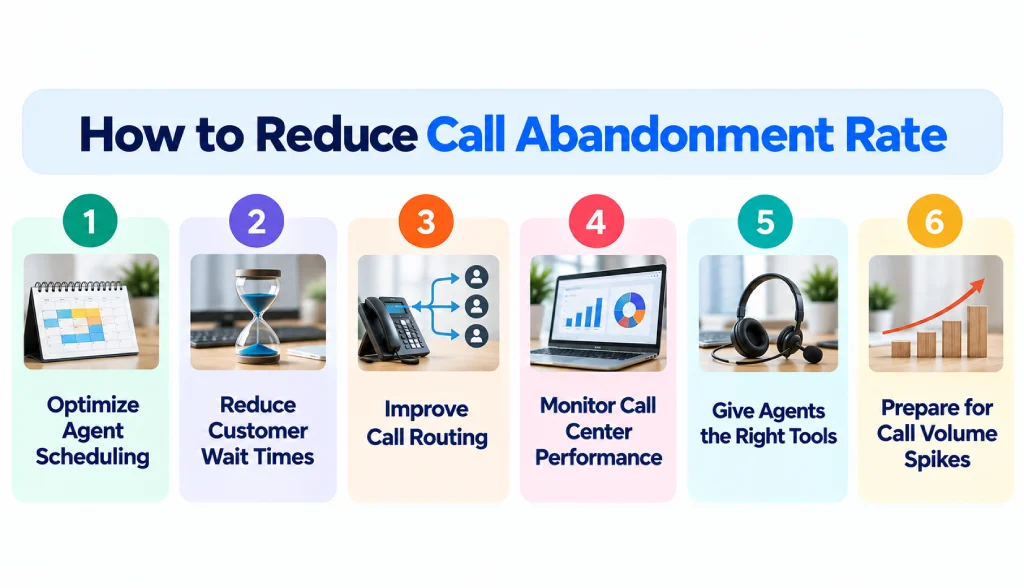
Optimize Agent Scheduling
Schedule enough agents during your busiest hours to keep queues manageable. Use your call data to identify peak periods and adjust shifts accordingly. This helps you match agent availability with customer demand. You can also use historical data to plan staffing for seasonal peaks and recurring busy periods.
Reduce Customer Wait Times
Long queues are one of the main reasons customers abandon calls. Set up estimated wait times, offer callback options, or use self-service options to give customers alternatives to waiting. Shorter wait times give customers less reason to leave the queue. Review your average wait time regularly to see where delays are happening.
Did You Know?
According to Gartner, only 14% of customer service issues are fully resolved through self-service, showing why customers still need effective access to assisted support.
Improve Call Routing
Route callers to the right agent or department as quickly as possible. Effective routing reduces unnecessary transfers and helps customers get the right support without repeating their issue. Use IVR menus and skill-based routing to direct calls more accurately. Keep your routing options simple so customers don’t have to navigate through a maze of menus.
Monitor Call Center Performance
Track metrics such as abandonment rate, average wait time, and average handle time regularly. Monitoring these metrics helps you spot sudden changes and take action before abandoned calls start increasing. Look for patterns across different days, shifts, and teams. This gives you a clearer idea of when and where customers are most likely to abandon calls.
Give Agents the Right Tools
Equip your agents with easy access to customer information, knowledge bases, and support tools. When agents can find answers faster, they can resolve calls efficiently and keep queues moving. Automating repetitive tasks can also reduce the time agents spend on routine work. Make sure your team knows how to use these tools effectively.
Prepare for Call Volume Spikes
Plan for periods when call volumes are likely to increase, such as product launches, outages, or seasonal demand. Having backup agents or flexible staffing options can help you manage sudden increases without creating long queues. Review previous call data to predict when these spikes are likely to happen. You can then prepare your team before the queue starts piling up.
Improve Call Center Efficiency with Time Champ
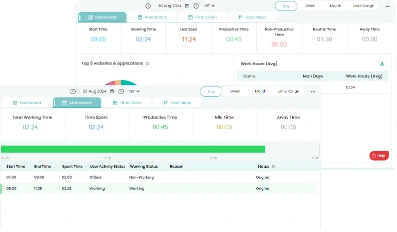
Reducing your call abandonment rate starts with making sure your agents are available when customers need them. Time Champ is a call center time tracking software that helps you understand agent availability, workload, attendance, and productivity, so you can identify staffing gaps and better prepare for busy periods.
These insights can support smarter workforce planning and help you keep customer wait times under control.
Features that can support your call center team:
- Time Tracking: Track agents’ working hours to understand team availability.
- Attendance Tracking: Monitor attendance and identify potential coverage gaps.
- Productivity Monitoring: See how efficiently your team is using its working hours.
- Real-Time Monitoring: Get visibility into current team activity and agent availability.
- Workload Insights: Identify uneven workloads that could affect call handling.
- Reports & Analytics: Use productivity data to make better staffing and scheduling decisions.
Ready to Reduce Your Call Abandonment Rate?
Use Time Champ to spot workload issues that can lead to longer waits and abandoned calls!
Conclusion
A high call abandonment rate often means customers are waiting too long or your team is struggling with call volume. Track your rate, find the cause, and improve staffing, routing, and wait times to keep more customers connected.
If you’re looking for call center time tracking software, Time Champ is a great solution to monitor agent availability, attendance, productivity, and workload. These insights can help you plan staffing better and keep your team ready when call volumes rise.

Guna Lakshmi

Table of Content
 What Is Call Abandonment Rate?
- How to Calculate Call Abandonment Rate
- What Is a Good Call Abandonment Rate?
- Why Call Abandonment Rate Matters
- What Causes a High Call Abandonment Rate?
- How to Reduce Call Abandonment Rate
- Improve Call Center Efficiency with Time Champ
- Features that can support your call center team:
- Conclusion
Related Blogs
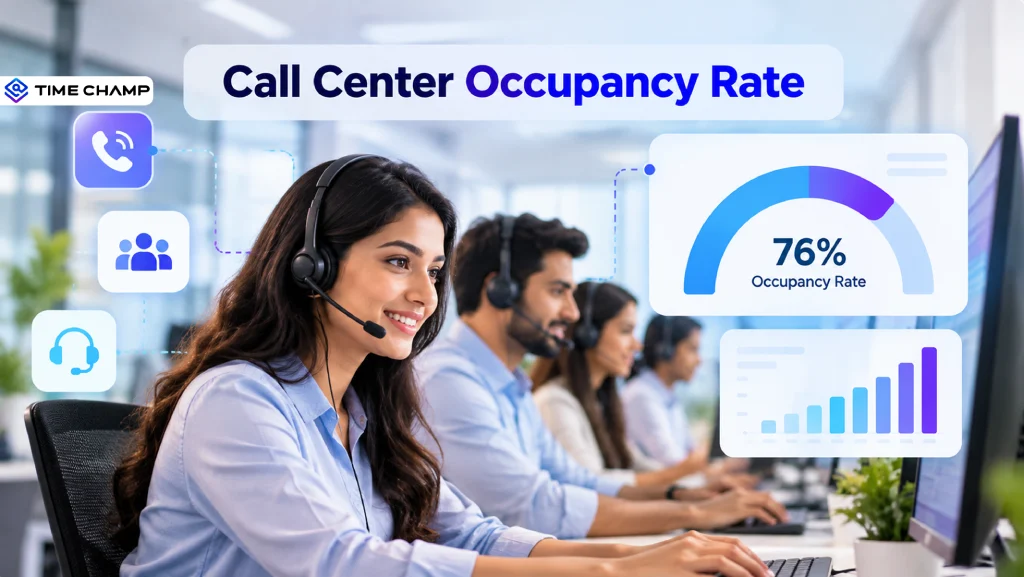
Learn what the call center occupancy rate is, the formula, how to calculate it, what a good occupancy rate is, and how it differs from utilization.
Oct 06, 2026
Track the most important BPO KPIs to measure agent performance, productivity, customer satisfaction, and overall contact center success in 2026.
Guna Lakshmi | Oct 02, 2026
Learn what average handle time (AHT) is, the AHT formula, how to calculate it, and proven ways to reduce it without hurting service quality.
Guna Lakshmi | Oct 06, 2026
Contact center services help businesses manage customer support across multiple channels. Compare types, benefits, costs, technologies, and AI trends.
Thasleem Shaik | August 10, 2026
Discover the ultimate guide to call centre workforce management. Learn key functions, pros, cons, optimisation tips, and how real-time WFM boosts ROI.
Thasleem Shaik | Oct 01, 2025
Discover the 10 best call centre quality assurance software for 2025. Compare features, pricing, pros, and cons to boost service quality and performance.
Thasleem Shaik | Nov 07, 2025


 4.7/5 avg.
Ready to Manage Your Workforce Smarter?
Join our family of 1500+ companies using smart insights to redefine workforces!

Free Trial
No Credit Card Required