Hybrid Team Productivity Strategies That Actually Work
Turn hybrid teams into high performers with hybrid team productivity strategies that improve results, visibility, collaboration, trust, and accountability.

You adopt hybrid work expecting greater flexibility and employee satisfaction, but still struggle with communication gaps, uneven visibility, declining accountability, and inconsistent performance. When you cannot clearly measure outcomes or ensure equal opportunities for remote and in-office employees, productivity can suffer even when you have talented teams. As hybrid work becomes a long-term operating model, you need a structured approach to keep teams productive, connected, and accountable. Hybrid team productivity strategies are the practices and management techniques that help your distributed teams collaborate effectively and achieve consistent results across both remote and in-office settings.
Here you’ll understand the key factors that affect hybrid team productivity and the strategies that help teams perform better. You’ll also understand how to reduce proximity bias and manage hybrid teams effectively without micromanaging.
What are the Key Factors That Influence Hybrid Team Productivity
Hybrid team productivity is influenced by several factors beyond just flexible work arrangements. Understanding these factors can help you create a more productive and connected hybrid workforce.
Clear Communication and Information Sharing
Clear communication helps hybrid teams stay aligned by ensuring everyone has access to the same information, whether they work remotely or from the office. Consistent updates, documented processes, and transparent workplace communication channels reduce misunderstandings and improve overall efficiency.
Outcome-Based Performance Management
Focusing on outcomes and measurable results encourages employees to prioritize meaningful work and take ownership of their responsibilities. Clear goals and measurable expectations also help you evaluate performance fairly and objectively.
Strong Team Collaboration and Connectivity
Effective collaboration enables team members to share ideas, solve problems, and work together seamlessly across different locations. Regular interactions and collaborative workflows strengthen your team relationships while keeping projects on track.
Employee Engagement and Trust
Employees who feel trusted and valued are more likely to stay motivated, productive, and committed to their work. Building a culture of trust through recognition, autonomy, and open communication helps you improve both performance and employee engagement.
Balanced Workloads and Workplace Flexibility
When workloads are distributed fairly, employees can maintain productivity without feeling overwhelmed or burned out. Combining balanced responsibilities with workplace flexibility allows your team members to work more effectively while supporting their well-being.
Access to the Right Technology and Tools
The right technology enables employees to communicate, collaborate, and manage tasks efficiently from any location. Reliable tools eliminate workflow bottlenecks, improve visibility, and support smoother day-to-day operations.

Did You Know?
Gallup found that 55% of remote-capable U.S. employees currently work in a hybrid arrangement, making it the most common work model among knowledge employees.
7 Hybrid Team Productivity Strategies That Work
Improving hybrid team productivity requires more than flexible schedules and collaboration tools. You need clear systems that help employees stay aligned, accountable, and connected while working from different locations.
The following strategies can help you create a productive hybrid work environment where teams collaborate effectively, stay focused on goals, and consistently deliver results.
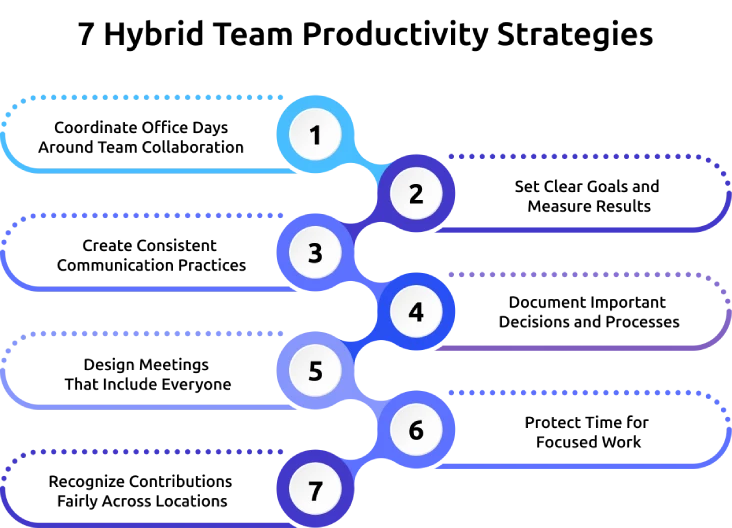
1. Coordinate Office Days Around Team Collaboration
Schedule employees who frequently collaborate to work from the office on the same days. Bringing the right people together for brainstorming sessions, project discussions, and planning helps teams solve problems faster and make decisions more efficiently. This approach strengthens collaboration, improves communication, and creates more meaningful in-person interactions.
2. Set Clear Goals and Measure Results
Define measurable goals, project milestones, and performance expectations for every employee. When team members know what success looks like, they can prioritize their work with greater confidence and accountability. Clear objectives also help you track progress consistently and provide fair performance evaluations.
3. Create Consistent Communication Practices
Establish clear guidelines for how your team communicates across emails, chat platforms, meetings, and project management tools. Consistent communication ensures everyone receives the same information and understands current priorities. This reduces misunderstandings, improves coordination, and helps projects move forward without unnecessary delays.
4. Document Important Decisions and Processes
Maintain shared documentation for workflows, meeting notes, project updates, and key decisions. Giving employees easy access to accurate information helps them complete tasks without relying on repeated explanations or follow-ups. Well-documented processes improve transparency, increase accountability, and support smoother collaboration across teams.
5. Design Meetings That Include Everyone
Create meetings where both remote and in-office employees can participate equally. Share agendas in advance, encourage everyone to contribute, and use reliable collaboration tools to keep discussions engaging. Inclusive meetings strengthen teamwork, improve decision-making, and ensure every employee has a voice.
6. Protect Time for Focused Work
Encourage employees to block dedicated time for important tasks and minimize unnecessary meetings during those periods. Fewer interruptions allow employees to concentrate better and complete complex work more efficiently. Protecting focus time also improves work quality and helps teams achieve better results.
7. Recognize Contributions Fairly Across Locations
Recognize employees based on their achievements, impact, and results, no matter where they work. Celebrate accomplishments regularly through team meetings, recognition programs, or personal appreciation to keep employees motivated. Fair recognition builds trust, improves morale, and encourages consistent high performance across the entire team.
Struggling to keep hybrid teams productive?
Track performance, balance workloads, and improve accountability with Time Champ.
How Proximity Bias Impacts Hybrid Team Performance
Proximity bias is a common challenge in hybrid workplaces where employees who are physically present receive greater visibility and recognition than remote team members. If left unaddressed, it can affect fairness, engagement, collaboration, and overall team performance.
Limited Career Growth Opportunities
Employees who spend more time in the office often have greater exposure to managers and leadership teams. This increased visibility can lead to more opportunities for promotions, leadership roles, and high-impact projects, while equally capable remote employees may receive less recognition.
Unfair Performance Assessments
When visibility influences perception, managers may unintentionally associate office attendance with productivity and commitment. This can result in performance evaluations that overlook actual outcomes and measurable contributions, making it difficult to assess employees fairly.
Declining Engagement and Higher Turnover
Employees who feel overlooked or undervalued are less likely to stay engaged in their work. Over time, reduced motivation can undermine performance and increase the likelihood that talented employees seek opportunities elsewhere.
Communication Gaps in Decision-Making
Important discussions and decisions sometimes happen through informal office conversations that remote employees cannot participate in. Missing these interactions can leave remote team members with less context, slower access to information, and fewer opportunities to contribute their ideas.
Challenges in Building an Inclusive Workplace
Proximity bias can create unequal experiences across the workforce and make it harder to maintain an inclusive culture. Employees with limited physical access to leaders and colleagues may feel disconnected from important conversations, networking opportunities, and organizational initiatives.
Reducing proximity bias requires intentional leadership practices, objective performance metrics, and equal access to opportunities. When employees are recognized and rewarded based on their results, you can create a more engaged, collaborative, and productive hybrid workforce.
How to Manage Hybrid Teams Effectively Without Micromanaging?
Managing a hybrid team requires balancing accountability with employee autonomy. The most effective approach is to provide clear direction, maintain open communication, and focus on outcomes without constant oversight.

- Set Clear Expectations and Goals: Define responsibilities, priorities, deadlines, and performance expectations from the start. When employees understand what they expect, they can work more confidently and independently.
- Focus on Results, Not Activity: Evaluate performance based on completed work, project outcomes, and goal achievement. This encourages accountability while allowing employees the flexibility to manage their work effectively.
- Maintain Regular Check-Ins: Schedule consistent one-on-one meetings and team discussions to provide support, address challenges, and stay informed about progress. Frequent communication helps you stay connected without constantly monitoring employees.
- Build a Culture of Trust: Give employees ownership of their work and avoid unnecessary oversight. Trust encourages initiative, improves engagement, and helps team members take greater responsibility for results.
- Use Technology to Improve Visibility: Project management, communication, and productivity tools can provide insights into progress and workloads without requiring constant follow-ups. This helps you stay informed while giving employees the freedom to work independently.
How Time Champ Improves Hybrid Team Productivity
Managing a hybrid workforce can be challenging when you lack visibility into how work is progressing across remote and in-office teams. Communication gaps, inconsistent productivity, workload imbalances, and limited insight into employee performance can make it difficult to support teams effectively. Time Champ is a smart employee monitoring software with hybrid work management features that help you gain better visibility, improve accountability, and make informed decisions based on actual work data.
Time Champ helps you track productive hours, focus time, and work patterns across your workforce, giving you a clearer understanding of team performance. It provides productivity reports, activity insights, attendance tracking, and automated timesheets to simplify workforce management. You can monitor workload distribution, identify signs of burnout early, and ensure employees receive fair recognition based on measurable contributions. With comprehensive visibility in both remote and in-office work, Time Champ helps you manage hybrid teams more effectively while focusing on outcomes, productivity, and employee well-being.
Need better visibility into hybrid work?
Time Champ helps you monitor productivity, measure results, and support high-performing teams.
Conclusion
Building a productive hybrid workforce requires more than flexible work arrangements. Success depends on clear communication, strong collaboration, outcome-focused management, and fair opportunities for every employee. Addressing challenges such as proximity bias, establishing clear expectations, and promoting a culture of trust and accountability helps you create an environment where employees perform at their best. Implementing the right hybrid team productivity strategies helps your teams stay aligned, engaged, and focused on meaningful results. When supported by effective leadership and the right tools, hybrid teams can achieve higher productivity, stronger collaboration, and long-term organizational success.

Anjali

Table of Content
 What are the Key Factors That Influence Hybrid Team Productivity
- 7 Hybrid Team Productivity Strategies That Work
- How Proximity Bias Impacts Hybrid Team Performance
- How to Manage Hybrid Teams Effectively Without Micromanaging?
- How Time Champ Improves Hybrid Team Productivity
- Conclusion

Related Blogs

Learn what a hybrid work policy is, see the 9 essential components to include, and download, edit, and use your free hybrid work policy template.
Guna Lakshmi | Jun 13, 2026
Prevent hybrid work burnout in 2026 with practical manager strategies. Learn warning signs, support employee wellbeing, and reduce stress effectively.
Anjali | Jun 11, 2026
Learn 10 essential hybrid workforce best practices to boost productivity, improve communication, and foster team morale for success in a flexible work setup.
Tarun Kumar Reddy | Nov 12, 2024
Explore our top 9 strategies to enhance remote employee engagement, tackle common challenges, and keep your team motivated and connected.
Shabana Shaik | Oct 25, 2024
Remote workforce management, also called virtual workforce management, helps teams stay engaged. Explore its definition, benefits, challenges & tools.
Thasleem Shaik | September 16, 2025
Discover the hybrid work model, which blends office and remote environments for greater flexibility and productivity.
Thasleem Shaik | Oct 25, 2024


 4.7/5 avg.
Ready to Manage Your Workforce Smarter?
Join our family of 1500+ companies using smart insights to redefine workforces!

Free Trial
No Credit Card Required