Hidden Costs of Outsourcing: 12 Costs That Erode Savings
Uncover the hidden costs of outsourcing that impact ROI. Explore 12 overlooked expenses and learn how to calculate the true cost before you outsource.
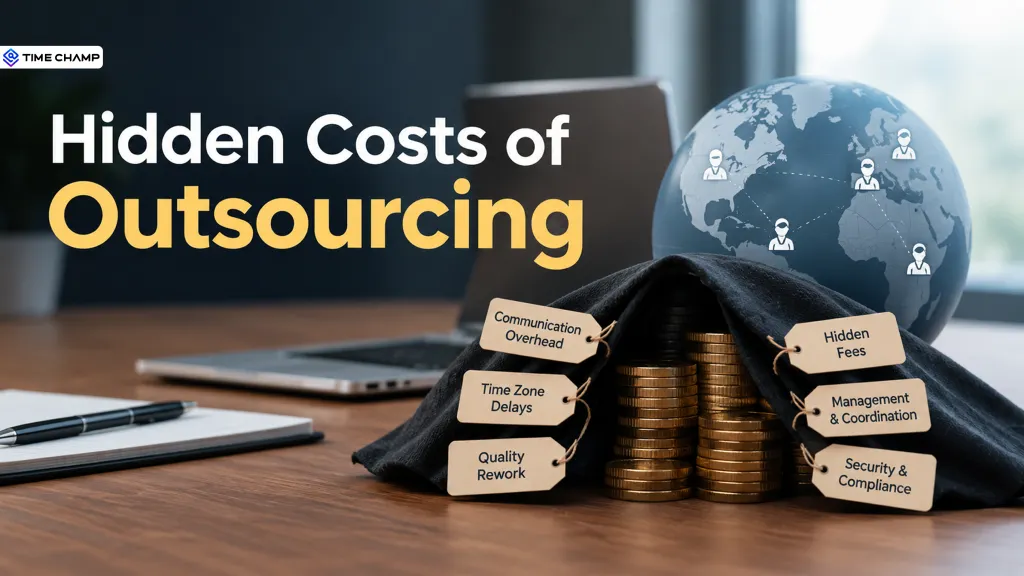
Most outsourcing deals look great on paper. Lower costs, skilled talent, and faster delivery- it sounds like an easy win. But once the project starts, the extra costs begin to show up.
Time spent managing vendors, training new teams, fixing mistakes, handling delays, and even paying contract exit fees can quietly reduce your expected savings. These costs rarely appear in the vendor's quote, but they still come out of your budget.
It's a common problem. According to Deloitte's 2024 Global Outsourcing Survey, 70% of executives have brought outsourced work back in-house because the results didn't meet their expectations.
Before you sign your next outsourcing contract, it's important to know where these hidden costs come from and how they affect your bottom line. In this blog, you'll learn about the 12 hidden costs of outsourcing, how to calculate the true cost of a deal, and how to avoid expensive surprises.
What are the Hidden Costs of Outsourcing?
Hidden costs of outsourcing are the extra expenses that don't appear in your vendor's quote but still increase the total cost of the project. These can include the time spent choosing a vendor, onboarding and training new teams, managing the partnership, fixing quality issues, meeting compliance requirements, and even ending the contract.
Because these costs are often left out of the initial budget, businesses end up spending more than they expected. For example, vendor governance alone can cost 3% to 5% of the annual contract value, even before you factor in delays, rework, or communication costs.
The 12 Hidden Costs of Outsourcing Business Services
Hidden costs don't appear in the vendor's quote, but they still affect your budget. Here are the 12 most common hidden costs businesses face when outsourcing.
1. Vendor Selection and Contracting
Outsourcing starts long before the contract is signed. Your team spends time creating RFPs, comparing vendors, checking references, reviewing security requirements, and negotiating contracts.
These activities involve teams from operations, finance, legal, and IT. Although they aren't included in the outsourcing budget, they are real business costs that should be considered before signing any agreement.
2. Knowledge Transfer and Training
Your outsourcing partner can't do the job without understanding your business. That means your team must document processes, share knowledge, and train the vendor before work begins.
During this period, experienced employees spend less time on their regular work. Since you're paying both your internal team and the vendor, the costs of outsourcing often increase before you see any savings.
3. The Productivity Gap
A new outsourcing team needs time to learn your processes. It rarely reaches full productivity in the first few months.
While the vendor is still ramping up, your internal team often has to answer questions, fix issues, and handle extra work. This temporary drop in productivity is one of the highest hidden costs of outsourcing, yet it's often left out of the original budget.
4. Vendor Management and Governance
Outsourcing doesn't mean you can step away from the project. Someone still needs to manage the vendor, review performance, track service levels, approve invoices, and resolve issues.
These tasks take time and resources. In fact, governance can cost 3% to 5% of the annual contract value. Without proper vendor management, expected savings can quickly disappear.
5. Shadow Management
Even with a dedicated vendor, your team still spends time answering questions, reviewing work, solving problems, and following up on tasks. This extra effort is called shadow management.
It often goes unnoticed because it's part of everyday work. Over time, these small tasks take up valuable hours and increase the costs of outsourcing, reducing the savings you expected.
6. Quality Issues and Rework
Mistakes cost more than you think. When the vendor's work doesn't meet expectations, your team has to review, correct, or redo it.
Whether it's fixing invoices, resolving customer complaints, or rewriting code, rework means you're paying twice, once for the original work and again to fix it. Strong quality checks can help reduce the hidden costs of outsourcing.
7. Vendor Staff Turnover
High employee turnover at the vendor can affect the quality and speed of your project. Every time someone leaves, a new person has to learn your processes, tools, and business requirements.
This constant training slows progress, increases errors, and puts extra pressure on your internal team. Even if service levels are met, frequent staff changes can reduce productivity and increase the long-term costs of outsourcing.
8. Change Requests and Scope Creep
Business needs change over time, but outsourcing contracts often have a fixed scope. Any work outside the original agreement usually comes with an extra charge.
A new report, a small process change, or an additional integration may seem minor on its own. However, these change requests can add up quickly and increase the total cost of the contract. Clearly defining the project scope and reviewing it regularly can help keep these costs under control.
9. Communication and Time Zone Challenges
Working with teams in different locations can slow down communication. A simple question may take hours, or even a full day, to get answered because of time zone differences.
Language barriers, cultural differences, and different working styles can also lead to misunderstandings. These delays may seem small, but they can affect project timelines and increase the overall cost of outsourcing.
10. Security, Compliance, and Data Protection
Outsourcing a process doesn't transfer the responsibility for protecting your data. Your business is still responsible for meeting security and compliance requirements.
This often means spending time and money on vendor security reviews, audits, compliance checks, data protection tools, and regular monitoring. These ongoing costs are rarely included in the original outsourcing budget.
11. Paying for Services You Don't Use
Many outsourcing contracts include services that businesses rarely use. Over time, reports, meetings, dedicated resources, or support services may stop providing value, but you continue paying for them.
Regularly review your contract and the services you're receiving to identify unnecessary costs and ensure you're getting the value you paid for.
12. Exit and Switching Costs
Ending an outsourcing contract can be expensive. Moving data, training a new vendor, documenting processes again, and managing the transition all require time and resources.
These costs are often overlooked when signing the contract, but they can make it difficult to switch vendors, even when the partnership isn't delivering the expected results. Planning your exit strategy from the beginning can help avoid costly surprises later.
Stop Hidden Costs from Reducing Your ROI with Time Champ!
Monitor productivity, project costs, and vendor performance in real time
How to Calculate the True Cost of Outsourcing?
The true cost of outsourcing is more than the vendor's fee. To get an accurate picture, you need to include all the extra costs that come with managing and supporting the outsourcing relationship.
True Cost of Outsourcing =
Vendor Cost + Transition Costs + Vendor Management + Productivity Loss + Rework + Security & Compliance + Exit Costs
Don't worry if you don't have exact numbers. Start with estimates and update them as your outsourcing project progresses.
| Cost | How to Estimate It |
|---|---|
| Vendor Cost | Annual contract value |
| Vendor Selection | Time spent evaluating and choosing a vendor |
| Knowledge Transfer | Time spent documenting processes and training the vendor |
| Productivity Loss | Lower output while the vendor ramps up |
| Vendor Management | Time spent on meetings, reviews, and performance tracking |
| Quality Issues | Cost of fixing errors and rework |
| Staff Turnover | Time spent training replacement vendor employees |
| Unused Services | Services you're paying for but not using |
| Security & Compliance | Audits, compliance checks, and security tools |
| Exit Costs | Data migration, transition, and switching vendors |
A few simple tips can make your calculations more accurate:
- Compare the total cost with your in-house costs, not just the vendor's price. If outsourcing costs nearly the same, you're probably outsourcing for flexibility or expertise rather than cost savings.
- Measure the cost per outcome, not per employee. Instead of comparing hourly rates or headcount, track the cost per invoice processed, support ticket resolved, or project completed. This gives you a much clearer picture of outsourcing performance.
How Can You Reduce Hidden Outsourcing Costs?
You can't avoid every hidden cost of outsourcing, but you can plan for them and reduce their impact. These simple steps can help you get more value from your outsourcing partnership.
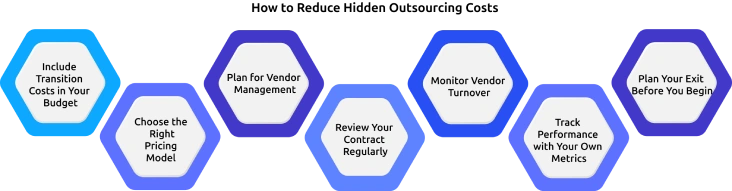
1. Include Transition Costs in Your Budget
Don't focus only on the vendor's price. Also, budget for vendor selection, onboarding, knowledge transfer, and the time it takes for the new team to become productive.
2. Choose the Right Pricing Model
Instead of paying only for headcount, consider contracts based on results or business outcomes. This helps ensure you're paying for value, not just hours worked.
3. Plan for Vendor Management
Outsourcing still requires oversight. Set aside time and resources for performance reviews, meetings, issue resolution, and contract management.
4. Review Your Contract Regularly
Compare the services you're paying for with what you're actually receiving. Regular reviews can help you spot unused services and avoid unnecessary costs.
5. Monitor Vendor Turnover
Frequent staff changes can affect quality and productivity. Ask your vendor to share turnover rates for your account and discuss plans to improve team stability.
6. Track Performance with Your Own Metrics
Don't depend only on vendor reports. Measure key performance indicators (KPIs) such as productivity, quality, turnaround time, and customer satisfaction to understand the true value you're getting.
7. Plan Your Exit Before You Begin
Include clear exit terms in the contract, such as data transfer, documentation, transition support, and notice periods. A well-planned exit strategy can save time, money, and stress if you decide to switch vendors later.
How Time Champ Helps You Manage Hidden Outsourcing Costs
Many hidden outsourcing costs happen because businesses lose visibility once work moves to an external team. Without clear data, it's difficult to track productivity, monitor performance, or know whether you're getting the value you're paying for.
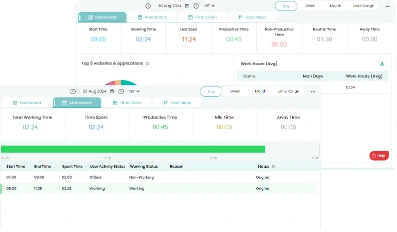
Time Champ is an employee monitoring software that helps you close that visibility gap. It gives you real-time insights into outsourced, remote, and extended teams, making it easier to track work, control costs, and make informed decisions.
Here's how Time Champ helps:
- Gain full visibility into work hours by tracking actual project time, comparing it with vendor-reported hours, and ensuring accurate billing.
- Boost team productivity with app usage, activity tracking, and project insights that show how time is spent.
- Stay within budget by tracking billable hours, using custom billing rates, and getting alerts before costs go over budget.
- Improve work quality and accountability with screenshots, screen recordings, and activity logs for faster reviews and issue resolution.
- Ensure reliable attendance by tracking work hours and shift coverage to keep outsourced teams on schedule.
- Reduce security and compliance risks with data protection, audit logs, and security monitoring.
- Make better business decisions with one dashboard that brings together time, productivity, attendance, and project insights.
Know the True Cost of Your Outsourcing with Time Champ!
Track vendor performance, productivity, and hidden costs, all in one place
Conclusion
Outsourcing can help your business save money and improve efficiency, but only if you understand the full cost involved. Looking beyond the vendor's quote helps you avoid unexpected expenses and make better decisions. Planning for hidden costs, tracking performance, and reviewing your outsourcing strategy regularly can get you the most value from your investment and build a stronger partnership with your vendor.

Jahnavi Pulluri

Table of Content
 What are the Hidden Costs of Outsourcing?
- The 12 Hidden Costs of Outsourcing Business Services
- How to Calculate the True Cost of Outsourcing?
- How Can You Reduce Hidden Outsourcing Costs?
- How Time Champ Helps You Manage Hidden Outsourcing Costs
- Conclusion
Related Blogs

Learn how project cost management helps you estimate, control, and optimize project budgets with proven methods, best practices, and accurate time tracking.
Jahnavi Pulluri | Jul 22, 2026
Hybrid work offers savings, but hidden costs can erode ROI. Explore 9 expenses and practical ways to identify them before they grow.
Guna Lakshmi | Jun 06, 2026
A cost centre is a part of an organization which is responsible for costs incurrence but is not directly involved in revenue generation.
Sai Keerthi Uppala | Apr 27, 2024
Compare employee monitoring software costs in 2026. Explore pricing factors, models, tiers, hidden fees, and the real total cost of ownership for any team.
Jahnavi Pulluri | Apr 16, 2026
Discover the hidden cost of low productivity in business. Learn how to calculate productivity loss, reduce inefficiencies, and improve profitability in 2026.
Guna Lakshmi | May 13, 2026
Learn how to measure the ROI of digital time tracking software with a practical cost benefit analysis template for productivity and cost savings.
Jahnavi Pulluri | May 15, 2026


 4.7/5 avg.
Ready to Manage Your Workforce Smarter?
Join our family of 1500+ companies using smart insights to redefine workforces!

Free Trial
No Credit Card Required