Cost Per Contact Call Center: Formula and Benchmarks
Learn how to calculate cost per contact in a call center, discover a good average benchmark, and understand the four key drivers that impact your costs.

Most call centers track cost per contact, but not everyone calculates it the same way. That's where the confusion begins.
At first, the formula looks easy. But once you decide which costs to include, and which ones to leave out, the number can change quite a bit. Without a consistent method, comparing one call center with another doesn't tell you much.
So, what should you include? What's considered a good average? And what really drives this metric?
This blog answers those questions. You'll learn how to calculate cost per contact correctly, understand the factors that affect it, and find practical ways to lower costs without reducing service quality.
What Is Cost Per Contact in a Call Center?
Cost per contact is the average cost of handling one customer interaction. You calculate it by dividing your total call center operating costs by the total number of customer contacts handled during the same period.
A contact can be a phone call, live chat, email, social media message, or any other customer interaction your team handles.
Formula
Cost per Contact = Total Call Center Operating Costs ÷ Total Customer Contacts Handled
How to Calculate Cost Per Contact in a Call Center
Calculating cost per contact is simple once you know what to include.
Formula
Cost per Contact = Total Call Center Operating Costs ÷ Total Customer Contacts Handled
The math is easy. The important part is making sure you include the right costs and count contacts consistently every time.
Step 1: Choose the Time Period and Channel
Start by choosing a reporting period, such as a month or a quarter. A full month is usually the best choice because it gives a more reliable picture than a few days or a single week.
Next, decide what you want to measure:
- All customer contacts together (voice, chat, email, etc.)
- Each channel separately
If possible, calculate both. A combined number gives an overall view, while separate numbers show which channels cost more or less to operate.
Step 2: Add Your Operating Costs
Include all the regular costs of running your call center during that period.
| Cost Category | Examples | Include? |
|---|---|---|
| Agent salaries and benefits | Wages, bonuses, benefits | Yes |
| Team leaders and QA | Supervisors, quality analysts, workforce management | Yes |
| Hiring and training | Recruitment, onboarding, training | Yes |
| Technology | Contact center software, CRM, phone system | Yes |
| Office costs | Rent, utilities, equipment, IT support | Yes |
| Management costs | Operations managers and allocated overhead | Yes |
| One-time projects | Office setup, software migration, consulting | Usually exclude, or spread the cost over several months |
Step 3: Count Customer Contacts
Next, count every customer interaction handled during the same period.
A contact can be:
- A phone call
- A live chat
- An email
- A social media message
- A support ticket
To keep your numbers accurate:
- Don't count abandoned calls that were never answered.
- Count a transferred call as one customer contact, not multiple.
- Count repeat contacts separately because each one required agent time.
- If you include self-service interactions, such as IVR, report them separately from agent-handled contacts.
Step 4: Calculate the Cost Per Contact
Once you have total operating costs and total customer contacts, divide the costs by the contacts.
Example
- Total operating costs: $362,000
- Total customer contacts: 46,500
Cost per Contact = $362,000/46,500 = $7.78
This means the call center costs an average of $7.78 to handle one customer interaction.
That's it. Repeat the same calculation every month using the same cost categories and counting method. This keeps your results consistent and makes it easier to compare performance over time.
What Is a Good Average Cost Per Contact in a Call Center?
There isn't a single "good" cost per contact that applies to every call center. The right number depends on several factors, including your support channels, location, customer needs, staffing model, and the costs included in your calculation.
That's why comparing your cost per contact with a published industry average can be misleading. Instead of focusing only on industry averages, compare your current cost per contact with your own historical performance. If you're calculating the metric consistently every month, you'll be able to see whether your call center is becoming more efficient over time.
Industry benchmarks can still be useful, but only if they use a calculation method that's similar to yours. Otherwise, the comparison may not give you an accurate picture of your performance.
What Affects Cost Per Contact in a Call Center?
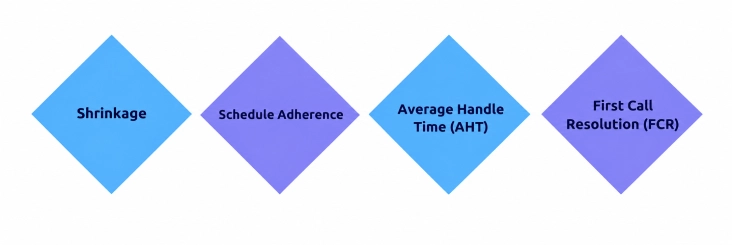
Many people think technology is the biggest factor behind cost per contact. Here are the four factors that have the biggest effect on cost per contact.
1. Shrinkage
Shrinkage is the time agents are paid but are not available to handle customer contacts. This includes breaks, meetings, training, coaching, sick leave, and system downtime.
Higher shrinkage means fewer agents are available to answer customers, even though the business is still paying for that time. As a result, the cost of handling each customer's contact increases.
2. Schedule Adherence
Schedule adherence measures whether agents are available when they are supposed to be.
Even small delays can reduce productivity. For example, if several agents start late or return late from breaks every day, the team handles fewer customer contacts. The operating costs stay the same, so the cost per contact goes up.
Good workforce planning and real-time monitoring can help improve schedule adherence.
3. Average Handle Time (AHT)
Average Handle Time (AHT) is the average time an agent spends handling one customer interaction. It includes talk time, hold time, and after-call work.
When agents spend less time on each contact, they can help more customers, which usually lowers the cost per contact.
However, reducing AHT should never come at the expense of customer service. If agents rush calls and customers have to contact support again, costs can increase over time.
4. Repeat Contacts
A repeat contact happens when a customer reaches out again about the same issue.
Every repeat contact requires more agent time, which increases operating costs. A high repeat contact rate often points to problems with first-contact resolution, agent training, or internal processes.
Reducing repeat contacts not only improves customer satisfaction but also lowers your overall support costs.
Run a More Efficient Call Center!
Improve workforce utilization, reduce idle time, and control operating costs with Time Champ
6 Proven Ways to Lower Cost Per Contact
- Reduce Shrinkage First: Improve how agent time is used before hiring more people or cutting staff. Better scheduling and workforce planning can free up capacity.
- Improve Schedule Adherence: Make sure agents are available when they're scheduled. Small improvements can increase productivity without adding headcount.
- Increase First-Contact Resolution (FCR): Solving customer issues on the first interaction reduces repeat contacts and lowers overall support costs.
- Improve Self-Service Options: Many customers prefer to solve simple issues themselves. A clear knowledge base, FAQ, or chatbot can reduce the number of contacts reaching agents.
- Align Staffing with Customer Demand: Use historical contact volume to schedule agents when they're needed most. This reduces overstaffing and long wait times.
- Reduce Employee Turnover: High attrition increases hiring, training, and onboarding costs. Retaining experienced agents helps improve efficiency and keeps cost per contact under control.
How Time Champ Helps Reduce Cost Per Contact
Time Champ is an employee monitoring software that gives you real-time visibility into how employee time is spent. It helps you improve workforce efficiency, reduce idle time, and optimize staffing; it supports your efforts to lower cost per contact without affecting service quality.
1. Attendance & Shift Management
Monitor attendance, shift schedules, late logins, and absences in real time. This helps ensure the right number of agents are available when customer demand is highest, improving schedule adherence and reducing staffing gaps.
2. Productivity Monitoring
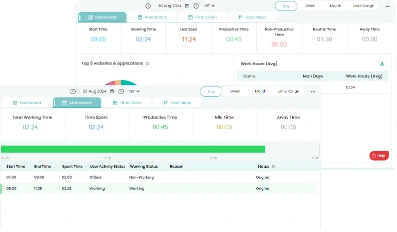
Track productive, unproductive, and idle time to understand how agents spend their workday. These insights help managers identify productivity gaps and improve workforce efficiency.
3. Idle Time Tracking
Identify periods when agents are inactive during working hours. Reducing unnecessary idle time helps improve agent utilization and lowers the cost of handling each customer interaction.
4. Workforce Analytics
Access detailed reports on employee activity, productivity, and utilization. These insights make it easier to optimize staffing, balance workloads, and make data-driven workforce decisions.
5. Call Recording
Review customer interactions to identify coaching opportunities, improve agent performance, and increase first-contact resolution. Resolving issues the first time helps reduce repeat contacts and unnecessary support costs.
Reduce Your Call Center Cost Per Contact!
Improve workforce productivity, balance workloads, and optimize staffing with Time Champ
Conclusion
Cost per contact is more than just a number; it shows how efficiently your call center handles customer interactions. When you calculate it the right way and track it consistently, it becomes easier to find areas for improvement and control operating costs. Focus on the factors that have the biggest impact, such as workforce efficiency, scheduling, and first-contact resolution. Small improvements in these areas can lower costs while still delivering a great customer experience.

Jahnavi Pulluri

Table of Content
 What Is Cost Per Contact in a Call Center?
- How to Calculate Cost Per Contact in a Call Center
- What Is a Good Average Cost Per Contact in a Call Center?
- What Affects Cost Per Contact in a Call Center?
- 6 Proven Ways to Lower Cost Per Contact
- How Time Champ Helps Reduce Cost Per Contact
- Conclusion
Related Blogs
Learn simple ways to measure and boost call center productivity, helping your team work more efficiently and improve customer service.
Jahnavi Pulluri | Jan 10, 2025
Discover the ultimate guide to call centre workforce management. Learn key functions, pros, cons, optimisation tips, and how real-time WFM boosts ROI.
Thasleem Shaik | Oct 01, 2025
Discover the 10 best call centre quality assurance software for 2025. Compare features, pricing, pros, and cons to boost service quality and performance.
Thasleem Shaik | Nov 07, 2025
Employee screen recording helps you meet compliance and security requirements. See which regulations apply and when your team needs them.
Guna Lakshmi | Apr 24, 2026
Implementing screen recording legally means getting notification, consent, and data rules right. Here is what you need to know before they start.
Guna Lakshmi | Jan 01, 2024
Learn when employee screen recording is legal in New York and how to meet notice and compliance requirements without creating risk or gaps.
Thasleem Shaik | Apr 27, 2026


 4.7/5 avg.
Ready to Manage Your Workforce Smarter?
Join our family of 1500+ companies using smart insights to redefine workforces!

Free Trial
No Credit Card Required