Hiring can be challenging when you need to reach the right candidates quickly while keeping the recruitment process organized. E-recruitment gives employers a digital way to attract talent, collect applications, screen candidates, and manage hiring from one place.
But which e-recruitment methods should you use, and how do they fit into your hiring process? This guide covers the meaning, process, types, and examples of e-recruitment to help you build a more efficient and structured hiring process.
What Is E-Recruitment?
E-recruitment, or electronic recruitment, is the process of using digital platforms and online tools to attract, find, evaluate, and hire candidates. It allows employers to post job openings, collect applications, screen candidates, schedule interviews, and manage hiring activities digitally.
Unlike traditional recruitment, which often relies on paper applications, in-person interactions, or manual processes, e-recruitment uses digital tools to simplify hiring. These include career websites, job portals, social media, applicant tracking systems (ATS), and recruitment software. These digital tools help make the hiring process more accessible, organized, and efficient.

Did You Know?
According to Naukri JobSpeak, India's white-collar hiring grew 8% in FY26, the strongest year in three years, and almost all of those roles were advertised, applied for, screened, and scheduled online.
E-Recruitment vs Traditional Recruitment
E-recruitment uses digital platforms and tools, while traditional recruitment relies more on manual and offline methods. Here’s a quick comparison of the two approaches:
| Aspect | E-Recruitment | Traditional Recruitment |
|---|---|---|
| Recruitment method | Uses digital platforms and online tools | Relies on offline and manual methods |
| Job posting | Jobs are posted on career websites, job portals, and social media | Jobs are advertised through newspapers, job fairs, referrals, and other offline channels |
| Candidate reach | Can reach candidates across different locations | Usually has a more limited geographic reach |
| Application process | Candidates can apply online | Candidates may submit applications in person, by email, or through other manual methods |
| Candidate screening | Uses digital tools and ATS software to organize and screen applications | Often involves manual review of applications |
| Communication | Uses email, messaging platforms, and video calls | Often relies on phone calls, emails, and in-person communication |
| Hiring speed | Can shorten several stages of the recruitment process | Can take longer due to manual steps |
| Cost | Can reduce costs associated with printing, travel, and physical recruitment activities | May involve higher costs for printing, travel, venues, and other physical activities |
| Data management | Candidate information can be stored and managed digitally | Candidate records may be maintained through paper files or separate systems |
| Interview process | Supports virtual interviews through video conferencing tools | Traditionally relies more on face-to-face interviews |
How Does E-Recruitment Work? Step-By-Step Process
E-recruitment follows a structured digital process that helps you attract suitable candidates, evaluate applications, and complete hiring efficiently. Here’s how the process typically works:
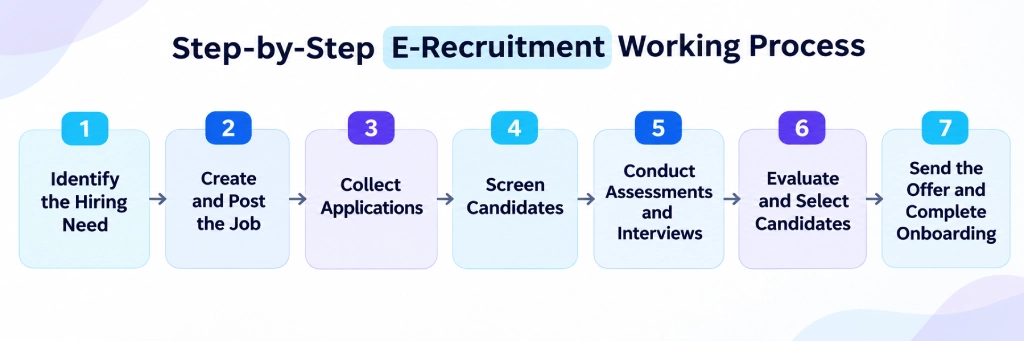
1. Identify the Hiring Need
Start by defining why you need to hire and what the role requires. Specify the job responsibilities, required skills, qualifications, experience, and other criteria you’ll use to evaluate candidates. A clear hiring plan helps you attract candidates who match the requirements of the position.
2. Create and Post the Job
Create a clear and detailed job description that explains the role, responsibilities, qualifications, salary range if applicable, and other relevant details. Publish the opening on your career website, job portals, social media, and other online platforms to reach potential candidates. Using multiple digital channels can help you reach a wider pool of potential applicants.
3. Collect Applications
Candidates can apply online by submitting their resumes, application forms, portfolios, and other required information. Digital applications make it easier for you to collect candidate information in a centralized system. You can also organize applications based on job roles, qualifications, experience, or application status.
4. Screen Candidates
Review applications to identify candidates who meet your requirements. An Applicant Tracking System (ATS) can help you organize applications, filter candidates based on predefined criteria, and manage the recruitment pipeline. This allows you to focus your time on candidates who meet the key requirements of the role.
5. Conduct Assessments and Interviews
Shortlisted candidates may complete online tests or skills assessments before moving to interviews. You can conduct interviews through video conferencing platforms, allowing you to evaluate candidates without requiring them to visit your workplace. Online assessments and interviews can also make it easier to coordinate hiring across different locations.
6. Evaluate and Select Candidates
Compare shortlisted candidates based on their qualifications, skills, experience, assessment results, and interview performance. Use consistent selection criteria to help you make a structured hiring decision. You can document candidate evaluations digitally to keep the selection process organized and consistent.
7. Send the Offer and Complete Onboarding
Once you select a candidate, send the offer letter digitally and collect the necessary documents. You can then use digital HR and onboarding tools to complete paperwork, introduce the new employee to the organization, and prepare them for their role. A digital onboarding process helps you move the selected candidate from hiring to joining with fewer manual steps.
Types of E-Recruitment Methods
You can use different e-recruitment methods to attract candidates based on your hiring needs, target audience, and available resources. Each method helps you reach potential candidates through a different digital channel.
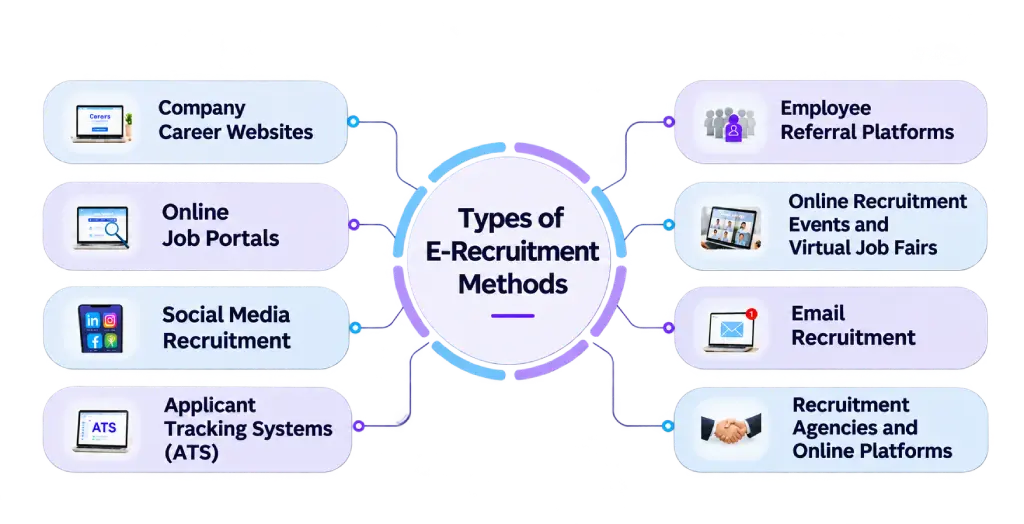
1. Company Career Websites
You can list open positions on your company’s career page and allow candidates to submit applications directly. This method also gives you control over how job opportunities and your employer brand are presented.
Best for: Building a direct talent pipeline and strengthening your employer brand.
2. Online Job Portals
Online job portals allow you to publish vacancies and reach a large pool of active job seekers. You can also use filters and search features to find candidates with specific qualifications and experience.
Best for: Reaching a broad pool of candidates for different types of roles.
3. Social Media Recruitment
You can use platforms such as LinkedIn and other social networks to promote job openings and connect with potential candidates. Social media can also help you reach passive candidates who may not be actively searching for jobs.
Best for: Reaching passive candidates and promoting your employer brand.
4. Applicant Tracking Systems (ATS)
An ATS helps you manage applications, organize candidate information, screen resumes, and move candidates through different hiring stages. It can reduce manual administrative work when you receive a high volume of applications.
Best for: Managing large numbers of applications and organizing the recruitment pipeline.
5. Employee Referral Platforms
Digital referral tools allow your employees to recommend qualified candidates and submit referrals online. You can manage referrals and communicate with employees through a centralized system.
Best for: Finding candidates through your existing employees’ professional networks.
6. Online Recruitment Events and Virtual Job Fairs
Virtual career fairs and online recruitment events allow you to meet potential candidates through video sessions, webinars, and digital networking activities. You can introduce your company and discuss available positions without requiring candidates to attend a physical event.
Best for: Engaging multiple candidates remotely and recruiting across different locations.
7. Email Recruitment
You can use email campaigns to communicate job openings to existing talent pools, previous applicants, or potential candidates. Personalized emails can help you reach candidates who match specific job requirements.
Best for: Re-engaging qualified candidates and maintaining a talent pipeline.
8. Recruitment Agencies and Online Platforms
You can work with digital recruitment agencies or specialized talent platforms to source and shortlist candidates. These services can help you access candidates with specific skills or experience.
Best for: Filling specialized or difficult-to-source positions.
Did You Know?
Gartner predicts that by 2028, one in four candidate profiles worldwide will be fake, and 6% of candidates in its survey admitted to interview fraud, such as having someone else pose as them.
Advantages and Disadvantages of E-Recruitment
E-recruitment can make hiring faster and more organized, but it also comes with challenges. Understanding both sides can help you decide where digital recruitment fits into your hiring process.
| Advantages | Disadvantages |
|---|---|
| Wider candidate reach: Reach candidates across different locations through online platforms. | High application volume: Popular job postings can attract more applications than you can easily review. |
| Faster hiring process: Digital tools can speed up job posting, application collection, screening, and communication. | Less personal interaction: Relying heavily on digital communication can reduce face-to-face interaction with candidates. |
| Lower recruitment costs: Online recruitment can reduce expenses related to printing, travel, and physical recruitment events. | Technology dependence: Technical issues with recruitment platforms can interrupt the hiring process. |
| Better application management: Organize candidate information and applications in a centralized digital system. | Privacy and security risks: Candidate information needs to be handled securely to protect sensitive data. |
| Easy candidate screening: ATS and other recruitment tools can help you filter applications based on predefined criteria. | Risk of unsuitable screening: Automated filters may overlook qualified candidates if screening criteria are too restrictive. |
| Improved communication: Communicate with candidates through email, messaging, and video interviews. | Digital access barriers: Candidates with limited access to technology or reliable internet may face difficulties applying. |
| Greater flexibility: Manage recruitment activities remotely and connect with candidates from different locations. | Requires digital skills: Recruiters may need training to use ATS platforms, recruitment software, and other digital tools effectively. |
Struggling to simplify your recruitment process?
Use Time Champ to simplify the hiring process and build a more productive workforce.

Decisions Backed by Data
Trends and team-level analytics that show what matters.
Explore Workforce Analytics →