Hiring isn't always the only way to close a skills gap.
Sometimes the right talent is already within your organization.
The challenge is knowing when to upskill, reassign responsibilities, or bring in short-term expertise without creating confusion or burnout.
That's where quiet hiring comes in. Quiet hiring is a practical way for you to fill skill gaps without always bringing in new full-time employees.
This article covers what quiet hiring means, why organizations are using it, its benefits and challenges, practical examples, and how you can make it work in a fair and effective way.
What Is Quiet Hiring?
Quiet hiring is a workforce strategy where a company gains new skills or fills important talent gaps without hiring new full-time employees. Instead of opening a new role, the organization may move existing employees into new responsibilities, train them for different tasks, or bring in temporary support such as contractors or freelancers. It is also known as silent hiring.
In simple terms, quiet hiring means solving skill needs with the talent and resources already available. You can carry out silent hiring in two ways, and these are also known as types of quiet hiring.
- Internal Quiet Hiring: This happens when you shift existing talent into new roles, assign new responsibilities, or build skills through upskilling and reskilling.
- External Quiet Hiring: This involves bringing in temporary specialists or contract experts to handle specific tasks without adding permanent roles.
Why Quiet Hiring Is Becoming Popular
Several factors have come together to drive this change. As hiring slowed and budgets became tighter, organizations still needed to meet growing demands without expanding headcount. This created a shift toward using existing talent more strategically, and here is why quiet hiring is becoming more popular as a practical solution to fill skill gaps quickly and efficiently.
- Hiring and onboarding a new employee costs around $4,000 on average, and a bad hire can cost up to 2.5 times the employee’s salary.
- Around 80% of CEOs remain concerned about talent availability, especially for specialized roles.
- The average time to fill a role is about 36 days, making internal movement a faster alternative.
- Up to 40% of the workforce may need reskilling due to AI, while only a small portion currently has those skills.
Quiet hiring is gaining traction because it helps organizations stay agile while making better use of the talent they already have.
What are the Benefits of Quiet Hiring
When implemented with clear communication, proper training, and fair compensation, quiet hiring can create value for both your organization and your employees. Here’s how it benefits both sides.
For Employers
- Fills Skill Gaps Faster: You can respond to changing business needs quickly by using existing talent or temporary specialists instead of waiting for a lengthy hiring process.
- Reduces Hiring Costs: It lowers expenses related to recruitment, onboarding, and training while making better use of the talent already available.
- Improves Workforce Flexibility: Internal mobility allows you to move talent where it is needed most, making it easier to adapt to new projects and changing priorities.
- Retains Valuable Talent: Giving employees new opportunities to learn and grow can increase engagement and encourage them to stay with your organization.
For Employees
- Builds New Skills: Taking on new responsibilities helps employees gain practical experience, develop new capabilities, and stay ready for future opportunities.
- Creates Career Growth Opportunities: Internal role changes and stretch assignments provide valuable exposure that can support career progression.
- Makes Work More Engaging: Learning new responsibilities and solving different challenges can make day-to-day work more meaningful and rewarding.
- Strengthens Long-Term Career Prospects: Developing a broader skill set through quiet hiring improves adaptability and prepares employees for future roles within the organization or beyond.
Quiet Hiring vs Quiet Quitting vs Quiet Firing vs Quiet Promotion
These workplace trends are often discussed together because they involve changes in roles, responsibilities, or work behavior. While the names sound similar, each has a different purpose and impact. The table below highlights the key differences.
| Workplace Trend | What It Means | Who Starts It | Main Purpose | Typical Outcome |
|---|---|---|---|---|
| Quiet Hiring | Filling skill gaps by upskilling existing employees, reassigning roles, or bringing in temporary specialists instead of hiring new full-time employees. | Organization | Meet business needs without expanding headcount. | Better use of existing talent and faster skill development. |
| Quiet Quitting | Employees do only the work expected in their role without taking on extra responsibilities. | Employee | Protect work-life balance or respond to disengagement. | Lower engagement and reduced discretionary effort. |
| Quiet Firing | An employee is gradually pushed to leave through reduced support, fewer opportunities, or poor communication instead of formal termination. | Organization | Encourage voluntary resignation. | Lower morale, dissatisfaction, and higher turnover risk. |
| Quiet Promotion | Employees receive additional responsibilities without a matching title change or fair compensation. | Organization | Fill business needs without a formal promotion. | It can lead to frustration and burnout if not managed fairly. |
How to Implement Quiet Hiring
A successful quiet hiring strategy requires planning, transparency, and ongoing support. Instead of assigning extra responsibilities without direction, follow a structured approach that helps you fill skill gaps while supporting long-term growth.
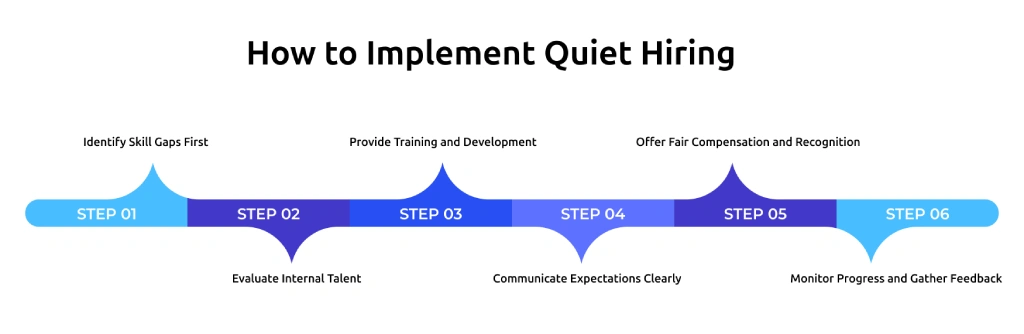
1. Identify Skill Gaps First
Start by identifying the skills your organization needs to achieve current and future business goals. This helps you focus on the right opportunities instead of making temporary role changes.
2. Evaluate Internal Talent
Review your existing workforce to identify employees whose skills, experience, or potential align with those needs. Look beyond job titles and consider transferable skills and learning ability.
3. Provide Training and Development
Equip employees with the knowledge and resources needed for their new responsibilities. Upskilling and reskilling help build confidence and improve the chances of success.
4. Communicate Expectations Clearly
Explain why the role is changing, outline the new responsibilities, and define the expected outcomes. Clear communication builds trust and reduces confusion.
5. Offer Fair Compensation and Recognition
If employees take on additional responsibilities, reward their contributions with appropriate pay, incentives, career growth opportunities, or other meaningful recognition. This helps maintain motivation and ensures employees feel valued.
6. Monitor Progress and Gather Feedback
Regularly review performance, workload, and employee feedback after implementing quiet hiring. This helps you make adjustments early and ensures the approach continues to benefit both your organization and your employees.
What are the Challenges of Quiet Hiring
Quiet hiring can be effective, but without proper planning and support, it can also create several risks and challenges. Here are the key challenges to be aware of:
- Risk of Employee Burnout: Taking on additional responsibilities without balancing workloads can increase stress and lead to burnout over time.
- Unclear Roles and Responsibilities: Moving employees into new roles without clearly defining expectations can create confusion, reduce accountability, and affect productivity.
- Skill Gaps Can Affect Performance: Employees may need time, training, and support to succeed in new responsibilities. Without proper preparation, performance and confidence can suffer.
- Limited New Ideas and Perspectives: Relying only on existing talent may reduce opportunities to bring in fresh skills, different experiences, and new ways of solving business challenges.
- Concerns About Fair Compensation: If new responsibilities are not matched with appropriate pay, recognition, or career growth opportunities, employees may feel undervalued.
Real-World Examples of Quiet Hiring
Many organizations have adopted quiet hiring by focusing on internal mobility, upskilling, and project-based work instead of relying only on external recruitment. Here are some well-known examples of how this approach works in practice.
1. Unilever
Unilever launched Flex Experiences, an internal talent marketplace that matches employees with short-term projects based on their skills and interests. Instead of hiring externally for every new requirement, the company connects existing talent with business opportunities across different teams.
2. Schneider Electric
Schneider Electric created its Open Talent Market, an AI-powered platform that connects employees with internal jobs, projects, mentoring, and learning opportunities. The initiative helps the company fill business needs faster by making better use of existing skills across the organization.
Having trouble tracking employee growth and performance?
Try Time Champ to measure progress with clarity.

Decisions Backed by Data
Trends and team-level analytics that show what matters.
Explore Workforce Analytics →