High employee attrition can disrupt daily operations, increase hiring costs, and put extra pressure on existing teams. You need a clear way to track employee departures and identify workforce challenges early. Attrition rate helps you measure how many employees leave during a specific period and assess workforce stability.
This blog explains what attrition rate is, its formula, and how to calculate it with a simple example. It also covers common causes of employee attrition and practical ways to reduce it.
What Is Attrition Rate?
Attrition rate is the percentage of employees who leave an organization during a specific period. HR teams use this metric to monitor workforce stability, identify changes in employee departures, and assess retention efforts. The calculation may include voluntary and involuntary exits, depending on how the organization defines attrition.
How to Calculate Attrition Rate?
You can calculate employee attrition to measure how many employees leave during a specific period. The result helps you track workforce changes, review retention efforts, and identify patterns in employee departures.
The calculation uses the number of employees who left and the average number of employees during that period.
Attrition Rate (%) = (Number of Employees Who Left/Average Number of Employees) X 100
1. Choose the Time Period
Decide whether to calculate attrition monthly, quarterly, or annually. Use the same period when counting departures and employee headcount.
2. Count Employee Departures
Count the employees who left during the selected period. Include resignations, retirements, and terminations according to your company’s reporting rules. Keep the same definition for every calculation.
3. Calculate Average Headcount
Add the number of employees at the beginning and end of the period. Divide the total by two to find the average workforce size.
For Example,
200+180/ 2 = 190
If the company starts with 200 employees and ends with 180, its average headcount is 190.
4. Apply the Attrition Rate Formula
Divide the number of departures by the average headcount. Multiply the result by 100 to express it as a percentage.
Attrition Rate Calculation Example
Suppose a company starts the year with 200 employees and ends with 180. During the year, 20 employees leave the organization.
| Calculation | Result |
|---|---|
| Employees at the start | 200 |
| Employees at the end | 180 |
| Employees who left | 20 |
| Average headcount | 190 |
| Attrition rate | 10.53% |
Calculation:
(20/190) X 100 = 10.53%
The company’s annual attrition rate is 10.53%. This means employee departures during the year equaled 10.53% of its average workforce.
Attrition vs Turnover: What’s The Difference?
Employee attrition and employee turnover both describe employees leaving an organization. The key difference often comes down to whether the company replaces the departing employee. Attrition usually refers to roles left vacant or eliminated, while turnover includes departures followed by replacement hires.
| Aspect | Employee Attrition | Employee Turnover |
|---|---|---|
| Meaning | Employees leave, and their roles remain unfilled or are eliminated. | Employees leave, and the organization may hire replacements. |
| Impact on headcount | Usually reduces the workforce. | Headcount may remain stable when roles are refilled. |
| Common examples | Retirement, resignation without replacement, role elimination. | Resignation followed by hiring, termination followed by replacement. |
| Main focus | Workforce reduction and future staffing needs. | Employee departures, replacement needs, and retention. |
| Business impact | Can increase workloads and create knowledge gaps. | Can increase recruitment costs and disrupt team continuity. |
| HR response | Review staffing needs, redistribute work, and plan knowledge transfer. | Identify reasons for departures and improve hiring and retention practices. |
Common Causes of Employee Attrition
Employee attrition can happen for several reasons, from personal career decisions to workplace challenges. Understanding why employees leave helps you identify retention issues and take practical steps to address them. The following are five common causes of employee attrition.
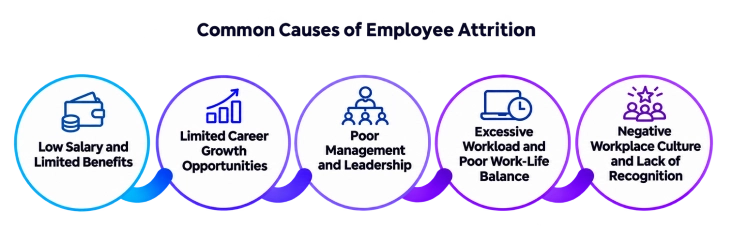
1. Low Salary and Limited Benefits
Employees may leave when their pay does not match their responsibilities, skills, or market rates. Limited benefits, unclear salary reviews, and unequal compensation can also affect job satisfaction. Competitive pay and fair benefits can help you retain employees.
2. Limited Career Growth Opportunities
Employees want opportunities to develop their skills and advance their careers. When promotions, training, or new responsibilities remain out of reach, they may look for growth elsewhere. Clear career paths and regular development discussions can help address this concern.
3. Poor Management and Leadership
Managers influence employees’ daily work experiences. Unclear expectations, limited feedback, unfair treatment, or lack of support can weaken trust. Employees who feel unsupported may decide to leave. Training and regular one-on-one conversations can help improve workplace relationships.
4. Excessive Workload and Poor Work-Life Balance
Heavy workloads, long working hours, and constant pressure can make it difficult for employees to manage work and personal commitments. Over time, these conditions may lead to stress and dissatisfaction. Reviewing workload distribution, staffing levels, and work schedules can help your teams create more sustainable routines.
5. Negative Workplace Culture and Lack of Recognition
Employees may leave when they experience poor communication, unfair treatment, or limited appreciation for their contributions. A workplace that does not encourage respect, collaboration, and recognition can affect employee morale. Regular feedback, fair recognition, and open communication can help you create a more supportive environment.
Struggling to reduce employee attrition and keep your team engaged?
Time Champ helps you track workforce patterns and spot retention challenges early.
How to Reduce Employee Attrition Rate
Reducing employee attrition requires more than offering competitive salaries. You need to understand why employees leave and address the workplace issues behind those decisions. Better management, career growth, fair workloads, and regular employee feedback can help improve retention. Here are six practical ways to reduce employee attrition.
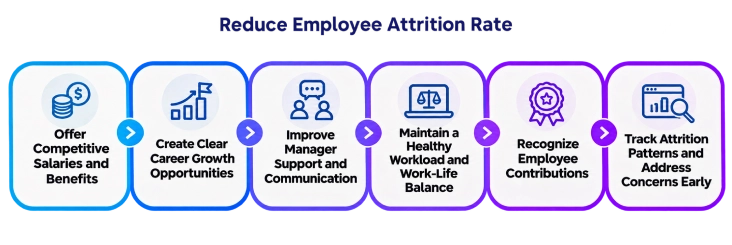
Offer Competitive Salaries and Benefits
Employees may leave when their compensation does not match their skills, responsibilities, or market expectations. Review salary structures regularly and compare them with industry standards. Offer fair benefits, performance-based rewards, and clear salary progression. These steps can help employees feel valued and reduce compensation-related departures.
Create Clear Career Growth Opportunities
Employees are more likely to stay when they can see a future within the organization. Provide training, mentorship, internal promotions, and opportunities to develop new skills. Discuss career goals during performance reviews and create clear paths for advancement. These efforts help employees connect their current roles with long-term career plans.
Improve Manager Support and Communication
Managers influence how employees experience their daily work. Encourage regular one-on-one meetings, constructive feedback, and open conversations about workplace concerns. Train managers to recognize employee contributions, address challenges fairly, and discuss career goals.
Maintain a Healthy Workload and Work-Life Balance
Excessive workloads and long working hours can affect employee well-being and job satisfaction. Review workload distribution, staffing levels, overtime, and project deadlines regularly. Give employees reasonable flexibility and ensure teams have enough support to complete their work. Balanced workloads can help reduce stress and support sustainable performance.
Recognize Employee Contributions
Employees want their efforts and achievements to receive meaningful recognition. Acknowledge individual contributions, celebrate team milestones, and provide specific feedback on good work. Recognition does not always require financial rewards. Consistent appreciation and fair opportunities can strengthen employees’ connection with the organization.
Track Attrition Patterns and Address Concerns Early
Review attrition rates alongside employee feedback, attendance, workload, and engagement trends. Look for recurring patterns across teams, roles, and tenure groups. Exit interviews and employee surveys can help you identify why employees leave.
Workforce analytics can also reveal early signs of retention concerns. Understanding these patterns through employee attrition prediction can help you identify potential turnover risks and take timely action to improve employee retention.

Decisions Backed by Data
Trends and team-level analytics that show what matters.
Explore Workforce Analytics →