Full-Time Equivalent (FTE): What It Is & How to Calculate
Full-time equivalent (FTE) helps measure workforce capacity using employee hours, with clear formulas, examples, and practical business use cases.

If your team includes a mix of full-time, part-time, seasonal, or variable-hour staff, measuring workforce capacity can quickly become confusing. A simple headcount only tells you how many employees you have. It does not show how much work your team can actually handle. That gap often makes budgeting, staffing decisions, workload planning, and compliance reporting harder than they need to be.
This is where full-time equivalent becomes useful. Instead of counting employees, FTE measures the total hours worked and converts them into a standardized value. In this guide, you will learn what a full-time equivalent is, how the formula works, how to calculate full-time equivalent hours, and how to use FTE data to make more informed workforce decisions.
What Is Full-Time Equivalent (FTE)?
Full-time equivalent, often shortened to FTE, is a unit of measurement that converts the hours worked by all your employees, whether full-time, part-time, or seasonal, into a single standardized number. Instead of counting employees, FTE measures the total amount of work your employees complete based on hours worked.
For example, one employee working 40 hours per week equals 1.0 FTE. An employee working 20 hours per week equals 0.5 FTE. Two employees working 20 hours each would together equal 1.0 FTE. This makes it easier to compare workforce capacity across different work schedules.
Understanding the definition of full-time equivalent is important because headcount alone does not always reflect the actual capacity of your workforce. You may have 20 employees on payroll, but if several employees work part-time or fewer hours than a standard full-time schedule, your actual FTE value could be much lower. FTE helps you see the amount of available work capacity in a more accurate and consistent way.
Why You Need to Calculate FTE?
Headcount tells you how many employees are on your payroll. Full-time equivalent (FTE) shows the amount of work your workforce actually represents. This difference is important because it affects compliance requirements, budget planning, and staffing decisions. Here are key workforce insights and planning advantages that FTE data can provide.

- Plan Workforce Capacity More Accurately: FTE helps you understand whether your current workforce can handle existing workloads and upcoming projects. Instead of relying on headcount alone, you can measure actual work capacity and identify staffing gaps before they affect productivity.
- Build More Accurate Labor Budgets: A full-time equivalent calculation makes it easier to estimate labor costs across full-time and part-time employees. This gives you a more reliable foundation for budgeting salaries, benefits, and workforce expenses throughout the year.
- Make Smarter Hiring Decisions: When workload demands increase, FTE data helps you determine whether you need additional staff or whether existing capacity is enough. This reduces the risk of overstaffing or understaffing and supports more informed hiring plans.
- Allocate Resources More Effectively: FTE helps you distribute work based on available capacity rather than assumptions. This makes it easier to assign resources, balance workloads, and keep projects moving without putting too much pressure on employees.
- Track Productivity Consistently: Comparing performance across teams can be difficult when employees work different schedules. Using FTE values creates a consistent benchmark for measuring output, workload, and operational efficiency.
Make workforce planning decisions based on actual work hours, not assumptions.
Use Time Champ to track employee hours accurately and support smarter staffing and resource planning

Did You Know?
Under the Affordable Care Act, the IRS uses a 30-hour/week (or 130-hour/month) threshold to classify employees as full-time for compliance purposes. This differs from the 40-hour/week standard most businesses use internally for FTE calculations.
How Do You Calculate FTE? Step-by-Step Formula
Calculating full-time equivalent is simpler than it sounds. The goal is to convert the total hours worked by your workforce into the equivalent number of full-time employees. Once you know the total hours worked and your standard full-time hours, you can calculate FTE in a few steps.
The standard full-time equivalent calculation formula is:
FTE = Total Hours Worked ÷ Full Time Hours
Most businesses use 40 hours per week as the full-time standard. On an annual basis, this equals 2,080 hours per year.
40 hours × 52 weeks = 2,080 hours
Step 1: Calculate Total Hours Worked
Start by adding the hours worked by all employees over the same week, month, or year.
For Example:
- Employee A = 40 hours per week
- Employee B = 40 hours per week
- Employee C = 20 hours per week
- Employee D = 10 hours per week
Total hours worked = 110 hours per week
Step 2: Identify Your Full-Time Standard
Next, determine what counts as a full-time schedule in your organization.
In Most Cases:
- Weekly full-time hours = 40
- Monthly full-time hours = 173.33
- Annual full-time hours = 2,080
Use the same timeframe throughout your calculation to keep the result accurate.
Step 3: Divide Total Hours by Full-Time Hours
Now divide the total hours worked by the full-time standard.
FTE = 110 ÷ 40
FTE = 2.75
This means the workload of four employees is equivalent to 2.75 full-time equivalent employees.
Quick FTE Reference Table
| Weekly Hours Worked | FTE Value |
|---|---|
| 40 Hours | 1.0 FTE |
| 30 Hours | 0.75 FTE |
| 20 Hours | 0.5 FTE |
| 10 Hours | 0.25 FTE |
This table can help you quickly estimate full-time equivalent hours without performing a complete calculation every time.
Did You Know?
If you frequently calculate FTE for budgeting, staffing, or compliance purposes, using a full-time equivalent calculator can simplify the process, reduce manual errors, and help ensure more accurate workforce planning.
Real-World Examples of Full-Time Equivalent (FTE)
The calculation is easier to understand when you see how it works in real situations. Here are a few common workplace scenarios that show how a full-time equivalent calculation works in everyday situations.
1. A Small Retail Business with Part-Time Staff
You run a small retail store with five employees on the schedule. Two work full-time at 40 hours a week. The other three are part-time, working 25, 20, and 15 hours respectively.
To find your full-time equivalent hours, multiply each employee's weekly hours by 52 to get annual hours, then divide by 2,080 (the standard annual hours for one full-time equivalent employee).
| Employee | Weekly Hours | Annual Hours | FTE Value |
|---|---|---|---|
| Employee 1 | 40 hrs | 2,080 | 1.0 |
| Employee 2 | 40 hrs | 2,080 | 1.0 |
| Employee 3 | 25 hrs | 1,300 | 0.625 |
| Employee 4 | 20 hrs | 1,040 | 0.5 |
| Employee 5 | 15 hrs | 780 | 0.375 |
Total FTE = 1.0 + 1.0 + 0.625 + 0.5 + 0.375 = 3.5 FTE
There are five employees on payroll, but the total workforce capacity equals 3.5 full-time equivalent employees. This difference is important when budgeting labor costs or evaluating whether staffing levels align with peak business hours.
2. A Restaurant Checking ACA Threshold Before Hiring
You own a restaurant with 38 full-time employees (each working 30+ hours per week) and 24 part-time employees who average 60 hours per month.
You want to find out whether hiring five more full-time employees will push your business past 50 FTE and into Applicable Large Employer (ALE) status under the ACA. Here's the full-time equivalent calculation for your current workforce using the ACA method.
Step 1: Count full-time employees directly.
38 employees working 30+ hours per week = 38.
Step 2:
24 employees × 60 hours = 1,440 hours.
Step 3: Divide by 120 to convert the hours into FTE units.
1,440 ÷ 120 = 12 FTE.
Step 4: Add both numbers together.
38 + 12 = 50 FTE.
Notice the Gap: The restaurant has 62 employees on payroll (38 full-time and 24 part-time), but the FTE is only 50. That gap is exactly why FTE matters for ACA compliance. The restaurant is already at the threshold without the five new hires, so adding them would push it past 50 and trigger ACA coverage requirements.
3. A Marketing Agency Staffing a Three-Month Project
Your agency has landed a three-month campaign that needs 960 hours of work completed by the end of the quarter.
You have three people available. One is full-time at 40 hours a week. Two are part-time contractors working 20 hours a week each.
First, figure out how many full-time equivalent hours each person contributes over 13 weeks (one quarter).
| Team Member | Weekly Hours | Hours Over 13 Weeks | FTE Value |
|---|---|---|---|
| Full-time | 40 hrs | 520 hrs | 1.0 |
| Part-time A | 20 hrs | 260 hrs | 0.5 |
| Part-time B | 20 hrs | 260 hrs | 0.5 |
Total available hours = 520 + 260 + 260 = 1,040 hours
Total FTE for the project = 2.0
You have 1,040 hours available for a 960-hour project. The work fits and leaves a small buffer. If the project required 1,200 hours, you would know in advance that a 2.0 FTE team cannot complete it in 13 weeks. You could then adjust the hiring plan or project timeline before the work begins, rather than after.
Why ACA Compliance Depends on FTE Calculations?
One of the most important uses of full-time equivalent (FTE) is determining whether your business falls under certain Affordable Care Act (ACA) requirements. The ACA uses FTE calculations to measure workforce size more accurately. Instead of looking only at full-time employees, it also considers the hours worked by part-time employees. This helps create a clearer picture of your total workforce capacity.
A business that averages 50 or more full-time employees during the previous calendar year is generally considered an Applicable Large Employer (ALE) under ACA rules. Once your business reaches that threshold, additional healthcare coverage and reporting requirements may apply. This is why accurate full-time equivalent calculations are important, especially if your workforce includes a mix of full-time, part-time, seasonal, or variable-hour employees.
Key ACA Rules You Should Know
- Employees working 30 or more hours per week are generally considered full-time under ACA guidelines.
- Combine the hours worked by part-time employees and convert them into full-time equivalent (FTE) values when calculating whether your business reaches the 50 FTE threshold.
- Businesses with 50 or more FTEs may need to comply with ACA healthcare coverage and annual reporting requirements.
- ACA eligibility is based on the average workforce size from the previous year, not a single month's employee count.
For detailed ACA guidance, you can review the official IRS resources on ACA reporting and Applicable Large Employer status:
How Does Time Champ Help You Track FTE Accurately?
Accurate full-time equivalent calculations rely on having a clear record of the hours employees actually work. Tracking this information manually can be time-consuming and often leads to missing entries or inconsistent records, especially when managing part-time, contract, or flexible schedules. Using an automated time tracking solution makes it easier to capture work hours accurately, helping you maintain reliable data for capacity planning, resource allocation, and operational decision-making.
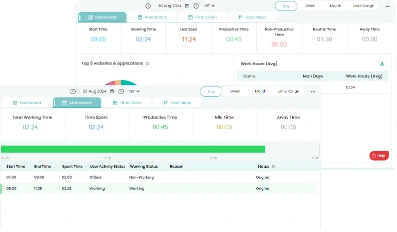
Time Champ is a time tracking and employee monitoring software that automatically records work hours, attendance, and activity data in one place. Detailed timesheets and employee hour reports provide a clear view of the hours worked by each employee. This makes it easier to calculate full-time equivalent hours accurately and track workforce capacity across teams.
Time Champ also helps monitor time spent on projects and tasks, giving you better visibility into resource management and workload distribution. If you're looking for a simpler way to track employee hours and support accurate FTE calculations, Time Champ can help you simplify the process with real-time work hour insights and centralized reporting.
Ready to stop relying on manual logs and scattered timesheets?
Try Time Champ to capture real work hours automatically and plan your team’s capacity with complete clarity.
Conclusion
Calculating full-time equivalent is not just about numbers. It helps you understand the true capacity of your workforce and gives you a stronger foundation for planning, budgeting, and growth. When you track employee hours accurately, FTE becomes a valuable metric for making smarter operational decisions. With automated time tracking, detailed timesheets, and workforce insights, Time Champ makes it easier to maintain accurate FTE records and understand workforce capacity.

Thasleem Shaik

Table of Content
 What Is Full-Time Equivalent (FTE)?
- Why You Need to Calculate FTE?
- How Do You Calculate FTE? Step-by-Step Formula
- Real-World Examples of Full-Time Equivalent (FTE)
- Why ACA Compliance Depends on FTE Calculations?
- How Does Time Champ Help You Track FTE Accurately?
- Conclusion
Related Blogs

Learn how to calculate productivity using simple formulas, practical methods, and real examples to measure employee performance accurately.
Thasleem Shaik | May 20, 2026
Learn how to calculate overtime pay with simple formulas, examples, and overtime rules. Understand double time, salaried overtime, taxes, & payroll tips.
Jahnavi Pulluri | Jun 01, 2026
Master the art of calculating worked hours with ease! Learn valuable tips and uncover the benefits of accurate time tracking.
Shabana Shaik | Apr 11, 2024
Learn what paid time off (PTO) means, explore common leave types, and compare the 9 best PTO tracking tools to simplify leave management.
Guna Lakshmi | May 30, 2026
Choose employee time tracking software with the right tracking features, reporting, integrations, security, scalability, and workforce visibility for your team.
Thasleem Shaik | May 26, 2026
Learn how to track time on multiple projects without losing billable hours or missing deadlines. Discover common challenges, workflows, and tool features.
Guna Lakshmi | May 21, 2026


 4.7/5 avg.
Ready to Manage Your Workforce Smarter?
Join our family of 1500+ companies using smart insights to redefine workforces!

Free Trial
No Credit Card Required