Top 6 Factors Affecting Productivity in the Workplace
Learn what a work environment is, its types, factors affecting productivity, signs of a toxic workplace, and practical ways to measure and improve it.

Employees don't leave because of a desk or an office; they leave because of the environment they work in. A positive work environment helps people stay motivated, collaborate better, and perform at their best, while a poor one can have the opposite effect.
This blog covers what a work environment is, its different types, the six key factors that affect workplace productivity, common signs of a toxic workplace, and practical ways to improve it.
What Is a Work Environment?
A work environment is the combination of physical, social, and organizational conditions in which employees perform their jobs. It includes the workspace, company culture, leadership, communication, colleagues, technology, and workplace policies. These elements influence employee productivity, engagement, job satisfaction, and overall well-being.
What are the Different Types of Work Environment?
Every organization works differently, and so does its work environment. Here are the most common types of work environments and what makes each one unique.
| Type of Work Environment | How It Works | Key Challenges |
|---|---|---|
| Office-Based | Employees work from a shared office during fixed working hours. | Noise, long commutes, and presenteeism |
| Remote | Employees work from home or any location using digital tools. | Isolation, work-life balance, communication gaps |
| Hybrid | Employees split their time between the office and home. | Unequal experiences, meeting overload, coordination challenges |
| Field-Based | Employees work at client locations, project sites, or on the move. | Travel time, attendance tracking, limited manager interaction |
| Shift-Based | Employees work in rotating or fixed shifts to provide continuous operations. | Fatigue, burnout, and shift scheduling challenges |
Why Does the Work Environment Matter for Productivity?
A great work environment doesn't just make employees happier; it helps them perform at their best. Here's how the right workplace can boost productivity and drive business success.
1. Improves Employee Productivity
A positive work environment helps employees stay focused, organized, and motivated. With the right tools, clear expectations, and fewer distractions, they can complete tasks more efficiently and produce better results.
2. Increases Employee Engagement
Employees are more engaged when they feel supported, respected, and included. Open communication, recognition, and a positive workplace culture encourage people to contribute their best every day.
3. Supports Employee Wellbeing
A healthy work environment reduces stress and promotes a better work-life balance. Employees who feel physically and mentally well are more likely to stay motivated and perform consistently.
4. Reduces Employee Turnover
People are more likely to stay with organizations where they feel valued and have opportunities to grow. A supportive work environment improves job satisfaction, reduces attrition, and lowers hiring and training costs.
5. Drives Business Growth
A productive workforce leads to better collaboration, higher-quality work, improved customer satisfaction, and stronger business performance. Investing in the work environment benefits both employees and the organization.
Top 6 Key Factors Affecting Productivity in a Work Environment
A productive workplace is built on more than just hard work. The work environment, the tools employees use, and the way teams work together all play a part. Here are the six factors that most impact workplace productivity.
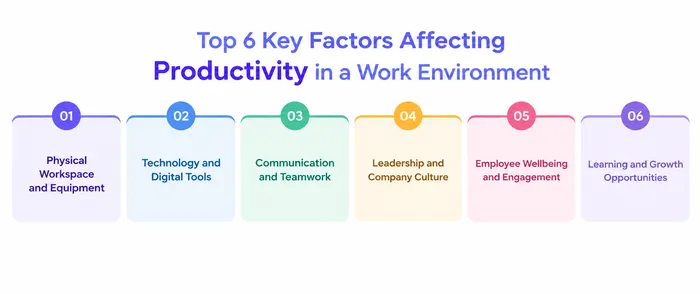
1. Physical Workspace and Equipment
The place where employees work can affect how well they perform. Good lighting, comfortable furniture, clean workspaces, proper ventilation, and less noise make it easier to stay focused. Reliable computers, fast internet, and the right equipment also help employees complete their work without unnecessary delays.
2. Technology and Digital Tools
The right tools make work easier and save time. Project management software, communication apps, and cloud storage help teams stay organized and work together. At the same time, using too many tools can slow employees down. Keeping only the tools that add value makes work simpler and more efficient.
3. Communication and Teamwork
Good communication helps everyone stay on the same page. When employees know what is expected of them and can easily share ideas or ask questions, work gets done faster. Too many meetings, messages, or emails, however, can break focus and reduce productivity.
4. Leadership and Company Culture
Managers and company culture have a big impact on how employees feel at work. Leaders who listen, give feedback, and support their teams create a workplace where employees feel respected and motivated. A positive culture also builds trust and encourages collaboration.
5. Employee Wellbeing and Engagement
Employees do their best work when they feel healthy, supported, and appreciated. A good work-life balance, fair workloads, and regular recognition help reduce stress and keep employees motivated. When people enjoy their work, they are more likely to stay productive and committed.

Did You Know?
Depression and anxiety cause the loss of 12 billion working days each year, costing the global economy nearly US$1 trillion, according to the World Health Organization (WHO).
6. Learning and Growth Opportunities
Employees need opportunities to learn and grow. Training programs, skill-building sessions, and guidance from experienced colleagues help employees improve their work. When people see a clear path for growth, they stay motivated and are more likely to remain with the organization.
Create a Better Work Environment with Time Champ!
Track productivity, reduce distractions, and give your team the support they need
Positive vs. Toxic Work Environment: What's the Difference?
The way employees are treated every day shapes their motivation and performance. Here's a quick comparison of what a positive and a toxic work environment look like.
| Area | Positive Work Environment | Toxic Work Environment |
|---|---|---|
| Communication | Clear communication and open discussions | Poor communication and frequent misunderstandings |
| Workload | Fair workloads with a healthy work-life balance | Heavy workloads and constant overtime |
| Leadership | Supportive leaders who guide and encourage employees | Micromanagement, lack of support, or unfair treatment |
| Recognition | Employees are appreciated for their efforts | Good work often goes unnoticed or unfairly rewarded |
| Flexibility | Fair and consistent remote, hybrid, or shift policies | Favoritism and inconsistent workplace rules |
| Employee Wellbeing | Breaks, leave, and mental wellbeing are encouraged | Employees feel stressed, overworked, and hesitant to take time off |
How to Measure Work Environment?
Measuring your work environment doesn't have to be complicated. Start by tracking these key metrics to identify strengths and areas for improvement.
| What to Measure | Why It Matters | What You Can Do |
|---|---|---|
| Focus Time | Shows whether employees have enough uninterrupted time to work. | Reduce unnecessary meetings and block focus hours. |
| Meeting Load | Too many meetings can reduce productivity. | Keep meetings short and only when needed. |
| After-Hours Work | Regular overtime may indicate heavy workloads or poor planning. | Balance workloads and set clear work-hour expectations. |
| Attendance Patterns | Frequent late logins or absences can point to scheduling or workload issues. | Review shift timings and identify recurring problems. |
| Employee Feedback | Helps you understand employee satisfaction and workplace challenges. | Run regular pulse surveys and act on feedback. |
| Tool Usage | Slow or too many tools can waste valuable time. | Remove unnecessary tools and improve the ones employees use most. |
Best Practices for Measuring Your Work Environment
- Ask employees for feedback regularly through short surveys or one-on-one meetings.
- Look for team trends instead of focusing on individual employees.
- Be transparent about what data is collected and why.
- Use the findings to make real improvements, not just create reports.
How to Improve Your Work Environment?
A better work environment is built through small, consistent improvements. Here are some simple ways to create a workplace where employees can stay productive, engaged, and motivated.
1. Create a Comfortable Workspace
Make sure employees have a clean, comfortable, and well-equipped place to work. Good lighting, proper seating, less noise, and reliable internet or equipment help employees stay focused throughout the day.
2. Give Employees Time to Focus
Too many meetings and constant notifications can break concentration. Schedule meeting-free hours and encourage employees to complete important work without unnecessary interruptions.
3. Improve Communication
Set clear expectations about how teams communicate and which channels to use for different types of work. Open and honest communication reduces confusion and helps everyone stay aligned.
4. Support Employees with Good Leadership
Listen to employees, provide regular feedback, and offer guidance when needed. Supportive leadership builds trust and creates a positive workplace culture.
5. Manage Workloads Fairly
Review workloads regularly to make sure work is shared evenly across the team. A balanced workload helps prevent stress, improves productivity, and reduces burnout.
6. Offer Flexibility
When possible, give employees flexibility in where or when they work. Clear policies for remote, hybrid, and office work help employees maintain a better work-life balance while staying productive.
7. Recognize and Develop Employees
Recognize employees for their contributions and provide opportunities to learn new skills. Regular appreciation and career development help employees stay engaged, motivated, and committed to the organization.
How Does Time Champ Help to Build a Better Work Environment?
Building a better work environment starts with understanding what your employees need to do their best work. Time Champ is an employee monitoring software that gives you the insights to remove productivity barriers, support employee well-being, and create a workplace where teams can thrive.
Here's how it helps:
- Increase Productivity: Understand how time is spent, identify distractions, and help employees stay focused on actual work.
- Prevent Employee Burnout: Find heavy workloads early and balance tasks before stress affects performance and morale.
- Improve Employee Engagement: Identify changes in work patterns and take timely action to keep employees motivated and supported.
- Create Fair Work Policies: Manage attendance, shifts, remote work, and hybrid schedules with clear and consistent rules for everyone.
- Support Every Team: Whether employees work from the office, home, or the field, Time Champ helps you manage teams efficiently from one platform.
- Make Better Decisions with Data: Replace guesswork with real workplace insights to improve productivity, collaboration, and employee experience.
- Protect Employee Privacy: Monitor work responsibly with secure, privacy-focused features that build trust across your organization.
Help Your Team Work Smarter with Time Champ!
Get clear visibility into productivity, workloads, and employee performance, all from one powerful platform
Conclusion
A good work environment helps employees stay focused, motivated, and productive. When people have the right support, tools, and opportunities to grow, they are more likely to do their best work and stay with the organization. Regularly reviewing your workplace and making small improvements can solve problems before they grow. Building a better work environment benefits both employees and the business in the long run.

Jahnavi Pulluri

Table of Content
 What Is a Work Environment?
- What are the Different Types of Work Environment?
- Why Does the Work Environment Matter for Productivity?
- Top 6 Key Factors Affecting Productivity in a Work Environment
- Positive vs. Toxic Work Environment: What's the Difference?
- How to Measure Work Environment?
- Best Practices for Measuring Your Work Environment
- How to Improve Your Work Environment?
- How Does Time Champ Help to Build a Better Work Environment?
- Conclusion
Related Blogs

Learn how to introduce productivity monitoring with clear policies, employee communication, rollout planning, and trust-focused implementation steps.
Anjali | May 12, 2026
Productivity enhancement starts with measuring output, not activity. Learn four key metrics, a six-step framework, and how to avoid over-monitoring easily.
Jahnavi Pulluri | Mar 14, 2025
Boost employee productivity with workday insights that improve efficiency, streamline workflows, and drive better performance.
Thasleem Shaik | Mar 13, 2025
Productivity metrics are becoming a norm for businesses and organizations of all sizes, but only because it gives managers, executives, some insight
Sai Keerthi Uppala | May 30, 2023
Organize your workplace with these best productive tips. Boost efficiency, reduce clutter, and optimize your work environment today!
Sai Keerthi Uppala | Feb 22, 2025
The best virtual assistant software for every job, from Time Champ for task tracking to Calendly for scheduling, find perfect tools to delegate every task.
Shabana Shaik | Feb 25, 2025


 4.7/5 avg.
Ready to Manage Your Workforce Smarter?
Join our family of 1500+ companies using smart insights to redefine workforces!

Free Trial
No Credit Card Required