Monitoring Reports vs Performance Reviews: Key Differences
Understand monitoring reports vs performance reviews, key differences, and how to use both for better performance decisions and team clarity.

Teams often treat monitoring reports and performance reviews as the same thing. You track metrics, fill out dashboards, and schedule evaluations without a clear line between ongoing system oversight and individual performance assessment. That confusion leaves you unsure about what each tool should accomplish and when to use it. The detail here sits inside a wider conversation covered in our enterprise employee monitoring guide.
The confusion creates real damage. When you treat monitoring reports like performance reviews, you react too late to operational issues. When you handle performance reviews like monitoring outputs, you reduce growth conversations to raw numbers. You waste time, trigger frustration, and weaken trust across teams while important signals slip through unnoticed.
This article shows you how to separate Monitoring Reports from Performance Reviews and use each with a purpose. You will learn how to apply the right approach at the right moment, strengthen accountability, and turn data and evaluations into clear, actionable outcomes.
What are Employee Monitoring Reports?
Employee monitoring reports are structured outputs that show how work actually happens across time, tasks, and tools. They collect real activity data such as application usage, work hours, task duration, and productivity patterns to give a clear picture of daily work execution. These reports come from employee monitoring software that tracks and analyzes work behavior continuously.
- Scope: Continuous tracking of work activity, time usage, and workflow behavior across tasks and tools.
- Focus: Providing clear visibility into how work happens using real-time data from development tracking software.
- Key Functions: Track active and idle time, monitor application usage, record task duration, generate activity timelines, and highlight productivity patterns.
- Example: A development team handles multiple tasks across the day. The system records time spent on coding tools, meetings, and idle periods, then generates a report that shows how the team used time and where the workflow slowed down.
What are Employee Performance Reviews?
Employee performance reviews are structured evaluations that assess how well work aligns with expectations, goals, and overall contribution. They focus on reviewing past performance, identifying strengths and gaps, and setting direction for improvement. These reviews happen at specific intervals and rely on feedback, outcomes, and goal alignment to evaluate performance.
- Scope: Periodic evaluation of performance, contributions, and progress against defined goals.
- Focus: Assessing performance quality, identifying strengths and improvement areas, and guiding future development.
- Key Functions: Evaluate performance outcomes, provide structured feedback, recognize achievements, identify gaps, set future goals, and align work with expected results.
- Example: A team completes a quarter of work. The review evaluates delivered outcomes, compares results with set goals, highlights strong contributions, and identifies areas that need improvement for the next cycle.
Connect daily work activity with meaningful performance insights.
Use Time Champ to make every decision accurate and informed.
What Are the Key Differences Between Employee Monitoring Reports and Performance Reviews?
Many teams still treat monitoring reports and performance reviews as interchangeable, even though both serve very different roles in understanding performance. A Deloitte study found that 82% of companies reported performance evaluations were not worth the time invested, with a separate study reporting that 41% of companies found widespread bias in their review process.
Monitoring reports focus on real-time activity and workflow visibility, while performance reviews evaluate outcomes over a defined period. The comparison below clearly shows how both differ across key aspects.
| Aspect | Employee Monitoring Reports | Employee Performance Reviews |
|---|---|---|
| Purpose | Track how work time moves in real time. Catch workload issues, attendance gaps, and productivity dips before they affect output. | Evaluate whether an employee met their goals during a defined period and identify what they need to grow in their role. |
| Data Type | Activity levels, productivity scores, active and idle time, app and website usage, attendance patterns, and behavioral signals. | Goal completion, output quality, peer and direct feedback, development milestones, and competency assessment. |
| Cadence | Continuous. Dashboards update daily, weekly, and monthly. Alerts trigger in real time when a threshold crosses the defined limit. | Periodic. Quarterly check-ins or annual reviews, with mid-cycle touchpoints in some organizations. |
| Who Uses It | Team leads and HR rely on data daily to manage workload, track attendance, and monitor performance. | HR and team leads conduct structured evaluation conversations to assess performance and guide improvement. |
| What It Measures | How the employee spends work time and whether activity patterns align with role expectations. | Whether the employee achieved what they were asked to achieve and how they are growing in the role. |
| What It Cannot Do | Explain why productivity changed, assess work quality, evaluate soft skills, or set development goals. | Detect real-time performance changes, flag workload problems as they develop, or surface early behavioral risk signals. |
| Employee Experience | Continuous and transparent. The employee sees their own data through a personal dashboard on an ongoing basis. | Formal and structured. The employee prepares for it, knows it is happening, and it directly affects compensation and progression. |
| Output | Operational data drives daily decisions such as workload adjustment, attendance management, and productivity coaching. | A documented performance rating, development plan, feedback record, and goal-setting for the next period. |
What Are the Key Similarities Between Employee Monitoring Reports and Employee Performance Reviews?
Monitoring reports and performance reviews work differently, but they share the same end goal. Both systems help you understand how your team performs and where to provide support. When both work together, one strengthens the gaps that the other cannot cover. The table below shows where both systems align.
| Aspect | Employee Monitoring Reports | Employee Performance Reviews |
|---|---|---|
| Focus on Employee Performance | Track active time, productivity scores, and activity patterns to show how an employee performs day to day. | Evaluate whether an employee met their goals and how their overall performance compares to expectations over a defined period. |
| Support for Feedback | Give you specific, data-backed observations to bring into feedback conversations, so your feedback stays grounded in facts rather than impressions. | Provide a structured space to deliver feedback directly, discuss what went well, and set clear expectations for the next cycle. |
| Employee Development | Surface patterns like consistent overtime, declining productivity scores, or focus time gaps that signal where an employee needs support or a workload change. | Identify skill gaps, set development goals, and create a plan for the employee to grow in the role over the coming period. |
| Goal Alignment | Show whether an employee's daily activity and time distribution align with their role responsibilities and team priorities. | Review whether the employee met the goals set in the previous cycle and realign individual targets with current team and business objectives. |
| Performance Documentation | Generate a continuous, timestamped record of activity, attendance, and productivity trends across the full review period. | Produce a formal, documented record of the evaluation conversation, performance rating, and agreed development plan. |
| Early Problem Detection | Flag declining trends, attendance issues, and burnout signals in real time, before they affect deliverables or escalate into bigger problems. | Identify performance gaps, recurring challenges, and development needs through structured evaluation and direct conversation. |
| Accountability | Create an objective, verifiable record that holds both the team and individual contributors to the activity and attendance standards set by the organization. | Hold employees accountable to the goals, competencies, and development commitments agreed upon at the start of the review cycle. |
When Should You Use Monitoring Reports and Performance Reviews?
Both monitoring reports and performance reviews play a role in managing your team, but each works best in different situations. Choosing the wrong approach leads to incomplete decisions. The key lies in knowing which tool fits the moment. Below is a clear breakdown of when each one applies.
When to Use Monitoring Reports
- Daily Work Visibility: Use monitoring reports to track how work progresses across tasks, tools, and time throughout the day. This helps you stay aware of what is happening without waiting for reviews.
- Identifying Workflow Gaps: Rely on reports when work slows down, tasks pile up, or time distribution looks uneven. Reports highlight where flow breaks and show where you need to focus.
- Managing Workload and Capacity: Use reports to support capacity planning and understand how work spreads across the team. Capacity data helps you rebalance tasks, prevent overload, and maintain steady output.
- Tracking Attendance and Activity Patterns: Monitoring reports help you spot irregular work patterns, gaps in activity, or inconsistent work hours before they affect delivery.
- Taking Immediate Action: When delays, inefficiencies, or productivity dips appear, reports give you the data needed to act quickly instead of waiting for periodic evaluations.
When to Use Performance Reviews
- Evaluating Overall Performance: Use performance reviews to assess how work aligns with expectations, goals, and outcomes over a defined period.
- Providing Structured Feedback: Reviews create space for clear conversations around strengths, gaps, and improvement areas based on actual results.
- Setting Future Direction: Use reviews to define goals, adjust expectations, and guide the next phase of work with clarity.
- Recognizing Contributions: Performance reviews help highlight strong contributions and acknowledge consistent effort in a structured way.
- Making Growth and Role Decisions: When you need to decide on role changes, growth opportunities, or responsibilities, reviews provide the context required for those decisions.
How Does Time Champ Help You Connect Monitoring Data to Performance Reviews?
Time Champ connects daily work activity with performance insights, so you can base evaluations on actual data. It tracks real-time activity, app usage, and time patterns, then turns that data into clear reports and insights. This gives you a complete view of how work flows across tasks, not just what your team delivers at the end. You see where time goes, how work moves, and where gaps start to form.
Time Champ removes the disconnect between tracking and evaluation. You use real data to guide daily decisions and bring that same clarity into performance reviews. This helps you balance workloads, improve capacity planning, and keep performance discussions grounded in actual work. Instead of guessing, you act with context and make decisions that reflect reality.
Conclusion
Monitoring reports and performance reviews serve different roles, but both shape how you understand and improve performance. Performance reviews assess work results over a set period, while monitoring reports show how work happens in real time. Using only one limits visibility or delays action. When you use both together, you track what actually happens and evaluate it with the right context. This helps you make clear decisions, respond faster, and keep performance aligned with real work.
Stop guessing and start acting on real work data.
Time Champ helps you track, analyze, and improve performance with clarity.

Thasleem Shaik

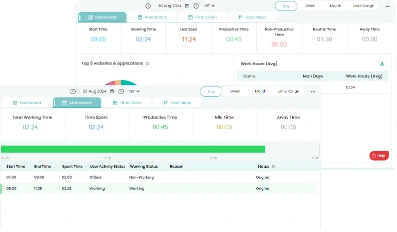
Table of Content
-
 What are Employee Monitoring Reports?
-
What are Employee Performance Reviews?
-
What Are the Key Differences Between Employee Monitoring Reports and Performance Reviews?
-
What Are the Key Similarities Between Employee Monitoring Reports and Employee Performance Reviews?
-
When Should You Use Monitoring Reports and Performance Reviews?
-
How Does Time Champ Help You Connect Monitoring Data to Performance Reviews?
-
Conclusion
Instant Signup
Thank you for your request!
We have received your signup request and our team will get back to you soon. In the meantime, you can book a demo to see Time Champ in action.
Book a DemoFree trial. No credit card required. Prefer a walkthrough? Book a demo.
Related Blogs
Stealth and transparent monitoring work very differently for teams. See the key differences, legal implications, and which approach fits your organization.
Jahnavi Pulluri | Apr 21, 2026
Strategic planning vs operational planning: definitions, differences, benefits, and use cases to align long-term goals with daily execution effectively.
Guna Lakshmi | Apr 08, 2026
Confused about performance management vs performance appraisal? Discover the key differences and when to use each to achieve stronger results.
Thasleem Shaik | Apr 02, 2026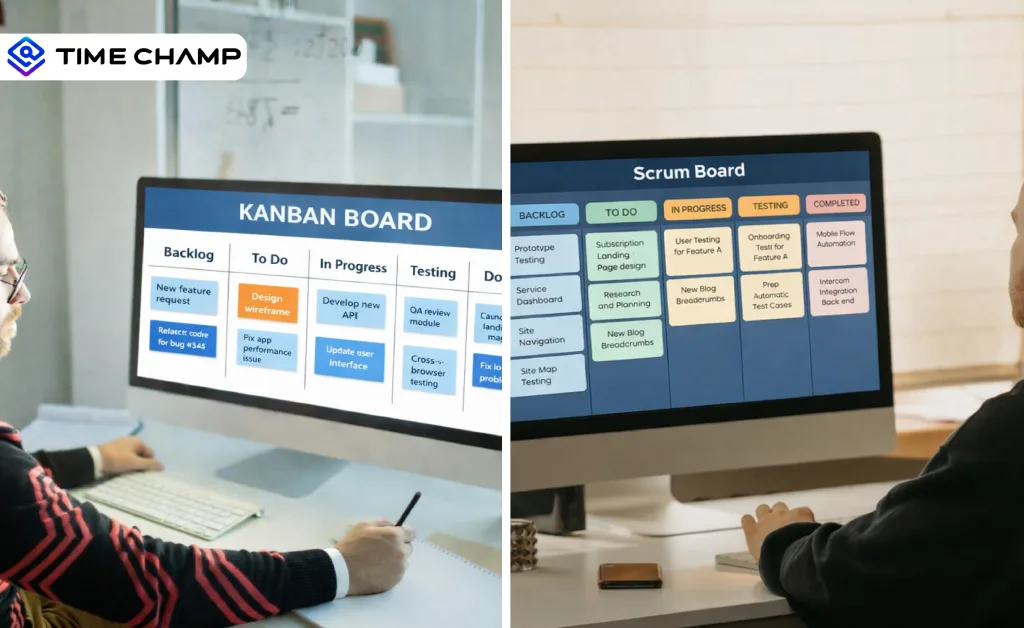
Kanban vs Scrum board explained. Understand their key differences, features, benefits, and when to use each method to manage projects effectively.
Thasleem Shaik | Apr 02, 2026
Workforce Management (WFM) vs Workforce Optimization (WFO). Learn the definitions, key functions, similarities, and best-fit use cases for businesses
Chethana Choudary | September 01, 2025
Understand how billable and non-billable hours impact profitability, efficiency, and time management in businesses and freelancing.
Sai Keerthi Uppala | Sep 13, 2024


 4.7/5 avg.
Ready to Manage Your Workforce Smarter?
Join our family of 1500+ companies using smart insights to redefine workforces!

Free Trial
No Credit Card Required