Is It Legal to Record Employee Conversations in Workplaces?
Learn employee conversation recording laws, consent rules, and compliance tips to monitor workplace communication without violating employee privacy or trust.

Recording employee conversations can be legal when organizations follow consent requirements, define a clear business purpose, and respect employee privacy. The outcome depends on factors like location, type of conversation, and whether employees receive proper notice before recording begins. This is where confusion often arises. Recording a customer support call for quality checks differs significantly from secretly capturing a private employee discussion. When recording employee conversations is handled with transparency and consent, it supports business needs effectively, but when done without them, it can lead to legal risks and damage workplace trust. Programs that overlook workplace conversation recording laws often run into avoidable disputes once enforcement starts.
In this blog, you’ll understand when recording employee conversations is allowed, what laws typically require, where recording becomes inappropriate, and how to build a clear policy that protects both the organization and its employees.
What Makes Workplace Recording Legal or Illegal?
Workplace recording becomes legal or illegal based on how clearly you follow consent rules, define purpose, and respect privacy boundaries. Laws don’t just focus on the act of recording, they also focus on how and why it happens.
Key Factors that Determine Legality:
- Consent Requirements: Recording remains legal only when you obtain the required level of consent, whether from a single party or all participants, based on applicable laws.
- Clear Employee Notification: Inform employees in advance about recording practices to avoid hidden monitoring and reduce legal and trust risks.
- Valid Business Purpose: Recording should directly support legitimate needs such as training, compliance, or quality assurance without unclear or personal reasons.
- Workplace Location and Setting: Avoid recording in private areas such as restrooms or break rooms where employees expect a higher level of privacy.
- Scope of Monitoring: Recording must stay limited to work-related activities during work hours without extending into personal or off-duty interactions.
- Data Protection and Handling: Store the recordings securely, restrict access, and follow proper retention and deletion practices to stay compliant.
- Company Policy and Transparency: A clear and accessible company policy should explain how recording works, how data is used, and what employees can expect.
- Local and Regional Laws: Align recording practices with the specific legal requirements that apply in your country or state to ensure full compliance.
What Laws Apply to Recording Employee Conversations?
Understanding the legality of workplace recording starts with one reality, no single law covers everything. Different laws address consent, employee rights, and data protection, so organizations must align their practices with multiple legal frameworks.
| Law | What It Covers | What Employers Must Do |
|---|---|---|
| Federal Wiretap Act (USA) | Governs the recording of oral, wire, and electronic communications at the federal level. | Ensure at least one party consents before recording and avoid recording for unlawful or harmful purposes. |
| State Consent Laws (USA) | Defines whether one-party or all-party consent is required, depending on the state. | Identify applicable state laws and obtain the required level of consent before recording any conversation. |
| National Labor Relations Act (NLRA) | Protects employees’ rights to discuss wages, working conditions, and workplace issues. | Avoid using recording policies to restrict or interfere with protected employee rights or activities. |
| General Data Protection Regulation (GDPR) (EU) | Regulates how personal data, including recorded conversations, is collected, processed, and stored. | Establish a lawful basis for recording, inform employees clearly, and manage data securely with defined retention practices. |
When and Where Can Employers Legally Record Conversations?
Legality depends on two factors working together, why the recording happens and where it happens. Organizations must justify why they record, inform employees clearly, and choose the right setting. When these elements align, recording supports operations, when they don’t align properly, it creates legal and trust risks.
Customer Support and Business Calls
Recording customer-facing calls is widely accepted when it supports quality assurance, training, or compliance. A clear call notice and internal policy help set expectations for both employees and customers. In these structured environments, recording employee conversations aligns with legitimate business needs.
Sales, Compliance, and Regulated Workflows
Sales calls and regulated processes often require recordings to verify commitments, meet compliance standards, and resolve disputes. Organizations must define scope, access, and retention clearly to avoid over-recording and ensure recordings serve a specific and justified purpose.
HR and Disciplinary Discussions
HR conversations involve sensitive topics such as performance, grievances, or personal issues, which increase legal and ethical risk. Recording should happen only after explaining the purpose, obtaining clear consent, and documenting that agreement to maintain fairness and transparency.
Internal Meetings and Team Collaboration
Teams may record internal meetings for documentation, accountability, or knowledge sharing, but transparency is more essential. Announcing the recording at the start and clarifying its use helps to maintain trust while supporting operational needs.
Locations and Situations to Avoid Recording
Recording becomes risky in spaces where employees expect privacy, such as restrooms, locker rooms, break areas, or during personal calls, because these environments demand stricter boundaries even in monitored workplaces. When recording employee conversations, avoiding such sensitive locations is just as important as having a valid business purpose.
Want to avoid confusion and build trust around recording?
Start by clearly communicating what you record, why it matters, and how it’s used with Time Champ.
What Should a Workplace Recording Policy Include?
A clear employee monitoring and recording policy removes confusion and sets the right expectations before any recording begins. It helps employees understand what happens, why it happens, and how their information is handled. A well-defined approach to recording employee conversations builds transparency and reduces legal risk.

Define the Purpose Behind Recording
Explain why recording takes place and connect it to real business needs such as quality assurance, training, compliance tracking, dispute resolution, or security reviews.
Specify Conversation Types
Outline the exact types of conversations that come under recording, such as customer calls, sales discussions, compliance-related interactions, or scheduled training sessions.
Conversations Excluded from Recording
Set firm boundaries by identifying excluded scenarios like personal calls, informal break-room conversations, or discussions in private spaces where employees expect confidentiality.
Explain How Consent Is Collected
Describe how you inform participants and collect consent, whether through call announcements, written agreements, onboarding documents, or meeting disclosures.
Restrict Who Can Access Recordings
Limit access to specific roles such as QA teams, compliance managers, HR, or legal personnel to ensure recordings are handled responsibly and only when necessary.
Set Clear Storage and Retention Rules
Define where recordings are stored, how long they are kept, and when they are securely deleted to maintain proper data management and compliance standards.
Provide a Process for Review and Concerns
Explain how recordings are reviewed and give employees a clear path to raise concerns or question how a recording was collected or used.
Keep the Policy Updated
Review and update the policy regularly as tools, legal requirements, or the scope of recording employee conversations evolve.
How to Store and Protect Recorded Conversations?
Handling recordings requires more than just storage. Each file may contain sensitive employee, customer, and business information, so every step must protect privacy, limit misuse, and maintain accountability. A structured approach to recording employee conversations ensures both compliance and trust.
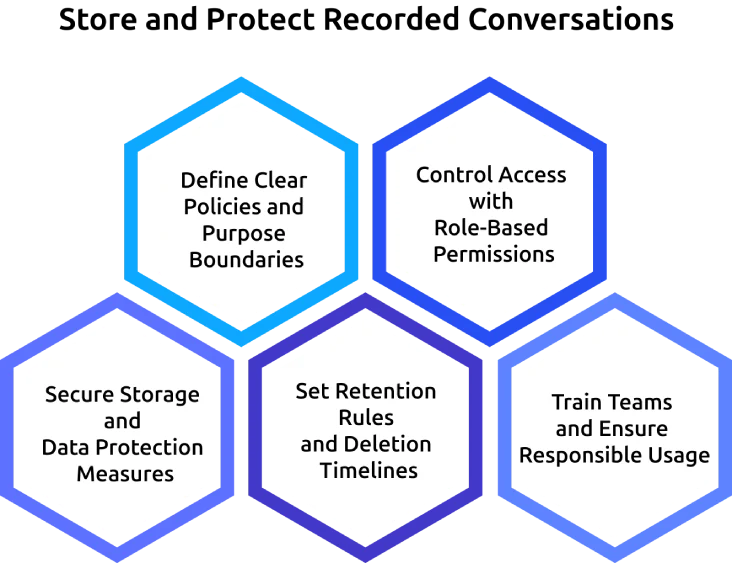
1. Define Clear Policies and Purpose Boundaries
Set a clear purpose before recording begins and stick to it. Use recordings only for the reason they were collected, such as quality checks or compliance, and avoid expanding usage later without updating the policy and informing employees.
2. Control Access with Role-Based Permissions
Limit access to recordings based on roles so only authorized individuals can view or review them. Track who accesses each file, when they access it, and why, to maintain employee accountability and prevent misuse.
3. Secure Storage and Data Protection Measures
Store recordings in secure systems with proper safeguards to protect sensitive information. Apply the same level of protection to transcripts, summaries, and any AI-generated insights as they carry similar risks.
4. Set Retention Rules and Deletion Timelines
Define how long recordings will be kept based on business needs and legal requirements. Remove files once they are no longer necessary to reduce risk and avoid unnecessary data accumulation.
5. Train Teams and Ensure Responsible Usage
Prepare managers and reviewers to handle recordings carefully and interpret them in the right context. Avoid making decisions based on a single clip and ensure fair evaluation when using recording employee conversations for review or action.

Did You Know?
The U.S. Government Accountability Office reviewed 122 studies on digital monitoring and found that a lack of transparency can increase worker stress and anxiety, highlighting the need for clear and transparent recording practices.
How Can Time Champ Support Transparent Workplace Monitoring?
Managing workplace audio recordings often becomes messy. Files get scattered, access remains unclear, and teams struggle to track who recorded what and why. This lack of structure not only creates compliance risks but also makes employees feel uncertain about how recordings are used. That’s where Time Champ brings clarity.
Time Champ is an employee monitoring software which simplifies audio recording by turning it into a structured and transparent process. It offers one-click recording, system audio tracking for quality checks, detailed logs, and secure storage that aligns with compliance needs. With role-based access controls, only authorized users can review sensitive recordings, ensuring accountability at every step. Teams can clearly define purpose, collect consent, and use recordings only where needed, making the entire workflow more organized, compliant, and easy to trust.
Need a clearer way to manage workplace audio records?
Use Time Champ for transparent recording, easy reviews, and compliant conversation tracking.
Conclusion
Recording employee conversations can be legal when you align consent requirements, define a clear business purpose, respect privacy boundaries, and follow well-structured policies. The outcome depends on how transparently and responsibly you handle the process. You should never make recording feel hidden or unclear. Focus on clear work needs, explain them in simple terms, and apply strict access and usage controls.
When you manage recording carefully, it supports quality assurance, compliance, training, and accountability. When you handle it poorly, it creates legal risk and damages trust. A clear and transparent approach helps you keep recording controlled, purposeful, and fair for everyone involved.

Anjali

Table of Content
-
 What Makes Workplace Recording Legal or Illegal?
-
What Laws Apply to Recording Employee Conversations?
-
When and Where Can Employers Legally Record Conversations?
-
What Should a Workplace Recording Policy Include?
-
How to Store and Protect Recorded Conversations?
-
How Can Time Champ Support Transparent Workplace Monitoring?
-
Conclusion
Related Blogs

Understand employee monitoring legal compliance, key laws, and best practices to track work activity while protecting privacy and avoiding legal risks.
Explore how an employee monitoring privacy policy protects employee rights, maintains compliance, and supports transparent workplace monitoring.
Discover how to create an effective employee monitoring policy with our comprehensive guide. Enhance productivity while respecting privacy. Learn best practices today!
Jahnavi Pulluri | Jul 31, 2024
Learn how to overcome employee monitoring challenges like low trust, privacy concerns, and data misuse. Discover 8 common challenges and solutions that work.
Anjali | Apr 22, 2026
Get answers to the most asked questions about employee monitoring laws, including legal considerations and privacy rights for compliant workplace monitoring.
Thasleem Shaik | Aug 17, 2024
Learn how to legally implement employee monitoring software. Covers legal requirements, policy steps, best practices, and what to tell your employees.
Thasleem Shaik | Apr 16, 2026


 4.7/5 avg.
Ready to Manage Your Workforce Smarter?
Join our family of 1500+ companies using smart insights to redefine workforces!

Free Trial
No Credit Card Required