Top Time wasters & How to Tackle Time Wasting at Workplaces
Discover effective strategies to combat time-wasting, optimize efficiency, and thrive in your professional pursuits!
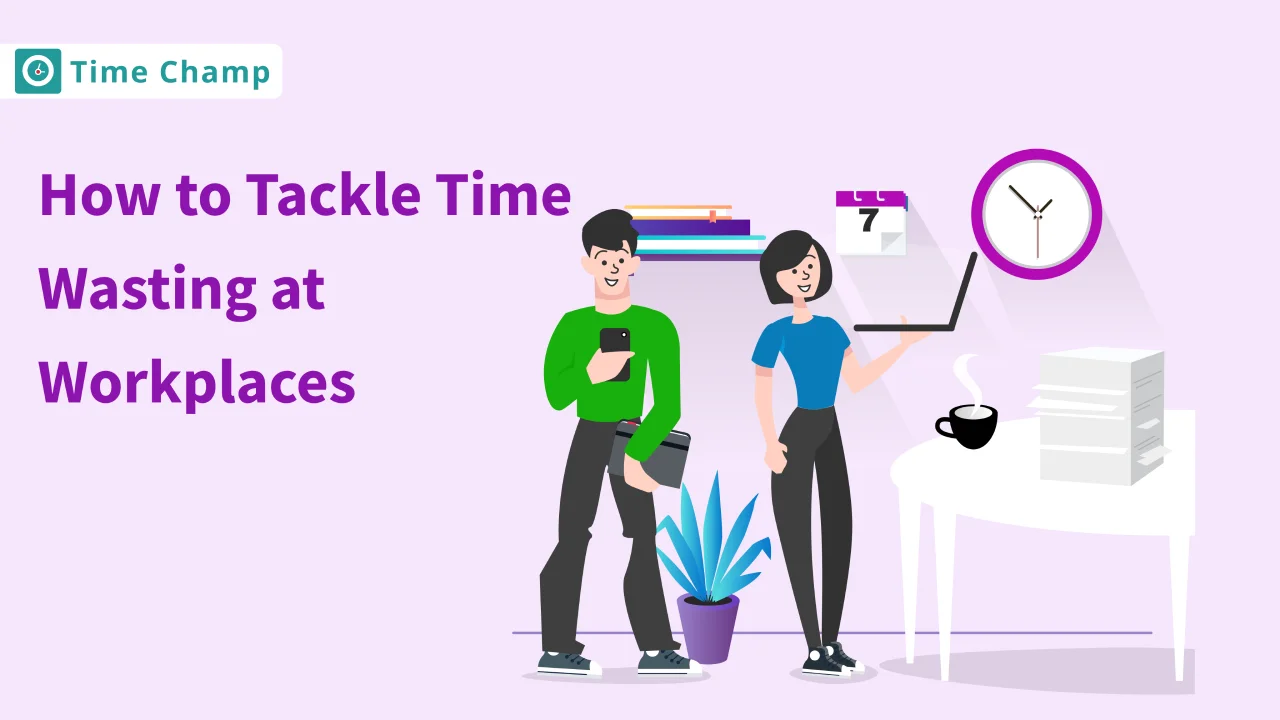
According to some the typical duration spent on a task before experiencing distractions is around 11 minutes.
According to a study by Salary.com, employees spend around 2.09 hours each day on tasks unrelated to their work.
But don’t worry, we can fight back by being aware of them Let’s figure out the art of time management so we will have the ability to maximize every moment.
We will discuss the causes, reasons for time wasting and prevention methods in this blog, keep reading to know more.
What are the Causes of Time Wasting?
Wasting time can be caused by a variety of factors, which then tend to overlap and intertwine themselves, ultimately resulting in a perfect storm of procrastination and inefficiency. Let’s look into some of the main causes of time wasting.
- Lack of Prioritization: Without a focus, it’s very easy to lose track of what matters and divert to less important tasks or distractions. When everything is perceived as the most important, it becomes difficult to pay attention to the most important things.
- Poor Time Management Skills: Many of us get confused when it comes to time management. In such situations, it is possible that jobs are done slowly and there is no time left for important duties.
- Procrastination: One of the main factors that can lead to procrastination is the desire to postpone tasks. Sometimes, procrastination comes from the fear of failure, perfectionism, or just being overwhelmed by the task itself.
- Distractions: In today’s world where the connectivity is high, distractions are everywhere. It doesn’t matter whether it’s social media, email or office chatter, the distractions are there and they can easily disrupt the focus and productivity of employees.
- Lack of Motivation: It is a simple thing to find many reasons to procrastinate or to take longer than expected to finish a task when we are not enthusiastic or motivated.
- Multitasking: It is not true that multitasking is more efficient than proper focusing. Switching between tasks will lower efficiency and increase the possibility of mistakes, thus, spending time in vain.
- Unclear Goals: Without a clear goal or a direction, it is difficult to remain focused on the task and to make real progress. This vagueness, then, can result in aimless roaming and lost effort.
- Perfectionism: The pursuit of perfection can be a double-edged weapon. However, perfectionism can also result in a situation where a person spends the majority of time correcting minor details or making endless changes.
Establishing the reasons for these habits will be the first step in overcoming them. Through grasping the roots, we will find out the most efficient ways to enhance productivity and use time wisely.
Time Wasters in Workplaces and How to Deal with Them
While various workplace distractions. exist, few impact employee performance as significantly as these.
1. Social Media Temptations
It is pretty simple to be dragged into the social media feed during working hours.
Solution: To counter this, try setting specific times for social media use, for instance during breaks, and use apps or website blocking tools to limit access during focused work time.
2. Endless Meetings
Meetings, most of the time, are known to be unproductive and they take a long.
Solution: To ensure their effectiveness, hold back on the number of meetings, stick to the agenda and consider email and stand-up meetings as an alternative.
3. Email Overload
The flow of work can be disrupted if checking and replying to emails is done continuously.
Solution: Instead, try batching email tasks by scheduling a particular time in a day to check and respond to emails, employ email filters and folders to prioritize, and unsubscribe from unimportant email lists to reduce the clutter.
4. Multitasking
The concept of doing many tasks at the same time may seem efficient, but it in fact reduces productivity and quality of work.
Solution: When you have many things to do, try to focus on one task at a time, dividing it into smaller, easily manageable steps, and allotting dedicated time blocks. for each task to maximize your productivity.
5. Procrastination
Procrastination can really hurt productivity, but you can beat it!
Solution: Break tasks into smaller parts to make them less overwhelming, give yourself deadlines to stay focused, and treat yourself when you finish tasks to stay motivated and on track.
6. Unplanned Interruptions
Workflow disruptions usually happen because of unexpected interruptions, which can result in lost productivity.
Solution: To avoid this, let your colleagues know when you’re available, use tools like “do not disturb” settings or closed-door signs when you need focused time, and kindly ask to postpone non-urgent interruptions to a better time.
7. Lack of Prioritization
When there is no clear priority, it becomes easy to be overwhelmed and to feel scattered.
Solution: Every day, determine the most important tasks that need to be done, Use the Eisenhower Matrix to sort tasks by urgency and importance. Focus on completing important tasks first to make the most of your time and effort.
Also Read: How to Manage Distractions in the Workplace
Want to Tackle Time Wasting?
Enhance Your Employee Efficiency with Time Champ
How to Identify Time Wasting Activities
Recognizing time wasters is one of the most effective ways to increase productivity..
- Track Your Time: Keep track of how you utilize your time during the day, writing down the things that take up more time than they really should.
- Analyze Your Habits: Take a look at your daily activities and habits to realize which ones are distractions and unproductive ones.
- Assess Results: Assess the results of your activities to see whether they are directed towards the attainment of your goals and priorities. If there are some tasks which do not help you to achieve your goals, they can be regarded as a time waster.
- Seek Feedback: Request your peers or supervisors to give you some input on your work habits, time management., and performance. They can be a good source of learning from which you can draw information on how to do better.
- Review Distractions: Keep a record of the different external factors or distractions that might be the reason why you often put your focus on unimportant things. The possible interruptions could be email, phone calls, social media notifications or meeting requests from workmates.
- Consider Energy Levels: Watch out for the times when your energy level is at a peak, and you are most focused and productive. These peak periods are the perfect times to tackle the most important tasks and eliminate time spent on less important activities during periods of low energy.
- Assess Task Completion Time: Measure how much time you spend on each task with the real time it takes to finish the task. Your time management skills can be assessed by determining how often you either underestimate or overestimate the time required to complete certain tasks. It could be that you are inefficient or distracted.
- Evaluate Personal Satisfaction: Think about your feelings after you have finished doing various tasks. If you find that you regularly have the feeling that the results of some activities do not match your expectations, then it is probably not the best way to spend your time.
Time Champ can be your best buddy to identify time wasters earlier before your company has to face any consequences.
Also Read: Workplace Discipline the Key to Success
Key Features of Time Champ
- Activity Monitoring: The activity monitoring feature allows employers to supervise employee activities, and it can help to determine how much time is spent on unrelated work tasks or on excessive breaks.
- Productivity Tracking: The productivity tracking feature provides information on employee performance, therefore, employers can find inefficiency and improve workflow.
- Task Management: With the help of task management tools, employers will be able to assign tasks, set deadlines, and track the progress of each employee, to make sure that they don’t lose focus on the most important priorities and deadlines.
- Time Tracking: Time tracking makes it possible for employees to track the time spent on different tasks, which fosters accountability and helps workers spot the places where they waste time on unnecessary things.
- Reports and Analytics: Gives a thorough report and analysis of employee time usage, and therefore, employers can trace patterns, and trends and remedy areas in time management.
- Goal Setting: Offers goal setting and objective tracking, employees can stay focused on the targets they have set for themselves and effectively avoid time wasting on irrelevant activities.
Final Thoughts
In conclusion, to stop wasting time at work, you need to be proactive and create a culture of efficiency and responsibility. Simple steps like setting clear goals, avoiding distractions, and focusing on important tasks can help. Make these small changes together to value and use your time wisely for success. Create a peaceful environment for your employees to work in and increase productivity.
Also Read: How to Handle Employee Slacking Off at Work? Tips & Strategies

Shabana Shaik

Table of Content
-
 What are the Causes of Time Wasting?
-
Time Wasters in Workplaces and How to Deal with Them
-
How to Identify Time Wasting Activities
-
Final Thoughts
Related Blogs
Struggling with employee shift scheduling? Explore the best types, benefits, and strategies to streamline shifts, boost productivity, and keep your
Tarun Kumar | 13 March 2025
Learn the benefits of a work time tracker, from boosting productivity to improving accuracy and streamlining workflow for better efficiency.
Thasleem Shaik | 13 March 2025
Want a happier team and lower costs? See how a remote work culture can boost productivity and make your company
Jahnavi Pulluri | 12 March 2025
Explore the best remote employee management software systems for productivity, collaboration, and performance tracking.
Jahnavi Pulluri | 12 March 2025
Boost productivity with virtual assistant software! Explore top tools for time tracking, scheduling, communication, and task automation to streamline workflows.
Shabana Shaik | 25 February 2025
Boost work-life balance in your workforce with simple, effective strategies. Reduce stress, prevent burnout, and create a healthier work culture.
Shabana Shaik | 25 February 2025


 4.7/5 avg.
Ready to Manage Your Workforce Smarter?
Join our family of 1100+ companies using smart insights to redefine workforces!

Free Trial
No Credit Card Required