Financial Data Protection: Best Practices for Businesses
Protect business finances with effective financial data protection, strong security controls, fraud prevention, compliance, and governance best practices.
In today’s business environment, you handle financial information that constantly flows through invoices, payroll systems, bank transactions, tax filings, and customer payments. However, this continuous movement also increases the risk of exposure. A single oversight, a weak access point, or a well-crafted phishing attempt is often enough to turn routine operations into a serious financial and compliance risk. Financial data protection helps you safeguard this critical information through the right security practices, policies, and controls.
Here you’ll understand the key financial data to protect, associated risks, and best practices for securing it. You’ll also learn about fraud prevention, compliance, data governance, and how organizations can enhance the security of financial data.
What is Financial Data Protection?
Financial data protection is the process of securing sensitive financial information, such as banking details, payment records, payroll data, invoices, tax documents, and financial statements, from unauthorized access, misuse, theft, or loss. It combines security controls, access management, encryption, monitoring, and governance practices to maintain data confidentiality, integrity, and availability while supporting regulatory compliance and reducing financial risk.
What Financial Data Needs Protection?
You handle financial information in the organization that supports daily operations, from payroll to customer payments and reporting. If this data is exposed or misused, you could face financial loss, fraud, compliance issues, and reputational damage. Understanding what needs more protection helps you keep your business secure.
- Banking Information: Business and customer bank account numbers, routing details, account statements, and payment instructions.
- Payment Card Information: Credit and debit card details, CVV codes, payment tokens, and transaction authorizations.
- Payroll and Compensation Records: Employee salaries, bonuses, tax deductions, reimbursements, and direct deposit information.
- Customer Financial Information: Billing details, invoices, payment history, subscription records, and outstanding balances.
- Financial Statements and Reports: Balance sheets, profit and loss statements, cash flow reports, budgets, and financial forecasts.
- Tax and Regulatory Documents: Tax returns, GST/VAT records, audit reports, compliance filings, and supporting documentation.
- Financial Credentials and Access Information: Banking portal logins, finance application accounts, API keys, authentication tokens, and multi-factor authentication data.

Did You Know?
According to the IRS Criminal Investigation Annual Report 2025, investigators identified $10.59 billion in financial crimes during FY 2025, underscoring the growing scale of financial crime in the U.S.
Why Is Financial Data Security Harder Than It Looks
Protecting financial data is not just about using security tools, it’s about managing constant movement, evolving threats, and human error. As financial information flows through multiple systems and partners, the risk of exposure increases at every step. This makes security far more complex than it appears.
1. Financial Data Flows Across Multiple Systems
Financial data moves across accounting tools, payroll systems, cloud platforms, emails, and third-party apps. Each transfer creates a potential point of exposure where sensitive information can be accessed or leaked.
2. Cybercriminals Specifically Target Financial Information
Financial data can be directly monetized, making it a prime target for attackers. Details such as bank accounts, payment credentials, and financial records are often used for fraud and unauthorized transactions.
3. Internal Mistakes and Third-Party Risks Increase Exposure
Security issues often come from within, such as misconfigured access, accidental sharing, or phishing attacks. Additionally, reliance on external vendors means a single weak link in the supply chain can compromise financial data.
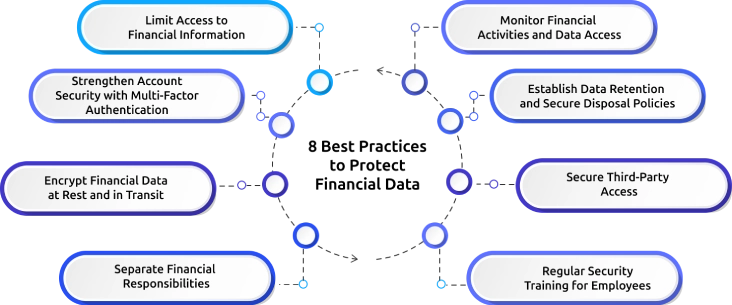
How to Protect Financial Data? 8 Best Practices That Work
Protecting financial data requires a combination of technology, well-defined processes, and employee accountability. Relying on a single security measure is not enough because financial information is constantly accessed, shared, and processed across multiple systems. Implementing the following best practices helps you reduce security risks, prevent fraud, and maintain compliance with industry regulations.
1. Limit Access to Financial Information
Give employees access only to the financial data they need to perform their roles. Role-based access controls reduce unnecessary exposure and help you prevent unauthorized viewing, editing, or sharing of sensitive information.
2. Strengthen Account Security with Multi-Factor Authentication
Enable multi-factor authentication (MFA) for banking portals, accounting software, payroll platforms, and other financial systems. Even if passwords are compromised, MFA adds an additional layer of protection against unauthorized access.
3. Encrypt Financial Data at Rest and in Transit
Use strong encryption to protect your financial information stored in databases, servers, cloud platforms, and backup systems. Encrypt data in transit to prevent interception as it moves between users, applications, and third-party services.
4. Separate Financial Responsibilities
Avoid assigning one person complete control over financial transactions. Separate responsibilities such as vendor creation, invoice approval, payment authorization, and reconciliation to reduce the risk of fraud and unauthorized payments.
5. Monitor Financial Activities and Data Access
Continuously monitor financial systems for unusual login attempts, unexpected file transfers, changes in privileges, and suspicious user activity. Early detection allows your security teams to respond before incidents escalate.
6. Establish Data Retention and Secure Disposal Policies
Define how long financial records should be retained based on legal and business requirements. Once retention periods expire, securely archive or permanently delete the data to reduce unnecessary exposure.
7. Secure Third-Party Access
Many vendors, payment processors, auditors, and accounting partners require access to financial information. Evaluate their security practices, grant only the required permissions, and review third-party access regularly to minimize supply chain risks.
8. Regular Security Training for Employees
Employees play a critical role in protecting financial data. Provide ongoing training on phishing attacks, business email compromise (BEC), password security, secure document sharing, and financial fraud tactics so your staff can recognize and respond to potential threats before damage occurs.
Finding it difficult to protect financial data across everyday employee activities?
Time Champ helps you detect risks and prevent data leaks with built-in DLP features.
How to Prevent Invoice and Payment Fraud
Invoice and payment fraud are a common risk for businesses. Attackers often misuse weak approval systems or impersonate vendors to steal money. Strong verification and payment controls help you reduce this risk.
- Verify Vendor Information Before Making Payments: Confirm any request to change bank account or payment details through a trusted communication channel, such as a phone call to an existing contact.
- Implement Multi-Level Payment Approvals: Require approval from more than one authorized employee for high-value transactions or changes to vendor payment information.
- Authenticate Payment Requests: Verify invoices against purchase orders, contracts, and delivery records before processing payments to ensure they are legitimate.
- Protect Business Email Accounts: Use multi-factor authentication, strong passwords, and email security controls to reduce the risk of business email compromise (BEC) and account takeovers.
- Monitor Vendor and Payment Activity: Regularly review vendor records, payment patterns, and transaction histories to identify duplicate invoices, unusual payment requests, or unexpected account changes.
- Restrict Access to Payment Systems: Allow only authorized finance personnel to create vendors, modify payment details, or approve transactions based on their responsibilities.
- Train Employees to Recognize Fraud Attempts: Educate finance and accounts payable teams to identify phishing emails, fake invoices, urgent payment requests, and impersonation scams before taking action.
- Maintain Detailed Audit Trails: Record every invoice approval, vendor update, and payment transaction. Complete audit logs help you detect suspicious activities, support investigations, and strengthen accountability.
What Are the Key Financial Data Compliance Regulations
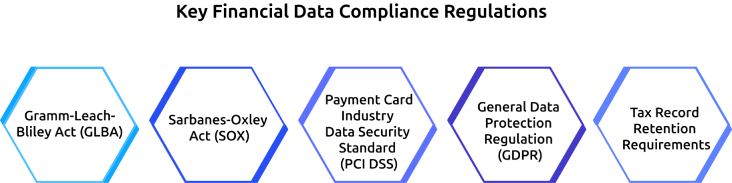
Protecting financial data is both a security best practice and a regulatory requirement. Applicable rules vary by industry, data type, and region, with key frameworks ensuring protection and customer trust overall. Following compliance frameworks helps you safeguard financial data and maintain customer trust.
1. Gramm-Leach-Bliley Act (GLBA)
The Gramm-Leach-Bliley Act (GLBA) applies to financial institutions such as banks, insurance companies, lenders, and investment firms in the United States. It requires organizations to protect customers’ nonpublic personal information by implementing security safeguards, maintaining privacy policies, and limiting unauthorized data sharing.
2. Sarbanes-Oxley Act (SOX)
The Sarbanes-Oxley Act (SOX) applies primarily to publicly traded companies in the U.S. It establishes strict requirements for financial reporting, internal controls, audit integrity, and record retention to reduce financial fraud and improve corporate accountability.
3. Payment Card Industry Data Security Standard (PCI DSS)
PCI DSS applies to any organization that stores, processes, or transmits payment card information. It requires businesses to secure cardholder data through encryption, strong access controls, continuous monitoring, vulnerability management, and regular security testing.
4. General Data Protection Regulation (GDPR)
The General Data Protection Regulation (GDPR) applies to organizations that collect or process the personal data of individuals in the European Union. Since financial records often contain personal information, businesses must implement appropriate security measures, protect privacy rights, and report qualifying data breaches within the required timelines.
5. Tax Record Retention Requirements
Most countries require businesses to retain financial and tax records for a legally specified period. Maintaining accurate records, protecting them from unauthorized access, and securely disposing of them after the retention period helps organizations remain compliant during audits and regulatory reviews.
How to Establish Financial Data Governance Without a Dedicated Team
Financial data governance is important even without a dedicated team. Small and growing businesses can still manage it by setting clear roles, rules, and review processes. The goal is to keep your financial data accurate, secure, and properly controlled.
1. Assign Ownership for Financial Data
Identify who is responsible for different categories of financial information, such as payroll, accounts payable, customer payments, and financial reporting. Clear ownership improves accountability and ensures someone is responsible for maintaining data quality, security, and compliance.
2. Define Access and Usage Policies
Create simple policies that specify who can view, edit, approve, and share financial data. Apply the principle of least privilege so employees only have access to the information required for their roles, reducing the risk of unauthorized access.
3. Standardize Data Classification and Retention
Classify financial data based on its sensitivity, such as public, internal, confidential, or restricted. Along with classification, define how long different financial records should be retained and establish secure procedures for archiving or permanently disposing of outdated information.
4. Review and Audit Financial Data Regularly
Conduct periodic reviews of user permissions, financial records, and security controls to ensure they remain accurate and effective. Regular audits help you identify outdated access rights, policy gaps, duplicate records, and potential compliance issues before they become significant risks.
Establishing these four governance practices helps you protect financial data more effectively, improve regulatory compliance, and create a consistent approach to managing sensitive financial information. This can be achieved without requiring a dedicated governance team.
How Time Champ Helps Protect Financial Data in the Organization
Protecting financial data is hard when your employees use many apps and handle sensitive payroll and payment information. Limited visibility into data access and sharing increases the risk of leaks, insider threats, and compliance issues. Time Champ is a smart employee monitoring software with built-in Data Loss Prevention (DLP) capabilities that helps you monitor sensitive activities, detect risky behavior, and strengthen financial data protection without disrupting everyday work.
Here’s how Time Champ helps protect financial data more effectively:
- Detects Sensitive Data Exposure in Real Time: Identifies attempts to access, copy, share, print, or transfer sensitive financial information, helping you respond before data leaves the organization.
- Monitors File Transfers Across Multiple Channels: Tracks file movements through USB devices, email attachments, cloud storage, web uploads, and other transfer methods to reduce the risk of unauthorized data sharing.
- Provides Instant Alerts for Suspicious Activities: Sends real-time notifications when unusual or policy-violating actions occur, enabling faster investigation and response to potential financial data risks.
- Tracks User Activity for Better Accountability: Records application usage, file access, and employee activities to provide a complete audit trail for investigations, compliance, and internal reviews.
- Strengthens Insider Threat Detection: Identifies unusual employee behavior, such as repeated access to confidential financial records or abnormal file movement, helping organizations address insider risks early.
- Supports Compliance with Detailed Activity Reports: Generates comprehensive reports and activity logs that help demonstrate adherence to financial data security policies and regulatory requirements while simplifying internal audits.
Struggling to protect sensitive financial data from insider risks?
Time Champ helps monitor risky activities and prevent data leaks with built-in DLP features.
Conclusion
Protecting financial information not only requires strong passwords or security software, but it also depends on clear policies, controlled access, employee awareness, regular monitoring, and compliance with relevant regulations. A proactive approach helps reduce fraud, minimize data breaches, and maintain the integrity of critical financial records. Implementing these best practices can help you build a stronger financial data protection strategy that safeguards sensitive information while supporting secure day-to-day operations. Regularly reviewing security controls and adapting to evolving threats ensures financial data remains protected as your organization grows.

Anjali

Table of Content
 What is Financial Data Protection?
- What Financial Data Needs Protection?
- How to Protect Financial Data? 8 Best Practices That Work
- How to Prevent Invoice and Payment Fraud
- What Are the Key Financial Data Compliance Regulations
- How to Establish Financial Data Governance Without a Dedicated Team
- How Time Champ Helps Protect Financial Data in the Organization
- Conclusion
Instant Signup
Thank you for your request!
We have received your signup request and our team will get back to you soon. In the meantime, you can book a demo to see Time Champ in action.
Book a DemoFree trial. No credit card required. Prefer a walkthrough? Book a demo.
Related Blogs

Data loss prevention helps protect sensitive business data from leaks, theft, and misuse. See how DLP works, its benefits, challenges, and best practices.
Thasleem Shaik | Aug 21, 2026
Learn how employee monitoring for financial services works, which teams need it, key features, and how it supports compliance, security, and productivity.
Anjali | Apr 18, 2026
Discover the top 10 Data Loss Prevention tools to safeguard sensitive information and ensure workplace security with essential features and practical tips for selection.
Tarun Kumar Reddy | Jan 21, 2025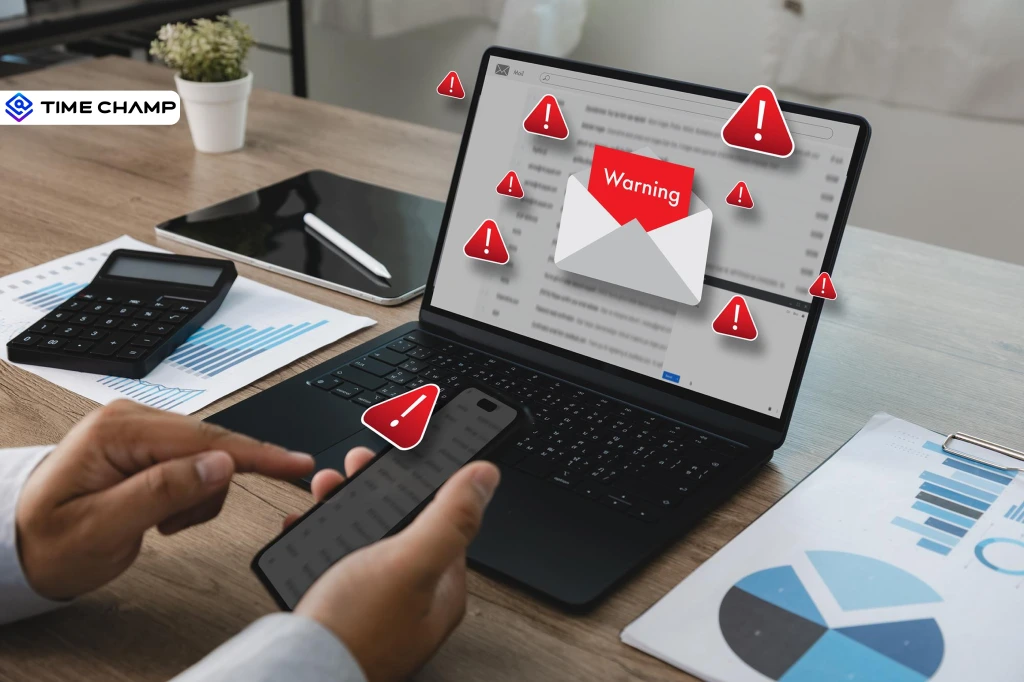
Learn what Email Data Loss Prevention (DLP) is, how it works, key features, benefits, and best practices to protect email data from leaks.
Guna Lakshmi | Aug 19, 2026
Implement data loss prevention practices to protect sensitive data, reduce security risks, prevent breaches, and strengthen your organization's security.
Thasleem Shaik | Aug 24, 2026Implement data loss prevention practices to protect sensitive data, reduce security risks, prevent breaches, and strengthen your organization's security.
Thasleem Shaik | Aug 24, 2026


 4.7/5 avg.
Ready to Manage Your Workforce Smarter?
Join our family of 1500+ companies using smart insights to redefine workforces!

Free Trial
No Credit Card Required