Employee Monitoring for Financial Services Firms
Learn how employee monitoring for financial services works, which teams need it, key features, and how it supports compliance, security, and productivity.
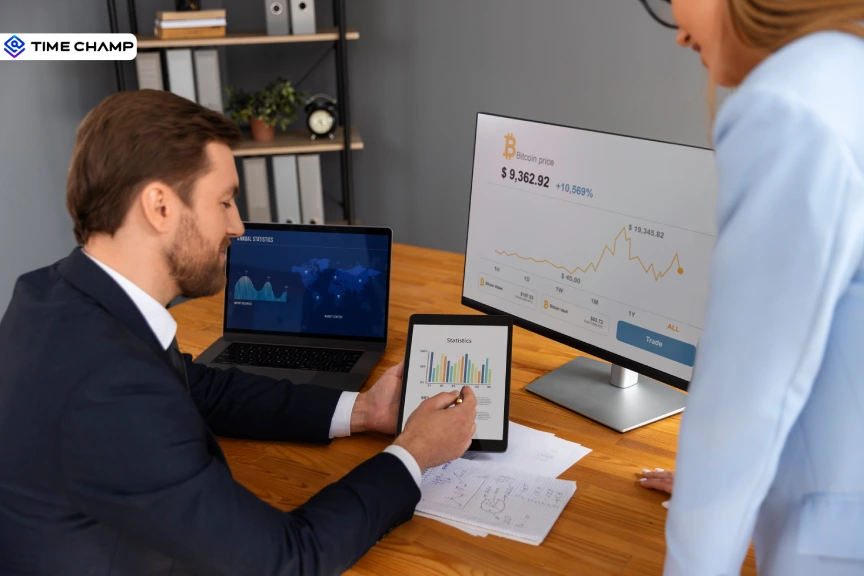
Employee monitoring for financial services is the operational layer that shows how your team uses access to systems and data during work sessions. It covers productivity visibility for back-office and remote teams, data loss prevention for sensitive client records, audit-ready activity logs for compliance reviews, and insider threat detection before exposure occurs.
This guide covers which finance teams need monitoring, what capabilities matter most, how it supports your compliance obligations, and how to implement it without disrupting daily operations.
What Employee Monitoring Means in Financial Services
Employee monitoring in financial services focuses on how teams work during their job hours. It shows how back-office teams, remote advisors, operations staff, and IT teams use their time. It also checks how employees handle data, tracks productivity, monitors attendance, and verifies that employees follow shift rules across the organization.
Employee monitoring plays a key role in helping firms stay compliant with industry regulations. It creates clear and reliable activity records that support audits and internal checks. These records help organizations show how employees use systems and access data during work.
It also helps reduce risks by identifying unusual behavior at an early stage. Through tracking system usage and work patterns, organizations can prevent data misuse and improve overall operational control. This ensures both data security and consistent team performance.

Did You Know?
According to the IBM report, the organizations with a high-level security skills shortage faced an average data breach cost of $5.74 million in 2024.
Which Financial Services Teams Need Employee Monitoring
Financial services organizations have different team structures with diverse monitoring needs. The requirements of a back-office operations team are different from a remote advisory team, and both are different from the IT and security function. The table below shows the key roles for their specific monitoring requirements and the features that address them.
| Finance Team / Role | What They Need to Monitor | How Time Champ Helps |
|---|---|---|
| Back-office operations (settlements, reconciliation, data entry) | Track productivity, ensure task accuracy, and identify idle time. | Activity monitoring, productivity classification, timeline view, and idle alerts. |
| Remote advisors and analysts | Verify work activity, track sessions, and manage attendance for remote teams. | Screen recording, activity tracking, automated attendance, and remote employee monitoring. |
| IT and security teams | Prevent data loss, monitor USB usage, track file activity, and maintain access logs. | DLP module, USB monitoring, file tracking, real-time alerts, and compliance reports. |
| Compliance and audit teams | Maintain audit-ready logs, control access, and generate reports. | Timestamped logs, role-based access, exportable reports (XLSX, CSV, PDF). |
| Payroll and HR teams | Track attendance, calculate overtime, and ensure accurate timesheets. | Automated attendance, overtime tracking, and payroll-ready reports. |
| Branch and hybrid teams | Monitor WFH/WFO attendance, ensure shift compliance, and detect coverage gaps. | Hybrid scheduling, shift tracking, and absence alerts. |
Struggling to protect sensitive financial data and track employee activity?
Time Champ helps you monitor work, secure data, and stay audit-ready.
Key Monitoring Capabilities for Financial Services
Employee monitoring for financial services includes key capabilities that help organizations manage work, protect sensitive data, and meet compliance needs. These capabilities provide clear visibility into employee activity, system usage, and potential risks. This section helps financial teams understand which capabilities matter most and how to use them effectively in their operations.
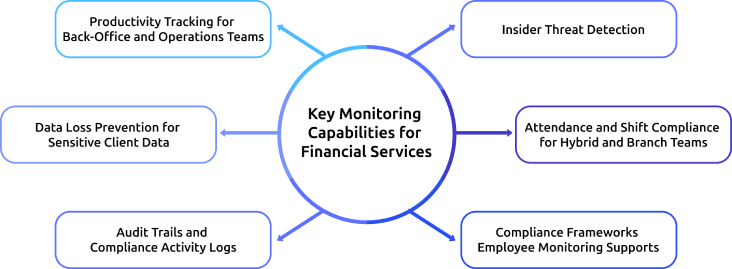
Productivity Tracking for Back-Office and Operations Teams
Back-office teams in financial services handle tasks like settlements, account reconciliation, customer data, and compliance checks. These are high-volume and repetitive tasks, so consistent productivity is important for maintaining work quality. Activity monitoring helps you to see how each team member spends their work time. It shows which apps they use, how much time is productive or idle, and when attention shifts to non-work tasks.
The productivity system marks each app as productive, non-productive, or neutral based on the role. For example, a compliance analyst using regulatory tools is classified as productive, while time spent on news sites during work hours is marked as non-productive. Team comparisons help you quickly spot low performance and take action before it affects overall output.
Data Loss Prevention for Sensitive Client Data
Data loss prevention is a critical part of employee monitoring in financial services. Client records, account data, trading details, and personal data are important and sensitive information for both external threats and internal risks.
- USB Device Monitoring and Control
The system detects USB usage in real time and can block unauthorized devices instantly. It also logs every action with time, user, and device details for audits and investigations.
- File Movement Tracking
It tracks file creation, edits, deletion, and transfers with full details. The system flags any unusual movement of sensitive data based on normal user behavior.
- Upload and Download Violation Alerts
The system monitors uploads and downloads to detect transfers to personal email or cloud storage. It sends the alerts in real time so that teams can act quickly.
- Compliance-ready Violation Reports
The system stores all DLP events in exportable reports such as XLSX, CSV, or PDF formats. Access is controlled so that only authorized teams can view this data.
Audit Trails and Compliance Activity Logs
Regulators and audit teams in financial services focus on who accessed the system and what they did with it. Employee monitoring helps track user activity during work sessions. It records which systems and apps were used, how much time was spent, and highlights any unusual behavior.
The platform stores these records securely with role-based access, so only authorized compliance, audit, or security teams can view them. They can be exported in standard formats for audits or reviews. For firms following ISO 27001, SOC 2 Type II, or GDPR, these logs provide proof that employee activity is continuously monitored.
Insider Threat Detection
Insider threats in financial services are not always intentional. A departing employee may download client data, an analyst may access accounts outside their role, or a team member may use permissions they no longer need. These actions often appear in activity data before any real damage happens.
Monitoring systems track unusual behavior that deviates from normal patterns. This includes access to new systems, activity outside work hours, or large data downloads. Real-time alerts help security teams act quickly and address issues early, before you discover them during audits.
Did You Know?
A report by Ponemon Institute shows that organizations spend an average of $16.2 million each year to manage insider-related incidents.
Attendance and Shift Compliance for Hybrid and Branch Teams
Financial services firms with hybrid teams need clear visibility into attendance. Employees may work from home or the office, so tracking should not depend on manual timesheets or manager checks. Automated attendance tracking records login and logout times, shift adherence, late logins, and absence patterns across all work modes without manual effort.
For firms with multiple branches or time zones, shift tracking helps identify coverage gaps early. Alerts for late logins and absences give you quick updates, helping to take action immediately and maintain smooth operations.
Compliance Frameworks Employee Monitoring Supports
Financial services firms follow many regulations simultaneously. Employee monitoring for financial services does not replace compliance teams but helps them by providing clear activity records for audits and reviews.
- ISO 27001: ISO 27001 requires continuous tracking of user activity and proof that access controls are working properly. Activity logs help show how employees use systems and confirm that access is used correctly.
- SOC 2 Type II: SOC 2 audits check if user activity is monitored on an ongoing basis. Audit teams expect real-time monitoring data and alerts, not just access control records.
- GDPR: GDPR applies when firms handle personal data of EU residents. Monitoring on company devices during work hours is allowed with clear policies and employee awareness, and helps track how data is accessed and used.
- Internal Audit and SOX: SOX and internal audits require proof that only authorized users access sensitive financial data. Activity logs provide clear records of user actions to support these checks.
How Time Champ Fits into a Financial Services Monitoring Stack
Time Champ is an employee monitoring software built to provide financial services teams with clear visibility into work, data usage, and compliance. It helps track productivity, protect sensitive data, manage attendance, and maintain audit-ready records across remote, hybrid, and office teams. In a financial services setup, it works as the operational layer that shows how employees work and how teams handle data.
The platform gives you a clear view of how back-office and remote teams spend their time, with team comparisons and individual insights. Its DLP features monitor USB usage, track file movement, and alert on risky uploads or downloads. Attendance and shift tracking help manage hybrid teams without relying on manual timesheets.
All data is stored securely with role-based access, so only authorized teams can view it. Reports can be exported easily for audits and compliance checks. Time Champ meets key standards like ISO 27001:2022, GDPR, SOC 2 Type I, and HIPAA, making it suitable for regulated financial environments.
Struggling to keep track of employee activity and compliance in financial teams?
Time Champ helps you stay in control with real-time tracking and secure data monitoring.
Conclusion
Employee monitoring for financial services plays a key role in managing work, protecting data, and meeting compliance requirements. It helps organizations track productivity, understand how systems are used, and maintain clear activity records for audits. It also supports data protection by identifying unusual behavior early and reducing the risk of data exposure. With hybrid work and strict regulations, financial firms need better visibility into daily operations. The right monitoring approach combines productivity tracking, data loss prevention, audit logs, and attendance management in one system. This helps teams work efficiently, stay compliant, and keep sensitive information secure at all times.

Anjali

Table of Content
-
 What Employee Monitoring Means in Financial Services
-
Which Financial Services Teams Need Employee Monitoring
-
Key Monitoring Capabilities for Financial Services
-
How Time Champ Fits into a Financial Services Monitoring Stack
-
Conclusion
Instant Signup
Thank you for your request!
We have received your signup request and our team will get back to you soon. In the meantime, you can book a demo to see Time Champ in action.
Book a DemoFree trial. No credit card required. Prefer a walkthrough? Book a demo.
Related Blogs
Empower your team's productivity with expert strategies. From setting SMART goals to reducing distractions, discover effective methods for success. Elevate your business performance and unlock growth potential.
Shabana Shaik | Jun 23, 2024
Discover effective insider threat mitigation strategies to protect your organization from internal risks and minimize vulnerabilities.
Thasleem Shaik | Jan 22, 2025
Stay ahead of data threats! Discover the best practices for data loss prevention and safeguard your organization’s sensitive information.
Shabana Shaik | Jan 18, 2025
Learn how to legally implement employee monitoring software. Covers legal requirements, policy steps, best practices, and what to tell your employees.
Thasleem Shaik | Apr 16, 2026
The AI employee monitoring software goes beyond basic tracking. It predicts risks, reveals patterns, and gives you real clarity to lead your team better.
Shabana Shaik | Apr 17, 2026
Discover effective data loss prevention strategies to protect sensitive information, enhance security, and safeguard your business from data breaches.
Shabana Shaik | Jan 22, 2025


 4.7/5 avg.
Ready to Manage Your Workforce Smarter?
Join our family of 1500+ companies using smart insights to redefine workforces!

Free Trial
No Credit Card Required