7 Ethical Employee Monitoring Techniques That Build Trust
Explore ethical employee monitoring techniques to track work transparently, protect privacy, and improve productivity while building trust across your team.

You want to understand how work is getting done, but don’t want your team to feel watched or uncomfortable. That’s where most teams struggle. When monitoring feels unclear or excessive, it can quickly create resistance and lower morale. At some point, you start to wonder, “Is your employee monitoring approach actually ethical?” The challenge isn’t whether you need to monitor, but how you do it. That’s where ethical employee monitoring really helps. Without analyze monitoring data, dashboards quickly become decoration rather than a decision tool. The detail here sits inside a wider conversation covered in our enterprise employee monitoring guide.
In this blog, you’ll learn the most effective ethical employee monitoring techniques you can use in your workplace. You’ll also see how ethical and unethical monitoring differ and how to apply these techniques in a clear and practical way.
What Are the Most Effective Ethical Employee Monitoring Techniques?
Ethical employee monitoring techniques help organizations collect only the work data they need while giving employees clarity, control, and context. The most effective techniques combine policy, transparency, privacy limits, employee access, and regular review.
The 7 techniques below help you build a monitoring program that people can understand and trust.
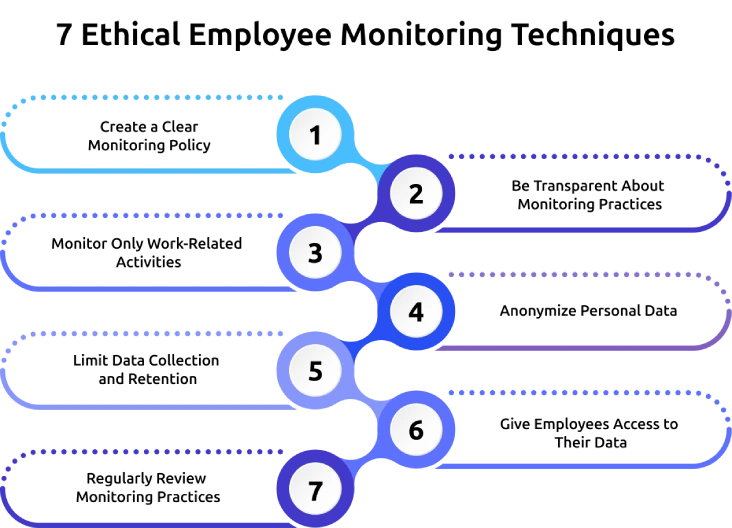
1. Create a Clear Monitoring Policy
A clear monitoring policy sets the foundation for ethical employee monitoring. It explains what you track, why you track it, and how that data is used in day-to-day work.
Keep the policy practical and easy to follow. Cover key areas like work hours, app or website usage, attendance, and any role-based differences. It also helps to mention who can access the data, how long it is stored, and how it supports business goals.
In real situations, employees usually look for simple answers:
- What data is being collected?
- Why is it needed?
- Is personal activity excluded?
- Who can see the reports?
- How long is the data stored?
When your policy clearly answers these questions, it builds trust and removes confusion.
Example:
Microsoft follows a transparent approach with Viva Insights, where employees can see their own data and managers only access aggregated insights. This helped to increase adoption as employees felt more comfortable and were not monitored.
2. Be Transparent About Monitoring Practices
Transparency means employees know about monitoring before it starts. It’s not just about sharing a policy, it’s about clearly explaining what’s happening in simple terms.
Let your employees understand what is being tracked, why it matters, and how the data will be used.
What they really want to know is:
- What exactly is being tracked?
- Why is this data needed?
- Will it affect performance reviews?
- Who can access it?
- Is anything outside work included?
When these points are clear, monitoring feels open and fair without hiding anything.
Transparency also depends on how you communicate. A clear announcement, team discussion, and space for questions make a big difference. Simple and honest communication builds trust, while unclear messaging creates doubt.
Example:
Shopify openly communicates how employee data is used for performance and operations, giving teams clarity on what is tracked and why. This approach helps to reduce concerns and improve acceptance of monitoring practices.
Struggling to monitor work without losing employee trust?
Time Champ gives clear visibility while keeping tracking fair and transparent.
3. Monitor Only Work-Related Activities
Ethical employee monitoring becomes effective when you limit tracking to what actually matters for work. Focus on business systems, work hours, approved devices, and job-related tasks. Anything like personal browsing, private messages, or activity beyond work hours does not need to be part of your monitoring unless there is a clear legal or security reason.
Start by defining the purpose behind monitoring. If the goal is payroll accuracy, tracking work hours and breaks is enough. If you want better project control, task time, and billable hours, give more useful insights than constant screenshots. Many teams collect more data than they need, which creates confusion and raises privacy concerns.
A more practical approach is to connect each type of data to a clear business need. This keeps monitoring focused and avoids overreach. When employees see that only relevant work data is tracked, they feel more comfortable and engaged.
Example: Basecamp follows a simple approach by focusing on work output and communication without tracking employee activity. This helps maintain trust while still ensuring accountability.
4. Anonymize personal data
Anonymize data to reduce privacy risks while still gaining useful insights. When you remove or mask employee identities, you focus on patterns and trends. In many situations, you can understand what’s happening without identifying specific individuals.
Use anonymized or aggregated data when analyzing trends like workload, productivity, or tool usage. For example, if overtime increases in a team, the first step can focus on workload balance or project demands without identifying individuals. This approach keeps monitoring less intrusive and more objective.
Anonymization works well for:
- Team-level productivity trends
- Workload and burnout analysis
- Tool adoption and usage patterns
- Policy effectiveness reviews
Individual data still matters in some cases, like payroll issues or compliance checks. The key is to start with the least identifiable data and only go deeper when needed. This keeps monitoring balanced and respectful.
5. Limit Data Collection and Retention
Limiting data collection and retention keeps employee monitoring focused and secure. Collect only the data that directly supports your business goals, and keep it only for as long as it is needed. This approach reduces privacy risks and avoids storing information that may no longer be useful.
Retention matters because monitoring does not end when data is collected. What you keep over time can create risk if it is not reviewed or removed. Old screenshots, activity logs, or location data can lose relevance but still remain stored, which increases exposure.
A clear retention approach defines the following:
- What data is collected (time logs, reports, alerts)
- How long each type is stored
- Who can access it
- When and how it is deleted
Different data types need different handling. Payroll or compliance records may stay longer, while temporary activity data or reports can be removed sooner. Matching retention to purpose keeps monitoring responsible and controlled.
Example:
The Federal Trade Commission advises businesses to keep data only as long as necessary and dispose of it securely. This principle helps organizations reduce risk and maintain responsible data practices.
6. Give Employees Access to Their Data
Give employees access to their own data to make monitoring more open and fair. When you allow them to see what is being recorded, they understand expectations better and stay more involved. This also helps them spot errors early and add context where needed.
Remember that work data does not always show the full picture. A report may show idle time during a client call or low activity during research. Give employees the opportunity to explain these situations before any decisions are made.
Good practices include:
- Simple dashboards for time, attendance, and activity
- Easy ways to correct inaccurate data
- Clear explanations of how metrics are calculated
- Open communication with managers
When employees have visibility, monitoring feels less like something happening in the background and more like a shared system.
7. Regularly Review Monitoring Practices
Review your monitoring practices regularly to keep them fair, accurate, and aligned with your policies. What works for one team or time period may not fit another. Changes like new tools, remote setups, or added data types can quickly make your current approach outdated.
Bring together HR, operations, IT, and compliance to evaluate how monitoring is being used. This helps you identify gaps, inconsistencies, and areas where tracking may no longer be relevant.
During a review, focus on practical questions:
- Are you collecting only the data that is truly needed?
- Do employees clearly understand current monitoring practices?
- Are managers using data consistently and fairly?
- Are alerts and reports useful or creating confusion?
- Are retention and access rules being followed?
Regular reviews also help to spot risks related to employee rights, bias, or uneven treatment across teams. This keeps monitoring aligned with both business goals and workplace fairness.
Ethical vs Unethical Employee Monitoring
Understanding what separates ethical from unethical monitoring helps you build a clearer framework for your own organization. The difference often comes down to intent, transparency, and proportionality.
| Factor | Ethical Monitoring | Unethical Monitoring |
|---|---|---|
| Transparency | Employees are fully informed | Monitoring is hidden or undisclosed |
| Scope | Limited to work-related activities | Extends to personal activity and off-hours |
| Purpose | Productivity, security, compliance | Micromanagement, control, punishment |
| Data Access | Employees can view their own data | Data is locked away from those being monitored |
| Consent | Employees acknowledge the policy | No consent or acknowledgment required |
| Data Retention | Defined limits and deletion timelines | Data stored indefinitely without a clear purpose |
| Use of Data | Used to improve processes and support employees | Used to penalize or build cases against employees |
| Proportionality | Monitoring matches the actual business need | Excessive monitoring beyond what the role requires |
How Does Time Champ Support Ethical Employee Monitoring?
Time Champ helps you apply ethical employee monitoring with clear and controlled visibility into work. It gives you the ability to understand work patterns while keeping data use aligned with your team’s expectations.
You can track time, attendance, and project activity to support planning, payroll, and workload management. Productivity insights, such as app usage and activity patterns, help you see how work flows during the day. Features like role-based access and configurable settings help to limit who can view data and what gets collected.
The impact depends on how you set it up. Select features that match your business needs, explain them clearly to employees, and review data with proper context. Some teams need only time and attendance, while others may need project or field tracking.
When used with clarity and purpose, Time Champ supports both performance and trust in your workplace.
Not sure what to track and what to avoid in employee monitoring?
Time Champ helps you track only what matters with flexible and controlled settings.
Conclusion
Ethical employee monitoring works when your team clearly understands what is tracked, why it matters, and how it benefits them. When your approach stays transparent, focused on work, and reviewed regularly, monitoring feels fair and easier to accept.
What really matters is not just whether employee monitoring is ethical, but whether your approach is clear, consistent, and responsible. When employees understand the purpose, and you use the data with context, monitoring becomes a tool that supports both productivity and trust.

Anjali

Table of Content
-
 What Are the Most Effective Ethical Employee Monitoring Techniques?
-
Ethical vs Unethical Employee Monitoring
-
How Does Time Champ Support Ethical Employee Monitoring?
-
Conclusion
Instant Signup
Thank you for your request!
We have received your signup request and our team will get back to you soon. In the meantime, you can book a demo to see Time Champ in action.
Book a DemoFree trial. No credit card required. Prefer a walkthrough? Book a demo.
Related Blogs
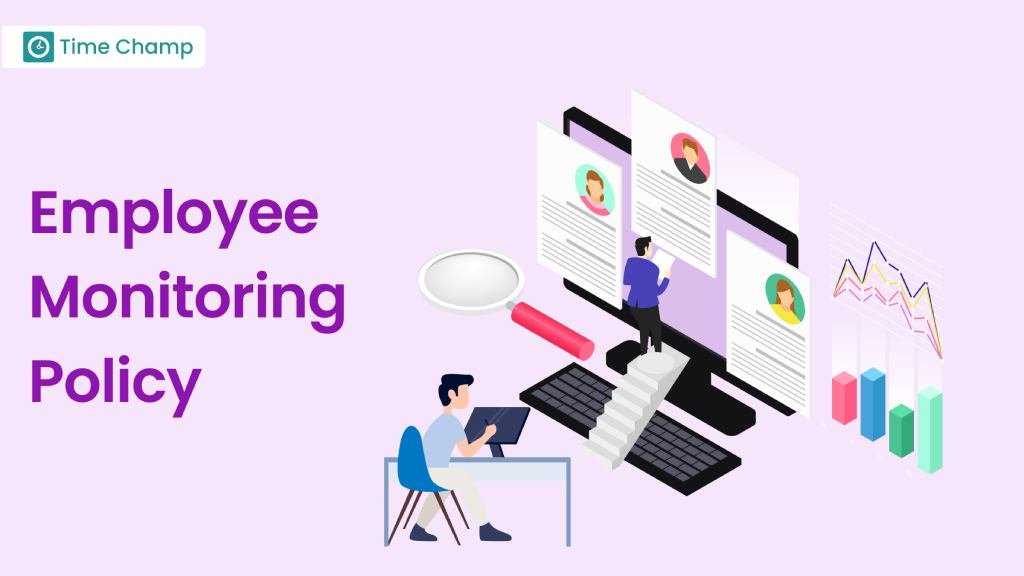
Discover how to create an effective employee monitoring policy with our comprehensive guide. Enhance productivity while respecting privacy. Learn best practices today!
Jahnavi Pulluri | July 31, 2024
Understand employee monitoring legal compliance, key laws, and best practices to track work activity while protecting privacy and avoiding legal risks.
Thasleem Shaik | Apr 14, 2026
Learn the key ethical considerations in employee monitoring. Know what to track, how to stay transparent, and how to build trust with your team.
Thasleem Shaik | Apr 15, 2026
Explore how to implement employee monitoring software effectively with clear steps, legal tips, best practices, ROI metrics, and key pitfalls to avoid.
Anjali | Apr 15, 2026
Explore common employee monitoring myths and learn what's actually true. Find out how proper monitoring boosts productivity, trust, and team performance.
Guna Lakshmi | Apr 14, 2026
Learn about employee monitoring laws, what they mean for businesses, and how they protect employee privacy and rights.
Shabana Shaik | July 10, 2024


 4.7/5 avg.
Ready to Manage Your Workforce Smarter?
Join our family of 1500+ companies using smart insights to redefine workforces!

Free Trial
No Credit Card Required