Employee Retention Metrics: Key Measures & Formula
Measure retention using employee retention metrics, key formulas, and simple steps to identify risks, track trends, and reduce employee turnover today.
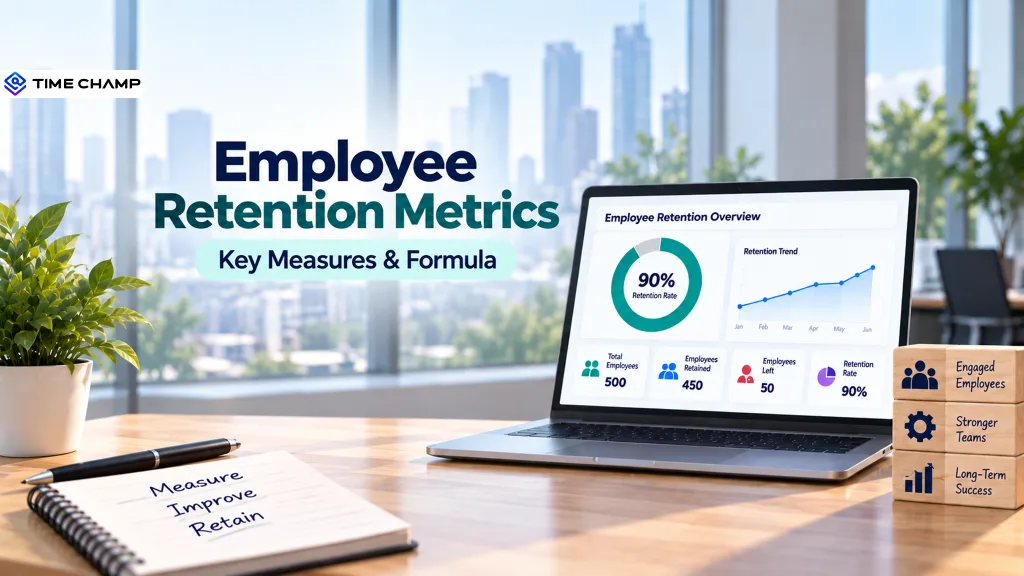
You might often lose high-performing employees unexpectedly, only realizing the gap after productivity and team stability begin to suffer. Without clear visibility into why people leave, recurring issues stay hidden and continue to weaken retention over time. Measuring employee retention clearly reveals these patterns and turns turnover data into actionable insights that help you prevent future losses.
Here you’ll understand what employee retention metrics are, how to track them, and calculate your retention rate. You’ll also find practical steps to measure retention and use workforce insights to improve it.
What is Employee Retention?
Employee retention is an organization’s ability to keep employees over a specific period and reduce unnecessary employee departures. It reflects how well a company maintains a stable workforce by addressing factors such as job satisfaction, workload, workplace culture, growth opportunities, and employee experience that influence people’s decision to stay.
What is the Employee Retention Rate Formula?
The employee retention rate shows the percentage of employees who remain with your organization over a defined period. It helps you measure workforce stability and compare retention across different periods, teams, or employee groups.
Employee Retention Rate Formula
Employee Retention Rate = (Number of Employees Who Stayed/Number of Employees at the Start of the Period) × 100
Example: If you start the year with 200 employees and 180 of those original employees remain at the end of the year:
Employee Retention Rate = (180/ 200) × 100 = 90%
Your employee retention rate is 90%.
How to Calculate Employee Retention Rate (step by step)
Calculating the employee retention rate is simple when you follow a structured approach. The steps below will help you measure it accurately and consistently.
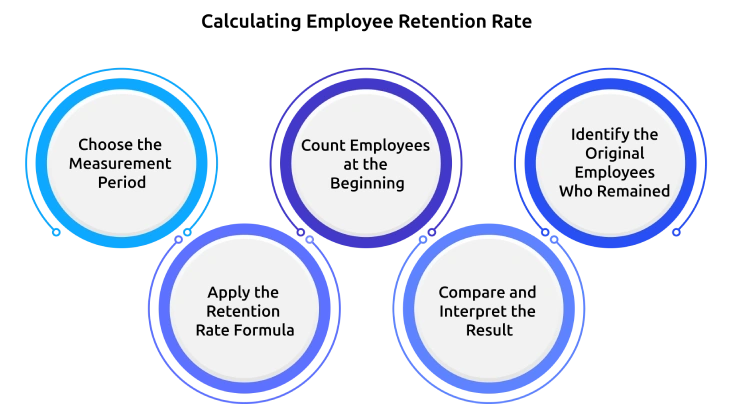
1. Choose the Measurement Period
Decide whether you want to measure retention monthly, quarterly, or annually. Use consistent periods when comparing results over time.
2. Count Employees at the Beginning
Record the number of employees working for your organization on the first day of the selected period. This becomes your starting employee count.
3. Identify the Original Employees Who Remained
At the end of the period, count how many employees from the original group are still employed. Exclude employees who joined after the period began.
4. Apply the Retention Rate Formula
Divide the number of original employees who stayed by the number of employees at the beginning. Multiply the result by 100 to get your retention percentage.
5. Compare and Interpret the Result
Compare the rate with previous periods and break it down by department, location, manager, tenure, or other relevant groups. This can reveal where retention is strong and where employee departures are concentrated.
What is a Good Employee Retention Rate?
There is no single retention rate that qualifies as “good” for every organization, as it varies widely based on industry, job type, company size, and workforce structure. As a general benchmark, an annual employee retention rate of around 80%-90% is typically considered healthy across many industries, while rates above 90% often indicate strong workforce stability.
However, benchmarks alone are not enough. The most important factor is how your retention changes over time within your own organization. Comparing retention across periods and within specific teams or roles helps you understand whether workforce stability is improving or declining, even if the overall percentage looks acceptable.
Employee Retention Metrics: What to Measure
A single retention rate can tell you whether employees are staying, but it cannot explain where retention problems occur or what may be driving them. Tracking multiple employee retention metrics gives you a clearer view of turnover patterns, workforce stability, employee experience, and areas that need attention. Leading HR resources commonly recommend combining overall retention with turnover, tenure, satisfaction, and segmented workforce metrics.
Here are the key metrics to track:
- Employee Retention Rate: Measures the percentage of employees who remain with your organization during a specific period. It gives you a baseline view of workforce stability.
- Employee Turnover Rate: Shows the percentage of employees who leave during a given period. Compare it with the retention rate to see whether employee departures are increasing or declining.
- Voluntary Turnover Rate: Tracks employees who choose to leave the organization. A rising rate can signal concerns around compensation, workload, management, career growth, or workplace experience.
- Regrettable Turnover Rate: Measures the loss of high-performing, high-potential, or otherwise critical employees. This helps you focus retention efforts on talent that has a greater impact on business performance.
- New-Hire Retention Rate: Shows how many new employees remain after a defined period, such as 30, 60, 90 days, or one year. A low rate can point to gaps in hiring, onboarding, role expectations, or early employee support.
- Average Employee Tenure: Measures the average length of time employees stay with your organization. Shortening tenure may indicate emerging retention or employee experience issues.
- Employee Satisfaction or Engagement Score: Tracks how employees feel about their work and workplace. Comparing these scores with retention patterns can help you identify relationships between employee experience and turnover.
Not sure where employee retention starts to decline?
Use Time Champ to uncover workforce patterns and spot emerging retention risks early.
How to Measure Employee Retention In 5 Steps
Measuring retention requires more than calculating a single percentage. Follow a structured process to identify retention patterns, uncover workforce risks, and improve employee stability.
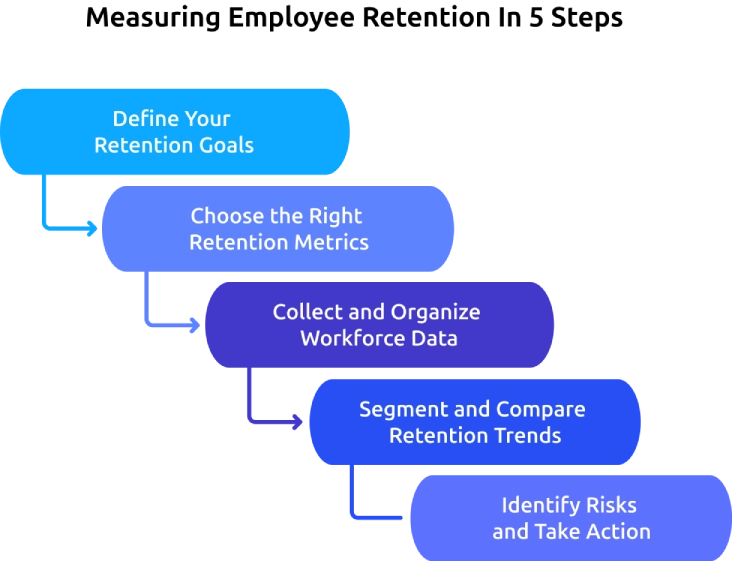
1. Define Your Retention Goals
Start by deciding what you want to achieve through retention measurement. You may want to reduce voluntary turnover, improve first-year retention, or retain employees in critical roles. Clear goals help you select relevant metrics and focus on analysis.
2. Choose the Right Retention Metrics
Select metrics that match your retention goals. Track measures such as retention rate, voluntary turnover, new-hire retention, employee tenure, and regrettable turnover. Using multiple metrics gives you a broader view of workforce stability.
3. Collect and Organize Workforce Data
Gather employee data from reliable sources such as HR records, attendance systems, surveys, performance reports, and exit interviews. Keep the information consistent and organize it by relevant time periods, employee groups, and roles.
4. Segment and Compare Retention Trends
Break retention data down by department, role, manager, location, tenure, or other relevant groups. Compare the results across periods to identify teams with declining retention or groups experiencing higher turnover.
5. Identify Risks and Take Action
Look for patterns that may contribute to employee departures, such as excessive workloads, frequent absenteeism, low engagement, or limited growth opportunities. Use these insights to address issues and monitor whether retention improves over time.

Did You Know?
Gallup found that 42% of employees who voluntarily left said their organization or manager could have done something to prevent their departure. This shows why identifying retention risks early and acting on them matters.
How Time Champ Helps to Measure the Metrics That Predict Retention
Retention problems often show up through changes in workload, productivity, attendance, and work patterns before an employee decides to leave. Time Champ is a smart employee monitoring software with built-in workforce analytics features that bring these workforce signals together, helping you spot early risks, understand team patterns, and take action before they affect retention.
Here are key features of Time Champ that help you measure and understand the metrics that influence employee retention:
- Attrition Risk Indicators: Identifies early signs of disengagement and potential attrition risks, helping you address workforce concerns before they lead to employee departures.
- Workload & Burnout Insights: Spots workload imbalances, extended work hours, reduced focus, and other patterns that may signal fatigue or burnout. This helps you create healthier workloads and support employee well-being.
- Productivity Trend Analysis: Tracks productivity changes over time and identifies slowdowns or performance shifts. These trends can help you investigate potential workforce issues that may affect employee engagement and retention.
- Accurate Time Tracking: Captures working hours across tasks and activities to understand how employees spend their time. This gives you clearer visibility into workload patterns and work-hour trends.
- Attendance & Shift Insights: Analyzes attendance patterns and shift data across remote and hybrid teams. Consistent visibility can help you identify changes in workforce reliability and emerging attendance concerns.
- Team Performance Comparisons: Compares productive hours and efficiency trends across teams to spot declining performance and potential workload gaps early. This helps you address issues before they affect team stability.
- Detailed Workforce Reports: Brings productivity, attendance, activity, and performance information into detailed reports. Use these insights to compare retention-related workforce patterns and make informed workforce decisions.
Struggling to spot workforce patterns that may impact retention?
Use Time Champ to track workload, productivity, attendance, and workforce trends in one place.
Conclusion
Employee retention gives you a clear view of workforce stability and the factors influencing employee departures. Tracking employee retention metrics helps you spot trends, compare teams, and identify areas that need attention. Start by calculating your retention rate, then monitor turnover, tenure, new-hire retention, and other relevant measures. Review these metrics regularly and segment results by role, team, or location to uncover meaningful patterns. Use these insights to address workload issues, improve employee experience, and strengthen workforce stability. Take action on the patterns you find, measure the results, and keep refining your retention strategy over time.

Anjali

Table of Content
 What is Employee Retention?
- What is the Employee Retention Rate Formula?
- Employee Retention Metrics: What to Measure
- How to Measure Employee Retention In 5 Steps
- How Time Champ Helps to Measure the Metrics That Predict Retention
- Conclusion
Related Blogs

Learn what employee retention is, why it matters, and discover proven strategies to retain top talent, reduce turnover, and build a more engaged workforce.
Guna Lakshmi | Jul 22, 2026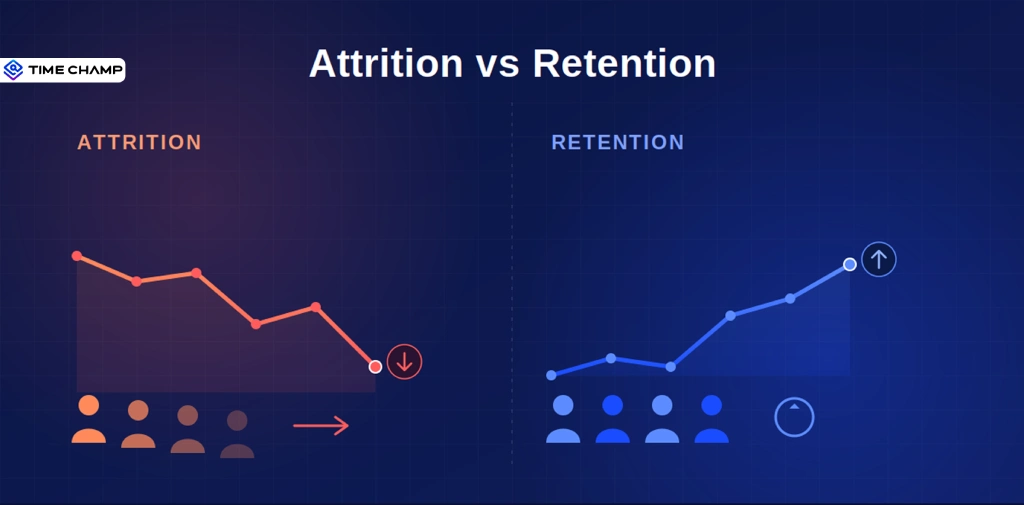
Understand attrition vs retention with simple definitions, formulas, key differences, and why a low attrition rate doesn't always indicate strong retention.
Jahnavi Pulluri | Sep 17, 2026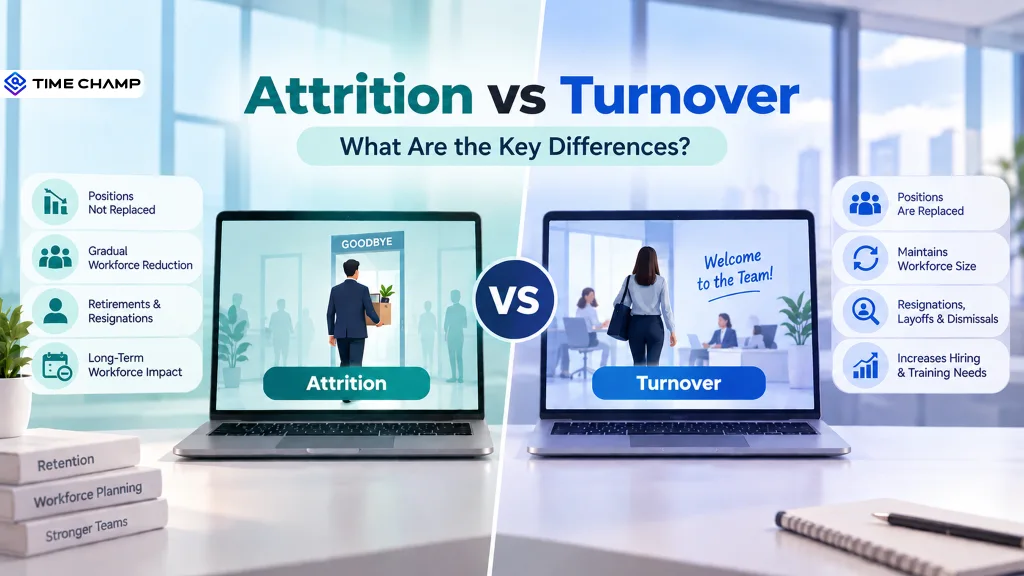
Understand attrition vs turnover, learn key differences, types, and rate calculations, and discover how workforce insights can help reduce employee loss.
Anjali | Sep 17, 2026
Explore how employee engagement impacts productivity with real data insights, trends, and what teams should focus on to improve performance.
Thasleem Shaik | May 06, 2026
Learn what employee satisfaction is, its benefits, the 7 key factors that drive it, and proven ways to measure and improve it at your workplace effectively.
Sai Keerthi Uppala | Jul 29, 2026
Learn workforce intelligence's role in employee experience & retention, how it redefines engagement, and key strategies to reduce turnover effectively.
Chethana | Feb 11, 2026


 4.7/5 avg.
Ready to Manage Your Workforce Smarter?
Join our family of 1500+ companies using smart insights to redefine workforces!

Free Trial
No Credit Card Required