BPO Benchmarking: KPIs, Process & 2026 Standards Overview
Learn BPO benchmarking with 12 benchmarks, 2026 industry standards, a 7-step process, and mistakes that skew comparisons for better business decisions.

How do you know if your BPO team is actually doing well? Your reports may show good numbers, but those numbers don't mean much unless you compare them with others in the industry. For example, is your response time faster than average? Is your customer satisfaction score competitive? Are your costs in line with similar BPO operations? These are the questions BPO benchmarking helps answer.
In this blog, you'll learn what BPO benchmarking is, the most important KPIs to track, a simple 7-step benchmarking process, the latest 2026 industry standards, and the common mistakes to avoid when comparing performance.
What Is BPO Benchmarking?
BPO benchmarking is the process of measuring and comparing a business process outsourcing (BPO) company's performance, costs, and service quality against industry standards, competitors, or top-performing organizations. It helps businesses identify performance gaps, set realistic goals, and improve operational efficiency using data-driven insights.
Types of Benchmarking
Every type of BPO benchmarking has a different purpose. Picking the right one helps you understand your performance and find the areas that need improvement.
| Type | What You Compare Against | Question It Answers | Best For |
|---|---|---|---|
| Internal Benchmarking | Your own teams, locations, departments, or time periods | Which team or process performs best, and what can others learn from it? | Companies with multiple teams, sites, or business units |
| Competitive Benchmarking | Similar BPO providers or direct competitors | How do we compare with other vendors competing for the same clients? | Improving market position and winning more contracts |
| Industry Benchmarking | Industry averages, reports, and recognized standards | Are our KPIs above or below the industry average? | Businesses benchmarking for the first time |
| Process Benchmarking | Best practices from leading organizations, even outside the BPO industry | How can we improve specific processes like onboarding, quality assurance, or workforce planning? | Organizations focused on continuous improvement |
12 BPO Performance Benchmarks to Track (With Industry Standards)
The best BPO teams focus on the metrics that directly affect customer experience, operational efficiency, and business costs. The 12 benchmarks below are the ones most commonly used to measure BPO performance and compare it with industry standards.
| Benchmark | What It Measures | 2026 Industry Standard | World-Class Performance |
|---|---|---|---|
| First Call Resolution (FCR) | Percentage of customer issues resolved on the first contact | 70% | 80% or higher |
| Average Handle Time (AHT) | Average time spent on talk, hold, and after-call work | ~10 minutes (varies by industry) | Depends on the line of business (LOB) |
| Customer Satisfaction (CSAT) | Customer satisfaction after an interaction | 78% | 85% or higher |
| Service Level | Percentage of calls answered within the target time | 80% of calls answered within 20 seconds | Meets or exceeds the contract SLA |
| Call Abandon Rate | Percentage of callers who disconnect before reaching an agent | 6% | Lower than the industry average |
| Occupancy Rate | Percentage of logged-in time agents spend handling customer interactions | 75–85% | Stays within the optimal range (not above 85%) |
| Call Transfer Rate | Percentage of calls transferred to another agent or supervisor | 19% | Lower through better routing and training |
| Agent Attrition Rate | Percentage of agents leaving the organization each year | 20% or lower (ideal target) | Maintains low turnover despite industry challenges |
| Shrinkage | Paid time when agents are unavailable for customer work | Based on your operational baseline | Reduces consistently over time |
| Schedule Adherence | How closely agents follow their assigned schedules | Based on your operational target | Consistently high across all teams |
| Cost per Contact | Total cost of handling a customer interaction | Varies by channel and location | Lower than the client's alternative cost |
| Quality Assurance (QA) Score | Internal evaluation of service quality and compliance | Organization's quality target | Consistently high and improving |
The industry standards above are based on widely used call center benchmarks and should be used as a guide, not a fixed target. The right benchmark depends on your industry, service channel, customer expectations, and the type of support you provide.
It's also important not to judge performance using a single metric. A high occupancy rate may seem positive, but consistently pushing it above 85% can lead to agent burnout and higher attrition. Likewise, reducing Average Handle Time (AHT) isn't always a win if it results in lower First Call Resolution (FCR) or poorer Quality Assurance (QA) scores. The best BPO teams review these benchmarks together to get a complete and accurate picture of performance.
Still Guessing What's Holding Your BPO Back?
Get clear insights into productivity, team performance, and workforce efficiency to work smarter
How to Benchmark Your BPO in 7 Steps
Benchmarking isn't something you do once and forget. To get useful insights, you need a clear process that uses consistent data and realistic comparisons. Follow these seven steps to measure your BPO's performance.
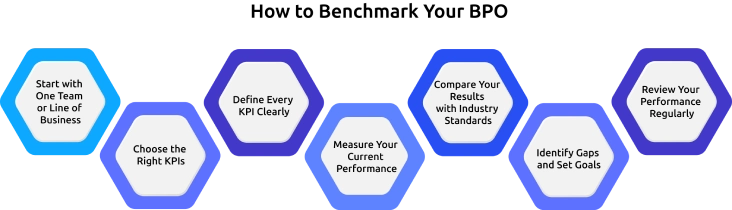
Step 1: Start with One Team or Line of Business
Don't try to benchmark your entire operation at once. Instead, focus on one team or line of business (LOB). Since every team has different goals, customers, and workloads, comparing them together can give misleading results. If you're unsure where to begin, start with your largest client or the team that needs the most attention.
Step 2: Choose the Right KPIs
Track the metrics that matter most to your business and your client. You should also include at least one workforce metric, such as occupancy or attrition, to understand what's affecting overall performance.
Step 3: Define Every KPI Clearly
Make sure everyone measures each KPI the same way. For example, decide whether AHT includes after-call work or whether attrition includes internal transfers. Clear definitions help you compare data accurately and avoid confusion later.
Step 4: Measure Your Current Performance
Collect at least 90 days of performance data before comparing your results with industry standards. A three-month baseline gives you a more reliable picture by smoothing seasonal changes, unexpected spikes, and one-off events.
Step 5: Compare Your Results with Industry Standards
Now compare your performance with trusted industry benchmarks, competitor data (when available), or recognized benchmarking reports. The goal isn't to match every number but to understand where you're ahead, where you're behind, and where you have the biggest opportunities to improve.
Step 6: Identify Gaps and Set Goals
Review the differences between your current performance and the benchmark. Focus first on the areas that have the biggest impact on customer experience and business outcomes. Then set realistic improvement goals, assign ownership, and create a timeline to measure progress.
Step 7: Review Your Performance Regularly
Review your KPIs every month and update your benchmark comparisons every quarter. Regular reviews help you find trends early, improve performance continuously, and stay prepared for client reviews and contract renewals.
Which Mistakes Make BPO Benchmarking Useless?
BPO benchmarking only works when you're comparing the right data in the right way. Avoid these common mistakes to get meaningful and actionable insights.
1. Comparing Different Teams Together
Using one average for different teams or lines of business can hide real performance issues. Since every team has different goals and workloads, always benchmark similar teams separately.
2. Using Inconsistent KPI Definitions
If teams calculate KPIs differently, the comparison won't be accurate. Define every metric clearly before collecting data, so everyone measures performance the same way.
3. Focusing on a Single KPI
No KPI should be viewed in isolation. For example, reducing AHT may lower CSAT or FCR, while pushing occupancy too high can increase agent burnout and attrition. Always review related metrics together.
4. Benchmarking Only Once
Benchmarking isn't a one-time exercise. Review your performance regularly to track progress, find new trends, and keep your benchmarks relevant as your business evolves.
How Time Champ Supports BPO Benchmarking
Accurate benchmarking starts with accurate workforce data. While your contact center software measures customer-facing KPIs like First Call Resolution (FCR) and Service Level, Time Champ is an employee monitoring software that helps you understand what drives those numbers by giving you complete visibility into your team's productivity, attendance, and work patterns.
Here's how Time Champ helps improve BPO benchmarking:
- Improve Schedule Adherence: Automatically track attendance, shifts, breaks, and overtime to quickly find attendance issues before they affect SLAs.
- Increase Workforce Productivity: Monitor productive, idle, and non-productive time to identify bottlenecks and improve agent efficiency.
- Benchmark Teams with Confidence: Compare agents, teams, shifts, and locations to identify top performers and find performance gaps.
- Strengthen Quality Management: Review recorded interactions and performance data to support fair QA evaluations and targeted coaching.
- Reduce Attrition with Early Insights: Detect signs of disengagement, balance workloads, and address potential issues before they lead to higher turnover.
- Take Action in Real Time: Receive instant alerts for productivity drops, late logins, excessive idle time, and schedule deviations so you can respond immediately.
Don't Just Benchmark, Build Better!
See what drives performance, and improve it with confidence
Conclusion
BPO benchmarking helps you see how well your business is performing compared to industry standards. Tracking the right KPIs, reviewing your performance regularly, and addressing gaps can help improve customer service, team productivity, and overall business results. The key is to benchmark consistently and use the insights to make better decisions over time.

Jahnavi Pulluri

Table of Content
 What Is BPO Benchmarking?
- Types of Benchmarking
- 12 BPO Performance Benchmarks to Track (With Industry Standards)
- How to Benchmark Your BPO in 7 Steps
- Which Mistakes Make BPO Benchmarking Useless?
- How Time Champ Supports BPO Benchmarking
- Conclusion

Related Blogs
Compare the best online outsourcing websites for 2026, including real fees, hiring tips, platform features, and proven ways to manage freelancers easily.
Jahnavi Pulluri | Aug 13, 2026
KPO (Knowledge Process Outsourcing) explained: what it is, real examples, the services involved, and how it cuts costs while adding expert skills. Start here.
Tarun Kumar Reddy | May 16, 2024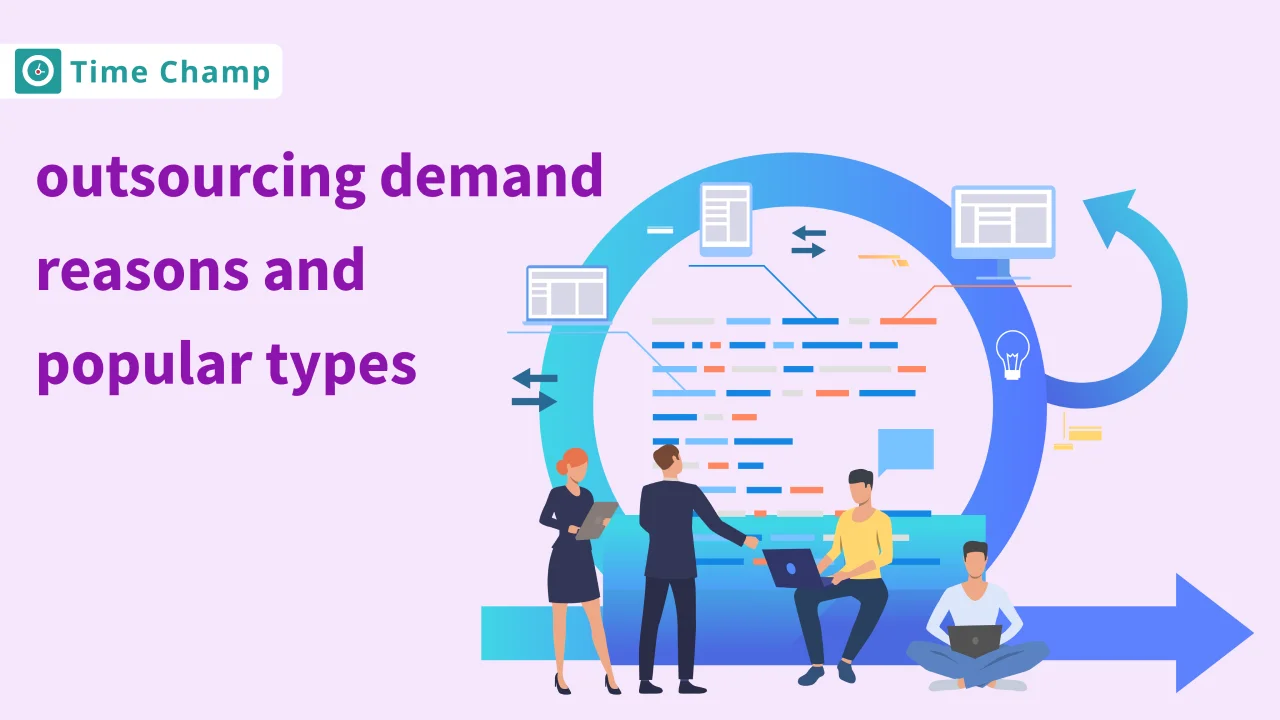
Discover the essence of outsourcing, you will get to know its various types and the driving factors behind its high demand
Shabana Shaik | May 17, 2024
In-house vs outsourcing explained with key differences, pros, cons, costs, and practical tips to help you choose the best approach for your organization.
Anjali | Jul 02, 2026
The future of outsourcing is changing with AI, nearshoring, and outcome-based models. Explore the latest trends, predictions, and what you should expect.
Thasleem Shaik | July 31, 2026
Find out the difference between short-term and long-term planning. Learn how businesses set short-term goals and lay the foundation for long-term success in simple terms.
Jahnavi Pulluri | May 24, 2024


 4.7/5 avg.
Ready to Manage Your Workforce Smarter?
Join our family of 1500+ companies using smart insights to redefine workforces!

Free Trial
No Credit Card Required