The 1-3-5 Rule Explained: Simple Steps & Real-Life Examples
Learn what the 1-3-5 rule is, how to use it daily, real role-based examples, task sizing method, common mistakes, fixes, and productivity improvement tips.

Imagine staring at a list of 20 tasks, all looking equally urgent, so you start with the easy ones. At the end of the day, you’ve crossed eleven things and feel productive, but the one important task is still untouched.
If that sounds like a typical Tuesday, the 1-3-5 rule was made for you. It’s a simple planning method that solves this exact problem by helping you to decide what actually matters before the day takes over.
In this blog, I'll explain what the 1-3-5 rule is, how it works, provide real-world examples, and show you how to use it daily.
What is the 1-3-5 Rule?
The 1-3-5 rule (also called the 135 rule) is a simple daily productivity and time-management method in which you plan your day by choosing one big task, three medium tasks, and five small tasks to complete. This creates a structured to-do list of nine tasks in total.
It is designed to improve focus and productivity by helping you prioritize important work, avoid overwhelm, and manage your time more effectively.
How Does the 1-3-5 Rule Work?
The 1-3-5 rule works by organizing your day into three task levels before you begin.
Here’s the simple breakdown:
| Task Tier | How Many | Rough Size | Examples |
|---|---|---|---|
| Big | 1 | A few hours of focused work | Write a proposal, complete a report |
| Medium | 3 | 30–90 minutes each | Review a draft, prepare a meeting, fix a bug |
| Small | 5 | 5–20 minutes each | Reply to emails, book a call, quick update |
The big task should be done first, ideally early in the day when focus is highest. Medium tasks fill your core working hours, while small tasks fit into short gaps between meetings or breaks.
Any new work that comes up during the day is pushed to tomorrow’s list, unless it’s truly urgent and requires a swap.
Why Does The 1-3-5 Rule Work So Well?
The 1-3-5 rule works because it reduces decision fatigue and aligns with how the brain actually handles work.
Here are a few reasons it works so effectively:
1. It Fits Your Working Capacity
A structured list of nine tasks keeps your day within a manageable limit. It’s enough to feel productive without becoming overwhelming. Instead of juggling too many items, you stay focused on a realistic amount of work that you can actually complete.
2. It Reduces Context Switching
Switching between too many different tasks breaks focus and slows you down. When your day is already clearly planned, you spend less time jumping from one thing to another and more time actually finishing work. This helps you maintain deeper focus throughout the day.
3. It Creates a Sense of Progress
A clearly defined set of tasks makes it easier to see what you’ve accomplished. As you complete each item, you get a steady sense of progress instead of feeling like your list is never-ending. This keeps motivation higher during the day.
4. It Forces Real Prioritization
With only one big task allowed, you’re pushed to choose what truly matters most. This naturally removes low-value work from your main focus and ensures that your energy goes toward something meaningful.
A better plan starts with better visibility
Track tasks, stay focused, and get more done every day.
1-3-5 Rule Examples for Different Roles
The best way to understand the 1-3-5 rule is to see it in action across real workdays. The task sizes are relative, what counts as a “big task” for a developer will look very different from a marketer or manager. Here are a few examples you can adapt to your own role.
| Role | 1 Big Task | 3 Medium Tasks | 5 Small Tasks |
|---|---|---|---|
| Manager | Finalize the quarterly team plan | Prepare 1:1s, review a report, and approve the budget | Emails, approvals, quick check-ins |
| Developer | Build a new feature module | Code review, fix bugs, update documentation | Standup updates, tickets, small merges, messages |
| Marketer | Draft campaign brief | Edit blog post, plan content calendar, review ad copy | Emails, scheduling posts, quick edits, replies |
| Support Lead | Rewrite escalation playbook | Coach agents, audit tickets, update macros | Respond to queries, tag tickets, and follow-ups |
Notice the pattern across every role, one anchor task drives the day, a few medium tasks keep progress moving, and small tasks fill in the gaps instead of taking over your time.
How To Use The 1-3-5 Rule (A Simple Daily Routine)
The 1-3-5 rule is most effective when it becomes part of your daily planning habit. Instead of creating a to-do list every morning, spend a few minutes at the end of your workday deciding what tomorrow will look like. This gives you a clear plan and lets you start working immediately instead of figuring out where to begin.
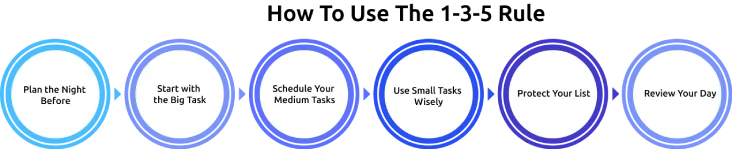
Follow these simple steps:
1. Plan the Night Before
Choose one big task, three medium tasks, and five small tasks based on your priorities. Write them down in the order you want to complete them.
2. Start with the Big Task
Tackle your most important work first while your energy and focus are at their highest. Avoid checking emails or completing small tasks before you've made progress on them.
3. Schedule Your Medium Tasks
Fit these into your main work blocks throughout the day. They should support your larger goals without overwhelming your schedule.
4. Use Small Tasks Wisely
Complete quick tasks during natural breaks, such as between meetings or while waiting for a response, instead of letting them interrupt focused work.
5. Protect Your List
New tasks will always appear, but unless something is genuinely urgent, add them to tomorrow's list instead of reshuffling today's priorities.
6. Review Your Day
Spend a few minutes checking off completed tasks, noting what needs to be carried over, and planning the next day's 1-3-5 list.
Common 1-3-5 Rule Mistakes (and How to Fix Them)
The 1-3-5 rule is easy to follow, but it takes a little practice to get right. Many people give up on the method because they make a few common planning mistakes. Fortunately, these are easy to identify and fix.
| Mistake | Why it Backfires | Easy Fix |
|---|---|---|
| Choosing two big tasks | Both compete for your time and attention, making it harder to finish either one. | Pick a single anchor task and move the other to tomorrow's list. |
| Underestimating task size | Your schedule becomes overloaded, leaving unfinished work at the end of the day. | Review how long tasks actually take and adjust your planning over time. |
| Being too rigid | Unexpected meetings or urgent requests throw off the entire plan. | Leave some buffer time or treat one small task as a flexible slot. |
| Prioritizing urgency over importance | You stay busy with reactive work while meaningful tasks keep getting postponed. | Choose your big task based on impact, not whichever request arrived first. |
| Misclassifying small tasks | "Quick" tasks often expand and consume much more time than expected. | Reclassify recurring long tasks as medium tasks and plan accordingly. |
How Time Champ Supports The 1-3-5 Rule
The 1-3-5 rule works best when you can accurately estimate how much time your tasks actually require. That's where Time Champ comes in.
Time Champ is an employee monitoring software that gives you visibility into how your time is spent, making it easier to plan realistic and achievable daily priorities.
Here's how it supports the 1-3-5 method:
- More Accurate Task Planning: View the actual time spent on tasks so you can distinguish between a true big task and a project that's too large for a single day.
- Weekly Productivity Insights: Compare your planned priorities with where your time actually went, helping you refine your task sizing and improve future planning.
- Better Team Alignment: You can understand workloads, identify bottlenecks, and reduce unnecessary interruptions while team members stay focused on their most important work.
- Employee-First Visibility: Self-service dashboards allow employees to track their own productivity and progress, promoting transparency and accountability.
- Enterprise-Grade Security: Built with compliance standards such as GDPR, ISO 27001, HIPAA, and SOC 2, ensuring productivity insights are backed by strong data protection practices.
The 1-3-5 rule gives you a simple framework for planning your day, while Time Champ provides the visibility needed to make that plan realistic. Together, they help you prioritize better, stay focused, and consistently complete the work that matters most.
Make the 1-3-5 rule work every day with Time Champ
Track actual task time, plan realistic priorities, and finish the work that matters most
Conclusion
The 1-3-5 rule proves that better productivity is about focusing on what matters most. A daily plan with one big, three medium, and five small priorities is easier to manage and more likely to get completed. This simple framework can help you reduce overwhelm, stay focused, and make consistent progress. Start using the 1-3-5 rule today, and you'll spend less time managing your to-do list and more time completing meaningful work.

Jahnavi Pulluri

Table of Content
 What is the 1-3-5 Rule?
- How Does the 1-3-5 Rule Work?
- Why Does The 1-3-5 Rule Work So Well?
- 1-3-5 Rule Examples for Different Roles
- How To Use The 1-3-5 Rule (A Simple Daily Routine)
- Common 1-3-5 Rule Mistakes (and How to Fix Them)
- How Time Champ Supports The 1-3-5 Rule
- Conclusion
Related Blogs

Learn what time management skills are, compare key skills, explore examples with stats, and see how they differ from time management techniques.
Thasleem Shaik | Apr 08, 2026
Explore the essentials of project time management, its importance, best processes and top tips to meet deadlines without fail and boost workforce productivity.
Shabana Shaik | Oct 10, 2024
Still believe multitasking saves time? Discover 10+ common time management myths that are holding you back and learn what actually works.
Guna Lakshmi | Jun 03, 2026
Learn how to build a time management plan that aligns roles, goals, and schedules. A practical, step-by-step guide to lead your team with clarity.
Thasleem Shaik | May 25, 2026
Compare the 10 best time management apps for 2026, with free plans, pricing, and what each tool is best for, so you can pick the right one for your team fast.
Guna Lakshmi | May 26, 2026
Setting the right time management goals can improve focus, organize priorities, and help you manage work with more clarity and consistency every day.
Thasleem Shaik | May 27, 2026


 4.7/5 avg.
Ready to Manage Your Workforce Smarter?
Join our family of 1500+ companies using smart insights to redefine workforces!

Free Trial
No Credit Card Required