Many workplaces face problems when there is no clear flow of communication between people, teams, and leadership. Teams misunderstand messages, delay decisions, and work without a clear understanding of goals or expectations.
This is why effective communication within an organization matters. Organizational communication refers to how people exchange, interpret, and act on information within an organization. It influences how teams coordinate, how leaders communicate decisions, and how work moves forward daily. In this blog, you will learn what organizational communication is, why it matters in the workplace, real examples of how it works, its advantages and disadvantages, and the difference between it and business communication.
Through this blog, you will have a clear understanding of how to improve communication flow, teamwork, reduce confusion, and help in making better decisions within your organization.
What Is Organizational Communication?
Organizational communication is the way people in an organization share information, understand messages, and take action based on them. It covers how employees, teams, and leaders communicate in terms of conversations, written messages, meetings, and digital tools to ensure that work is moving in the right direction.
In its simplest form, organizational communication focuses on how information flows across various levels and functions of an organization. It includes both formal and informal communication, including policies, updates, and instructions, and day-to-day discussions and feedback. These interactions guide teams in planning, assigning, and completing work.
Organizational communication also establishes the structure of message flow between individuals and teams. It guides the way individuals clarify tasks, align on expectations, and respond to changes. Communication with a clear process helps everyone stay connected and aware of what is going on in the organization.
Why Is Organizational Communication Important in the Workplace?
Organizational communication is crucial because it directly affects how employees complete their work every day. The Project Management Institute reports that poor communication contributes to the failure of more than half of projects, showing how easily unclear messages can disrupt plans, timelines, and team coordination. Here’s how otganizational communication impacts your workplace every day:
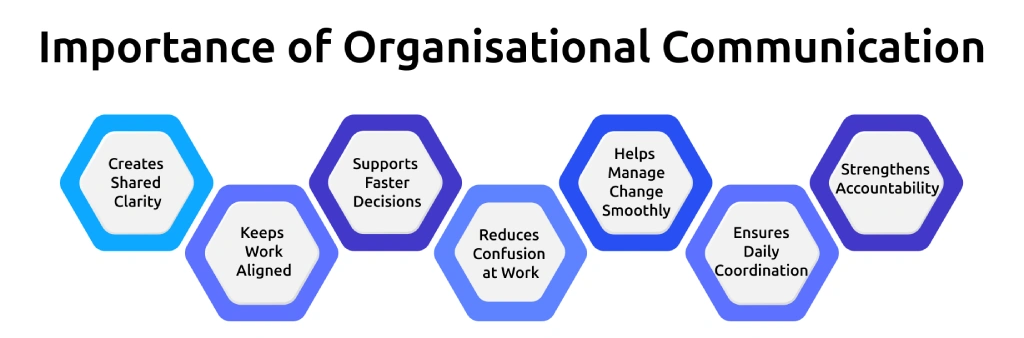
- Creates Shared Clarity: Clear communication ensures everyone understands tasks, priorities, and expectations.
- Keeps Work Aligned: Organizational communication helps teams move in the same direction.
- Supports Faster Decisions: When information reaches the right people at the right time, decisions happen faster.
- Reduces Confusion at Work: You can prevent mixed messages by following clear communication paths across teams and leadership.
- Helps Manage Change Smoothly: Updates and shifts in work are easier to handle when communication stays clear.
- Ensures Daily Coordination: Clear communication keeps you and your team aligned on meetings, updates, and tasks every day.
- Strengthens Accountability: Structured communication makes responsibilities clear and helps you stay accountable.
What Are Some Examples of Organizational Communication?
Organizational communication takes many forms in the workplace, each serving a different purpose. From sharing updates to giving feedback, here are some common examples you see in everyday work.
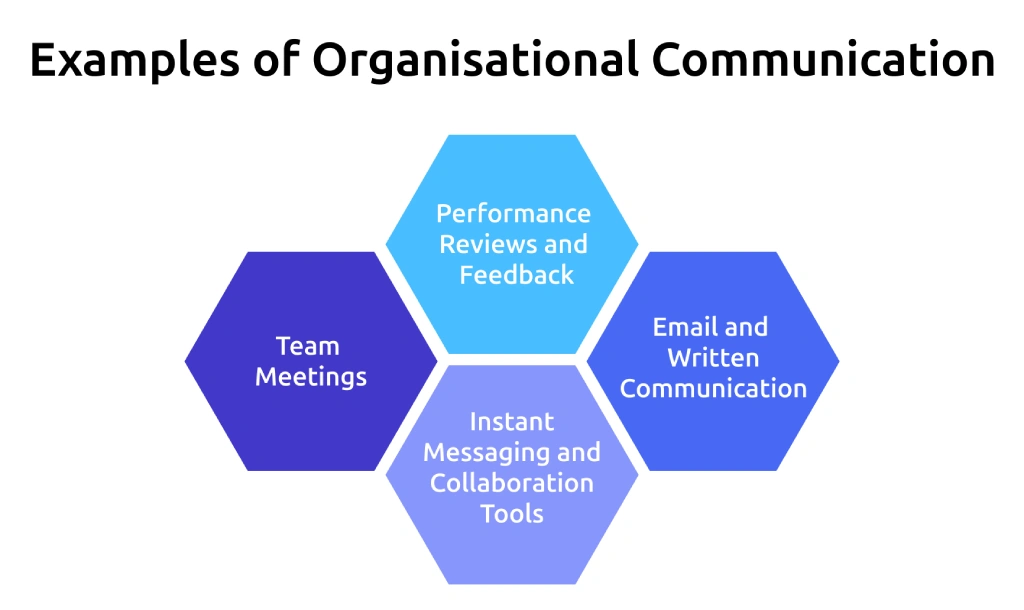
1. Team Meetings
Team meetings are a common form of organizational communication during which employees and leaders gather to provide updates, talk about challenges, and discuss strategies for the next steps. These meetings keep everyone updated and focused on team objectives and priorities.
2. Email and Written Communication
Emails, reports, and memos allow you to communicate significant information, instructions, and updates across different levels of the organization. Written communication gives you a clear reference for making decisions and ensures the right people receive your messages.
3. Instant Messaging and Collaboration Tools
Messaging and collaboration tools such as Slack, Microsoft Teams, or internal chat platforms can help you communicate quickly and effectively. They facilitate real-time collaboration, enable immediate clarifications, and keep everyone in touch even when teams are working remotely or in various locations.
4. Performance Reviews and Feedback
Regular performance reviews and feedback allow you to exchange constructive information regarding work, expectations, and areas of improvement. Such conversations help ensure accountability, enhance performance, and clarify goals between employees and managers.
Struggling to keep your team coordinated and avoid miscommunication?
Enhance clarity, coordination, and teamwork effortlessly with Time Champ!
What Are the Pros and Cons of Organizational Communication?
Organizational communication plays a key role in how employees carry out tasks and handle responsibilities in the workplace. It supports clarity, coordination, and accountability, but weak communication may cause confusion and delays. Below, you can clearly see the pros and cons of organizational communication.
Pros of Organizational Communication
- Creates Clarity at Work: Clear communication helps you understand tasks, priorities, and expectations, so employees know what to do, how to do it, and when to complete work without confusion.
- Keeps Teams Aligned: Organizational communication ensures teams move toward shared goals, reducing silos and helping everyone stay focused on the same objectives and outcomes.
- Improves Coordination: Consistent communication connects people, tasks, and updates, allowing you to plan work better, track progress, and manage daily activities without missing important details.
- Supports Faster Decisions: When accurate information reaches the right people on time, you make quicker decisions and respond to issues, changes, and opportunities without unnecessary delays.
- Builds Accountability: Structured communication defines roles and responsibilities clearly, helping individuals take ownership of their work and understand how their actions affect overall outcomes.
Cons of Organizational Communication
- Leads to Confusion When Unclear: Unclear or inconsistent messages cause misunderstandings, making it harder for you and your team to interpret information correctly and meet expectations.
- Causes Delays in Execution: Poor communication slows down work when information does not reach the right people on time, affecting planning, approvals, and task completion.
- Creates Information Overload: Too many messages, updates, or channels overwhelm employees, making it difficult for them to identify what information truly matters for daily work.
- Encourages Communication Gaps: Lack of regular updates and feedback weakens collaboration, which leads to misalignment between teams, managers, and employees.
- Increases Workplace Tension: Misunderstood or poorly delivered messages create frustration and conflict, affecting trust, teamwork, and workplace relationships.
How Does Organizational Communication Differ from Business Communication?
Organizational and business communication have different purposes. Organizational communication is about how people share information within the workplace. Business communication is about how the organization shares information with people or groups outside the company, like clients, customers, and partners. Here is the difference between them.
| Organizational Communication | Business Communication |
|---|---|
| Focuses on how information flows within the organization. | Focuses on how the organization communicates with external parties. |
| Supports daily coordination between employees, teams, and leaders. | Supports interactions with clients, partners, vendors, and customers. |
| Helps align teams on tasks, goals, and responsibilities. | Helps present ideas, services, and decisions to outside audiences. |
| Uses meetings, internal emails, chats, and feedback sessions. | Relies on proposals, presentations, emails, and formal reports. |
| Improves teamwork, clarity, and accountability in everyday work. | Builds stronger relationships, reputation, and business outcomes. |
| Plays a key role in guiding internal decisions and execution. | Helps to influence negotiations, branding, and external trust. |
Want to prevent confusion and make faster, smarter decisions at work?
Streamline your communication and improve collaboration across teams with Time Champ!
Conclusion
Organizational communication shapes how smoothly your workplace runs each day. When information flows clearly, you stay focused on shared goals, make better decisions, and work together with less confusion. By understanding how organizational communication works and where it can support or cause problems, you put yourself in a stronger position to improve teamwork, clarity, and accountability. Focusing on clear and consistent communication helps create a workplace where people understand each other better and work moves forward with confidence.

Run HR in One Place
Time, attendance, leaves, and payroll-ready reports unified.
Explore HR Management →