Performance conversations can either inspire growth or feel like a routine formality. The difference often comes down to how clearly and fairly employees are evaluated.
This guide explains employee evaluation, outlines how the process works, and introduces the main types of evaluation that organizations can use to recognize progress and support improvement.
What Is Employee Evaluation?
Employee evaluation is a structured assessment of an employee’s job performance, skills, results, and progress against defined expectations or goals. It gives you a clear way to review how well the employee is performing their role and identify strengths, development areas, and priorities for the next review period.
Employee evaluation is also commonly called performance evaluation, performance appraisal, or performance review, although the exact format and terminology can vary by workplace.
What Is the Employee Evaluation Process?
The employee evaluation process is a set of steps you follow to review your team’s performance, give clear feedback, and plan what comes next. Below are the common steps in the process, from setting expectations to planning future goals.
- Set Performance Standards: Define what good job performance looks like for each role before the review period starts. Use job descriptions, goals, and KPIs so your ratings are based on facts, not opinions.
- Share Your Expectations: Explain these standards to each employee at the start. This makes it clear how you will assess their work.
- Track Performance Throughout the Review Period: Collect information from your observations, productivity reports, project results, and team feedback. Regular notes help you avoid relying only on memory during the final review.
- Ask for a Self-assessment: Let each employee review their own work first. This helps you understand what they are proud of, where they face challenges, and how they see their performance.
- Compare Results with Expectations: Compare performance with the standards you set using a consistent rating scale. A well-designed employee evaluation form helps keep every review consistent and easy to compare.
- Hold the Evaluation Meeting: Discuss strengths, gaps, and the final rating using specific examples. Instead of saying “be more proactive,” explain what proactive work looks like in that role.
- Agree on Next Steps: Set goals, training plans, or corrective actions before the meeting ends. Add a follow-up date to track progress and make sure the evaluation leads to action.
What Are the Common Types of Employee Evaluation?
There is no single way to assess employee performance. The right approach depends on what you want to measure, who provides the feedback, and how often you review performance. Here are the common employee evaluation methods and what each one focuses on.
- Annual Performance Evaluation: A yearly review compares each employee’s performance with the goals set for the year. It provides a clear record for decisions about raises and promotions. Since it can rely heavily on past events, regular check-ins can make the review more accurate.
- Probationary Evaluation: A new hire is reviewed at set points during the probation period, usually at 30, 60, and 90 days. This helps assess whether the role is a good fit and where additional onboarding support may be needed.
- Supervisor Evaluation The direct supervisor assesses performance based on role expectations and observed results. A structured employee evaluation template helps keep ratings consistent across the team.
- Self-Evaluation: Employees review their own work before the formal evaluation. Comparing their view with the supervisor’s assessment can highlight differences, provide useful discussion points, and make the review more balanced.
- Peer Evaluation: Teammates provide feedback on areas such as communication, collaboration, and dependability. This can reveal aspects of work that may not be visible to the direct supervisor, especially in collaborative or cross-functional roles.
- 360-Degree Feedback: Feedback comes from supervisors, peers, direct reports, and sometimes customers. This approach provides a broader view of evaluating employee performance. Anonymous surveys can encourage more honest responses, although this method takes more time to manage.
- Goal-Based Evaluation: Specific and measurable goals are set at the beginning of the review period and assessed later based on the results. This approach works well for roles with clear targets, such as sales or delivery.
- Continuous Feedback: Short, regular check-ins replace one major review at the end of the year. Regular feedback keeps discussions timely, reduces surprises during performance evaluations, and helps you assess overall performance without giving too much weight to recent events.
Still relying on manual reviews to understand employee performance?
Try Time Champ to get clearer workforce insights and make informed decisions.
Employee Evaluation vs. Employee Performance Review: What's the Difference?
Employee evaluation and employee performance review often refer to the same overall process, and many workplaces use the terms interchangeably. The difference usually comes down to emphasis. An evaluation tends to focus on assessing and documenting performance, while a review often centers on the discussion, feedback, and goals that follow.
Here’s a simple comparison to make the distinction clear:
| Aspect | Employee Evaluation | Employee Performance Review |
|---|---|---|
| Main focus | Assesses performance against defined criteria, goals, and role expectations | Discusses performance, progress, feedback, and future goals |
| What it covers | Results, skills, behaviors, achievements, and development areas | Achievements, challenges, feedback, and goals for the next period |
| Typical format | Written assessment, rating, or employee evaluation form | Review meeting, discussion, and written feedback |
| Main purpose | Creates a clear record of employee performance and areas for development | Gives both sides a chance to discuss performance and agree on what comes next |
| Timing | Can happen annually, quarterly, during a probation period, or at other planned points | Usually takes place at a scheduled review period, although regular check-ins may also support it |
| Outcome | Performance assessment, ratings, development needs, and documented findings | Feedback, updated goals, development actions, and shared expectations |
What Are the Benefits of Employee Evaluation?
A well-planned evaluation does more than record a rating. It gives you a clearer view of performance, creates useful feedback, and helps turn review findings into practical decisions. Here are the main employee evaluation benefits to consider.
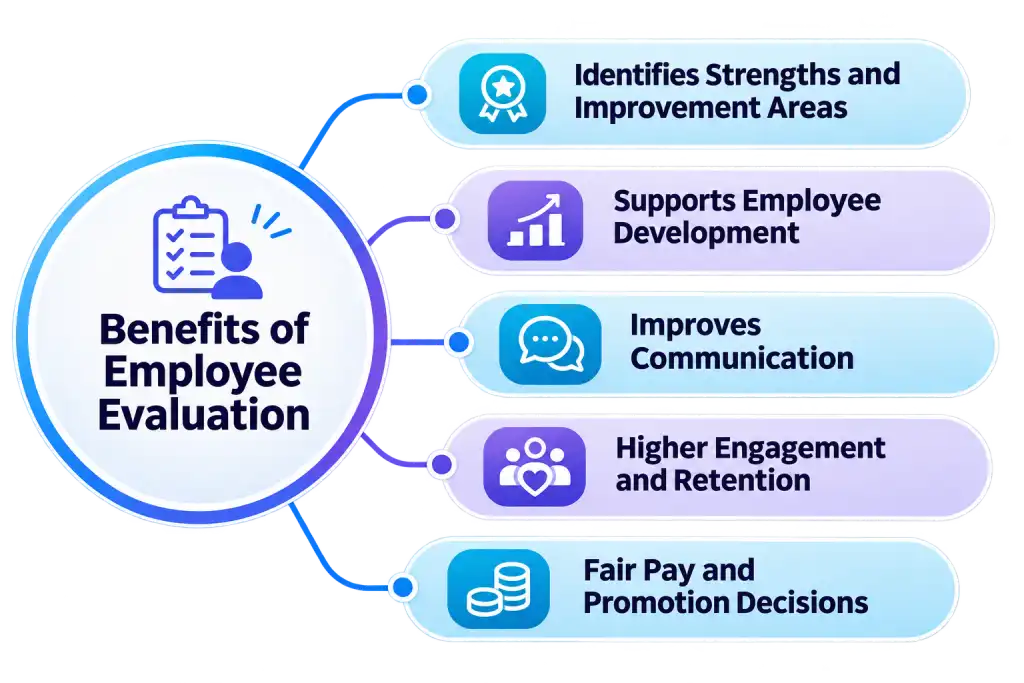
Identifies Strengths and Improvement Areas: A review shows what is going well and where performance needs attention. Clear feedback helps focus on the right areas instead of making broad assumptions.
Supports Employee Development: Evaluation results can show gaps in skills or knowledge that may require training, coaching, or other support. This connects review discussions with practical development plans.
Improves Communication: Regular evaluations create a clear opportunity to discuss achievements, challenges, expectations, and concerns. This makes performance conversations easier and more useful.
Higher Engagement and Retention: Gallup found that employees who strongly agree that they receive valuable feedback are five times as likely to be engaged and 48% less likely to be looking for another job. Useful feedback gives your team a reason to stay and can help you retain good hires.
Fair Pay and Promotion Decisions: Documented results give you clear facts to consider when making decisions about raises, bonuses, and promotions. This makes your decisions easier to explain and helps make them feel fairer to the team.

Decisions Backed by Data
Trends and team-level analytics that show what matters.
Explore Workforce Analytics →