Time Champ > Blog > Workforce Intelligence: Future of Work & Evolution (2026) > Content
Workforce Intelligence: Future of Work & Evolution (2026)
Discover why organizations use workforce intelligence, the shift to predictive intelligence, how it shapes future work, and key emerging trends.

Workforce intelligence is becoming essential as work is no longer limited to offices, fixed schedules or linear work processes. According to recent Gallup studies, less than 21% of employees globally claim to be engaged in the workplace, which means that most organizations operate without a clear understanding of employee performance. With your teams working across places, tools, and time zones, it is more complicated than ever to know how work happens. This is where workforce intelligence becomes significant.
Using workforce analytics, you will have insight into work patterns, bottlenecks, and team collaboration. You can make better decisions, manage workloads and empower employees without micromanaging. In this blog, you will find out what workforce intelligence is, why it is essential to your organization, and how it is transforming the future of work. I am also going to explain trends that will help you make teams efficient, engaged, and ready in 2026 and beyond.
Why Do Organizations Use Workforce Intelligence Today?
Measuring time, productivity or outputs in isolation limits effective decision-making in modern organizations. Workforce analytics brings all these signals together by connecting work patterns to results to make better, proactive workforce management.
- Operational Visibility Across Teams: Organizations use workforce intelligence to get a solid perspective of work across teams, shifts and sites. This visibility eliminates blind spots that are caused by unrelated tools and manual updates. This is what makes the team visible and allows making quick operational corrections when the workflow slows down or priorities shift.
- Data-Backed Performance Understanding: Workforce analytics is used to avoid subjective decisions using an integrated and data-rich approach. Businesses can determine team performance by monitoring productivity, concentration, and effort trends. Leaders use these insights to make evidence-based decisions to drive business improvement.
- Better Resource Utilization: Leaders use workforce analytics to identify where capacity is not used or overloaded. It helps businesses to manage workloads efficiently, before inefficiency can affect delivery time or quality. Businesses use these insights to maximize the utilization of the available resources and sustain team performance.
- Better and Confident Decision-Making: Real-time workforce insights are used to discover emerging trends as they occur and respond fast. Reacting to new trends quickly, which will help minimize operational friction and missed opportunities. Under this visibility, leaders can make proactive and confident decisions that ensure the team is on track with business goals.
- Scalability Without Process Overload: As organizations grow or introduce new work models, workforce analytics is used to ensure operational clarity without contributing any complexity. Businesses use this to stay operationally clear and stable despite changes in scale, structure and demand.
- Efforts and Business Outcomes Alignment: Workforce intelligence links day-to-day work trends with operational outcomes. This will help to know how effort can be converted into impact within teams and jobs. Knowing what actually drives results, leaders can optimize processes, focus on valuable work, and make performance geared towards the long-term business goals.
- Less Dependence on Assumptions and Manual Tracking: Workforce analytics is used to avoid manual tracking and assumptions, using objective, real-time data on work progress. Leaders use this knowledge to make realistic and consistent decisions regarding performance, capacity planning and responding to changes without having to work with fragmented or old information.
Struggling with scattered productivity data?
Experience clear, real-time workforce insights with Time Champ today!
Why Do Organizations Shift from Reactive Management to Predictive Intelligence?
Traditional reactive management tends to assume that one should respond to problems after they arise, which is inefficient and abandons opportunities. Strategic planning is replaced by firefighting due to decisions based on delayed reports or lagging indicators. Predictive intelligence changes the perspective to emphasize early trends and knowledge so that you can stay proactive and maximize team performance.
- Spot Early Signals Instead of Lagging Results: Reactive management acts only after things go wrong, which is a less effective and time-consuming process. Predictive intelligence uses early indicators, such as concentration patterns and workflow bottlenecks, which help you to solve problems before they get out of control.
- Reduce Firefighting Culture: Teams are always under urgency when you do not identify the problems in their initial stages. Predictive intelligence helps you identify risks at an early stage and take corrective measures. This will help you eliminate stress and build a more relaxed and proactive workplace environment.
- Improve Planning Accuracy: Assumption-based decisions can result in overstaffing or shortages. Predictive intelligence relies on past trends and current information, which will help you enhance workforce planning and allocation. This can help you allocate resources more efficiently, match capacity with demand and plan without any insecurities about guesswork or outdated reports.
- Maintain Consistency Across Teams and Workflows: Reactive strategies are based on personal preference, which may lead to misalignment and unjust expectations. Predictive intelligence helps you in standardizing decision-making by offering common and objective information across teams and leadership levels.
- Strategic Focus Over Tactical Guesswork: Predictive intelligence also helps you concentrate on significant initiatives by minimizing continuous firefighting. It helps you to simplify processes, enhance team productivity, and make decisions that reinforce long-term objectives. This strategy will ensure that your effort is proactive and long-term effective.
- Enable Data-Driven Leadership: Workforce data uncertainty sometimes causes indecisive or slow decision-making. Predictive intelligence will provide you with trustworthy information on how work is going, where effort is focused, and what results are coming out. This creates confidence in leadership by making sure that decisions are supported by evidence.
Still reacting to problems after they appear?
Explore how Time Champ supports predictive workforce planning.
How is Workforce Intelligence Shaping the Future of Work?
Flexible work practices, distributed teams and constant operational changes dominate the future of work. Workforce intelligence helps in this transition by providing you with clarity without involving control-intensive practices. You can get an insight into the nature of work within teams and roles. This allows you to see inefficiencies, clear workflows and have contextual performance. This leads to more structured, predictable and resilient work environments.
With organizations shifting towards outcome-based models, workforce data analytics can help you in matching effort to impact in a much more effective way. You can associate employee time consumption, task focus, and productivity trends with business performance. The relationship reduces guesswork in terms of performance evaluation and planning, which helps you to design work effectively. In the long run, this assists you in developing a work culture based on insight, trust, and continuous improvement.
| Feature / Capability | Traditional WFM / WFO / WEM | Workforce Intelligence Platforms |
|---|---|---|
| Forecasting | Relies on past data and pre-defined regulations. | Continuously modify the forecasts using predictive and real-time signals. |
| Scheduling | Delayed adjustments in manual and semi-automated. | Dynamic, AI-optimized live demand and capacity. |
| Data Integration | Works in silos at workforce tools. | Consolidates workforce, HR and productivity data. |
| Engagement Tools | Relies on surveys and periodic feedback. | Offers real-time and behavior-based engagement. |
| Adaptability | Built on fixed rules and with little flexibility. | Self-learning models which adapt to work patterns. |
| Employee Personalization | Single-sized schedules and expectations. | Capacity and role-specific work structures.E |
| Real-Time Decision-Making | Minimal encouragement of action. | Allows making decisions quickly and in real-time. |
| Scenario Modeling | Simple or lack of planning skills. | AI-based scenarios to plan ahead of disruption. |
| Primary Focus | Cost control and efficiency. | Agility, engagement, and intelligence-driven performance. |
| Deployment Model | Basic or on-premises cloud systems. | Java-based, API-first and built to scale. |
Is Workforce Intelligence the Future of Workforce Engagement?
Yes, workforce intelligence is emerging as a fundamental source of workforce engagement since it replaces uncertainty with clarity. When you have a clear picture of workloads, priorities and performance, there will be less friction and misunderstandings within the teams. Effective team engagement will make you feel that decisions are consistent, data-driven and aligned to business goals.
Along with visibility, workforce analytics enhances engagement through timely and focused support. You can detect the symptoms of workload imbalance, detachment or ineffectiveness early and take action before they turn into burnout or attrition. You can have clear expectations and balanced workloads that can make your teams work more confidently. This will help you to establish a culture where trust, transparency and continuous improvement drive engagement.
Preparing your workforce for 2026 and beyond?
Discover how Time Champ supports future-ready teams.
What are the Key Future Trends in Workforce Intelligence?
Workforce intelligence moved from tracking work to strategic planning in changing work environments. Companies are increasingly curious about what will occur next and how to respond to it. Predictive analytics, ethical design, and closer alignment with business goals are the main features that shape the future of workforce analytics.
- AI-Driven Insight Generation: AI-driven workforce intelligence is becoming popular in identifying patterns that human analysis cannot find. These systems identify emerging risks, anomalies and optimization opportunities within the workflows. By 2030, 94% of organizations will be using AI-based workforce analytics, and 87% will be carrying out real-time workforce insights to make predictive planning. AI can significantly speed up and make more contextual insights through continuous processing of large amounts of data to guide proactive decisions.
- Role-Based Decision Intelligence: The future platforms emphasize role-based visibility as compared to generic dashboards. Insights are given to leaders, managers, and analysts as per their roles. This makes informed decisions without flooding users with irrelevant information.
- Predictive Workforce Planning: Workforce data analytics is shifting to capacity forecasting, workload pressure and skill-demand forecasting. Traditional patterns and real-time statistics enhance the accuracy of planning. This reduces the reactive recruitment and last-minute resource changes.
- Ethical and Trust-Centred Visibility: The future workforce intelligence is based on transparency and data boundaries. Platforms are geared towards aggregated patterns, workflow trends and operational indications by avoiding individual-level surveillance. This strategy enables organizations to obtain actionable information without losing employee confidence and regulatory adherence.
- Integrated Operational Ecosystems: Workforce intelligence is emerging as a core layer in enterprise tools. Data related to productivity, project and collaboration are consolidated into one operational picture. This makes workforce information much more aligned with business outcomes.
- Outcome-Oriented Performance Metrics: Next-generation intelligence models do not rely on hours and activities. Business performance is measured in terms of its impact, consistency, and value creation. It helps to align business outcomes with workforce information.
Where Are These Workforce Intelligence Trends Being Put to the Test?
The trends above are not theory anymore. AI-driven insights, predictive workforce planning, ethical visibility, and outcome-based metrics are being argued over, benchmarked, and implemented by the people who run large workforces every day. And in September 2026, a good number of those people will be in one room.
The International WFM & CX Summit 2026, organized by GWFM, the Global WFM Chartered Body, runs on 24 and 25 September at The LaLiT Ashok, Bengaluru.
The theme of this event is “decoding the future of workforce management in the era of agentic AI, where customer experience, resilience, and workplace innovation come together.” At its core, it asks the same question this blog has been circling: once planning is automated, how do you better understand, support, and retain the people doing the work?
What makes the agenda worth your attention is how closely it reflects the shift from reactive management to predictive intelligence:
- Technology, analytics & AI sessions explore what AI can actually do for forecasting, scheduling, and intraday decisions, and where it still needs real data from the floor.
- Core WFM operations tracks focus on adherence, shrinkage, and capacity, the metrics workforce intelligence can turn from monthly reports into signals you can act on every day.
- Compliance, culture & future of work tackles the question of ethical visibility: what to measure, how to be transparent about it, and how to maintain trust.
- The insight tracks, strategy & resilience, customer & data, and culture & performance connect workload, burnout, and engagement to the business outcomes leaders are measured on.
The event runs for two days and features keynotes, panel discussions, and a fireside chat with global WFM and technology leaders. The sessions will cover the trends shaping workforce management, where it is headed next, and the questions that matter, through expert insights, best practices, and honest conversations.
Time Champ is a gold sponsor of the summit, and our CEO, Srihari Kothapalli, is one of the speakers. Drawing on more than two decades of building the systems large operations run on, and on what he has learned working with workforce management and intelligence across industries, his session looks at what utilization, burnout, and attrition patterns look like before they become problems, and what workforce management teams can do with those signals once they can see them. If you are attending, that is a conversation we would like to continue with you in person.
Registration is open on the GWFM event page. See you in Bengaluru!
Conclusion
As work continues to evolve, the traditional approach is not a sustainable process anymore. Having a clear picture of how work actually takes place within locations, teams, and departments actually matters today. Workforce analytics introduces this clarity by showing work trends, workforce productivity and workflow inefficiencies. You will get a clear picture of work patterns, productivity trends, and workflow inefficiencies using workforce intelligence software. Having a shift from reactive management to predictive intelligence shows a great impact on your workflows.
Predictive intelligence can help you get rid of reactive problem-solving, improve planning, and concentrate on high-value work. These strategies are beneficial in your future workforce planning by providing flexible work management across locations without micromanagement. Embracing workforce intelligence helps you create high-performing teams and remain competitive in the modern work environment.

Shabana Shaik

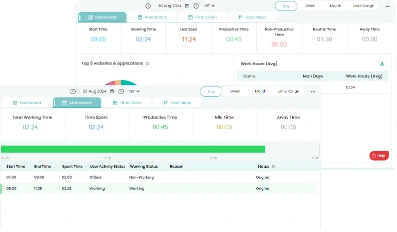
Table of Content
-
 Why Do Organizations Use Workforce Intelligence Today?
-
Why Do Organizations Shift from Reactive Management to Predictive Intelligence?
-
How is Workforce Intelligence Shaping the Future of Work?
-
Is Workforce Intelligence the Future of Workforce Engagement?
-
What are the Key Future Trends in Workforce Intelligence?
-
Where Are These Workforce Intelligence Trends Being Put to the Test?
-
Conclusion
Related Blogs
Find the 10 best workforce intelligence software for 2026. Compare features, pricing, pros, cons to boost operational clarity and team performance.
Thasleem Shaik | February 11 2026
Discover 10 ways HR teams can use workforce intelligence to improve hiring, retention, performance management, and drive smarter data-driven HR decisions.
Anjali | February 11 2026
Learn why workforce intelligence matters for investment & strategy teams, what makes it a strategic asset, how teams use it & how it supports decisions.
Chethana Choudary | February 18 2026
Learn what workplace intelligence is with real examples, how to implement it, key benefits, major challenges, and how it helps businesses scale effectively.
Anjali | February 11 2026
Learn what productivity intelligence is, why it's important, how it works, ways it transforms team performance, pros & cons, and how to measure it.
Shabana Shaik | February 11 2026
Understand operational intelligence: definition, real examples, benefits, challenges, how it differs from business intelligence & helps scale businesses.
Anjali | February 11 2026


 4.7/5 avg.
Ready to Manage Your Workforce Smarter?
Join our family of 1500+ companies using smart insights to redefine workforces!

Free Trial
No Credit Card Required