Remote Work Isolation: Causes and How to Overcome It
Learn the causes of remote work isolation, recognize its impact, and discover practical ways to stay connected and productive while working remotely.
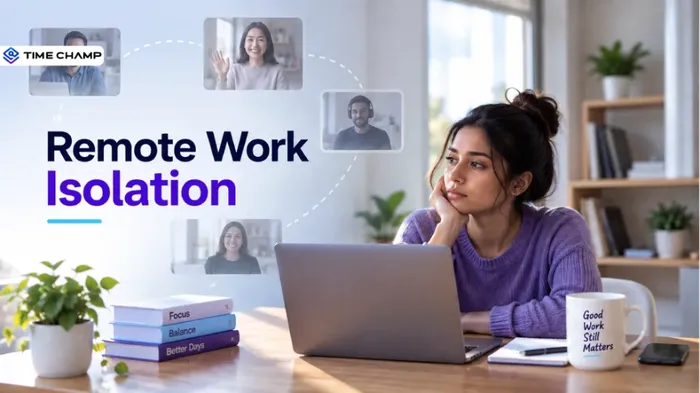
Working remotely can give employees flexibility, but it can also make them feel like they’re working alone. They might have meetings, messages, and video calls all day and still miss having real conversations with their colleagues. That is what remote work isolation means.
To give employees a clear understanding of remote work isolation, this guide covers what it is, what causes it, how it affects them, and practical ways to overcome it.
What Is Remote Work Isolation?
Remote work isolation is the feeling of being disconnected from colleagues, team members, or the workplace while working remotely. It describes the lack of connection an employee may feel when their work happens away from the usual office environment. Over time, this feeling can affect how connected and engaged they feel at work.

Did You Know?
25% of fully remote employees reported experiencing loneliness a lot of the previous day, compared with 16% of employees working exclusively on-site and 21% of hybrid employees.
Isolation vs Loneliness
Remote work isolation and loneliness are closely related, but they are not the same. Isolation explains a lack of social connection or interaction, while loneliness describes how a person feels about that lack of connection.
| Aspect | Remote Work Isolation | Loneliness |
|---|---|---|
| Meaning | A lack of regular social interaction or connection with colleagues. | A personal feeling of being alone or lacking meaningful relationships. |
| Focus | More about the level of connection and interaction. | More about the emotional experience of disconnection. |
| Cause | Can result from limited communication, working alone, or fewer team interactions. | Can occur even when a person regularly interacts with others but does not feel emotionally connected. |
| Workplace Example | An employee rarely talks to colleagues outside scheduled meetings. | An employee talks to coworkers every day but still feels that nobody understands or supports them. |
| How to Address It | Increase meaningful interaction, collaboration, and opportunities to connect. | Build deeper relationships and encourage employees to talk openly about how they feel. |
In simple terms, isolation is about the amount of connection a person has, while loneliness is about how that connection feels.
Why Remote Work Causes Isolation
Working remotely can make it harder for employees to maintain regular social connections with their colleagues. Several aspects of remote work can gradually create a sense of distance from the team.
Limited Face-to-Face Interaction
Working away from the office reduces opportunities for in-person conversations. This can make employees feel less connected to their colleagues.
Fewer Informal Conversations
Remote employees may miss quick chats, coffee breaks, and casual conversations that naturally happen in an office. These small interactions often help people build stronger workplace relationships.
Working Alone for Long Periods
Spending most of the workday alone can make employees feel disconnected from their team. Without regular interaction, work can start to feel less social.
Communication Gaps
Remote teams often rely on messages and scheduled calls to communicate. When communication is limited, employees may feel out of the loop or less involved.
Fewer Team-Building Opportunities
Remote employees may have fewer opportunities to take part in team activities and social interactions. This can make it harder to develop a strong sense of connection with the team.
Difficulty Building Workplace Relationships
Building relationships takes regular interaction and shared experiences. Remote employees may need to make more effort to develop the same connections that form naturally in an office.
Different Work Schedules and Time Zones
Different working hours can limit real-time interaction between team members. Employees may have fewer opportunities to talk with colleagues who work in different time zones.
The Effects of Remote Work Isolation
Remote work isolation can affect how employees feel, work, and interact with others. Here are the key effects of remote work isolation and how they can impact employees over time.
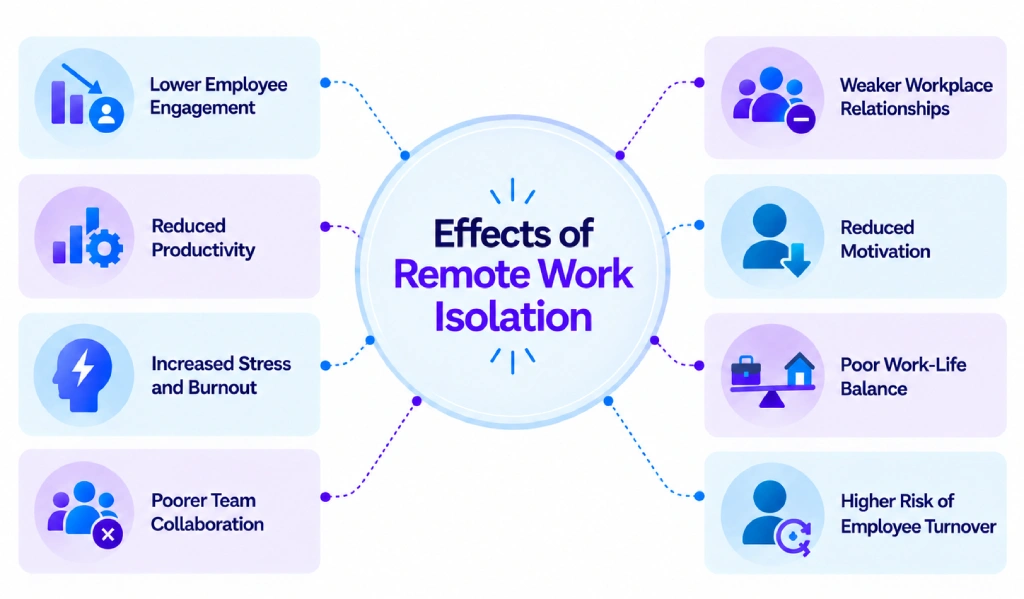
Lower Employee Engagement
Employees may feel less connected to their team and become less involved in workplace discussions and activities. They lose interest in team interactions and feel less connected to the organization. This can make everyday work feel less meaningful.
Reduced Productivity
Employees can lose focus and motivation when they spend most of their workday without regular interaction with their team. They find it harder to stay engaged with tasks and maintain consistent work habits. Distractions and a lack of team interaction can also affect their daily output.
Increased Stress and Burnout
Employees may feel more mentally tired and struggle to switch off from work when they lack regular social interaction. Working alone for long periods adds to the feeling of being overwhelmed. Over time, this affects their energy and overall well-being.
Did You Know?
The American Psychological Association survey found that younger workers were struggling with loneliness and feeling undervalued at work. The survey covered more than 2,000 working U.S. adults.
Poorer Team Collaboration
Employees communicate less, share fewer ideas, and hesitate to ask for help when they feel disconnected from their colleagues. This creates communication gaps and makes teamwork less smooth. Important information can also take longer to reach the right people.
Weaker Workplace Relationships
Employees find it harder to build meaningful relationships when most of their interactions happen through messages and scheduled calls. They miss the casual conversations that help colleagues get to know each other. As a result, relationships within the team become more professional and less personal.
Reduced Motivation
Employees lose enthusiasm for their work when they lack regular encouragement, interaction, and connection with their team. They feel less excited about contributing to team goals and workplace activities. Repetitive work can also feel more difficult when there is little social interaction.
Poor Work-Life Balance
Employees find it harder to separate work from personal time and often struggle to switch off after working hours. They continue thinking about unfinished tasks even after the workday ends. This makes it harder to maintain healthy boundaries between work and personal life.
Higher Risk of Employee Turnover
Employees who feel consistently disconnected become less satisfied with their work and start looking for workplaces where they feel more connected and supported. They lose their sense of belonging within the organization. Over time, this can influence their decision to stay with the company.
How to Overcome Remote Work Isolation
Working remotely does not mean employees have to feel disconnected from their colleagues. Small changes to their daily routines can create more opportunities for interaction and help them feel more connected to their work and team.
Schedule Regular One-on-One Conversations
Employees can set up occasional one-on-one conversations with colleagues they work with regularly. These conversations provide space to exchange ideas, discuss shared interests, and strengthen professional relationships.
Regular conversations also make it easier to maintain connections that might otherwise fade when most communication happens online. A short, informal conversation can often provide the social interaction that employees miss from working in an office.
Create a Social Routine
Employees can add simple social activities to their workday, such as having a virtual coffee break with a colleague. A regular social routine adds more interaction to the workday and creates opportunities for conversations beyond deadlines and tasks.
Even a few minutes of casual conversation can make the workday feel more connected. Keeping these interactions consistent helps make social connection a natural part of the remote work routine.
Communicate Beyond Work Tasks
Employees do not need to make every conversation about tasks or deadlines. Talking about hobbies, interests, weekend plans, or everyday topics helps employees build more natural relationships with coworkers.
These conversations give colleagues a chance to know each other beyond their job roles. Stronger personal connections also make everyday work communication feel more comfortable and engaging.
Work From Different Locations Sometimes
Employees need to change their workspace when working from home starts to feel repetitive. A coworking space, library, or suitable public workspace provides a different environment and more opportunities to be around other people.
A change of environment can break up the feeling of spending every workday in the same space. It also gives employees more variety in their daily routine while maintaining their regular work responsibilities.
Set Clear Work and Personal Boundaries
Employees should set a clear start and end to their workday and avoid allowing work to spill into personal time. Stepping away from the workspace after working hours helps employees recharge and maintain a healthier separation between work and personal life.
A consistent routine gives employees dedicated time for family, friends, hobbies, and other activities outside work. These boundaries also help prevent remote work from taking over the rest of the day.
Speak Up When Feeling Isolated
Employees should talk to their manager or a trusted colleague when they feel disconnected from the team. Speaking openly about the issue makes it easier to find ways to stay involved and connected.
Sharing these feelings early can help employees avoid dealing with isolation on their own. It also allows colleagues and managers to provide support and encourage more meaningful interaction.
Looking for an easier way to stay connected with your remote team?
Time Champ helps you organize your workday, manage your tasks efficiently, and maintain a clear view of your daily progress.
Conclusion
Overcoming remote work isolation does not require major changes to the employee's work. Small, consistent efforts to stay connected and create a healthier daily routine can make remote work feel more natural and enjoyable.
With the right habits and support, employees can stay connected while enjoying the benefits of working remotely.

Guna Lakshmi

Table of Content
 What Is Remote Work Isolation?
- Isolation vs Loneliness
- Why Remote Work Causes Isolation
- The Effects of Remote Work Isolation
- How to Overcome Remote Work Isolation
- Conclusion
Related Blogs

Learn how to track time for remote workers using simple methods and remote tracking tools and learn best practices that improve trust and productivity.
Guna Lakshmi | May 19, 2026
Discover effective ways to build employee trust in automatic time tracking software and create a transparent, productive, and positive work environment.
Thasleem Shaik | Mar 13, 2025
Learn why trust matters in workforce intelligence, how a privacy-first approach builds it, the key benefits, and how it protects company culture.
Thasleem Shaik | Feb 11, 2026
Struggling to keep your remote team connected? Explore 10 proven strategies to boost engagement, strengthen teamwork, and build a thriving remote culture!
Tarun Kumar Reddy | Mar 14, 2025
Don't let remote work myths hold your team back. Learn how to overcome challenges and build a productive, engaged remote workforce.
Guna Lakshmi | August 4, 2026
Misread messages, missed updates, endless pings? Learn how to overcome communication challenges in remote work and keep your team connected.
Guna Lakshmi | Jul 20, 2026


 4.7/5 avg.
Ready to Manage Your Workforce Smarter?
Join our family of 1500+ companies using smart insights to redefine workforces!

Free Trial
No Credit Card Required