9 Best Remote Employee Engagement Strategies That Work
Learn the best remote employee engagement strategies for 2026 to boost productivity, retain top talent, build stronger teams, and measure long-term impact.

Remote work has made it easier than ever to hire talent from anywhere, but it has also made one thing much harder, helping employees feel like they're truly part of the team.
It's easy to assume everything is fine when people are active on Slack, join every Zoom call, and meet their deadlines. But behind the screen, employees can still feel disconnected, overlooked, and isolated. Over time, that disconnect affects collaboration, motivation, productivity, and eventually, retention.
So, how do you keep remote employees engaged? It starts with creating a workplace where people feel connected, recognized, and supported. Here are 9 remote employee engagement strategies that work in 2026.
What are Remote Employee Engagement Strategies?
Remote employee engagement strategies are the intentional practices that help distributed teams stay connected, motivated, and engaged. They go beyond virtual events or occasional check-ins by creating a work environment where employees feel valued, supported, and part of the team.
These strategies include everything from clear communication and regular recognition to professional development, employee wellbeing, and trust.
What Makes Engaging Remote Teams So Hard?
Keeping a remote team engaged is more than staying connected online. Before exploring the solutions, let's look at the everyday challenges that make engagement harder.
- Communication Gaps: Without spontaneous conversations, misunderstandings are more common, and quieter voices can be overlooked.
- Isolation: Working remotely can leave employees feeling disconnected from their teammates and the company.
- Lack of Recognition: Great work often goes unnoticed when managers don't see employees' day-to-day contributions.
- Weaker Company Culture: It's harder to reinforce shared values and build relationships through screens alone.
- Blurred Work-Life Boundaries: When work and home overlap, employees are more likely to experience stress and burnout.
The good news is that each of these challenges can be addressed with the right approach. Let's look at the strategies that make the biggest difference.
9 Remote Employee Engagement Strategies That Actually Work
There's no single solution for remote employee engagement. The strategies below are practical, easy to implement, and can make a real difference in how your team works together.
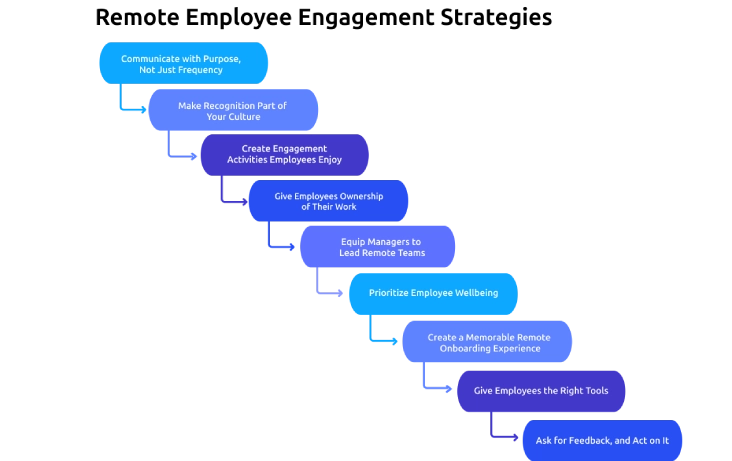
1. Communicate with Purpose, Not Just Frequency
More messages don't always lead to better communication. Instead, create a consistent rhythm with async updates, weekly team meetings, and monthly company-wide check-ins. Document important decisions so everyone stays aligned, regardless of time zone.
2. Make Recognition Part of Your Culture
Employees want to know their work matters. Celebrate achievements regularly with specific, timely recognition, whether it's a public shout-out, a peer recognition program, or a milestone celebration. Small moments of appreciation often have the biggest impact.
3. Create Engagement Activities Employees Enjoy
Not every team wants another virtual trivia session. Mix informal coffee chats, wellness challenges, online games, learning sessions, or team celebrations, and keep participation optional. The goal is to strengthen relationships, not fill calendars.
4. Give Employees Ownership of Their Work
Remote employees perform best when they're trusted. Set clear expectations, define outcomes, and give people the freedom to decide how they get there. Focusing on results instead of constant monitoring builds accountability and motivation.
5. Equip Managers to Lead Remote Teams
You have the biggest influence on employee engagement. Regular one-on-ones, meaningful feedback, active listening, and coaching conversations help employees feel supported and connected, even from a distance.
6. Prioritize Employee Wellbeing
Remote work can blur the line between work and personal life. Encourage healthy boundaries, respect time zones, normalize taking breaks, and make mental wellbeing an ongoing conversation, not just an annual initiative.
7. Create a Memorable Remote Onboarding Experience
Engagement starts on day one. Pair new hires with a buddy, provide a structured onboarding plan, and introduce them to teammates early. Helping employees build relationships from the beginning makes them feel like part of the team faster.
8. Give Employees the Right Tools
Even the most motivated employees struggle with outdated software and inefficient workflows. Invest in reliable communication, collaboration, and productivity tools, so your team can focus on meaningful work instead of technical frustrations.
9. Ask for Feedback, and Act on It
Regular pulse surveys and feedback sessions help you understand what's working and what isn't. More importantly, share the results, take action, and keep employees informed. When people see their feedback driving real change, they're far more likely to stay engaged.
Engagement Isn't Built in Meetings, It's Built Every Day
See how your team works, where they need support, and what helps them thrive
How to Find Disengagement Before the Exit Interview?
Employee disengagement rarely happens overnight. It builds gradually through small changes in behavior, and by the time someone submits their resignation, the warning signs have often been there for weeks.
Keep an eye out for these early indicators:
- Lower participation in meetings and team discussions.
- Declining productivity or difficulty staying focused.
- Fewer conversations with teammates or delayed responses.
- Working longer hours without improved output, which can signal stress or burnout.
- Missing deadlines or a noticeable drop in work quality.
- Less enthusiasm for new projects, team activities, or learning opportunities.
One sign on its own doesn't always indicate disengagement, but when several of these changes appear together or continue over time, it's worth checking in with the employee. A simple one-on-one conversation can uncover challenges, provide support, and prevent small issues from becoming reasons to leave.
How to Measure Remote Employee Engagement?
You can't measure employee engagement with a single metric. The best approach is to combine employee feedback, workplace behaviors, and business outcomes to get a complete picture of how your remote team is doing.
| Metric | What It Tells You | How Often To Track |
|---|---|---|
| eNPS or pulse surveys | How employees feel about their work and the organization | Monthly or quarterly |
| Focus and productivity trends | Whether engagement and work patterns are improving or declining | Ongoing |
| After-hours work | Early signs of stress or burnout | Ongoing |
| Employee retention and turnover | Whether engagement efforts are helping people stay | Quarterly |
| One-on-one conversations | Context behind employee feedback and performance | Weekly or biweekly |
| Participation in team activities | Sense of connection and belonging | After each activity |
5 Common Mistakes That Hurt Remote Employee Engagement
Even with the best intentions, a few common habits can slowly weaken engagement across remote teams. Here are the mistakes to watch out for:
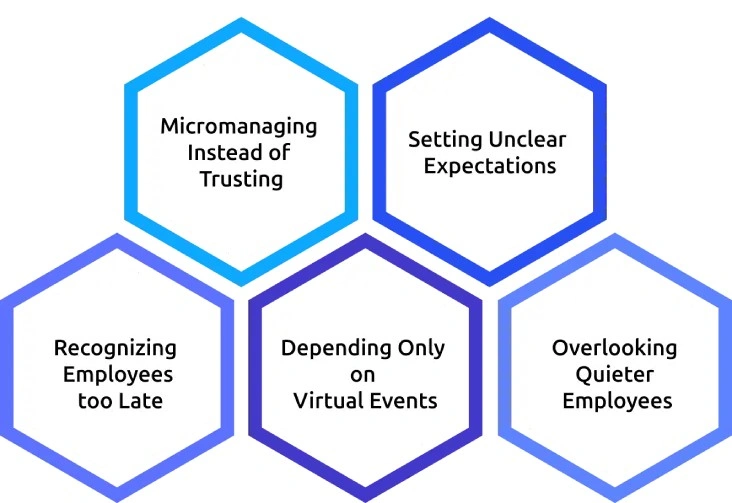
- Micromanaging Instead of Trusting: Measuring online presence rather than outcomes can reduce trust and motivation.
- Setting Unclear Expectations: When goals and priorities aren't well defined, employees can feel uncertain and disconnected.
- Recognizing Employees too Late: Appreciation shouldn't be limited to annual reviews. Regular recognition keeps employees motivated.
- Depending Only on Virtual Events: Team-building activities help, but they can't replace consistent communication, trust, and support.
- Overlooking Quieter Employees: Employees who gradually withdraw from conversations or team activities may need attention long before they decide to leave.
Avoiding these mistakes can make a big difference in building a remote team that's engaged, motivated, and committed for the long term.
How Time Champ Helps Improve Remote Employee Engagement
Time Champ is a remote employee monitoring software that gives you the visibility you need to support, engage, and retain remote teams. Instead of simply tracking employee activity, it provides meaningful insights into work patterns, productivity, collaboration, and workload, helping you make informed decisions and identify engagement issues before they grow.
With Time Champ, you can:
Productivity Tracking: Understand how work gets done across your team with real-time productivity insights. Identify productivity trends, recognize high performers, and find declining performance early so you can provide support before disengagement affects results.
Time Tracking: See where employees spend their time during the workday without disrupting their workflow. Accurate time tracking helps you improve planning, balance workloads, and ensure employees aren't overwhelmed.
Employee Monitoring: Get a clear view of work activity while respecting employee privacy. Instead of focusing on every click, use work patterns and activity trends to identify coaching opportunities, improve accountability, and support better performance.
Work-Life Balance Insights: Long working hours don't always mean higher productivity. Time Champ helps identify excessive after-hours work and workload imbalances, making it easier to prevent burnout and encourage healthier work habits.
Performance Analytics: Measure productivity, efficiency, and work trends with detailed reports and dashboards. These insights help you make informed decisions, recognize achievements, and improve team performance over time.
Team Collaboration Insights: Understand how teams collaborate across projects and departments. These insights help you identify collaboration gaps, improve team communication, and foster a more connected remote workforce.
Smart Reports & Dashboards: Access visual reports that highlight productivity trends, attendance, work hours, and employee performance. Instead of depending on assumptions, you can make data-driven decisions that improve engagement and productivity.
Improve Remote Employee Engagement Before It's Too Late!
Use Time Champ to identify disengagement, track productivity trends, and support your remote team
Conclusion
Building an engaged remote team doesn't happen overnight, it requires the right remote engagement strategies and a commitment to continuous improvement. Start by implementing a few strategies that address your team's biggest challenges, measure what matters, and make improvements based on employee feedback. When employees feel connected, recognized, and supported, they're more likely to stay engaged, perform at their best, and grow with your organization.

Jahnavi Pulluri

Table of Content
 What are Remote Employee Engagement Strategies?
- What Makes Engaging Remote Teams So Hard?
- 9 Remote Employee Engagement Strategies That Actually Work
- How to Find Disengagement Before the Exit Interview?
- How to Measure Remote Employee Engagement?
- 5 Common Mistakes That Hurt Remote Employee Engagement
- How Time Champ Helps Improve Remote Employee Engagement
- Conclusion
Related Blogs
Wondering why meetings are essential in remote work? Uncover 10 key reasons they improve communication, teamwork, and efficiency for your remote team!
Tarun Kumar Reddy | Mar 14, 2025
Avoid common remote work mistakes that hurt productivity and teamwork. Learn how to overcome challenges and create a more efficient remote work setup.
Thasleem Shaik | Mar 13, 2025
Want a happier team and lower costs? See how a remote work culture can boost productivity and make your company thrive!
Jahnavi Pulluri | Mar 12, 2025
Remote work is the secret sauce for more loyal employees. Discover how virtual collaboration and flexible hours transform teams into powerhouses.
Sai Keerthi Uppala | Feb 21, 2025
Learn how to track time for remote workers using simple methods and remote tracking tools and learn best practices that improve trust and productivity.
Guna Lakshmi | May 19, 2026
Ensure remote work compliance with our guide on key areas, common challenges, and best practices for your team.
Shabana Shaik | Jan 10, 2025


 4.7/5 avg.
Ready to Manage Your Workforce Smarter?
Join our family of 1500+ companies using smart insights to redefine workforces!

Free Trial
No Credit Card Required