Time Champ > Blog > Operational Intelligence (OI): Meaning, Examples & Benefits > Content
Operational Intelligence (OI): Meaning, Examples & Benefits
Understand operational intelligence: definition, real examples, benefits, challenges, how it differs from business intelligence & helps scale businesses.

Operational intelligence (OI) is the process of understanding what is happening in your business in real-time, before problems escalate. It transforms real-time data into actionable insights, helping you get complete visibility into systems, procedures, and workforce activity. This helps you to make accurate and confident decisions.
In this guide, you will know what operational intelligence is and its examples. You’ll also learn how it differs from business intelligence and how OI solutions can help businesses grow, especially with the modern workforce.
What is Operational Intelligence (OI)?
Operational intelligence analyzes real-time data to help you monitor activities, identify issues, and respond immediately. It integrates live systems, workforce signals, and processes to enhance decision-making, productivity, and business performance as work progresses among teams and daily operations.
Operational intelligence provides clarity when decisions play a crucial role. You can easily view the real-time workflow of tools, employees, and processes without relying on reports. This helps you to correct inconsistencies at an early stage, keep teams aligned, and maintain effective performance.

Did You Know?
The U.S. data analytics market is projected to grow from USD 29.7 billion in 2025 to USD 232.9 billion by 2034, highlighting the increasing demand for real-time operational intelligence.
You can gain complete control over the attendance, productivity, and output by integrating operational business intelligence with workforce information. This helps you clearly see what slows down your teams and fix it immediately with real-time operational intelligence.
Here is why operational intelligence matters:
- Helps you to make accurate decisions using real-time information.
- Enhances your team productivity with real-time visibility.
- Minimizes operational challenges through identifying issues at early stages.
- Optimizes daily operations without waiting for the reports.
- Supports sustainable growth with consistent operational clarity.
What Are Some Examples of Operational Intelligence?
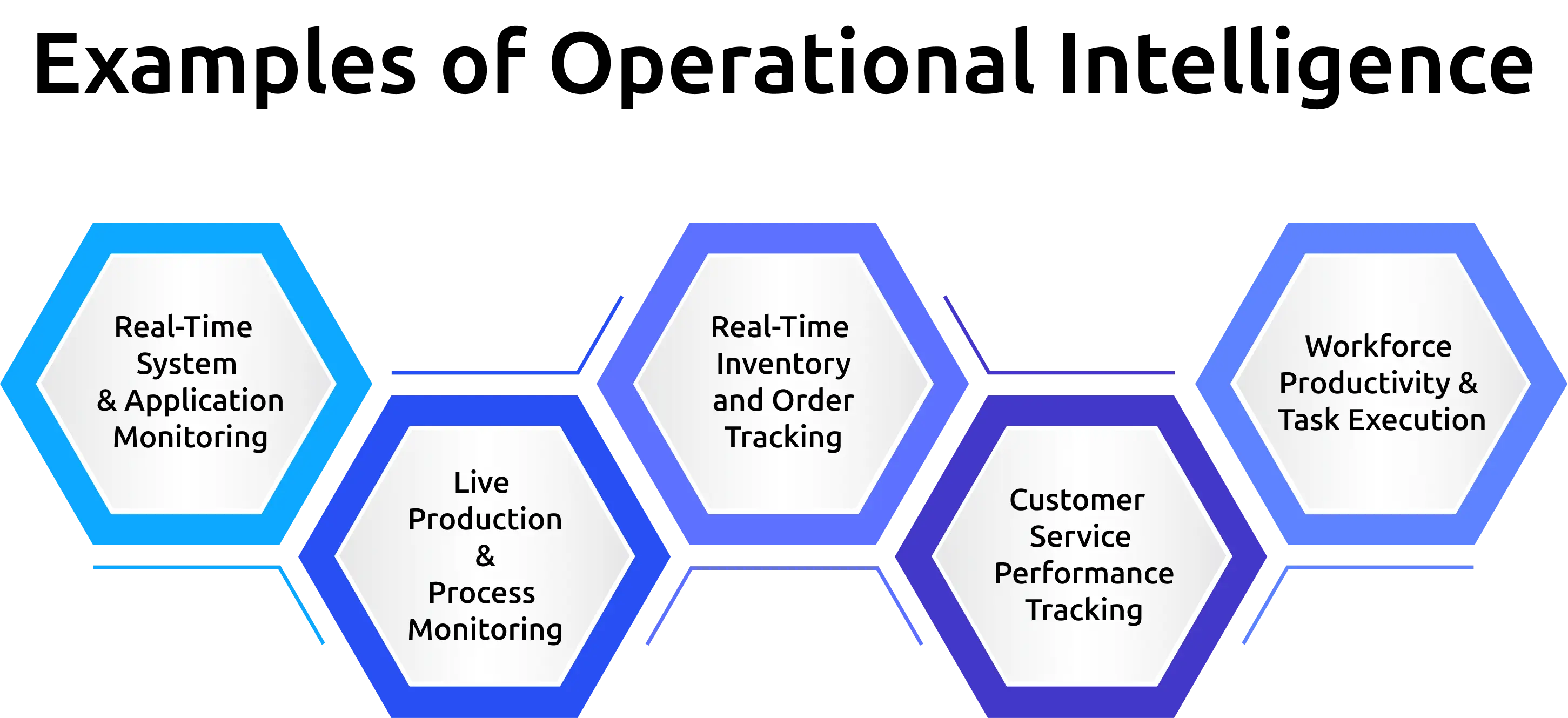
Operational intelligence plays a crucial role in making real-time decisions, regardless of the industry. Here you’ll understand how teams across industries transform real-time data into instant actions.
Real-Time System & Application Monitoring
The IT industry uses operational intelligence to effectively monitor application usage, system performance, and workforce activity. Teams can quickly identify workload spikes, fix outages, and any issues before they affect user or delivery.
Live Production & Process Monitoring
With real-time operational intelligence, manufacturers can monitor machines, output, and downtimes. Teams can respond immediately when efficiency drops to reduce delays and loss of production.
Real-Time Inventory and Order Tracking
Retail industries use operational business intelligence to monitor the inventory, orders, and user satisfaction in real-time. This clear visibility will help them to manage customer demands, reduce stock issues, and enhance customer experience.
Customer Service Performance Tracking
Customer services can view the live ticket volume, response times, and agent availability with operational intelligence. Teams can adjust workloads easily to maintain service quality and meet the SLAs.
Workforce Productivity & Task Execution
Enterprise operational intelligence offers real-time visibility into the workforce productivity and task execution. Teams can utilize these insights to maintain performance, reduce burnout, and enhance operations.
Scale your Business without Losing Visibility or Control.
See how Time Champ delivers operational intelligence for growing organizations.
How Operational Intelligence Delivers Clarity for Workforce Decisions?
Operational intelligence provides better clarity into workforce decisions through showing how work happens in real-time. It helps your teams to remain accountable, informed, and in control by integrating real-time operational data with workforce intelligence.
Here’s how operational intelligence brings clarity to your workforce decisions:
Real-Time Visibility into Workforce Activity
Operational intelligence monitors actual data on working hours, attendance, time spent at work, and productivity. You can observe the employee's work throughout the day, which helps to identify performance gaps early and keep on track.
Accurate & Data-Driven Workforce Decisions
Real-time operational intelligence eliminates expectations from decision-making. You can immediately respond to live insights to balance the workloads, solve any delays, and support teams at the right time.
Identification of Productivity Gaps
Operational intelligence and analytics indicate where the work actually slows down. You can easily spot productivity gaps and take effective actions before they impact the team’s productivity.
Smarter Workforce Planning
Integrating operational intelligence with workforce intelligence helps you plan staffing needs more accurately. Real-time insights allow you to assign resources efficiently and minimize burnout as teams grow.
Continuous Performance Improvement
Operational business intelligence facilitates sustained workforce enhancement by tracking productivity throughout the day. You can maintain consistency, enhance accountability, and make your teams focus on business objectives.
What Are the Benefits of Operational Intelligence?
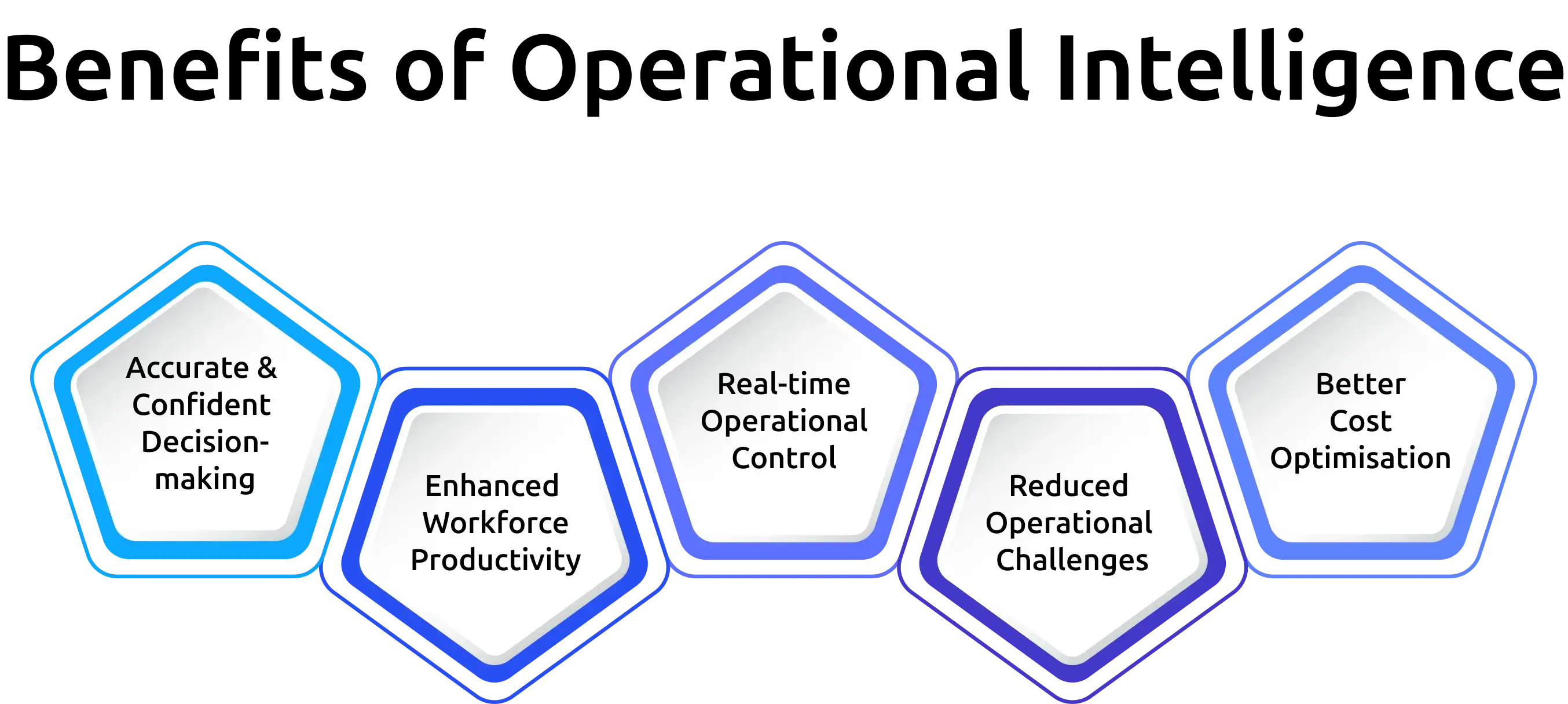
Operational intelligence helps you to understand and manage daily operations efficiently with real-time data. In this section, you'll know how these insights will help you to make effective decisions, maintain operations running smoothly, and enhance employee performance efficiently.
1. Accurate & Confident Decision-making
Operational intelligence provides access to real-time data, helping you to make decisions at the right moment. You can make accurate decisions using real-time operational data without waiting for the delayed reports. This allows you to respond quickly to any workforce or process adjustments.
2. Enhanced Workforce Productivity
Combining operational and workforce intelligence provides complete visibility into how employees work throughout the day. You can easily determine productivity gaps, distribute work, and keep your teams focused on high-impact work.
3. Real-time Operational Control
OI can help you keep track of daily operations in real-time. You can easily identify any problems, address the performance gaps, and keep workflows running smoothly across the departments and teams.
4. Reduced Operational Challenges
Operational business intelligence helps you identify anomalies before they escalate. You can enhance compliance, minimize failures, and downtimes by mitigating risks as soon as they occur in live data streams.
5. Better Cost Optimization
Operational intelligence solutions reveal hidden inefficiencies across tools, people, and processes. You can reduce unwanted costs while maintaining consistent performance through optimizing the usage of resources and workforce capacity.
What Are the Challenges of Operational Intelligence?
Operational intelligence enables real-time visibility, but teams often fail to understand its complete potential. Here in this section, you'll know the most common challenges that businesses face while implementing operational intelligence.
1. Integrating Disconnected Systems and Tools
Most organizations use various workforce tracking, project management, and operations tools. When these systems fail to connect, business intelligence stays fragmented. This lack of integration prevents a unified view of the workforce performance and operational health.
2. Managing High Volumes of Real-Time Data
Without clear priorities, teams may struggle to distinguish accurate insights from irrelevant data. This overload slows down the decision-making process and reduces the efficiency of operational intelligence and analytics.
3. Converting Insights into Immediate Action
Operational intelligence shows what is actually happening in real-time, but teams often delay action due to unclear workflows. Without organized procedures, effective insights might not convert into accurate decisions. This can reduce the impact of real-time operational intelligence.
4. Workforce Adoption and Data Trust
Managers and employees might sometimes resist data-driven monitoring. If the teams do not trust the accuracy of operational intelligence solutions, they may feel hesitant to act on insights. Successful adoption requires clear transparency and alignment with the workforce objectives.
5. Scaling Operational Intelligence across Teams
As organizations grow, enterprise operational intelligence becomes difficult to handle. Without the right solutions, teams lose visibility, decisions become less accurate, and workforce coordination also weakens, especially in hybrid and remote work environments.
How does Operational Intelligence Differ from Business Intelligence?
Business intelligence examines the past performance, whereas operational intelligence focuses on real-time action. Understanding the difference between them will help you to choose the appropriate insights and make accurate operational and workforce decisions.
| Aspect | Operational Intelligence (OI) | Business Intelligence (BI) |
|---|---|---|
| Main Focus | OI tracks and analyzes operations as they happen. | BI evaluates the completed tasks and past performance. |
| Data Type | OI tracks and analyzes operations as they happen. | BI evaluates the completed tasks and past performance. |
| Decision Scope | Facilitates immediate actions and quicker reactions. | Supports delayed and strategic decision-making. |
| Workforce Insight | Offers real-time insight into the employee workflow and activity. | Reviews workforce trends over the long term. |
| Issue Detection | Identifies operational and productivity issues. | It explains why issues occur only after they happen. |
| Operational Impact | Enhances daily execution, coordination and efficiency. | Enhances planning, forecasting and reporting. |
| Best Use Case | Managing live operations and workforce performance. | Evaluating business performance and long-term success. |
How Do Operational Intelligence Solutions Help Businesses Scale?
As businesses grow, operations become harder to manage. Operational intelligence solutions offer real-time visibility into the systems, processes, and workforce activity. You can monitor work within your teams and act immediately when any problem occurs. This clarity can help you to maintain performance, reduce unwanted costs, and keep operations on track as your organization grows.
Real-time operational intelligence also enhances decision-making across the workforce. It highlights the productivity gaps, workload imbalances, and workflow slowdowns. Platforms like Time Champ support this by integrating workforce intelligence with operational insights, which helps teams to remain productive across locations and departments.
This is where Time Champ plays a major role. It integrates workforce intelligence with operational intelligence to provide complete and real-time control over how work happens. With a centralized platform, you can easily monitor employee attendance gaps, application usage, productivity, and operational efficiency. Time Champ helps businesses scale with confidence by enabling accurate, data-driven decisions while maintaining full visibility across operations.
Gain Real-time Visibility into Operations and Workforce Performance.
Explore how Time Champ delivers smarter decisions through operational intelligence.
Conclusion
As operations become more complex, operational intelligence helps businesses to remain agile and informed. It transforms real-time data into actionable insights to help your teams make effective decisions and boost their performance. It also helps them prevent issues before they develop into bigger damage. Operational intelligence, together with workforce intelligence, can provide the clarity that organizations require to grow with confidence. With the right solutions, businesses can maintain clear transparency, enhance daily operations efficiently, and attain sustainable growth in today's workforce-driven business environments.

Anjali

Table of Content
-
 What is Operational Intelligence (OI)?
-
What Are Some Examples of Operational Intelligence?
-
How Operational Intelligence Delivers Clarity for Workforce Decisions?
-
What Are the Benefits of Operational Intelligence?
-
What Are the Challenges of Operational Intelligence?
-
How does Operational Intelligence Differ from Business Intelligence?
-
How Do Operational Intelligence Solutions Help Businesses Scale?
-
Conclusion
Related Blogs

Learn what productivity intelligence is, why it's important, how it works, ways it transforms team performance, pros & cons, and how to measure it.
Shabana Shaik | February 11 2026
Learn what business intelligence (BI) is, why it matters, how it works, explore key benefits, challenges & how AI is used to enhance business decisions.
Anjali | February 11 2026
Discover construction workforce intelligence: definition, importance, key components, how to build & manage it effectively, and explore its pros & cons.
Anjali | February 11 2026
Optimize productivity: Discover strategies to enhance organizational efficiency, streamline operations, and drive success in a competitive business landscape.
Mounika Sai | January 7 2024
Explore various free downloadable operational plan templates, including basic, strategic, project-based, and nonprofit templates for efficient planning.
Chethana | November 7 2024
Learn what workforce productivity is, key factors, metrics, and ways to measure and optimize it. Discover AI’s role in improving workforce efficiency.
Chethana Choudary | October 01 2025


 4.7/5 avg.
Ready to Manage Your Workforce Smarter?
Join our family of 1500+ companies using smart insights to redefine workforces!

Free Trial
No Credit Card Required