Call Center Agent Burnout: Statistics, Signs & Prevention
Learn the causes of call center agent burnout, recognize the early signs, and explore 9 practical strategies to improve agent well-being and retention.

One of your best agents suddenly isn't the same.
They're taking longer between calls, sounding less patient with customers, missing targets they used to hit with ease, and calling in sick more often. At first, it seems like a performance issue. But in many cases, it's something else entirely, call center agent burnout.
The reality is, burnout is far more common than most contact centers realize. Chances are, someone on your team is already struggling; you just haven't spotted the signs yet.
If you know what to look for, you can step in before exhaustion turns into disengagement, absenteeism, or another resignation.
In this blog, I'll break down the latest call center agent burnout statistics, the biggest reasons agents burn out, the early warning signs to watch for, and practical ways to prevent burnout before your best people decide to leave.
What is Call Center Agent Burnout?
Call center agent burnout is a state of physical and emotional exhaustion caused by prolonged, unmanaged workplace stress. It develops gradually, leaving agents feeling drained, disconnected from their work, and less capable of delivering the level of service they once did. Over time, even routine customer interactions can start to feel overwhelming.
People always assume stress and burnout are the same, but they aren’t!
Stress is temporary. Burnout isn't.
An agent dealing with stress may have a difficult shift but bounce back the next day. An agent experiencing burnout no longer recovers. Their patience wears thin, empathy becomes harder to show, and their performance slowly declines, even when the workload hasn't changed.

Did You Know?
According to customer service researcher Jeff Toister, 74% of contact center agents are at risk of burnout, with 30% at severe risk.
Causes of Burnout in Call Centers
Every job comes with its own challenges, but call center work is especially demanding. Agents spend their day talking to unhappy customers, meeting performance targets, and moving from one call to the next with almost no break in between. When this becomes the daily routine, it's no surprise that burnout starts to set in.
Here are the biggest reasons.
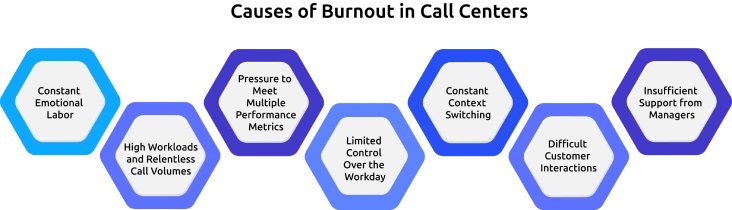
1. Constant Emotional Labor
Every customer interaction requires agents to stay calm, empathetic, and professional, even when they're dealing with angry, upset, or abusive callers. The emotional effort of staying positive all day can be exhausting, especially when there isn't enough time between calls to recover.
2. High Workloads and Relentless Call Volumes
Peak seasons, product launches, outages, and staffing shortages can quickly push occupancy levels higher. Agents often spend entire shifts moving from one call to the next, leaving no time to breathe. Research from the DHR Global Workforce Trends Report 2026 identifies overwhelming workload as the leading driver of employee burnout.
3. Pressure to Meet Multiple Performance Metrics
Call centers measure almost everything, average handle time (AHT), adherence, first call resolution (FCR), quality scores, customer satisfaction (CSAT), and more. While these metrics help improve performance, trying to optimize all of them at once can leave agents feeling like they're constantly under pressure.
4. Limited Control Over the Workday
Unlike many office roles, agents have very little control over when they take breaks, which customers they speak to, or how their day unfolds. Having little autonomy over work is one of the strongest predictors of burnout across industries, and contact centers are no exception.
5. Constant Context Switching
Agents rarely handle just voice calls. Many switch between calls, live chat, email, social media, and messaging apps throughout the day. Constantly changing tasks increases mental fatigue and makes it harder to stay focused and productive.
6. Difficult Customer Interactions
Not every customer is polite. Handling complaints, escalations, or abusive conversations day after day takes an emotional toll. Without clear escalation processes and opportunities to decompress, these interactions can gradually contribute to burnout.
7. Insufficient Support from Managers
Managers play a critical role in preventing burnout, but they often face pressure themselves. When team leaders are overwhelmed with targets, coaching, scheduling, and escalations, they have less time to support their agents. Gallup's research consistently shows that employees who feel supported by their managers are significantly less likely to experience burnout.
What Are the Early Warning Signs of Call Center Agent Burnout?
Burnout doesn't happen overnight. It develops gradually, often showing up in an agent's behavior and performance weeks before they take leave or resign. The key is to look for patterns rather than one-off incidents.
| Warning Sign | What It Could Indicate |
|---|---|
| High occupancy (85–90%+) for several weeks | Little or no recovery time between calls |
| Skipped or delayed breaks | The agent is pushing through instead of recharging |
| Rising overtime | Sustained workload or difficulty switching off |
| Increasing after-call work (ACW) | Mental fatigue or difficulty completing tasks |
| Declining quality scores, especially empathy and tone | Emotional exhaustion rather than a skills issue |
| More idle time or lower activity levels | Disengagement or fatigue |
| Frequent late logins or unplanned absences | Reduced motivation or early signs of burnout |
| Less patience with customers and colleagues | Emotional strain and frustration |
| Withdrawal from team interactions | Loss of engagement or morale |
A single sign doesn’t confirm burnout, but when several of these changes appear together, it's time to have a conversation. Identifying burnout early allows you to provide support before it leads to absenteeism or attrition.
How to Prevent Call Center Agent Burnout: 9 Practical Strategies
Preventing burnout is about creating a work environment where agents have manageable workloads, enough time to recover, and the support they need to perform at their best.
1. Keep Occupancy at Sustainable Levels
When occupancy stays above 85-90% for weeks, agents have some time to recover between interactions. Monitor occupancy regularly and adjust staffing or routing before workloads become unsustainable.
2. Encourage Agents to Take Their Breaks
Breaks help agents recharge, especially after difficult customer interactions. Schedule breaks consistently and discourage skipping them to meet performance targets.
3. Monitor More Than Just Handle Time
Don't focus only on AHT. Watch after-call work (ACW), overtime, and occupancy, as rising trends often signal that agents are becoming overloaded.
4. Give Agents More Control Over Their Workday
Where possible, allow flexible break times, shift swaps, or limited queue preferences. Even small amounts of autonomy can improve engagement and reduce stress.
5. Have a Clear Process for Handling Abusive Calls
Agents should know when they can escalate or end abusive conversations without fear of being penalized. Supporting employees during difficult interactions helps reduce emotional fatigue.
6. Balance Workloads Across the Team
Avoid depending on the same high-performing agents to handle extra work or overtime. Use workforce data to distribute workloads more evenly and prevent burnout from building up over time.
7. Check In with Agents Regularly
Don't wait for performance reviews. Short, regular one-on-one conversations help you identify challenges early and provide support before burnout affects performance.
8. Remove Unnecessary Friction
Outdated systems, slow applications, and confusing processes make every interaction more stressful. Improve tools and workflows so that agents' jobs are easier and daily frustration is reduced.
9. Support Your Team Leaders
Team leaders are often the first to notice burnout, but they also face significant pressure themselves. Give them the time, training, and resources they need to coach their teams effectively.
Prevent Burnout Before It's Too Late!
See workload trends and empower your team with Time Champ
How to Support an Agent Who Is Already Burned Out?
Even with the best prevention strategies, some agents will still experience burnout. When that happens, help them to recover.
Start with a private, supportive conversation. Share the changes you've noticed, listen without judgment, and understand what's contributing to their stress.
Then, take practical steps to reduce immediate pressure. This could include adjusting workloads, limiting overtime, approving time off, or temporarily moving the agent to a less demanding queue. If your organization offers employee assistance or mental health resources, encourage the agent to use them.
Finally, check in regularly. Recovery takes time, and one conversation isn't enough. Just as importantly, look beyond the individual. Burnout often points to a broader team or operational issue that needs to be addressed.
How Time Champ Helps Detect and Prevent Call Center Agent Burnout
Burnout doesn't happen overnight, and neither should your response to it. The sooner managers can spot changes in workload, work patterns, and engagement, the easier it is to step in before burnout affects performance or leads to attrition.
And Time Champ can help you with that!
Time Champ is an employee monitoring and workforce intelligence platform that gives contact center leaders real-time visibility into productivity, attendance, workload, and work patterns. Instead of depending on assumptions, you can identify early signs of burnout, understand when agents are becoming overloaded, and take proactive steps to support their teams before burnout becomes a bigger problem.
Work-Life Balance Dashboard
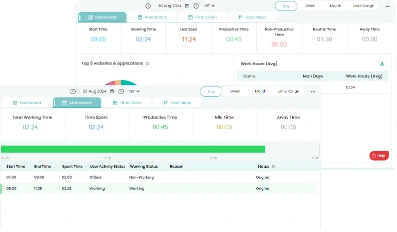
Time Champ provides visibility into employees' work hours, utilization, and work-life balance trends. You can identify agents who are consistently working longer hours or showing signs of overutilization and take steps to rebalance workloads.
Break Scheduling & Reminders
Skipped breaks are often one of the earliest signs of burnout. Time Champ lets you schedule breaks, sends reminders, and provides timeline insights to help ensure agents get the recovery time they need throughout the day.
Overtime Tracking
Rising overtime is a strong indicator that workloads may be becoming unsustainable. Time Champ tracks overtime trends across individuals and teams, helping you identify workload imbalances before they affect performance or well-being.
Productivity & Activity Tracking
Changes such as declining activity levels, increasing idle time, or frequent late logins can indicate that an agent is struggling. Time Champ highlights these patterns, making it easier for you to identify changes in work habits and offer timely support.
Find Agent Burnout Before It Leads to Attrition!
Track workloads, breaks, and productivity to spot burnout early with Time Champ
Conclusion
Call center agent burnout is a real problem, but it can be prevented with the right steps. Finding the warning signs early, reducing work pressure, and supporting agents can make a big difference. Even small changes, like better workload planning, regular breaks, and open conversations, can help agents feel less stressed. When employees feel supported, they stay happier, work better, and are more likely to stay with your company.

Jahnavi Pulluri

Table of Content
 What is Call Center Agent Burnout?
- Causes of Burnout in Call Centers
- What Are the Early Warning Signs of Call Center Agent Burnout?
- How to Prevent Call Center Agent Burnout: 9 Practical Strategies
- How to Support an Agent Who Is Already Burned Out?
- How Time Champ Helps Detect and Prevent Call Center Agent Burnout
- Conclusion
Related Blogs
Learn simple ways to measure and boost call center productivity, helping your team work more efficiently and improve customer service.
Jahnavi Pulluri | Jan 10, 2025
Toxic productivity at the workplace harms employee well-being and leads to burnout. Discover what it is, signs to watch for, and strategies to overcome it.
Sai Keerthi Uppala | Jan 10, 2025
Discover if remote workers are truly less productive. Explore key insights, challenges, and benefits of remote work in boosting employee productivity.
Shabana Shaik | May 30, 2023
Organize your workplace with these best productive tips. Boost efficiency, reduce clutter, and optimize your work environment today!
Sai Keerthi Uppala | Feb 22, 2025
Learn about the main types of productivity and how to track them effectively. Enhance your team’s output with proven strategies for measurable success.
Sai Keerthi Uppala | Jan 20, 2025
Learn how low productivity affects your business and discover proven strategies to improve efficiency, employee morale, and overall performance.
Thasleem Shaik | Jan 08, 2025


 4.7/5 avg.
Ready to Manage Your Workforce Smarter?
Join our family of 1500+ companies using smart insights to redefine workforces!

Free Trial
No Credit Card Required